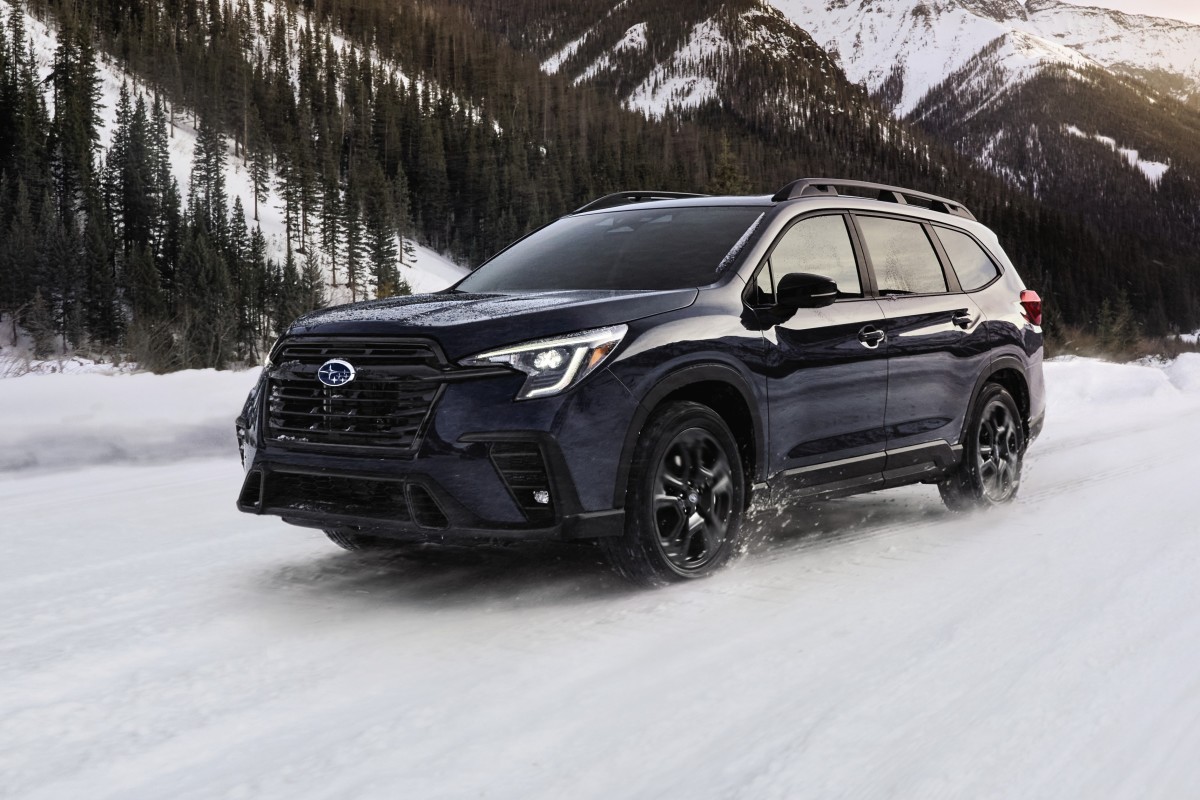
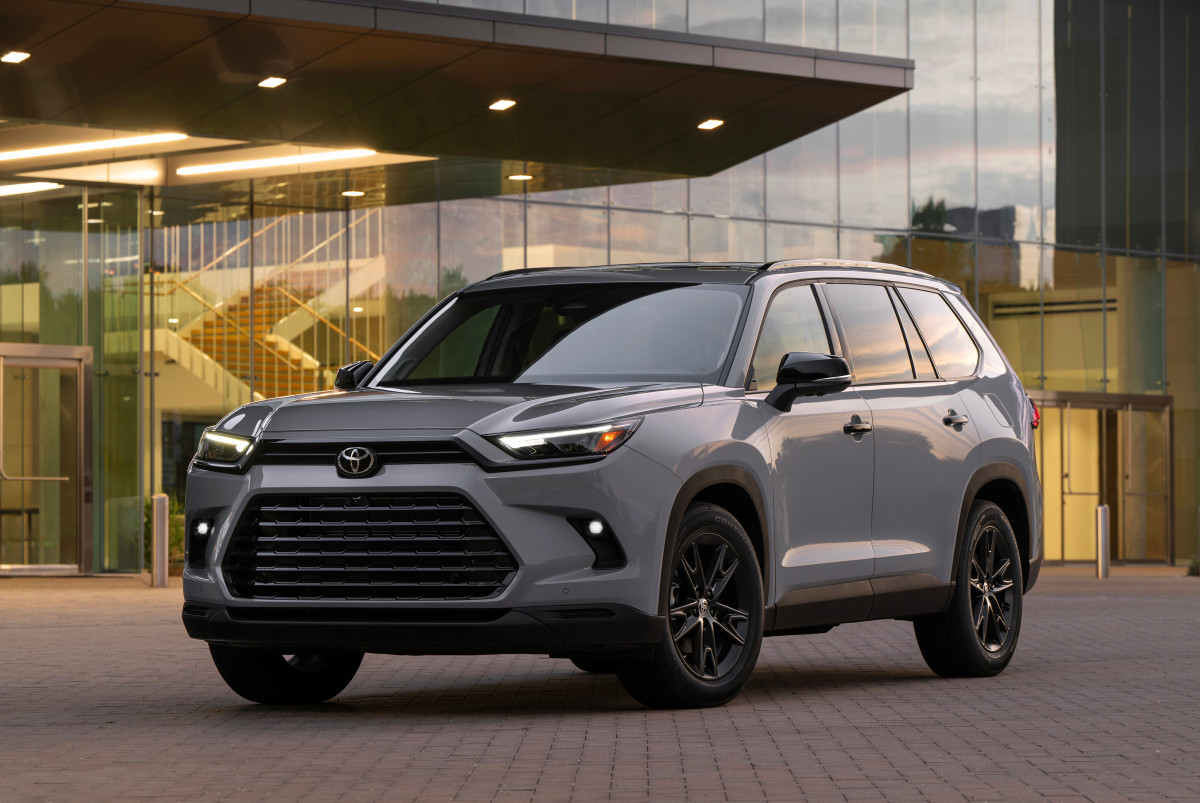
The Toyota Sequoia was designed for the North American market and aimed squarely at full-size SUVs with a body-on-frame chassis, such as the Chevrolet Suburban and the Ford Expedition. Named after the great Sequoia trees of the Sierra Nevada mountain range, the Sequoia promised to be ready for adventure.
From the beginning, the Sequoia shared a platform with the full-size Tundra pick-up truck, including quite a few design elements inside and out. All Sequoias are equipped with three rows of seating, accommodating up to eight passengers depending on the second-row layouts.
Thanks to its truck-based platform, the Sequoia delivers impressive towing capabilities, the latest models being able to tow up to 9,520 pounds. Robust and dependable powertrains have earned the Sequoia a legendary status among fans of Toyota trucks. While fuel economy has never impressed, the Sequoia will always get you where you need to go.
Toyota Sequoia Buying Guide: Cost, Reliability, and the Best Years to Buy
- Frequently Asked Questions
- Toyota Sequoia Pros and Cons
- Toyota Sequoia Generations
- Third Generation (2023-present)
- Second Generation (2008-2022)
- First Generation (2001-2007)
Frequently Asked Questions
Which Toyota Sequoia years are the best?
With a long production run from 2008 to 2022, the second-generation Sequoia is tough to beat. The refreshed 2018 to 2022 model years offer a nice balance of modern safety features and dependability. While the second-generation drew criticism for being dated, these Sequoias used dependable engines. The 2013 to 2015 model years also provide good value, but those looking for driving assistance features, such as adaptive cruise control and lane departure warning, should look for cars built from 2018 onwards.
What are the worst Toyota Sequoia years?
The worst model year of the Toyota Sequoia is 2023. Using an all-new platform and an all-new hybrid powertrain, the latest Toyota Sequoia has had some teething issues. Many of us also miss the 5.7-liter V8 engine, despite the better efficiency of the hybridized six-cylinder.
Is a used Toyota Sequoia a good deal?
Yes, the Toyota Sequoia can be a good deal. Buyers looking for a large body-on-frame SUV with three rows of seating have limited options, and those who prioritize reliability will quickly turn to the Sequoia. Unfortunately, finding the best deals can be difficult due to a strong following and strong used values.
Toyota Sequoia Pros and Cons
Pros:
- Reliable powertrains
- Room for the entire family
- Capable on- and off-road
Cons:
- Poor fuel economy
- Rust issues on older models
- Ride can be truck-like
Toyota Sequoia Generations
Third Generation (2023-present)
The Sequoia was all-new for the 2023 model year, and again built on the full-size truck platform and now built alongside the Tundra at Toyota's San Antonio plant. Unlike the previous generation, the new Sequoia ditched its independent rear suspension in favor of a solid rear axle like the Tundra's.
The biggest news for the third-generation Sequoia was the all-new hybrid I-Force MAX powertrain. Gone was the beloved, old 5.7-liter V8 engine, replaced by a twin-turbo V6 with a hybrid assist system. This new engine produced a combined 437 horsepower and 583 lb-ft of torque, impressive numbers that allow the Sequoia to tow up to 9,520 pounds in the right configuration. Thanks to the hybrid engine, fuel economy was improved, and the Sequoia was rated at 21 mpg city and 24 mpg highway. All Sequoias came standard with a 10-speed automatic transmission driving the rear wheels, with a 4x4 system available as an option.
At launch, the Sequoia was available in five trim levels: SR5, Limited, Platinum, TRD Pro and Capstone. In SR5 and Limited trim, the Sequoia is an eight-passenger vehicle with the second and third row benches each seating three passengers. For the Platinum trim and higher, the Sequoia is a seven-passenger vehicle, with second-row captain's chairs.
The Toyota Sequoia TRD Pro was ready for adventure with special forged alloy wheels and tires, off-road suspension, skid plates and standard four-wheel drive, while special grills added to the off-roader attitude. To tackle off-road terrain, driving assistance systems such as crawl control were fitted.
The Toyota Sequoia Capstone marked the top of the range, perfect for buyers looking for luxury. Drivers and passengers were treated to a full leather, black and white interior with walnut trim, and heated and ventilated first- and second-row seats. A panoramic moonroof and power-folding mirrors were also standard.
Inside, all Sequoia models got a Toyota Audio Multimedia system with Apple CarPlay and Android Auto connectivity. The base Sequoia SR5 got an eight-inch touch screen system, while all other trims had a larger 14-inch touch screen. The hybrid powertrain meant cargo space was limited, as the battery is located just under the third-row seats, eating into valuable interior space.
Stepping up to the Sequoia Limited trim added a standard 14-inch infotainment screen, heated and ventilated front seats, and 20-inch wheels over the base Sequoia SR5.
Toyota Safety Sense was also standard across all Toyota Sequoia trims, offering a range of driving assistance features, such as adaptive cruise control, automatic emergency braking, and lane keeping assistance.
For 2024, Toyota added a new Nightshade package exclusively for the Limited trim, featuring several black accents, and the TRD Off-Road package became available on Platinum 4x4 models. Seven-passenger seating became available in Limited trims as well.
The 2025 model year brought some significant additions to the lineup. The most notable of which was the new 1794 grade, a Texas-inspired luxury trim featuring real American walnut wood grain interior trim, unique leather-trimmed heated, ventilated, and massaging front seats, and exclusive badging. The TRD Off-Road Package was available on 4x4 1794 models, too.
For 2026, Toyota focused on interior refinements in the form of new leather-trimmed seating options in the Capstone and Limited trims and power-folding third-row seats becoming standard across the lineup.
Early reports from owners were problematic. While the new powertrain was more powerful and efficient than the old V8, it was much more complicated, with its combination of turbochargers and hybrid assist. Toyota recalled certain 2023 and 2024 model year Sequoias due to issues with the new 3.4-liter V6.
The MSRP for the new Toyota Sequoia as of January 2026 started at $66,920 for the base SR5, rising to $87,330 for the top-of-the-range Capstone trim. Used values are still strong, with prices averaging around $63,000 for the 2023 model year, around $69,000 for the 2024s and $75,000 for the 2025s.

Second Generation (2008-2022)
The second-generation Sequoia was the longest running, and getting quite long in the tooth by the time it was replaced for 2023. First released for the 2008 model year, the second-generation was a reliable family hauler, using tried and true components instead of experimenting with new technology.
The family three-row SUV was based on the full-size Tundra pickup with a few key differences. The Sequoia got a fully boxed frame and an independent rear suspension system for a smoother ride compared to the Tundra's solid rear axle.
At the time of its introduction, the Sequoia was available in three trims: SR5, Limited, and Platinum. The base SR5 carried over the same 4.7-liter V8 from the first-generation Sequoia. The new 5.7-liter V8 was optional on the SR5 and standard on the Toyota Sequoia Limited and Platinum trims. All Sequoias came standard with rear-wheel drive, with a part-time four-wheel drive system available as an option. Standard features included keyless entry and a tilt and telescopic steering wheel.
The range-topping Toyota Sequoia Platinum received an impressive list of standard and optional features. Passengers were treated to a JBL audio system, a rear-seat entertainment system, and rear climate control.
The base 4.7-liter V8 was replaced by a 4.6-liter V8 for the 2010 model year, which was soon discontinued for 2013. All Sequoias from 2013 onwards got the robust 5.7-liter V8, a beloved motor in the world of Toyota trucks.
The aging Sequoia received a mid-cycle refresh in 2018. The refreshed models received an updated front end, which included new LED headlights, new fog lights and a new front bumper, and Toyota's SafetySense driving assistance features. For a vehicle the size of the Sequoia, features such as a blind spot monitor and rear cross-traffic alert were welcome additions. More importantly, the Sequoia got a new trim, the TRD Sport, which added special shocks and anti-roll bars.
For more hardcore off-roaders, the TRD Pro was introduced for the 2020 model year. For the ultimate performance, the TRD Pro got Fox shocks, forged wheels with all-terrain tires, skid plates, and Rigid fog lights.
The second-generation lived up to Toyota's legendary reputation for reliability and dependability. The earlier 4.7-liter V8 was one of the most reliable engines Toyota has produced, and the later 5.7-liter V8 incredibly robust. Water pumps are a common wear item for the later 5.7-liter engines, so check the coolant levels.
The sliding rear window in the rear hatch is a very cool feature, especially on a warm sunny day, and being able to open up all the windows almost makes you feel like you're driving a convertible. Unfortunately, the rear window is a common problem area, as water can leak into the mechanism causing rust.
Due to the Sequio's sheer size and its 6,000-pound curb weight, brakes are a common wear item. Be prepared to regularly replace the front brakes, in particular. Finally, frame rust is a problem on, particularly in the snow belt.
Thanks to a reputation for durability and reliability, the second-generation Sequoia has held its value incredibly well. Many Toyota purists mourned the loss of the V8 on the third generation, increasing demand for the second. Because of how reliable this generation is, high mileage is not a huge concern. Always check for maintenance records and the underside for rust.
The refreshed model years from 2018 to 2022 command a premium, with average prices ranging from $35,000 to $50,000 depending on the trim level and condition. The TRD Pro is highly sought after, especially in limited edition colors.
The sweet spot in value is the 2013 to 2015 model years. Earlier kinks had been ironed out, and demand was lower compared to later model years. Expect to pay $17,000 to $20,000 for a nice example. You can find the cheapest second-generation Sequoias between the 2008 and 2012 model years, with prices averaging from $12,000 to $15,000 depending on mileage and condition.
First Generation (2001-2007)
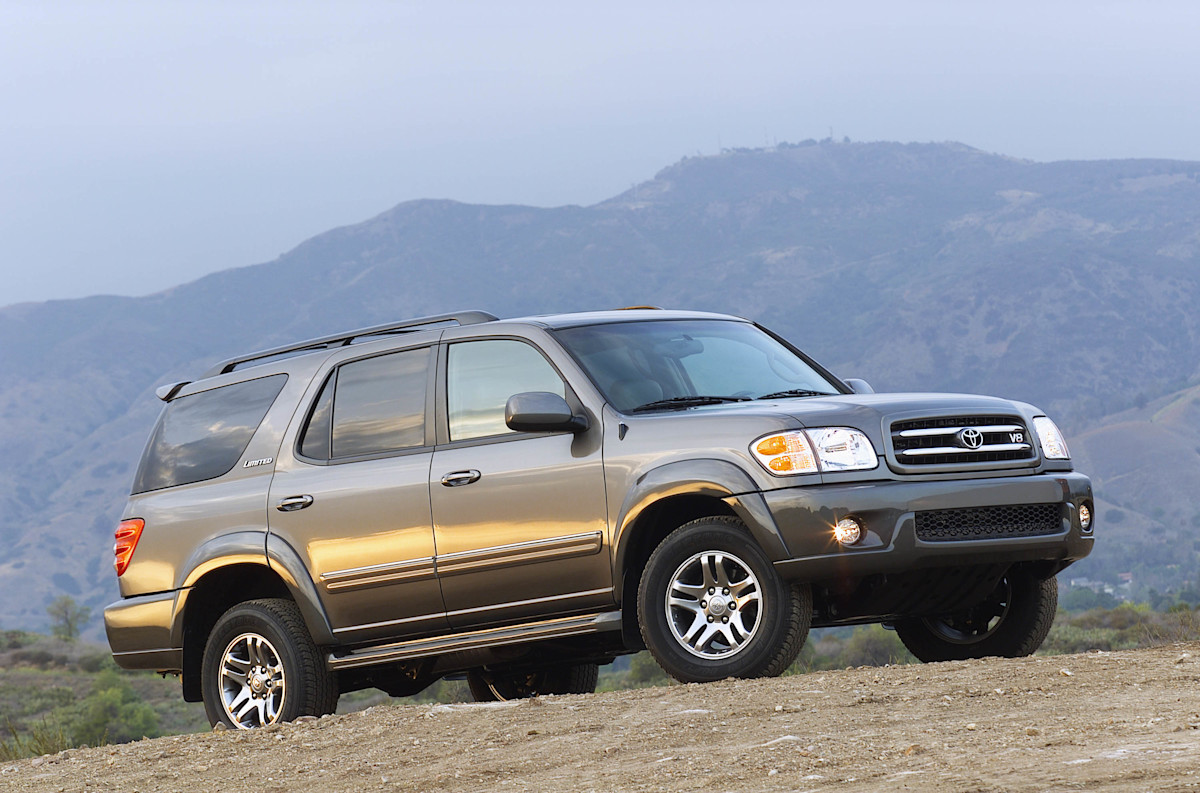
The first-generation Sequoia was launched for the 2001 model year. Based on the full-size Tundra pickup truck, the Sequoia was a highly anticipated competitor to large American body-on-frame SUVs. Many parts were shared with its truck counterpart, from the frame, engine, the front-end design, and even the dashboard. The rear suspension was redesigned for a smoother ride, though.
Options for the original Sequoia were limited. Under the hood, only one engine was available, paired with a four-speed automatic transmission. Rear-wheel drive was standard, with 4x4 available as an option. The Sequoia was only available in two trims, SR5 with cloth seats and Limited with leather seats.
Building on the lessons learned from the 4Runner and the Land Cruiser, the Sequoia immediately earned praise for its family-friendly nature. With three rows of seats, powerful engine, and robust body-on-frame construction, the Sequoia was perfect for hauling the family and towing the toys.
Toyota introduced a mid-cycle refresh for the 2005 model year that included updated head and taillights. The 4.7-liter V8 engine was upgraded with variable valve timing, giving it more power, and mated to a new five-speed automatic transmission, which improved towing capacity. The Sequoia also received a new Torsen center differential, improving off-road performance.
The first-generation Sequoia is an incredibly reliable SUV, and its 4.7-liter V8 is one of Toyota's great engines. Many of the common problems found on the Sequoia are related to age. Watch out for rust, as Toyota issued a recall for frames showing excessive corrosion, and this is common for Toyota trucks of the era, as the Tundra and the Tacoma were affected by the same recall. Like the second-generation, higher mileage on these SUVs is not a major concern if the vehicle has been well maintained.
Pricing for the first-generation Sequoia varies by condition. Generally speaking, prices average around $8,000 for a good example, with lower mileage examples commanding a premium. The first-generation is also entering the collector car category, and well-kept examples are now reaching upwards of $15,000.