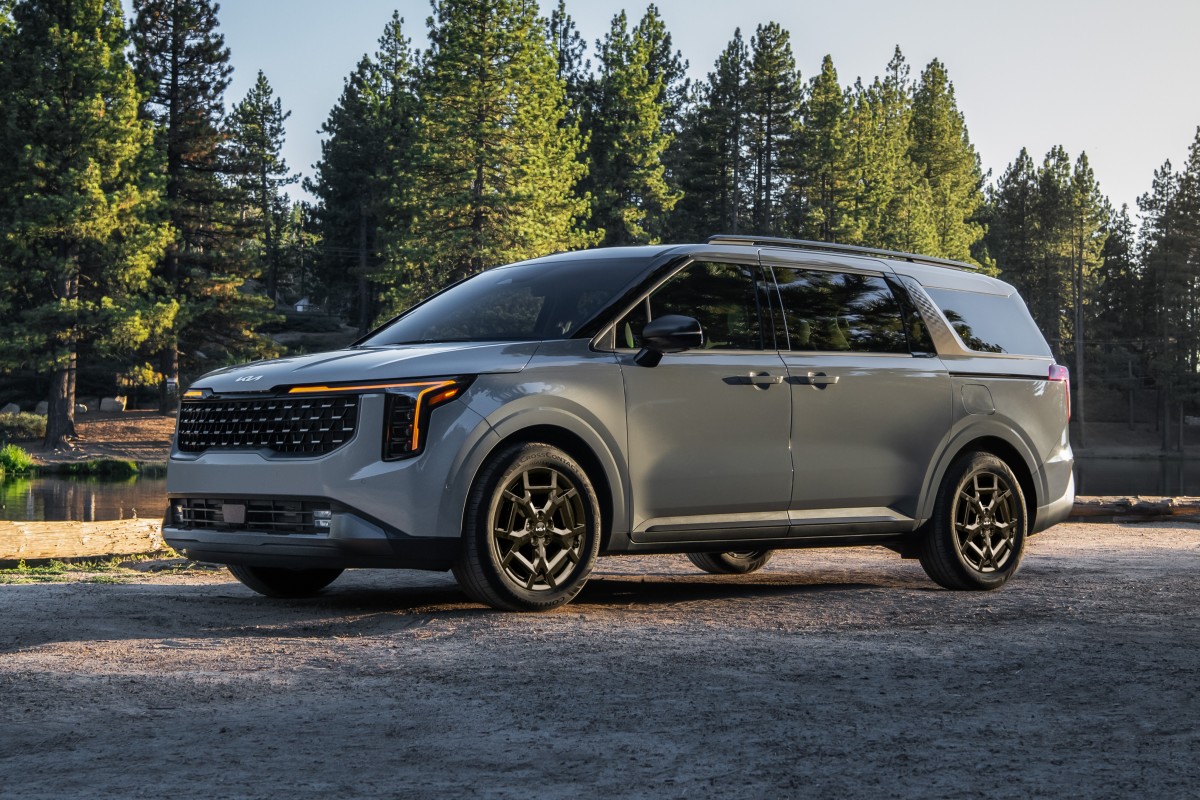
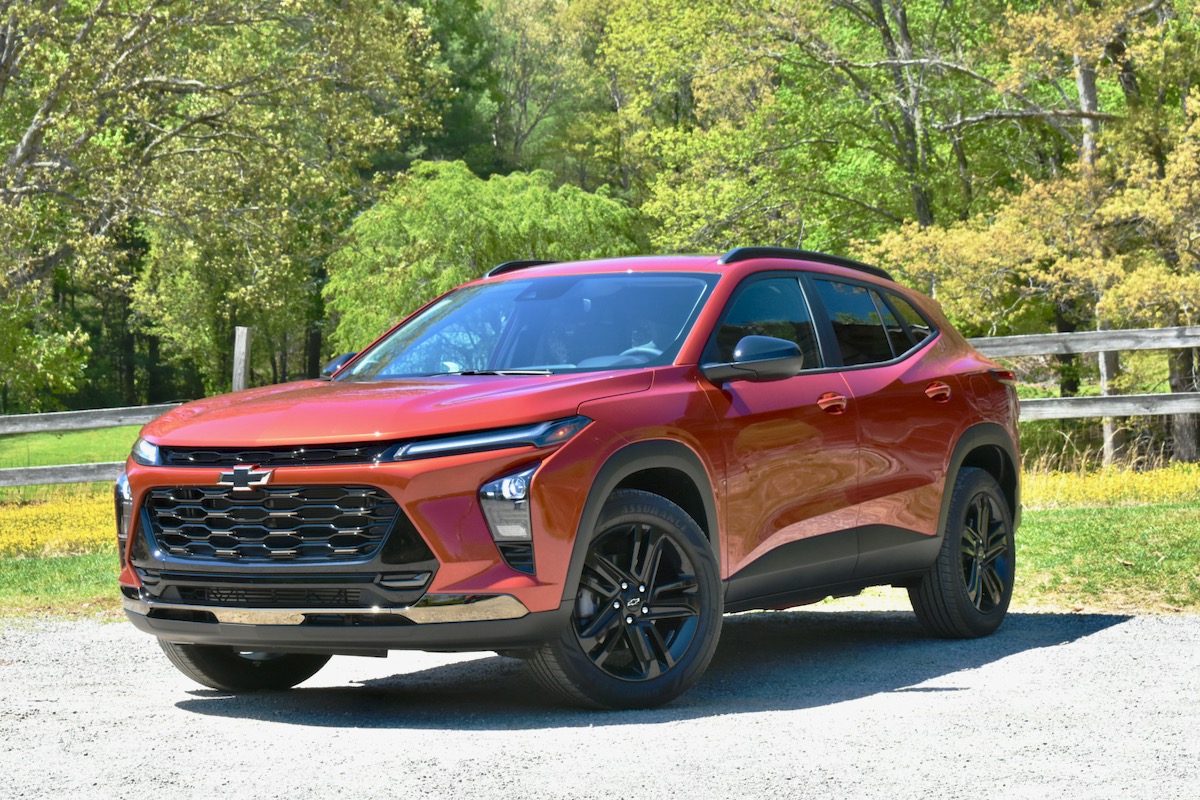
The best boxy cars and SUVs often blend retro-inspired designs with practicality and modern technology. These vehicles are valued for their spacious interiors and off-road capabilities. They offer features that suit a variety of needs, and you’ll find examples of boxy models of all sorts, from old-school new SUVs such as the latest Toyota 4Runner to EVs such as the Kia EV9. Below is a list of the top boxy vehicles available in the US for 2026.
The Best Boxy Cars and SUVs in 2026
- Kia Soul
- Toyota 4Runner
- Ford Bronco
- Hyundai Santa Fe
- Jeep Wrangler
- Kia EV9
- Honda Passport
- Land Rover Defender
- Mercedes-Benz G-Class
- Toyota Land Cruiser
Why Were Old Cars and SUVs Square or Boxy? Pros and Cons of Boxy Cars and SUVs What Makes CarGurus Best Cars Guides Different Shopping Tools Related Topics
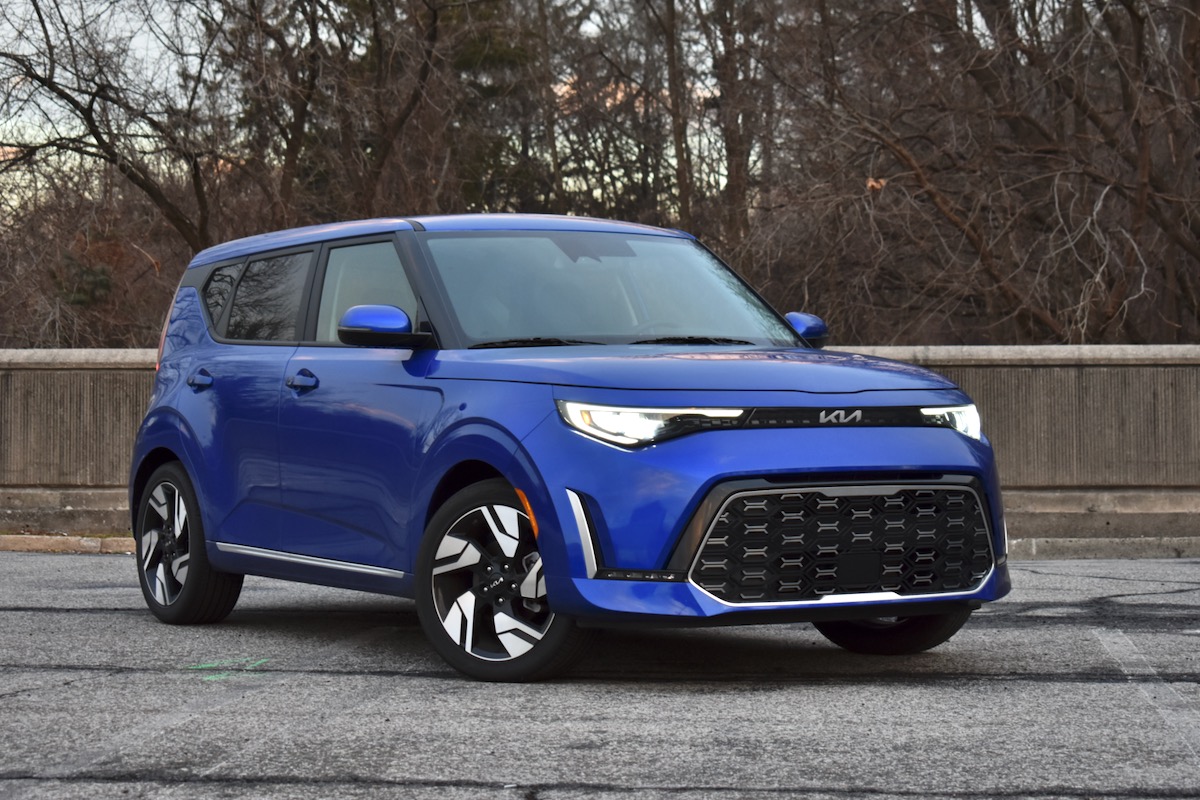
1. Kia Soul
Seating capacity: 5
Cargo space: 62.1 cubic feet
CarGurus expert rating: 7.7 out of 10
CarGurus user rating: 4.5 out of 5
Percentage of Good and Great Deals available on CarGurus: 30.9%
Overall CarGurus rating: 4.5 out of 5
| Pros | Cons |
|---|---|
| Stylish design | Fairly pedestrian performance |
| Spacious | Uncomfortable seats |
| Excellent value for money | Advanced safety features are not standard |
If you want boxy-cute styling without giving up everyday usefulness, the Kia Soul fits the bill with upright proportions that make it easy to place in traffic and easy to load with people and stuff. It’s a smart compromise between a small hatchback and a tiny crossover: you get an upright driving position and a cabin that feels bigger than the footprint suggests, plus available two-tone paint and distinctive lighting that lean into the Soul’s “thinking inside the box” personality.
For real-world driving, the 2.0-liter four-cylinder makes 147 hp and 132 lb-ft of torque, paired with a CVT and front-wheel drive; it’s not a quick car, but it’s tuned to be responsive enough for stress-free passing and daily commuting. The square shape pays dividends in usability, with up to 24.2 cubic feet of cargo space behind the rear seats (when equipped with the available dual-level cargo floor and cargo cover) and 62.1 cubic feet with the rear seats folded, plus a straightforward infotainment setup that’s especially user-friendly in base form with wireless Apple CarPlay/Android Auto. Safety tech like automatic emergency braking and lane keep assist became standard for 2023, though key extras such as adaptive cruise control can require stepping up to pricier trims and packages—still, the Soul’s strong value, excellent warranty coverage, and efficient EPA ratings around 30 mpg combined (31 mpg combined for the EX) keep it firmly in budget-friendly territory.
The CarGurus Verdict: "The Kia Soul has style and substance in equal measure. It’s both a practical car and a good value, just one that happens to be more interesting to look at than most other vehicles sharing those traits. Now in its third generation, the Soul is an excellent compromise between car and crossover, boasting the tidy proportions of the former and the upright driving position of the latter." - Stephen Edelstein
Read our most recent Kia Soul review

2. Toyota 4Runner
Seating capacity: up to 7
Cargo space: up to 90.2 cubic feet
CarGurus expert rating: 7.7 out of 10
CarGurus user rating: 4.5 out of 5
Percentage of Good and Great Deals available on CarGurus: 32.7%
Overall CarGurus rating: 4.5 out of 5
| Pros | Cons |
|---|---|
| Stylish design | Limited rear-seat space |
| Excellent off-road abilities | |
| Relatively fuel efficient |
If you want a boxy SUV that looks like it’s ready for the trail even when it’s parked at the grocery store, the redesigned Toyota 4Runner leans into that broad-shouldered, squared-off vibe without feeling gimmicky. Details like the slanted rear side window nod to early 4Runner generations, and Toyota keeps the handy sliding rear window for easy access to cargo. Inside, the Tacoma-based cabin design feels rugged and practical, with glove-friendly knobs and well-grouped off-road controls, though the middle-row legroom is only adequate for adults.
Under the hood, the 4Runner swaps the old V6 for turbo four-cylinder power, with a standard 317 hp engine making 278 lb-ft of torque, and an available i-Force Max Hybrid that bumps output to 326 hp and a strong 465 lb-ft of torque for low-speed crawling and easier passing on the highway. It’s also more settled on pavement than the outgoing model, while still offering serious off-road hardware in trims like TRD Pro and Trailhunter. For everyday usability, cargo space measures 44.8 cubic feet behind the second row (42.6 cubic feet with the Hybrid’s raised cargo floor), towing ranges from 5,800 lb to 6,000 lb when properly equipped, and available tech includes an 8-inch or 14-inch touchscreen with wireless Apple CarPlay and Android Auto plus helpful trail camera views.
The CarGurus Verdict: "Toyota doesn't throw out the fomula with its newly redesigned 4Runner. Instead, the 2025 model keeps many of the features shoppers have loved for over a decade, while also adding a more contemporary selection of four-cylinder powertrains." - Mark Takahashi
Read our most recent Toyota 4Runner review

3. Ford Bronco
Two-door seating capacity: up to 4
Two-door cargo space: 52.3 cubic feet
Four-door seating capacity: 5
Four-door cargo space: up to 83 cubic feet
CarGurus expert rating: 6.8 out of 10
CarGurus user rating: 4.4 out of 5
Percentage of Good and Great Deals available on CarGurus: 33.6%
Overall CarGurus rating: 4.4 out of 5
| Pros | Cons |
|---|---|
| Stylish design | Poor fuel economy |
| Fun to drive | Advanced safety features are not standard |
| Impressive off-road capability | Poor value for money |
If you want classic, boxy SUV proportions with modern hardware underneath, the Ford Bronco nails the assignment with its squared-off shape, round headlamps, and wide grille, plus the option to remove the doors and choose a soft top, hard top, or both for a true open-air vibe. It’s also a real off-roader—not just a rugged-looking commuter—with standard 4WD and available upgrades like the Sasquatch package (35-inch all-terrains and locking front/rear differentials) for buyers who plan to do more than drive down gravel roads.
On pavement, the Bronco is generally more comfortable and confident than a Jeep Wrangler thanks in part to its independent front suspension, while still offering strong power from the 2.3-liter turbo four-cylinder (300 hp, 325 lb-ft of torque) or the available 2.7-liter turbo V6 (330 hp, 415 lb-ft of torque). Practicality depends heavily on body style: the four-door’s cargo space ranges up to 83 cu-ft with the rear seats folded (soft top), while tech highlights include a standard 12-inch Sync 4 touchscreen with wireless Apple CarPlay/Android Auto and a now-standard 12-inch digital gauge cluster. Just be aware that pricing climbs quickly with popular packages and fuel economy is a weak point (as low as 19 mpg combined with the base four-cylinder/manual), and advanced driver-assistance features aren’t standard on the base trim.
The CarGurus Verdict: "Buyers would do well to consider carefully how they plan to use their car day in and day out before making the decision to buy a new Bronco. While the 2025 Bronco is an extremely fun beast that’s a blast to play with on-road and off, it requires some serious compromises to use as a daily driver, and it's hardly a bargain." - Jeremy Korzeniewski Read our most recent Ford Bronco review

4. Hyundai Santa Fe
Seating capacity: up to 7
Cargo space: 79.6 cubic feet
CarGurus expert rating: 7.7 out of 10
CarGurus user rating: 4.5 out of 5
Percentage of Good and Great Deals available on CarGurus: 30.9%
Overall CarGurus rating: 4.4 out of 5
| Pros | Cons |
|---|---|
| Multiple powertrain options | Design not to all tastes |
| Impressive technology | Not as spacious as some rivals |
| Great warranty | Expensive in top trims |
If you want a boxy SUV shape without jumping into a full-size truck-based rig, the Hyundai Santa Fe leans hard into that squared-off look with a flat hood, blocky profile, and distinctive pixel-style H lighting. The shape isn’t just for show: the longer wheelbase helps make this a genuinely family-friendly three-row, and Hyundai adds thoughtful touches like a dual-way center console and buttons in the cargo area to fold the rear seats. Cargo space is competitive for the class at 14.6 cubic feet behind the third row, 40.5 cubic feet with the third row folded, and 79.6 cubic feet with both rows down—plus the wider liftgate opening (50.2 inches wide) makes loading bulky gear less of a wrestle.
Power comes from a standard turbo 2.5-liter four-cylinder making 277 hp and 311 lb-ft of torque, paired with an eight-speed dual-clutch automatic, with FWD or AWD availability depending on trim (the XRT is AWD-only). There’s also a Santa Fe Hybrid variant with a combined 231 hp and 271 lb-ft of torque if efficiency is the priority. Tech is a major Santa Fe strength, with a standard 12.3-inch infotainment screen, wireless Apple CarPlay and Android Auto, available dual wireless phone charging, and features like a digital key and over-the-air updates. Safety tech is strong on the basics across trims, and the 2025 Santa Fe earned a 4-star overall NHTSA rating; for long-term value, Hyundai’s 10-year/100,000-mile powertrain warranty is a big plus.
The CarGurus Verdict: "Verdict: The 2025 Hyundai Santa Fe is a mid-size crossover that fashionable families will love. However, those with more traditional tastes might find it all a bit too much." - Emme Hall
Read our most recent Hyundai Santa Fe review

5. Jeep Wrangler
Two-door seating capacity: 4
Two-door cargo space: 31.7 cubic feet
Four-door seating capacity: 5
Four-door cargo space: 72.4 cubic feet
CarGurus expert rating: 5.3 out of 10
CarGurus user rating: 4.5 out of 5
Percentage of Good and Great Deals available on CarGurus: 35.4%
Overall CarGurus rating: 4.4 out of 5
| Pros | Cons |
|---|---|
| Fun to drive | Noisy |
| Impressive off-roading capability | Poor ride quality |
| Removable top and doors | Poor value for money |
If you’re shopping for one of the best boxy SUVs in 2026, the Jeep Wrangler is the one that still looks like it was drawn with a ruler—in the best way. Its upright stance, flat sides, and signature seven-slot grille deliver classic Jeep style, and it backs that look up with real hardware: standard 4WD, high ground clearance, and the kind of approach and departure angles that make rough trails feel routine. The Wrangler is also one of the few vehicles left that’s genuinely built around open-air driving, with a removable top and doors and even drain holes in the floor so you can hose it out after a muddy weekend.
The trade-off for that old-school, adventure-first design is day-to-day refinement. The ride is busy, the cabin can be noisy, and available driver-assist tech is limited unless you move up the trim ladder—while crash-test coverage is incomplete and rollover resistance is a known concern. Powertrain choice helps you tailor the experience: the available turbo 2.0-liter four-cylinder makes 270 hp and 295 lb-ft of torque, while the standard 3.6-liter V6 comes with a six-speed manual. Inside, Jeep’s 12.3-inch Uconnect 5 touchscreen brings modern usability with wireless Apple CarPlay and Android Auto, and cargo space in the four-door is a practical 31.7 cubic feet behind the rear seat, expanding to 72.4 cubic feet with the seats folded—though accessing it can be a hassle due to the swing-out tailgate and separate liftglass.
The CarGurus Verdict: "Rough, raw, and unrefined, the 2025 Wrangler is made for adventure and getting dirty. The top comes off. The doors come off. There are drain holes in the floor so that you can hose it out. This Jeep can be unpleasant to drive daily, yet we love it just the same." - Christian Wardlaw
Read our most recent Jeep Wrangler review
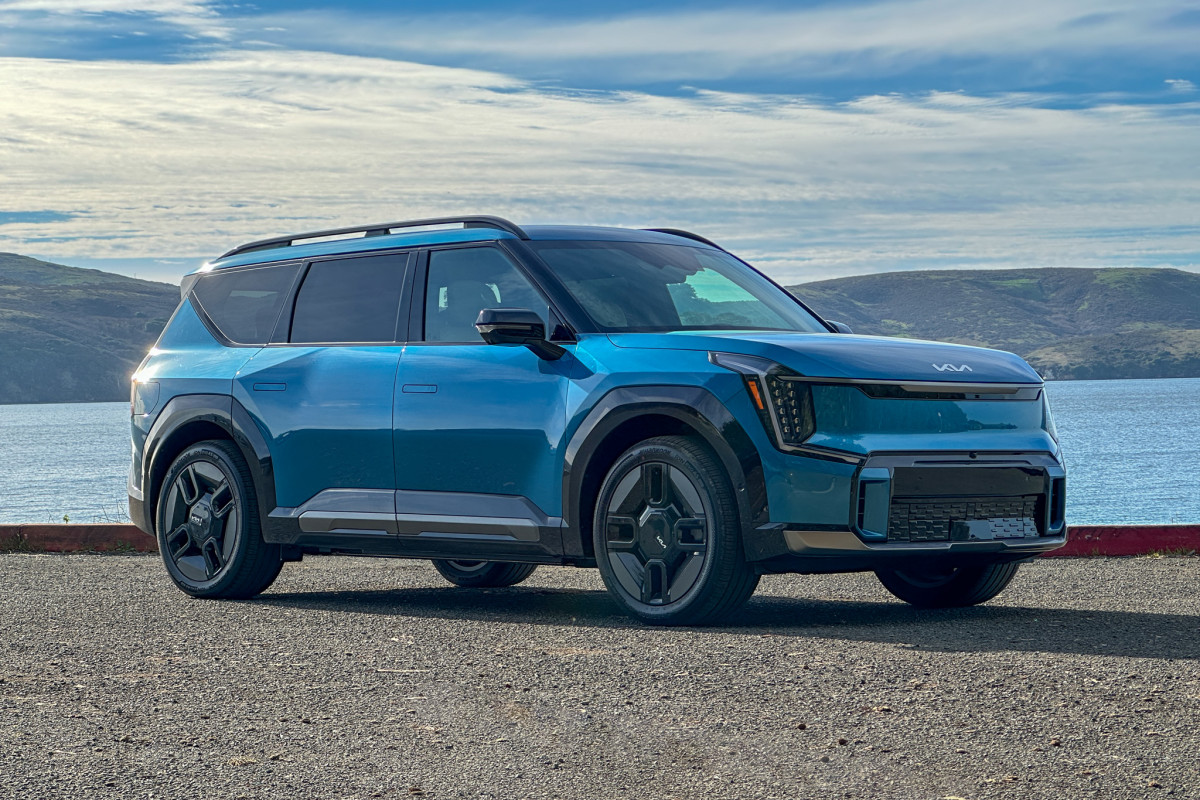
6. Kia EV9
Seating capacity: 7
Cargo space: 81.7 cubic feet
CarGurus expert rating: 8.5 out of 10
CarGurus user rating: 5 out of 5
Percentage of Good and Great Deals available on CarGurus: 17.9%
Overall CarGurus rating: 4.4 out of 5
| Pros | Cons |
|---|---|
| Spacious third row | Expensive |
| Exciting technology | Medium electric range |
| Stylish design |
If you want a boxy SUV that doesn’t feel like a throwback, the Kia EV9 fits the brief with sharp, squared-off styling cues (from the octagonal wheel arches to Kia’s “Digital Tiger Face” lighting look) and the kind of everyday ease that can help nervous first-time EV shoppers. It’s also one of the few fully electric three-row SUVs on sale, and that extra length and upright shape pay off in family-friendly packaging: there’s 20.2 cubic feet of cargo space behind the third row, 43.5 cubic feet with the third row folded, and 81.7 cubic feet with only the front seats in place, plus a high, flat load floor that’s easy to work with.
Powertrain choices range from the rear-wheel-drive Light model (215 hp, 258 lb-ft of torque, 230 miles of EPA-estimated range) to the Light Long Range (201 hp, 304 miles) if maximum range matters most. If you’re prioritizing all-weather traction, the dual-motor AWD trims (Wind and Land) bring 379 hp and 443 lb-ft of torque with 280 miles of range, while the GT-Line trades a bit of range (270 miles) for stronger shove, including 516 lb-ft of torque. On the tech side, the EV9’s three-screen curved display, standard wireless Apple CarPlay/Android Auto, and physical climate controls are welcome, and Kia’s deep over-the-air update plan—including the Kia Connect store for add-on features—could make the EV9 feel more current for longer than most. Kia says DC fast charging can take the battery from 10% to 80% in about 25 minutes, and the standard driver-assistance suite is broad even though NHTSA and IIHS scores weren’t available at the time of this review.
The CarGurus Verdict: "It looks like Kia’s got a winner on its hands. Well-appointed, comfortably sized, and offered at a price point fit to embarrass its luxury-brand rivals, the EV9 is a compelling package. Add to that its intuitive driving feel and its potential for later-term customization, and this just may be the ambassador vehicle it takes to bring the EV-wary over to the green side." - Natalie Harrington Read our most recent Kia EV9 review

7. Honda Passport
Seating capacity: 5
Cargo space: 100.8 cubic feet
CarGurus expert rating: 7.8 out of 10
CarGurus user rating: 4.4 out of 5
Percentage of Good and Great Deals available on CarGurus: 26.1%
Overall CarGurus rating: 4.3 out of 5
| Pros | Cons |
|---|---|
| Spacious interior and cargo capacity | Poor fuel economy |
| Improved off-road capability | High price |
| Easy-to-use technology | Still lacking key off-road features |
Redesigned for 2026, the Honda Passport leans hard into the boxy, outdoorsy SUV look with a flatter hood, an abrupt lower bumper for better approach angles, and a long 113.6-inch wheelbase that gives it big proportions on the road. Every trim wears 18-inch wheels (more sidewall for ride comfort and trail grip) and comes standard with Honda’s i-VTM4 AWD plus seven drive modes, including Trail and Tow. Power comes from a naturally aspirated 3.5-liter V6 making 285 hp and 262 lb-ft of torque, paired with a 10-speed automatic transmission, and towing is rated at up to 5,000 pounds; just know that while the TrailSport models add skid plates and available off-road camera views, the Passport still skips hardcore gear like a locking differential and low-range 4WD.
For everyday usability, the Passport’s squared-off shape pays off in a big way: 44 cubic feet of cargo room behind the rear seat and 83.8 cubic feet with the seat folded, plus strong rear-seat legroom for a two-row family hauler. The cabin also goes in the opposite direction of “everything in a screen,” keeping physical buttons and knobs, while upgrading to a 12.3-inch touchscreen with available Google Built-in (and standard wireless Apple CarPlay and Android Auto), a wireless phone charger, and a 10.2-inch digital driver display. Pricing rises into more premium territory, and fuel economy trails newer turbo or hybrid rivals (Honda estimates up to 19/25/21 mpg in RTL trim and 18/23/20 mpg in TrailSport models), while crash-test ratings for the new generation will need to be confirmed once IIHS and NHTSA testing is complete.
The CarGurus Verdict: "The 2026 Honda Passport is a well-rounded crossover SUV that shines with regards to cargo space and user-friendly tech. However, while the new Passport aims to be more capable off-road than its predecessor, it still lacks key features, such as a locking differential and low-range 4WD, not to mention it carries a high price tag. While not ideal for hardcore off-roaders (it is, after all, a unibody construction), the 2026 Honda Passport is a solid choice for family adventures in need of a comfortable and spacious crossover." - Matt Smith
Read our most recent Honda Passport review

8. Land Rover Defender
Two-door seating capacity: up to 6
Two-door cargo space: 58.3 cubic feet
Four-door seating capacity: up to 8
Four-door cargo space: up to 81.6 cubic feet
CarGurus expert rating: 7.5 out of 10
CarGurus user rating: 4.6 out of 5
Percentage of Good and Great Deals available on CarGurus: 31.2%
Overall CarGurus rating: 4.3 out of 5
| Pros | Cons |
|---|---|
| Multiple body styles | Poor fuel economy |
| Multiple powertrain options | Poor handling (on pavement) |
| Fun to drive | Poor visibility (to the rear) |
If you want a boxy SUV that’s more than a styling exercise, the Land Rover Defender is built around real capability, with 90 (two-door), 110 (four-door), and 130 (extended three-row) body styles to match how you’ll actually use it. The shape is unapologetically upright, and the cabin keeps a purposeful, industrial vibe while still offering upscale touches depending on trim. In Defender 130 form, it’s a legitimately comfortable three-row option—especially with the available captain’s chairs—though the tall step-in and the side-hinged, heavy rear cargo door can be daily annoyances in parking lots and tight garages.
On the road, the Defender’s boxy profile brings some wind noise, and this SUV prioritizes ride comfort and off-road composure over carving corners. In our testing, a turbocharged 3.0-liter inline-six mild-hybrid made 395 hp and 406 lb-ft of torque, paired with an eight-speed automatic and standard AWD with low range; it also tows up to 8,200 pounds. Off pavement, available tech like Terrain Response 2, an adaptive air suspension, wade sensing, and an off-road cruise-control system can make adventurous driving feel surprisingly approachable, while everyday tech is strong with an 11.4-inch Pivi Pro touchscreen, wireless Apple CarPlay/Android Auto, and helpful camera systems to offset the poor rear visibility. Just keep fuel economy expectations realistic, and remember that behind the third row the Defender 130 has 15.3 cu ft of space (43.7 cu ft with the third row folded, 89 cu ft max).
The CarGurus Verdict: "There is a Land Rover Defender for almost anyone, and any of them can take you farther into the wilderness than you expect. They’re rugged but refined, comfortable yet capable, and plenty of fun to drive. But the Defender comes at a cost, both on the window sticker and at the pump." - Christian Wardlaw
Read our most recent Land Rover Defender review
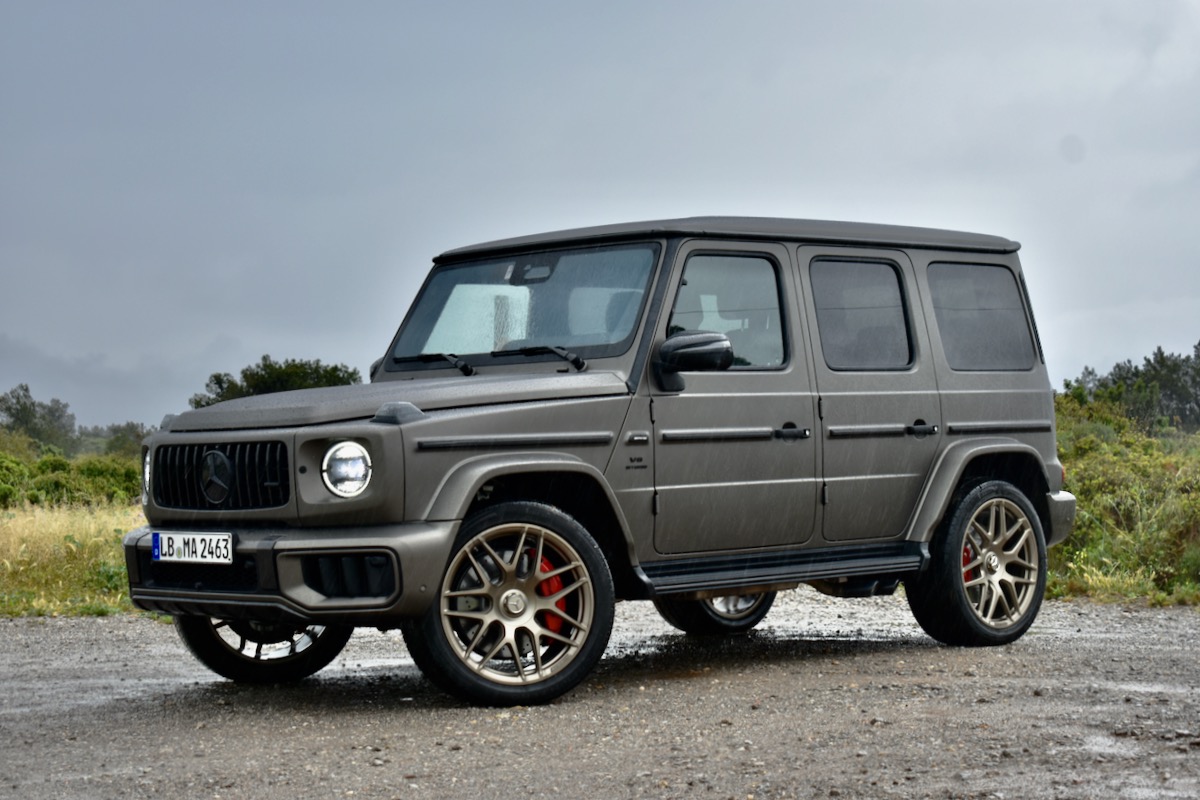
9. Mercedes-Benz G-Class
Seating capacity: 5
Cargo space: 70.3 cubic feet
CarGurus expert rating: 7.5 out of 10
CarGurus user rating: 4.5 out of 5
Percentage of Good and Great Deals available on CarGurus: 28%
Overall CarGurus rating: 4.3 out of 5
| Pros | Cons |
|---|---|
| Distinctive design | Not much cargo space |
| Powerful engines | Uncomfortable seats |
| Impressive off-road capability | Poor value for money |
If you want a modern boxy SUV that still looks and feels like a purpose-built 4x4, the Mercedes-Benz G-Class remains a distinctive mix of old-school toughness and high-end flash. For 2025 it gets updated powertrains and tech while keeping the squared-off proportions, flat hood, upright glass, and the famously hefty doors and latches that “clack” like nothing else in the luxury world. It’s also a legitimate trail machine: every gasoline G-Class comes with permanent 4WD and locking front, center, and rear differentials, plus off-road-friendly camera tech like “Transparent Hood” to help you place the nose over rocks (or avoid curbs around town).
For everyday usability, the G-Class is easier to park than many full-size luxury SUVs thanks to its relatively shorter length and narrower width, and it still provides the commanding, upright driving position some shoppers prefer. The tradeoff is space efficiency: cargo room is just 22.6 cubic feet behind the rear seats, and while towing capacity is a strong 7,716 pounds, it trails some rivals. Under the hood, the G 550 swaps to a turbo 3.0-liter inline-six with 443 hp and 413 lb-ft of torque, while the AMG G 63 keeps its twin-turbo 4.0-liter V8 with 577 hp and 627 lb-ft of torque; both add a mild-hybrid boost of 20 hp and 148 lb-ft at low speeds. Tech highlights include dual 12.3-inch displays, wireless Apple CarPlay and Android Auto, strong voice controls, and a robust suite of standard driver assists, though fuel economy and value are not core strengths for this kind of purchase.
The CarGurus Verdict: "The new G-Wagen is rougher around the edges than other luxury SUVs, but it still delivers when it comes to off-road capability and creature comforts." - Stephen Edelstein
Read our most recent Mercedes-Benz G-Class review
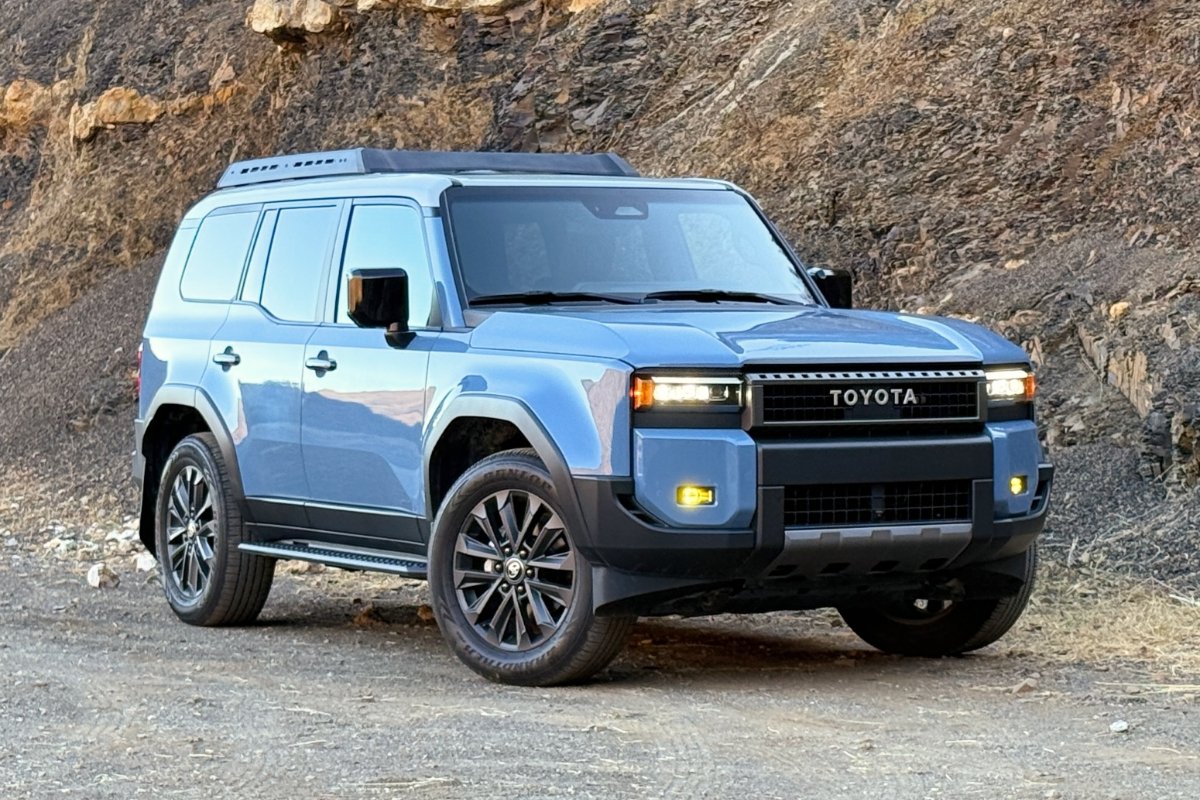
10. Toyota Land Cruiser
Seating capacity: 5
Cargo space: 82.1 cubic feet
CarGurus expert rating: 6.8 out of 10
CarGurus user rating: 4.6 out of 5
Percentage of Good and Great Deals available on CarGurus: 28.9%
Overall CarGurus rating: 4.2 out of 5
| Pros | Cons |
|---|---|
| Stylish design | Poor fuel economy |
| Impressive off-roading capability | Poor handling |
| Easy-to-use technology | Uncomfortable back seat |
If you’re shopping for a boxy SUV with real trail credentials, the 2025 Toyota Land Cruiser leans hard into a traditional two-box shape that favors upright visibility, usable ground clearance (8.7 inches), and a practical cargo area. Power comes from Toyota’s i-Force Max hybrid setup, pairing a turbocharged 2.4-liter four-cylinder with an electric motor for 326 hp and 465 lb-ft of torque, routed through a full-time 4WD system with locking center and rear differentials and up to 6,000 pounds of towing capacity. It’s a great fit for drivers who want one vehicle that can commute comfortably during the week and tackle rough roads on the weekend—just don’t expect it to feel nimble on a twisty road.
Inside, the Land Cruiser’s functional, button-forward cabin matches its rugged vibe, and the step up from the base 1958 trim is meaningful if you care about day-to-day comfort and features. The upgraded model brings larger 12.3-inch screens, and Toyota’s infotainment system includes wireless Apple CarPlay and Android Auto plus an excellent voice assistant; the Premium Package adds extras like a head-up display and a JBL sound system. Space is a strong point for a two-row SUV, with 46.2 cubic feet behind the second row and 82.1 cubic feet max, though the high load floor makes heavy items a lift—and the second-row seat itself isn’t as comfortable as the front seats for longer drives. The biggest real-world tradeoff is efficiency: despite a 23-mpg combined EPA estimate, our observed fuel economy was 15.7 mpg.
The CarGurus Verdict: "There is a lot to like about the Land Cruiser, especially if you don’t care about fuel economy. Our test vehicle averaged 15.7 mpg, falling well short of expectations. That thirst for fuel easily ranks as the worst thing about this SUV. Also, we recommend upgrading from the base 1958 trim level." - Christian Wardlaw
Read our most recent Toyota Land Cruiser review
Why Were Old Cars and SUVs Square or Boxy?
The boxy design of older vehicles wasn’t just a stylistic choice; it also reflected the manufacturing technology available at the time. In the mid-to-late 20th century, automakers lacked the advanced tools we have today, such as computer-aided design (CAD). Without CAD, vehicle designers relied on simple, straight lines and flat surfaces that were easier to design and manufacture. Additionally, square shapes required fewer intricate molds, which reduced production costs. Beyond technological limitations, boxy shapes maximize interior space, headroom and cargo capacity, appealing to families and utility-focused buyers. Think of the classic Volvo 240 series sedan or wagon, and you’re about there.
The boxy shape fell out of favor when new U.S. fuel economy standards were introduced in 1978, requiring automakers to improve mpg. Curved exteriors are more aerodynamic than boxy ones, so automakers began prioritizing this design to ensure they met the new standards.
The boxy aesthetic saw a short resurgence in the early 2000s with vehicles such as the Nissan Cube and Scion xB. These compact cars embraced quirky, niche designs and provided excellent interior space for a small vehicle, catering to a younger audience seeking something unconventional and at a relatively low starting price. At this time, automakers could embrace the boxy designs of the past due to advancements in engine technology that enabled them to still meet fuel efficiency standards despite their less aerodynamic shape. While their popularity was relatively short-lived, they demonstrated the enduring appeal of boxy designs for drivers looking for individuality and practicality in their vehicles.
Pros and Cons of Boxy Cars and SUVs
Pros:
- Spacious Interiors: Boxy designs optimize headroom, legroom and cargo space, ensuring passenger comfort and practicality.
- Retro Appeal: The boxy shape evokes nostalgia, blending classic design elements with modern innovation.
- Versatility: Boxy vehicles cater to many needs, from family travel to off-roading adventures.
Cons:
- Fuel Efficiency: Boxy shapes are less aerodynamic and can lead to lower fuel economy compared to streamlined vehicles.
- Wind Noise: Upright designs can increase wind resistance and more noise at highway speeds.
- Pedestrian Safety Concerns: Flat front ends with high grilles may pose increased risks in pedestrian collisions. For those embracing nostalgia or just looking for a practical design with ample interior space, the resurgence of the boxy design is a welcome diversion from the aerodynamic-focused vehicles of the past 15 to 20 years.
What Makes CarGurus Best Cars Guides Different?
Most car-shopping websites publish lists of the best cars across a variety of categories, with recommendations generally driven by editorial expertise. Here's what makes ours different: In addition to the insights and verdicts of our team of car-testing experts, our best cars guides take into account other factors that we know matter to buyers-real owner experiences and current market value.
Our expert reviewers are among this country's most trusted automotive journalists, also writing for publications including US News and World Report, Edmunds, Digital Trends, J.D. Power, and Car & Driver. They put each car through real-world testing and create detailed reviews of performance in a range of categories, from practicality and driving manners to cost-effectiveness and safety.
We also analyze hundreds of thousands of used car listings on CarGurus.com to track which models consistently offer the highest percentage of best deals relative to how many are listed for sale. Then we factor in reviews from owners-people who actually live with these cars every day. Our proprietary Best Cars algorithm then creates a final Overall CarGurus rating combining expert scores, user reviews, and the percentage of listings that have earned the Good or Great Deal rating. This multi-pronged approach reveals not just which cars excel on paper, but which ones deliver satisfaction and value when you're ready to buy.
The CarGurus market data used in this guide was last updated in March of 2026. Values were accurate at time of publication and should be used as a guide only.