The Porsche Panamera is Porsche's first-ever four-door sedan. It was introduced in 2009 and represented a big departure for the brand, if not as much of a shock as the Cayenne SUV that arrived a few years earlier. In truth, the Panamera's launch was a long time coming, since Porsche had been considering building a sedan since the 1950s. Many prototypes were created over the years and some were almost production-ready, but the concept was finally realised as the Panamera. After such a long gestation period, it was as accomplished as you'd expect. Not everyone was a fan of the looks, but all the Porsche design cues were present and correct and the long, wide body and domed roofline guaranteed good interior space. There was a large trunk, while the hatchback tailgate and folding seats provided versatility that's not far off what you get with a Cayenne. At the time of its launch, there weren't many direct rivals for the Panamera; you could cite the BMW M5 and high-end versions of the Mercedes-Benz CLS, but neither could offer the Panamera's hatchback practicality or outright glamour.
The Panamera has always had the performance and driving appeal to go toe-to-toe with any competitor. Initially available with massively powerful V8 engines, V6 versions with 300 horsepower or more soon followed. Hybrid and plug-in hybrid (PHEV) models joined the range, offering better fuel economy but equally wild acceleration. While base models are rear-wheel drive, the majority of Panamera models are all-wheel drive (AWD) and all have an automatic transmission. The Panamera Executive is a long-wheelbase variant that still provides sports car dynamics, along with limousine-like rear-seat legroom.
While the first-generation Panamera's styling wasn't to all tastes, there can be few complaints about the second-generation model that went on sale in 2016. Sleeker and sportier, it retained much of its predecessor's practicality yet looked more coupe-like and better resolved. It also offered an even more rewarding drive and similarly stellar performance, with a range of new turbo and twin-turbo engines and updated hybrid powertrains.
A new body style joined the range, in the form of the Panamera Sport Turismo. It's a 'shooting brake' rather than a pure wagon—still slinky but with a longer, squared-off roofline that gives extra cargo space and easier access to the back seats. Any concerns that the introduction of the Taycan EV in 2019 would spell the end for the Panamera were unfounded. Although the Taycan is a similar size and shape to the Panamera, a third-generation Panamera—again with gas or hybrid power—went on sale in 2024. It's a heavily updated version of the second-generation car, retaining much of its basic structure but featuring updated powertrains and tech and bodywork changes that go beyond the usual mid-life makeover.
Our Porsche Panamera buying guide gives you the lowdown on how this sports sedan has evolved over time, which are the best and worst versions and how much you're likely to pay for one.
Porsche Panamera Buying Guide: Cost, Reliability, and the Best Years to Buy
- Frequently Asked Questions
- Porsche Panamera Pros and Cons
- Porsche Panamera Generations
- Third generation (2025-present)
- Second Generation (2016-2024)
- First Generation (2009-2016)
Frequently Asked Questions
Which Porsche Panamera years are the best?
The Porsche Panamera has improved year-on-year and the latest, third-generation model is subjectively the best yet. The second-generation car looks very similar and still feels contemporary, though, so that's your best bet if you're looking for a more affordable used example.
What are the worst Porsche Panamera years?
The worst years for the Porsche Panamera are the earliest ones, with 2009-2011 models more prone to issues, according to sources such as carcomplaints.com, although they're still fairly low in number.
Is a used Porsche Panamera a good deal?
A used Porsche Panamera could be a great deal if you're looking for a car that has all the quality, driving appeal and performance you expect of the brand, along with four-door practicality. Running costs are likely to be high, but the Panamera has a real feel-good factor and there's nothing else quite like it out there.
Porsche Panamera Pros and Cons
Pros:
- All versions are powerful and rewarding to drive
- Spacious, top-quality interior
- Many hybrid options available
Cons:
- Some versions are expensive
- Design of first-generation model not to all tastes
- Thirsty V8 engines
Porsche Panamera Generations
Third generation (2025-present)
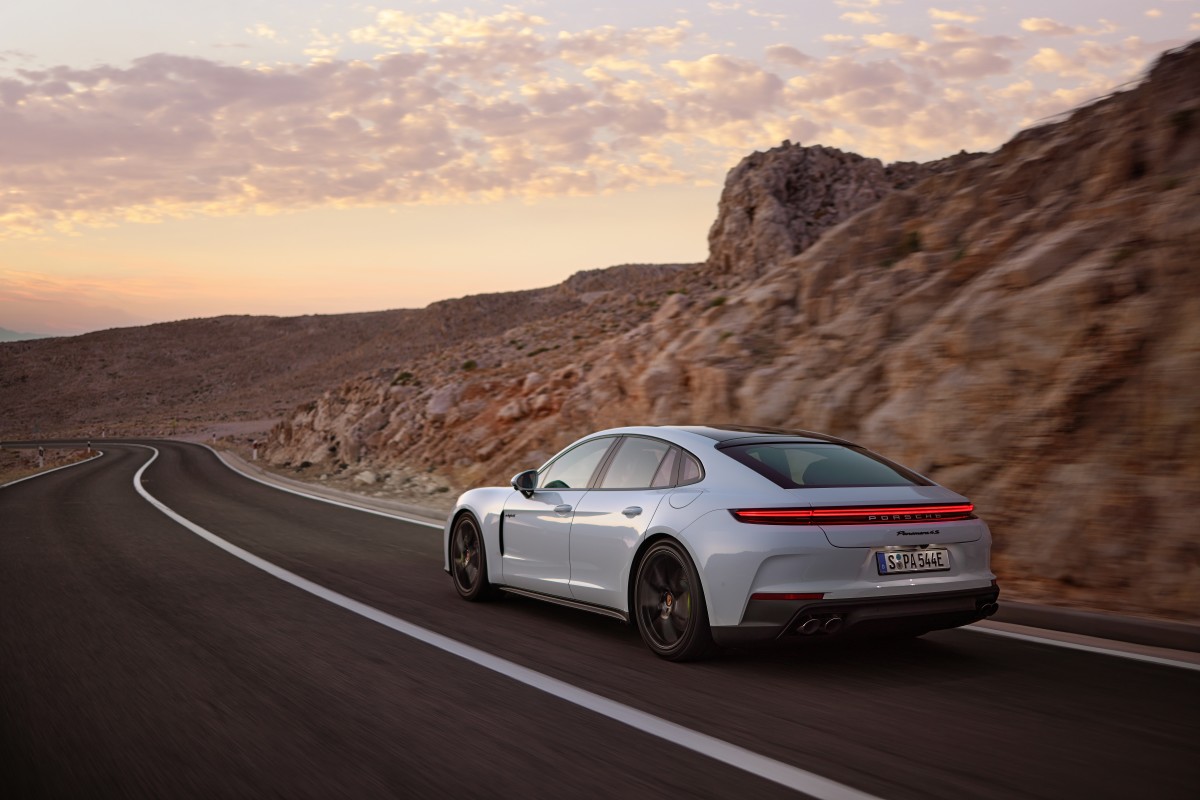
The latest, third-generation Porsche Panamera looks uncannily similar to the second, but Porsche says that only about 30% of components are carried over. That includes the side doors, but there are fresh front and rear sections incorporating the latest Porsche styling themes, including squarer headlights and a more pronounced rear light bar. As ever, the Panamera is a beguiling mix of sportiness and luxury, and all versions are enjoyable and comfortable to drive. They're all fast, too, some outrageously so, and most are now plug-in hybrids. Although the similarly-sized Taycan EV flies the flag for pure-electric power, the Panamera shows that there's life in the combustion engine yet—for Porsche, at least.
A slimmed-down range reflects the fact that the Panamera is now a niche model. The Panamera Sports Touring model has been dropped, while the overall lineup has shrunk. The Panamera continues as the entry-level model, with an updated 2.9-liter V6 engine pumping out 348 horsepower. It's rear-wheel drive, whereas the Panamera 4—like every other model in the range—is all-wheel drive. Next up is the Panamera 4 E-Hybrid, a plug-in hybrid version that adds a 187-horsepower electric motor for a combined total of 463 horsepower and a 0-60mph time of less than four seconds. The Panamera 4S E-Hybrid has a more powerful 2.9-liter engine, giving a total of 536 horsepower. As ever, the Panamera GTS is a sporty derivative with some motorsport-influenced mods. It's powered by a twin-turbo 4.0-liter V8 that pumps out 493 horsepower. The Panamera Turbo E-Hybrid delivers supercar performance, with a plug-in hybrid powertrain that pairs the 4.0-liter V8 with an electric motor for 512 horsepower, 0-60 mph in 3.0 seconds and a top speed of 196 mph. Those are crazy figures, but crazier still is the Panamera Turbo S E-Hybrid. With power from its 4.0-liter V8 ramped up to 591 horsepower, it gives a combined total of 771 horsepower, with a mammoth 737 lb ft of torque and a 0-60 mph time of 2.9 seconds.
To say that standard equipment for the latest Panamera is comprehensive is an understatement, but then it ought to be for a car that now has an entry-level MSRP of more than $113,000. At the very least, all versions have adaptive air suspension, LED headlights, a heated steering wheel, 14-way electric front seat adjustment, a panoramic roof, front and rear parking sensors and a rear-view camera, a power tailgate, wireless charging and Apple CarPlay/Android Auto integration. Advanced driver assistance features fitted as standard include Lane Change Assist, Lane Keep Assist and an automatic braking function. Higher-spec models are loaded with features, although there's still a wealth of available options that can add tens of thousands to the price. Bearing in mind that the range-topping Panamera Turbo S E-Hybrid already costs more than $245,000 to start with.
For 2026, Porsche significantly enhanced the Panamera's digital ecosystem. The new Porsche App Center provides direct access to a wide range of third-party apps that can be used within the Panamera's infotainment system, and Amazon's Alexa is now a digital assistant that drivers can use to control smart home functions like garage doors and lighting. Additionally, for Panameras equipped with the Bose or Burmester audio systems, Porsche introduced Dolby Atmos immersive sound technology. Perhaps most importantly, Porsche's connectivity package is included as standard for 10 years on all 2026 model Panameras, eliminating subscription fees during that period.
It's too early to judge the reliability of the latest Porsche Panamera, but given that it's an improved version of the previous model, the omens are good, and it should be a dependable choice.
Third-generation Panamera models have started filtering through to the used market already, and, so far, you can expect only a minimal saving—if any—on the MSRP of a new car. The average price for a used 2025 Panamera is $118,500.
Second Generation (2016-2024)
The second-generation Porsche Panamera—introduced in 2016—built on the success of the first, with a similar blend of sportiness and luxury. Objectively, there wasn't a huge amount wrong with the first Panamera, although many never warmed to its rather ungainly proportions. Although it has very similar dimensions to its predecessor, the second Panamera looks much more 'Porsche-like'—less a big hatchback with Porsche details grafted on, and more like a family-friendly 911. The interior is similarly upgraded, retaining the generous passenger space and sense of luxury of the previous car but with a more minimalist, modern design, including large infotainment/display screens.
The basics of the chassis and powertrains are similar, so there are six-cylinder and eight-cylinder models, all now with an eight-speed PDK dual-clutch automatic transmission. The entry-level Panamera has a 3.0-liter V6 engine and rear-wheel drive, with every other version having all-wheel drive. Moving up from the Panamera 4 to the Panamera 4S gets you a 2.9-liter twin-turbo V6 with 440 horsepower, while the Panamera Turbo has a 550-horsepower twin-turbo V8. The range of plug-in hybrid models expanded for the second generation. The Panamera E-Hybrid combines the 2.9 V6 with a 136-horsepower electric motor for a total of 462 horsepower, while the Panamera Turbo S E-Hybrid adds the same electric motor to the Turbo S drivetrain for a total of 680 horsepower. The Panamera GTS joined the range in 2018 and, as with the first Panamera, it has a range of chassis and cosmetic tweaks to give it an especially sporty look and feel. Power comes from a twin-turbo 4.0-liter V8 with 460 horsepower.
The Panamera Sports Turismo joined the range in 2017. This new body style is best described as a 'shooting brake'—it's not an all-out estate but a longer, squarer rear body section, lower load height and extra trunk space make it more practical. Long-wheelbase Panamera Executive versions of the sedan are a carryover from the first-gen car, and provide palatial rear legroom and extra luxury features.
A range update in 2020 involved the usual round of cosmetic, tech and power upgrades. Exterior changes give a sportier look, while the interior has an updated infotainment system. The Panamera base model switched to a twin-turbo 2.9-liter V6 in place of the previous single-turbo 3.0-liter unit, while a new Turbo S model with a 620-horsepower version of the Turbo's 4.8-liter V8 gives a 0-60 mph time of less than three seconds for standard-wheelbase models.
All models are very well-equipped, with the base model having a panoramic roof, heated front seats, a reversing camera, leather upholstery, LED headlights, Apple CarPlay/Android Auto compatibility and much more as standard.
The second-generation Porsche Panamera, like most of the brand's models, has a good reliability record, and Porsche has consistently ranked as one of the top car makers in the annual J.D. Power U.S. Vehicle Dependability Study in recent years.
If you want a second-generation Panamera, the good news is that sub-80,000-mile examples start at about $35,000. You can spend a lot more than that, of course, and V8s start at just under $60,000. Prices for top-of-the-line 2023 or 2024 cars are upwards of £150,000.
First Generation (2009-2016)
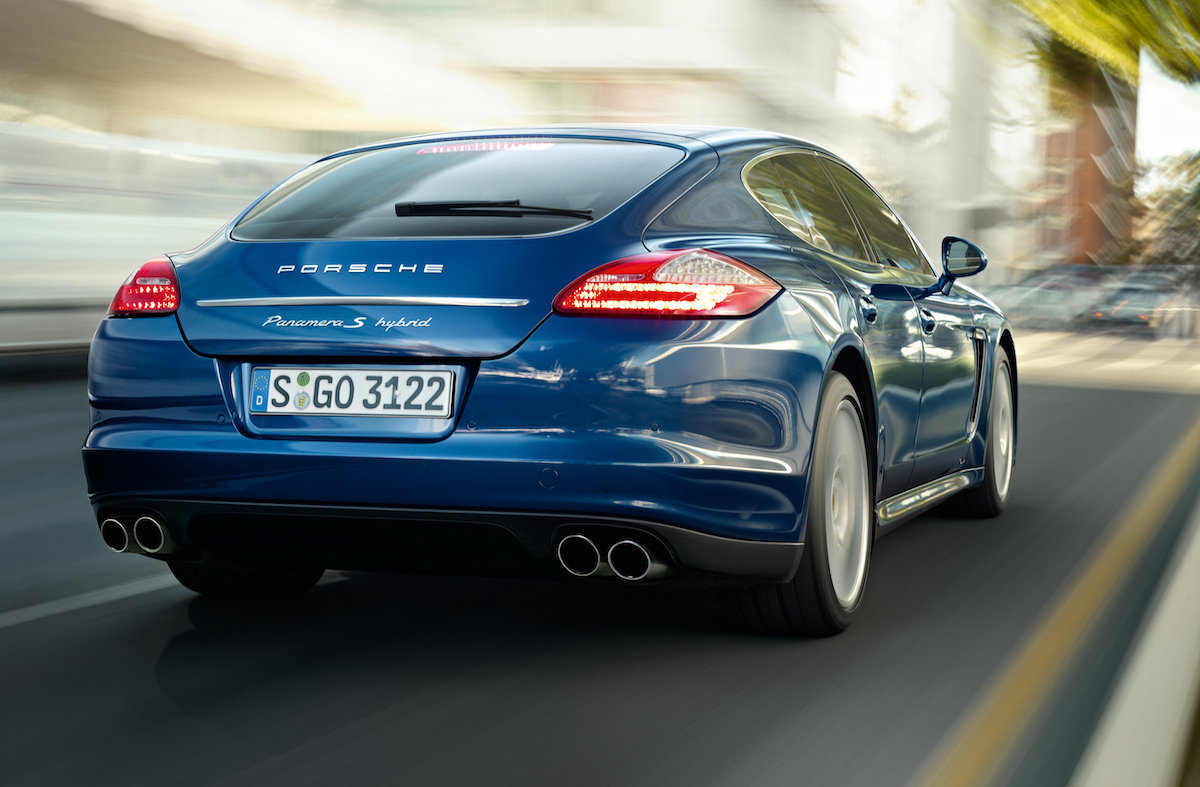
The first-generation Porsche Panamera arrived seven years after the Cayenne SUV, so it wasn't the first four-door Porsche. It was something new for Porsche, though—a spacious, high-end four-seater that's part sport-sedan, part luxury car. As such, it's an alternative to a handful of high-performance sedan and coupe models—although none offer quite the same mix of sports car dynamics and refined luxury.
Porsche hasn't altered the Panamera formula much over the years, with the first-generation model getting most things right off the bat. Despite being comparatively large and heavy (most versions weigh more than 4,000 lbs), the Panamera handles with real precision and every version is fast. Even the earliest, least-powerful version—the Panamera—has 300 horsepower, courtesy of a naturally aspirated 3.6-liter V6. The Panamera 4 has the same engine but adds all-wheel drive for a 0-60 mph time of 5.8 rather than 6.0 seconds. The Panamera S and 4S have a naturally aspirated 4.8-liter V8 with 400 horsepower, good for 0-60 mph times of 5.2 seconds and 4.8 seconds. The Panamera Turbo and Panamera Turbo S have twin-turbo versions of the V8, with 500 horsepower and 550 horsepower, respectively. Both have all-wheel drive as standard and can hit 60 mph in four seconds or less. The rear-wheel-drive Panamera S Hybrid arrived in 2011, combining a supercharged 3.0-liter V6 with a 47-horsepower electric motor for a total output of 380 horsepower and a 0-60 mph time of 5.7 seconds. While the S Hybrid has an eight-speed 'Tiptronic' conventional automatic transmission, all other models have a seven-speed PDK dual-clutch automatic transmission.
Porsche gave the Panamera range a comprehensive update in 2013. A new design for the tailgate, lights and bumpers gives it a sharper look, while the engine range was revised. Power for the Panamera and Panamera 4 was increased, while the V8 of the S and 4S models was replaced by a new 3.0-liter twin-turbo V6 with more power. A new Panamera GTS model with an overtly sporty character and naturally aspirated 440-horsepower V8 joined the range below the Turbo, which had power increased to 520 horsepower. The Panamera S Hybrid, meanwhile, was replaced by the Panamera S E-Hybrid—a plug-in hybrid (PHEV) version with more power and a pure-electric range of 22 miles. It's the most fuel-efficient first-generation Panamera and has the lowest CO2 emissions, although combined fuel economy is still only 33 mpg. The other models in the range get around 20 mpg or less. Alongside the usual round of mid-life tech and equipment upgrades, Porsche also added new Panamera Executive models to the range. These long-wheelbase versions—available in Turbo Executive or 4S Executive form—add an extra 5.9 inches between the axles (as well as additional equipment) to make them true rivals to luxury limos such as the Mercedes-Benz S-Class. An updated Turbo S model followed a few months later, now touting a monstrous 570 horsepower and maximum torque of up to 590 lb-ft (including overboost), as well as a top speed of 192 mph.
As you'd expect of a luxury sedan, standard equipment for all versions is generous. And, as is the way with Porsche, the more power the engine has, the more features you get. At the very least, you can expect automatic climate control, bi-xenon headlights, a part-leather interior and a range of advanced safety features. While Panamera and Panamera 4 models have standard steel suspension, S and 4S versions have Porsche Active Suspension Management (PASM), which has selectable modes, and higher-powered models have adaptive air suspension. When new, you could configure the Panamera with a huge variety of individual options and option packs, allowing a huge degree of personalization in the way it looks and drives. Highlights include privacy glass, noise-reducing windows, a Sport Chrono package, ceramic brakes and, from the 2013 model year onwards, LED headlights.
The first-generation Porsche Panamera feels like a high-quality product and is generally a reliable choice. There's a known issue that affects early V8 models, with camshaft bolts prone to shearing, mainly in 2010-2011 cars. Otherwise, it has a solid reputation, but it's worth bearing in mind that any replacement parts are likely to be costly and the earliest cars are now 15 or more years old.
You can pick up a leggy, high-mileage Panamera from about $15,000, but you're probably better off spending a bit more for one with less than 80,000 miles on the clock. In which case, budget for at least $20,000. Later, high-spec cars can cost $50,000 or more.