It was the early 2000s and Porsche was up against the ropes, financially. With only the iconic 911 and the new-ish Boxster at dealerships, it was clear that the sports car manufacturer needed a savior. The solution was the Porsche Cayenne, a midsize SUV with roots in the then-new Volkswagen Touareg. That sent Porschephiles into a frenzy, convinced this was the end of Porsche as we knew it.
That obviously didn't happen and the Cayenne went on to be a huge success, helping to save Porsche from an uncertain fate. It seems that once those critics finally got behind the wheel, they realized that it did indeed deserve the Porsche badges, delivering the kind of performance and polish for which the brand was known. It also didn't hurt that the Cayenne had a supporting role in the Sopranos, cementing its place among wealthy suburbanites as the hot car of the moment.
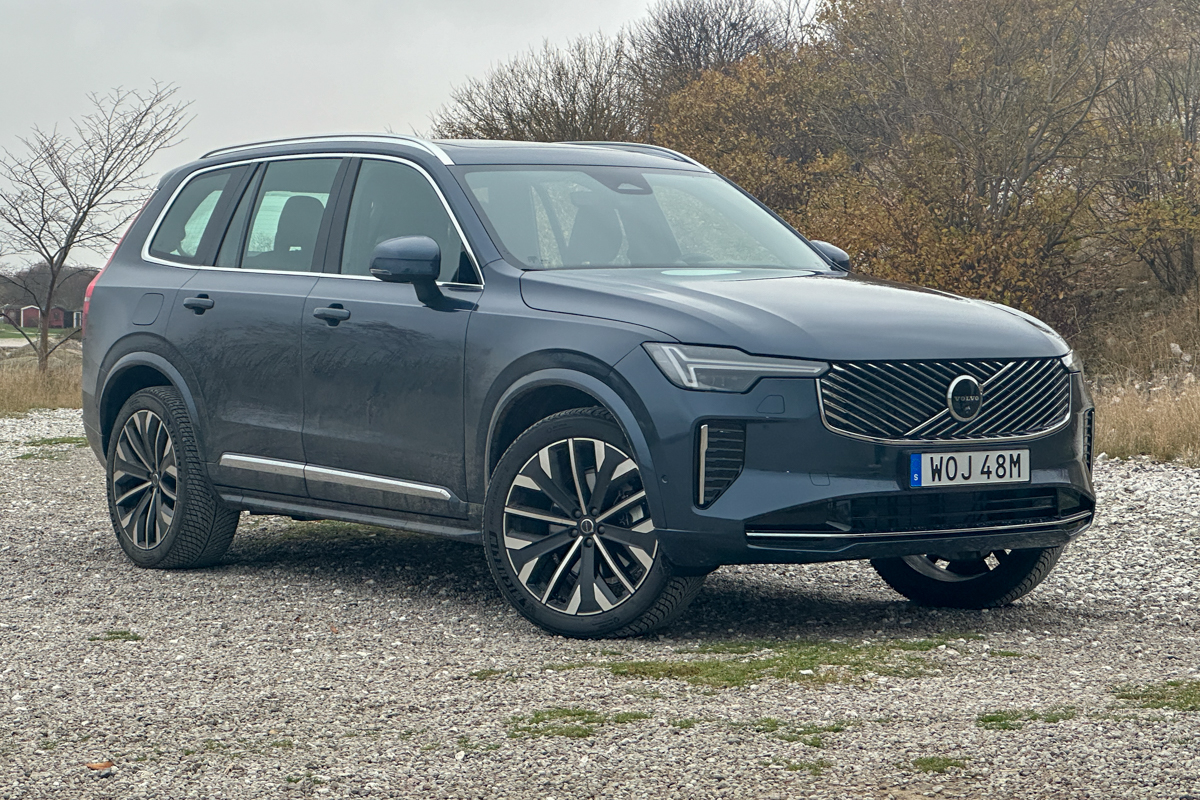
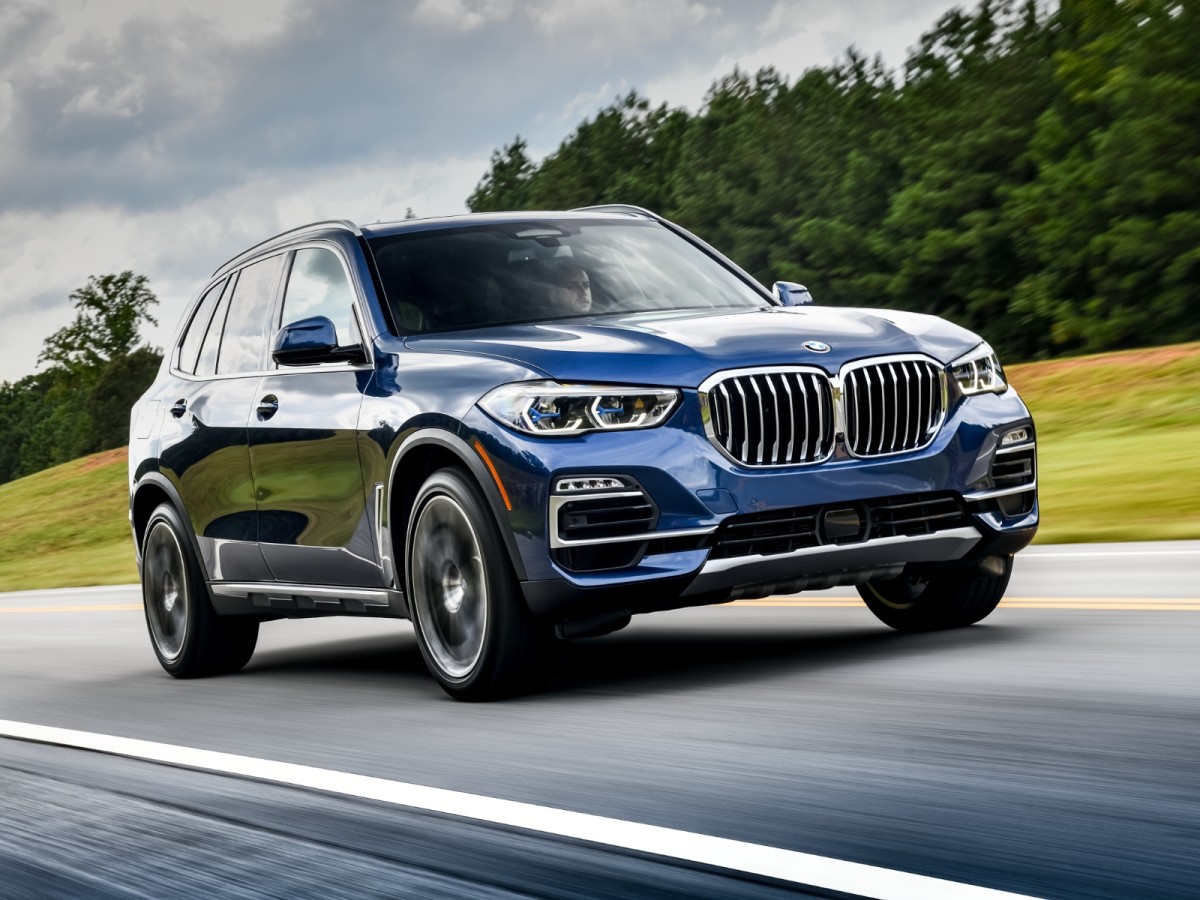
More than two decades later, the Porsche Cayenne remains a very desirable sporty SUV. In that time, other carmakers have followed suit, either developing their own SUVs or adding high-performance versions of existing models. These include the BMW X5, the Mercedes-Benz M- and GLE Class, and the Audi Q7. On the higher end, the Bentley Bentayga, the Aston Martin DBX, the Jaguar F-Pace, and the Range Rover Sport are also worth considering. There are also two sub-models of the Cayenne that we cover separately: the Cayenne Hybrids and the Cayenne Coupes.
Porsche Cayenne Buying Guide: Cost, Reliability, and the Best Years to Buy
- Frequently Asked Questions
- Porsche Cayenne Pros and Cons
- Porsche Cayenne Generations
- Third Generation (2019 - present)
- Second Generation (2011 - 2018)
- First Generation (2003 - 2010)
Frequently Asked Questions
Which Porsche Cayenne years are the best?
The most recent third-generation Cayennes are easily the best in the vehicle's history. As you'd expect, they're more powerful, efficient, and advanced than any of its predecessors, but they'll also cost you an arm and a leg. We're confident that the base Cayenne in any year would easily satisfy most drivers. Opting for higher trims makes sense for those who want even more performance, otherwise, you could be paying extra for something you really don't need.
Which Porsche Cayenne years are the worst?
For the most part, there aren't any conventional Cayennes that stand out as being bad. The only ones we would avoid are the early Hybrid models that debuted in 2011. We cover those in a separate review, but they suffered with inconsistent drive issues that left the you guessing as to how the SUV would react to pedal inputs, whether it was for acceleration or braking.
Is a used Porsche Cayenne a good deal?
As is the case with many luxury vehicles, the first owner loses the most value in the first two or three years, which could be more than 50 percent of the original price. That means a Cayenne coming off of a lease could be an excellent deal, as you won't have to contend with nearly as much depreciation.
We would caution potential owners to pay close attention to the warranty coverage. Not because of any mechanical deficiencies, but rather because Porsche maintenance and repairs are notoriously expensive. Depending on the mileage and age, we'd suggest hunting for a certified pre-owned model or adding an extended warranty.
Porsche Cayenne Pros and Cons
Pros:
- Strong performance
- Refined interior
- Sturdy construction
Cons:
- Expensive with few standard features
- Limited cargo capacity
- Pricey maintenance
Porsche Cayenne Generations
Third Generation (2019 - present)
The third-generation Cayenne debuted in 2019 and measured about 2.5 inches longer than the model it replaced, but it was also slightly lighter. In Porsche tradition, this latest iteration was more of an evolution than a typical redesign. Every aspect of the bodywork was restyled, but it still took a keen eye to tell the difference between new and old. As expected, power output also increased.
Initially, the new Cayenne was available in S and and Porsche Cayenne Turbo guises, and also as the Porsche Cayenne E-Hybrid (reviewed separately). These models were largely distinguished by their powertrains, with some minor features added along the way. The base Cayenne was anything but basic, with a 3.0-liter turbocharged V6 engine that produced 335 horsepower and 332 pound-feet of torque. The Cayenne S upgraded to a twin-turbo 2.9-liter V6 with specs of 434hp and 406 lb-ft of torque, while the top Turbo model kicked down the door with a twin-turbocharged V8 that cranked out 541hp and 561 lb-ft. An eight-speed automatic was the only transmission offered, and all-wheel drive was standard.
Besides the more powerful engine, the Cayenne S gained an adaptive suspension system called Porsche Active Suspension Management (PASM) and a panoramic sunroof. Stepping up to the Turbo added the Sport Chrono package (dash-mounted stopwatch, drive mode dial on the steering wheel, and launch control. You also got an additional Sport Plus drive mode and a Sport Response button that gives you a power boost for 20 seconds, an adaptive air suspension, upgraded brakes, and sport seats.
For 2020, the lineup grew to include a new 670hp S E-Hybrid, which we cover in a separate review. In 2021, the GTS trim returned to the Cayenne stable, offering shoppers an enticing middle ground between the conventional Cayennes and the Turbo. It featured a turbocharged 4.0-liter V8 that produced 453hp and 457 lb-ft of torque, a sports exhaust system, and torque vectoring for improved handling and traction.
The following year, a new Platinum Edition trim debuted as an add-on for the base and S trims. It added silver and gloss black styling accents, 21-inch wheels, keyless entry, a premium sound system, sports seats, interior ambient lighting, and a panoramic sunroof. It must not have been as popular as Porsche had hoped, as those Platinum models were discontinued a year later. The infotainment system also received some updates, the most prominent being Android Auto functionality.
There were no significant changes for 2023, likely in preparation for the numerous updates planned for 2024. That year brought a minor styling refresh inside and out, along with a bump in power and a tuned suspension system that promised better handling and comfort. The base Porsche Cayenne model now produced 348hp while the Cayenne S jumped to 468hp. The GTS also took a brief hiatus, and the Turbo model was replaced by the 729hp Turbo E-Hybrid.
The GTS returned in 2025, with a power increase to 493hp and 487 lb-ft of torque and performance enhancements that were borrowed from the Cayenne Coupe Turbo GT (a less practical version of the Cayenne with a fastback body style). A surround-view camera system was also moved from the options list to standard equipment.
Not surprisingly, the Hybrid Cayenne variants were the efficiency leaders of the lineup, with up to 17 miles of zero-emission range from the electric motor and 21 mpg in combined city and highway driving. The base Cayenne was also estimated at 21 mpg combined, while the GTS and the top-end Turbo model dropped to 17 mpg. The 2022 model year adjusted the fuel economy downwards, but only by a few mpg, with the base model rated at 19 mpg and the V8 models at 16 mpg.
Neither the National Highway Traffic Safety Administration (NHTSA) nor the Insurance Institute for Highway Safety (IIHS) have evaluated the Porsche Cayenne in their respective crash tests. That's not uncommon for high-end luxury and exotic sports cars with high MSRPs, and some direct rivals also lack this information.
Initially, the Cayenne came with only frontal collision warning with automatic emergency braking. In the following years, many previously optional features were added as standard equipment. These included a blind-spot monitor with rear cross-traffic alert, lane-keep assist, parking proximity sensors, a semi-automated parking system, and a traffic sign reader. Options included adaptive cruise control, a head-up display, night vision, and remote driverless parking.
As far as recalls go, the third-generation Cayenne has been relatively trouble-free. The most concerning issue was a front suspension control arm problem for the 2024 model year. Other minor recalls were issued for brake pad indicators, delayed camera activation, loose shock absorbers, faulty seat belt buckles, a transmission fluid leak, rear axle alignment and fasteners, and airbag activation problems.
With as few recalls as the Cayenne had, it makes sense that it is regarded as one of the more reliable choices in the luxury SUV class. Despite this, the Cayenne is prone to disproportionate depreciation. For example, you could expect a base 2019 Cayenne to lose over 50 percent of its value in the first three years of ownership, and more luxurious versions will likely lose even more value over the same time.
That's not an indictment of the Cayenne as much as the market it's intended for. At this level, having the newest or hottest model is of greater importance to wealthier clients with generous budgets.

Second Generation (2011 - 2018)
The second-generation Cayenne debuted in 2011 with revised styling that reflected the 911 sport coupe of the era. The compound "fried egg" headlights were simplified, and the grilles adopted a simpler, elegant look. The overall shape and personality remained easily recognizable, and it was about two inches longer than its predecessor.
Three standard models kicked off the new generation, with the base Cayenne, the Cayenne S, and the Turbo on top, while a new S Hybrid also joined the lineup. The base Cayenne came with a 3.6-liter V6 that produced 300hp and 295 lb-ft of torque. A six-speed manual was the standard transmission and an eight-speed Tiptronic S automatic was optional. This model also came standard with rear-wheel drive, with all-wheel drive available as an option.
The Cayenne S stepped up to a 4.8-liter V8 that made 400hp and 369 lb-ft. It was only offered with the Tiptronic automatic transmission and all-wheel drive. The top Turbo trim received a twin-turbo V8, with power increasing to 500hp and 516 lb-ft of torque.
The base Cayenne came with standard features including a power liftgate and leather seats, while the Cayenne S upgraded to a sportier steering system and added a sunroof. The Turbo topped off the features list with the PASM system, upgraded headlights, sport seats, a navigation system, and a Bose audio system.
In its sophomore year, the Cayenne added a blind-spot monitor, while the Turbo gained two options: larger carbon-ceramic brake rotors and a power boost function that was good for an additional 40hp.
A new diesel variant joined in 2013 as well as a GTS trim that supported the Turbo model. The diesel utilized a 3.0-liter V6 that produced 240hp and 406 lb-ft of torque. The Cayenne GTS squeezed 420hp and 380 lb-ft from the Cayenne S' V8, and further benefited from a height-adjustable PASM system and many of the performance upgrades from the Turbo.
In typical Porsche fashion, the Turbo alone wasn't enough, and in 2014, the Turbo S became the new king of the Cayennes. Power increased to 550hp and 553 lb-ft, and owners also got more serious active suspension and torque vectoring. The Sport Chrono package and other aesthetic enhancements were also included.
The Cayenne reached a turning point in 2015, as it underwent a significant mid-cycle refresh. The styling received only minor tweaks, but bigger changes were afoot under the hood. The Cayenne S ditched its V8 for a 3.6-liter turbocharged V6 that produced 420hp and 406 lb-ft of torque, while the Turbo model's suspension was retuned. New features included a surround-view camera system and available ventilated rear seats. The Turbo S and the GTS trims were put on hold for this year, too.
The return of the GTS in 2016 saw it take the Cayenne S' turbo V6 and increase output to 440hp and 443 lb-ft, while the V8-powered Turbo S jumped to 570hp and 590 lb-ft. In 2017, a new infotainment system was introduced, along with Apple CarPlay and a Platinum Edition model that was limited to aesthetic changes. The diesel powertrain was discontinued after the Volkswagen Dieselgate scandal.
Second-generation Cayenne models varied from a high of 19 mpg in combined city and highway driving down to 17 mpg combined for the Turbo model and 15 mpg for the Turbo S. The S Hybrid was the efficiency leader by a small margin, rated at 21 mpg combined. In its brief appearance, the diesel was estimated as high as 24 mpg combined.
This era saw the rise of advanced safety features and driver aids, but you had to pay extra for them. They included frontal collision warning with automatic emergency braking, a blind-spot monitor, lane departure warning, adaptive cruise control, a rearview camera, and parking proximity sensors. Crash tests were not performed or published for these Cayennes.
Between 2011 and 2018, the Porsche Cayenne received very few recalls, and the most serious problems (valvetrain, turbo, fuel injectors, and alignment) were addressed immediately. Other minor issues included problems with the headlights and the brake pedal. On the whole, these second-generation Cayennes deserve praise for their build quality and dependability, though that may not be as apparent for the first owner when it comes time to sell. It should also be pointed out that out-of-warranty repairs can be prohibitively expensive, so this could be a case where an extended warranty might actually come in handy.
Like most high-end luxury vehicles, the Cayenne loses a lot of value in its first three years of ownership. That's great if you're looking to buy but terrible if you're the one selling. The good news is that once you get past the first three or four years, the price decline slows to a more typical rate.

First Generation (2003 - 2010)
The first Cayenne debuted in 2003 and was offered in two flavors. The entry-level Cayenne S was powered by a 4.5-liter V8 engine that produced 340hp and 310 lb-ft of torque. The Turbo model added a pair of turbochargers for a stout 450hp and 457 lb-ft. Both were paired with a six-speed automatic transmission, and all-wheel drive was standard.
The 2004 lineup grew to include a V6-powered base model, simply called the Cayenne. This 3.2-liter V6 produced 247hp and 229 lb-ft of torque. There weren't any new trim levels for 2005, but a six-speed manual transmission was made available with the V6 model. New features included a standard power liftgate and an available panoramic sunroof and rearview camera. The Turbo trim also gained an option that increased power to 500hp and added upgraded brakes.
The 2006 model year gave shoppers a new range-topping target with the Cayenne Turbo S. As expected, power increased to 520hp and 530 lb-ft, but this high-performance model went further by firming up the suspension, improving brake performance, and retuning the stability control.
In a somewhat odd move, the Cayenne went on hiatus for the 2007 model year, despite being Porsche's best-seller at the time. That strategy made sense when a refreshed Cayenne reappeared in 2008. Styling changes were minimal, with the powertrains getting most of the attention. The base V6 increased output to 290hp and 273 lb-ft of torque, while the Cayenne S jumped to 385hp and 369 lb-ft thanks to a new 4.8-liter V8. A new Porsche Cayenne GTS model took the same engine and bumped up the power yet again to 405hp and was also available with a manual transmission. The Turbo also increased to 500hp and 516 lb-ft, but the Turbo S was still in development.
The Turbo S returned the next year with 550hp and 553 lb-ft of torque, and 2009 also brought a new infotainment system with a touchscreen interface, iPod/iPhone integration, and satellite radio. Performance-wise, carbon-ceramic brakes were available on V8 models. Changes were light in 2010, the first-generation Cayenne’s final year, and the most significant was a new Transsyberia special edition that started with the GTS and added some off-road abilities on top of the Off-Road Technology package.
Fuel economy figures for the first-generation Cayenne were low by today's standards and slightly below those of other SUVs at the time. Both the Cayenne S and the Turbo were initially estimated at 14 mpg in combined city and highway driving. The base V6 model did only marginally better at 15 mpg combined, whether you went with the automatic or manual transmission. Some models improved by one mpg in 2008, but the Turbo remained at 14 mpg, while the GTS was rated at 13 mpg.
As is typical, the first year of production saw the most recalls for the Cayenne. These included issues with the fuel pump and tank, the parking gear, and the dash wiring. Some minor problems with the headlights, the steering, the suspension, the seatbelts, and the seat frame were also reported. The more serious issues were addressed quickly.
Early Cayenne models held their value well, but as time wore on and they became more common, depreciation began adjusting to be more in line with that of other luxury vehicles. That means the first owner lost a lot of value in the initial years, with the decline leveling off afterwards.