Fuel efficiency has become a top priority for many car shoppers, and for good reason. With fluctuating gas prices, getting more miles out of every gallon is a practical way to manage your budget. Small SUVs offer a compelling solution, blending the higher driving position and versatile cargo space that drivers love with the kind of fuel economy that was once reserved for small sedans. This combination makes them an excellent choice for daily commuters, small families, and anyone looking to reduce their trips to the gas station without sacrificing practicality.
The market for fuel-sipping SUVs in 2026 is more diverse than ever, offering a range of options to fit different needs and budgets. Whether you prefer a traditional gasoline engine, like the efficient Chevrolet Trailblazer, or a sophisticated hybrid powertrain, found in models like the Kia Sportage Hybrid and Toyota RAV4 Hybrid, there's a vehicle on this list for you. Many of these models also offer the security of all-wheel drive (AWD) without a major penalty in fuel consumption, proving that you don't have to choose between capability and economy. This guide will walk you through the top contenders, highlighting their real-world benefits to help you make a confident choice.
Our Top Small SUVs with the Best Gas Mileage in 2026
- Chevrolet Trailblazer
- Honda CR-V Hybrid
- Hyundai Tucson Hybrid
- Kia Niro Hybrid
- Kia Sportage Hybrid
- Lexus UX Hybrid
- Mazda CX-50 Hybrid
- Nissan Rogue
- Toyota Corolla Cross Hybrid
- Toyota RAV4 Hybrid
FAQs What Makes CarGurus Best Cars Guides Different Shopping Tools Related Topics

1. Chevrolet Trailblazer
2026 EPA-rated fuel economy: 31 mpg combined FWD, 27 AWD
CarGurus expert rating: 6.8 out of 10
CarGurus user rating: 4.3 out of 5
Percentage of Good and Great Deals available on CarGurus: 31.4%
Overall CarGurus rating: 4.5 out of 5
| Pros | Cons |
|---|---|
| Stylish design | Underwhelming base engine |
| Spacious | Fairly pedestrian performance |
| Easy-to-use technology |
The Chevrolet Trailblazer offers string real-world fuel economy, especially in front-wheel-drive (FWD) form. The base turbocharged 1.2-liter three-cylinder (137 hp, 162 lb-ft of torque) is rated at 30 mpg combined (29 city/31 highway), while the available turbocharged 1.3-liter three-cylinder (155 hp, 174 lb-ft) drops to an estimated 27 mpg combined with AWD (26 city/29 highway). The Trailblazer prioritizes easy daily driving with a comfortable ride, muted road noise, and straightforward braking, even if acceleration is on the slow side—so it rewards a calmer, efficiency-minded driving style.
Beyond mpg, the Trailblazer’s usefulness is a big part of the appeal for commuters and small-family duty. Cargo space is generous for the class at up to 25.3 cubic feet behind the rear seats, and the back seat has enough legroom to better accommodate adult passengers or a rear-facing child seat. Tech is user-friendly, with an 11-inch infotainment touchscreen and standard wireless Apple CarPlay and Android Auto (though there’s no built-in navigation), and safety fundamentals are solid with strong crash-test results from the National Highway Traffic Safety Administration (NHTSA) and the Insurance Institute for Highway Safety (IIHS) plus standard automatic emergency braking and lane-keep assist.
The CarGurus Verdict: "The Chevrolet Trailblazer checks all of the necessary boxes for performance, efficiency, price, and capability. It also manages to exceed expectations for passenger space, cargo capacity, style, and ease of use." - Mark Takahashi
Read our most recent Chevrolet Trailblazer review
2. Honda CR-V Hybrid
2026 EPA-rated fuel economy: 40 mpg combined FWD, 37 AWD
CarGurus expert rating: 7.8 out of 10
CarGurus user rating: 4.7 out of 5
Percentage of Good and Great Deals available on CarGurus: 34.0%
Overall CarGurus rating: 4.4 out of 5
| Pros | Cons |
|---|---|
| Great ride quality | Underwhelming off-road chops |
| Efficient hybrid powertrain | No SiriusXM radio |
| Easy-to-use technology | Limited tech features |
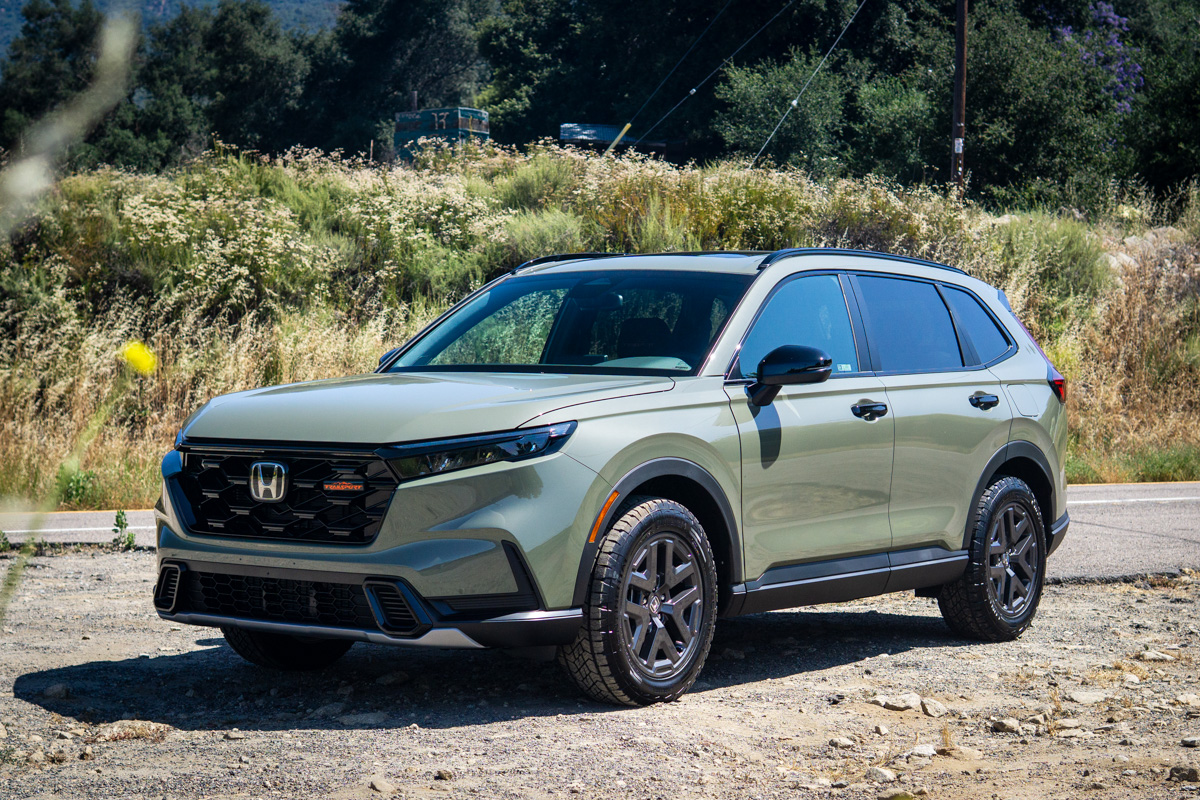
The CR-V Hybrid is rated at 40 mpg combined in FWD form or 37 mpg combined with AWD. Even the new TrailSport hybrid—wearing more aggressive all-terrain tires and tuned for a tougher look—still targets 35 mpg combined, which is solid if you like the adventure aesthetic but still want to keep fuel stops to a minimum. Power comes from Honda’s 2.0-liter hybrid system with two electric motors, rated at 204 hp and 247 lb-ft of torque, and the hybrid setup also enables multiple regenerative braking levels and a one-pedal driving mode for smoother stop-and-go commutes.
This CR-V also keeps daily usability front and center, with 39.3 cubic feet of cargo space behind the rear seat and 76.5 cubic feet with the seats folded, plus a comfortable cabin layout with physical controls that are easy to live with. For 2026, Honda makes a 9-inch touchscreen standard across the lineup, along with wireless Apple CarPlay and Android Auto; upper trims add a 10.2-inch digital gauge display, and the Sport Touring can be had with Google built-in. Standard Honda Sensing safety tech (including automatic emergency braking and adaptive cruise control) rounds out the value story, though key extras like blind-spot monitoring aren’t standard on the base LX.
The CarGurus Verdict: "The CR-V is one of the best compact crossovers on the market, and the hybrid powertrain only makes it better. If adventure and off-road driving are truly in the cards for you, however, the CR-V TrailSport may not be the right choice." - Matt Smith
Read our most recent Honda CR-V Hybrid review
3. Hyundai Tucson Hybrid
2026 EPA-rated fuel economy: 38 mpg combined
CarGurus expert rating: 7.3 out of 10
CarGurus user rating: 4.7 out of 5
Percentage of Good and Great Deals available on CarGurus: 27.1%
Overall CarGurus rating: 4.3 out of 5
| Pros | Cons |
|---|---|
| Fun to drive | Potentially polarizing design |
| Plenty of cargo space | Tech can be frustrating |
| Standard advanced safety features | Poor value for money |
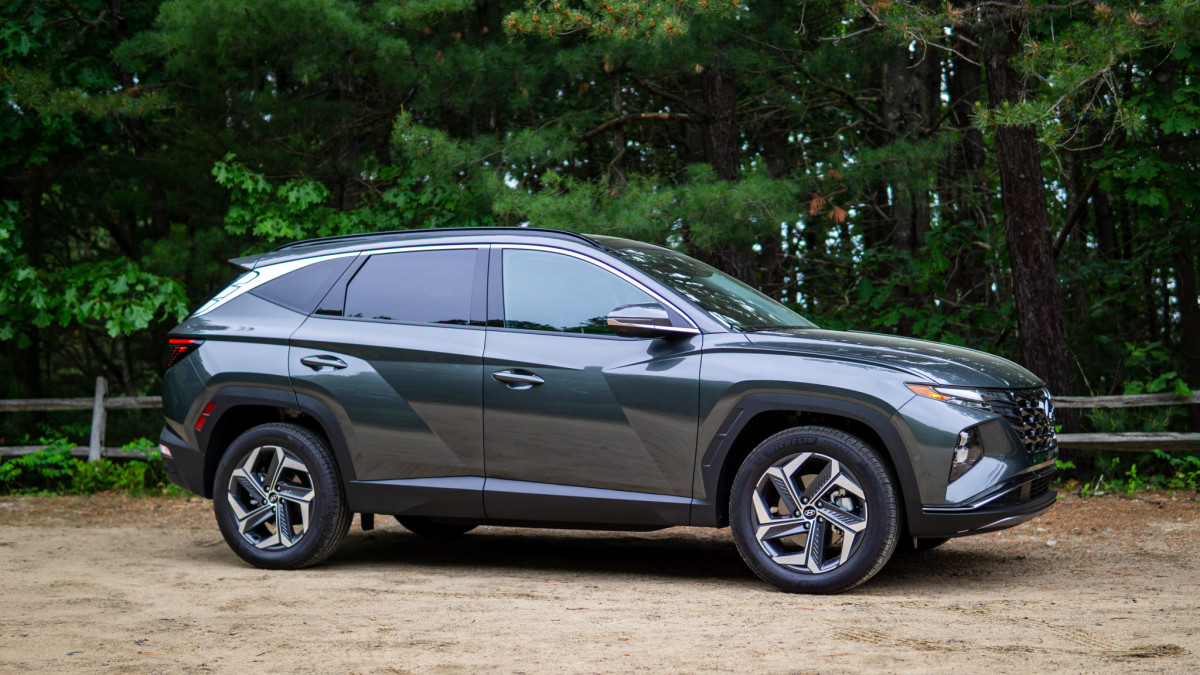
Every Tucson Hybrid comes standard with AWD and a 1.6-liter turbocharged four-cylinder paired with an electric motor for 226 hp and 258 lb-ft of torque, and it feels noticeably quicker and more responsive than the non-hybrid Tucson. The EPA rates it at 37 mpg city, 36 mpg highway, and 37 mpg combined (the Blue trim is rated 38 mpg across the board), and our test returned 36.5 mpg—right in the ballpark for a mileage-focused pick in this class.
It also backs up the efficiency story with real practicality: Cargo space is a generous 38.8 cubic feet behind the rear seat and 74.5 cubic feet with the rear seat folded, plus there’s ample legroom in both rows and reclining rear seats for passenger comfort. The main trade-off is that some of the cabin tech can be annoying day-to-day, with touch-capacitive controls and the larger 10.25-inch screen requiring a wired connection for Android Auto and Apple CarPlay. On the plus side, Hyundai loads the Tucson Hybrid with standard advanced safety features, and it earned an IIHS Top Safety Pick+ rating, though value can be a sticking point on higher trims compared with key rivals.
The CarGurus Verdict: "The angular new Tucson arrives with enough space, a fresh-look cabin, and a refined suspension to compete within the superheated compact crossover segment. And, with the hybrid powertrain, it delivers compelling performance and driving dynamics, too. Small families and shoppers looking for an engaging car capable of handling all types of day-to-date duties will want to keep this one on their list of options." - Matt Smith
Read our most recent Hyundai Tucson Hybrid review
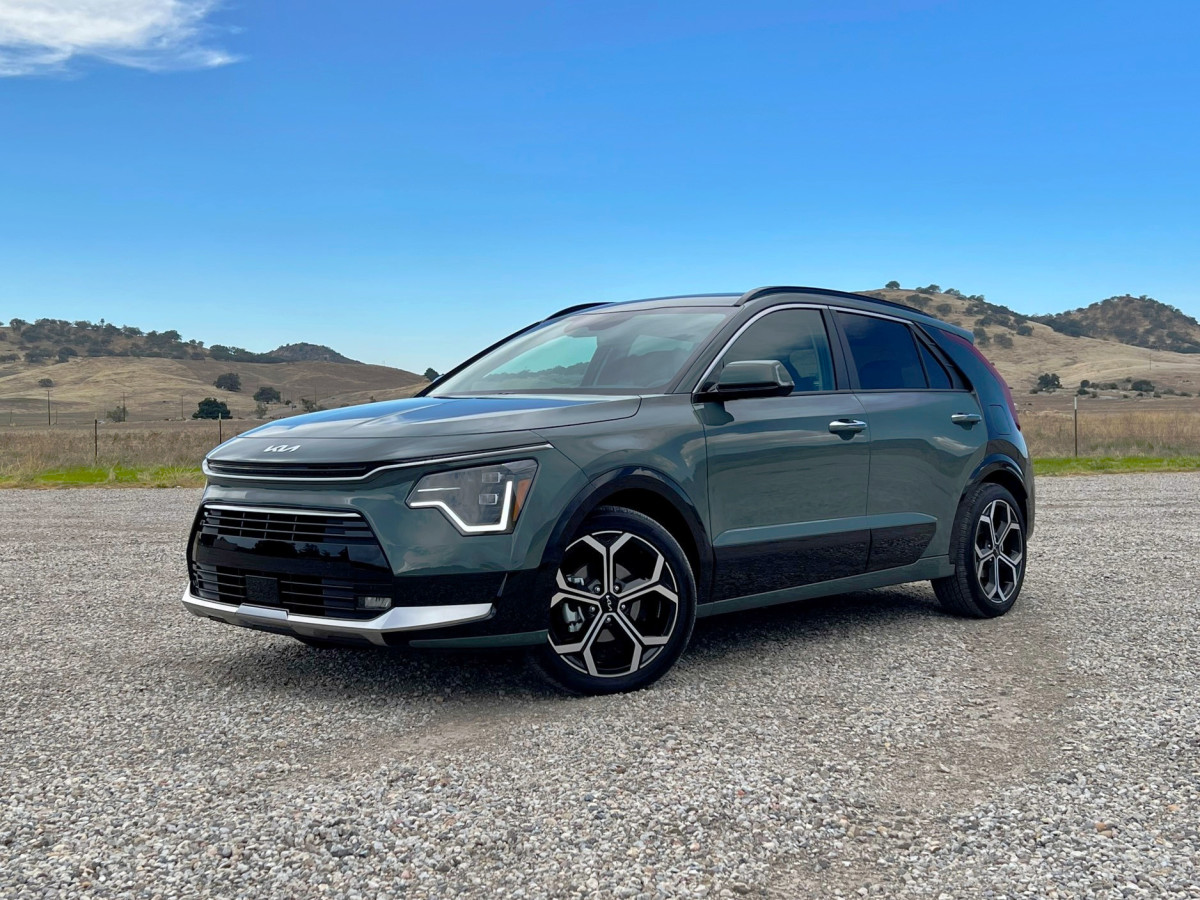
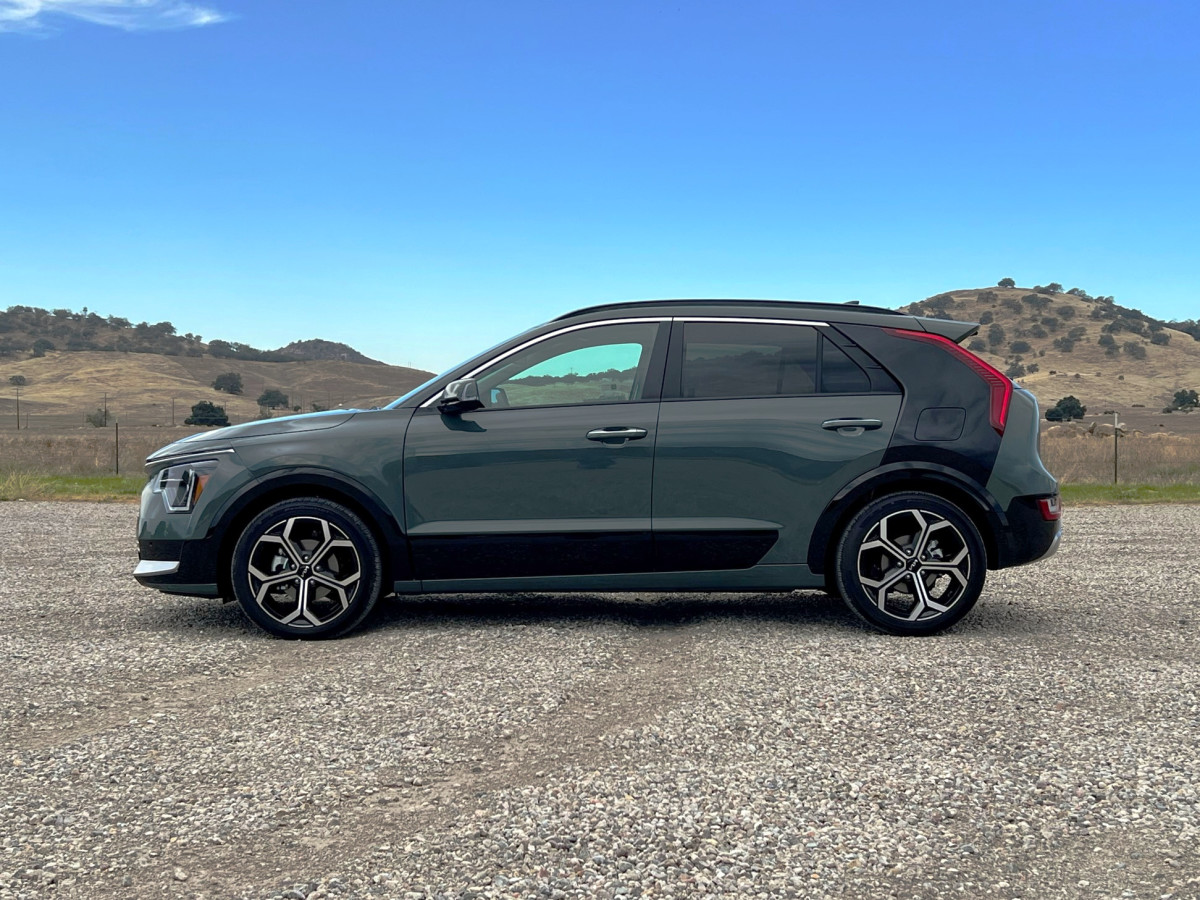
4. Kia Niro Hybrid
2026 EPA-rated fuel economy: 53 mpg combined
CarGurus expert rating: 7.7 out of 10
CarGurus user rating: 4.7 out of 5
Percentage of Good and Great Deals available on CarGurus: 28.4%
Overall CarGurus rating: 4.3 out of 5
When it comes to fuel economy, the Kia Niro Hybrid is hard to beat. Its 1.6-liter four-cylinder paired with a 32kW electric motor earns a best-in-class 53 mpg combined—and that number holds up in real-world driving. The redesigned second-generation Niro also brings a sharper, more confident exterior and a cabin that punches well above its price point. Interior materials lean sustainable—vegan leather upholstery, BTX-free paint on door panels, a recycled headliner—and the overall effect is a thoughtfully appointed space that doesn't feel like an economy car. Standard dual-zone climate control, USB-A and USB-C ports, and a full suite of advanced driver assistance features come on every trim, while EX and above add heated front seats, wireless charging, a 10.25-inch infotainment screen, and customizable mood lighting.
The Niro Hybrid does have a few trade-offs to know going in. The six-speed dual-clutch transmission can feel abrupt at first, though reviewers note that the system adapts to driving style over time and smooths out considerably. All-wheel drive isn't available — the Niro is front-wheel drive only across the lineup — which may be a deciding factor for buyers in snowier climates. Cargo space at 22.8 cubic feet behind the rear seat is also on the compact side, though best-in-class interior volume and second-row legroom help compensate for the smaller trunk. Starting around $27,800 for the LX and topping out just under $37,000 for the SX Touring, the Niro Hybrid offers an accessible entry point and a genuinely competitive value proposition for a small SUV that consistently delivers 50-plus mpg without asking you to change how you drive.
Read our most recent Kia Niro review
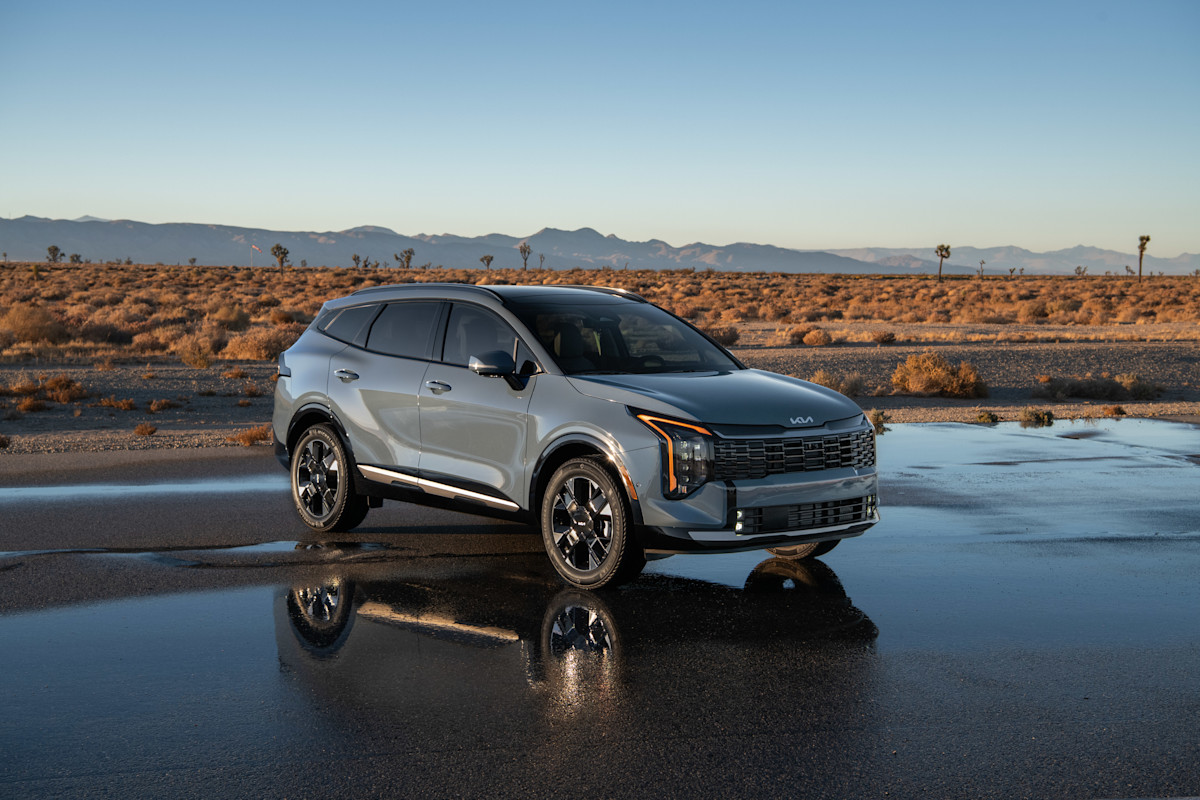
5. Kia Sportage Hybrid
2026 EPA-rated fuel economy: 42 mpg combined FWD, 35 AWD
CarGurus expert rating: 7.5 out of 10
CarGurus user rating: 4.6 out of 5
Percentage of Good and Great Deals available on CarGurus: 29.9%
Overall CarGurus rating: 4.3 out of 5
| Pros | Cons |
|---|---|
| Fuel-efficient | Fuel efficiency drops with AWD |
| Comfortable | Fairly pedestrian performance |
| Premium interior materials | Some advanced safety features are not standard |
The 2026 Kia Sportage Hybrid pairs small-SUV practicality with hybrid efficiency. With its turbocharged 1.6-liter four-cylinder plus electric motor (232 hp and 271 lb-ft of torque), it feels punchy around town and stays comfortable and quiet on the highway, making it an easy everyday commuter. Fuel economy is the big talking point: the base LX with FWD is EPA-estimated at 42 mpg combined (41 city/44 highway), while AWD versions drop to 35 mpg combined (35 city/36 highway), so it’s worth deciding early whether you truly need AWD.
Space and usability are also part of the appeal. The Sportage Hybrid has family-friendly room for four adults, plus 39.5 cubic feet of cargo space behind the rear seats and up to 73.7 cubic feet with the seats folded. Tech is a highlight, with a standard 12.3-inch touchscreen and wireless Apple CarPlay/Android Auto, while upper trims can add built-in navigation and a head-up display. A healthy suite of driver-assistance features is standard, though the most advanced aids (like a 360-degree camera and Highway Driving Assist 2) are reserved for the SX-Prestige, which helps explain the wide spread from the $31,735 starting price up to the low-$40K range.
The CarGurus Verdict: "The 2026 Kia Sportage is sized right in between smaller subcompact and larger compact crossover SUVs, and it strikes an intriguing balance of roominess, comfort and efficiency that ought to win over plenty of American buyers." - Jeremy Korzeniewski
Read our most recent Kia Sportage Hybrid review
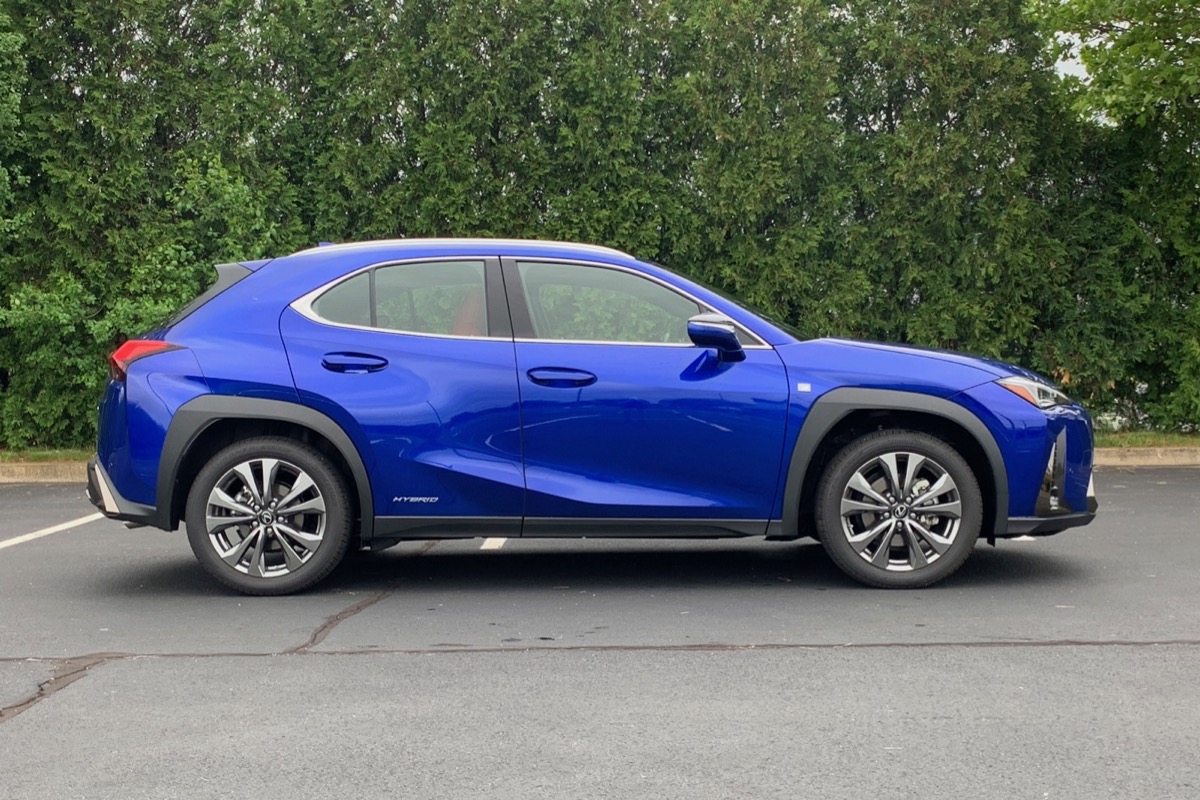
6. Lexus UX Hybrid
2026 EPA-rated fuel economy: 44 mpg combined FWD, 43 AWD
CarGurus expert rating: 6.3 out of 10
CarGurus user rating: 4.6 out of 5
Percentage of Good and Great Deals available on CarGurus: 33.1%
Overall CarGurus rating: 4.2 out of 5
| Pros | Cons |
|---|---|
| Fuel-efficient | Sluggish performance |
| Standard all-wheel drive | Unintuitive technology |
| Comfortable | Cramped back seat |
If your idea of “best gas mileage” includes real-world easy driving and a quiet, luxury-leaning cabin, the UX Hybrid fits the brief well. Every UX 250h pairs a 2.0-liter four-cylinder with two electric motors for 181 hp, and the payoff is excellent efficiency: 41 mpg city, 38 mpg highway, and 39 mpg combined per the EPA, with 41.2 mpg observed in mixed driving. Better still for shoppers in snow-belt states, all-wheel drive is standard on the hybrid, making it a practical commuter even if it’s more hatchback-like than truly SUV-capable.
That commuter focus shows up in the rest of the UX’s personality. It rides with impressive refinement and feels composed over bumps and through corners, but acceleration is sluggish at highway speeds, and the Remote Touch touchpad interface can make Apple CarPlay and Android Auto more distracting than they should be. It’s also tight on space: The UX Hybrid has 17.1 cubic feet of cargo room above the rear deck (21.7 below it) and a cramped back seat if front occupants are of average height or taller. The upside is a strong safety story with standard automatic emergency braking, adaptive cruise control, pedestrian detection, and (new for 2021) blind-spot monitoring and rear cross-traffic alert.
The CarGurus Verdict: "The UX is considered a crossover SUV but, in reality, it’s a hatchback with a slight lift and added plastic wheel arches. You won’t be off-roading in the UX. Heck, even certain unpaved roads will be too much for the UX. But the smallest Lexus crossover is an incredibly refined commuter, and the hybrid is an efficient machine for daily driving." - George Kennedy
Read our most recent Lexus UX Hybrid review
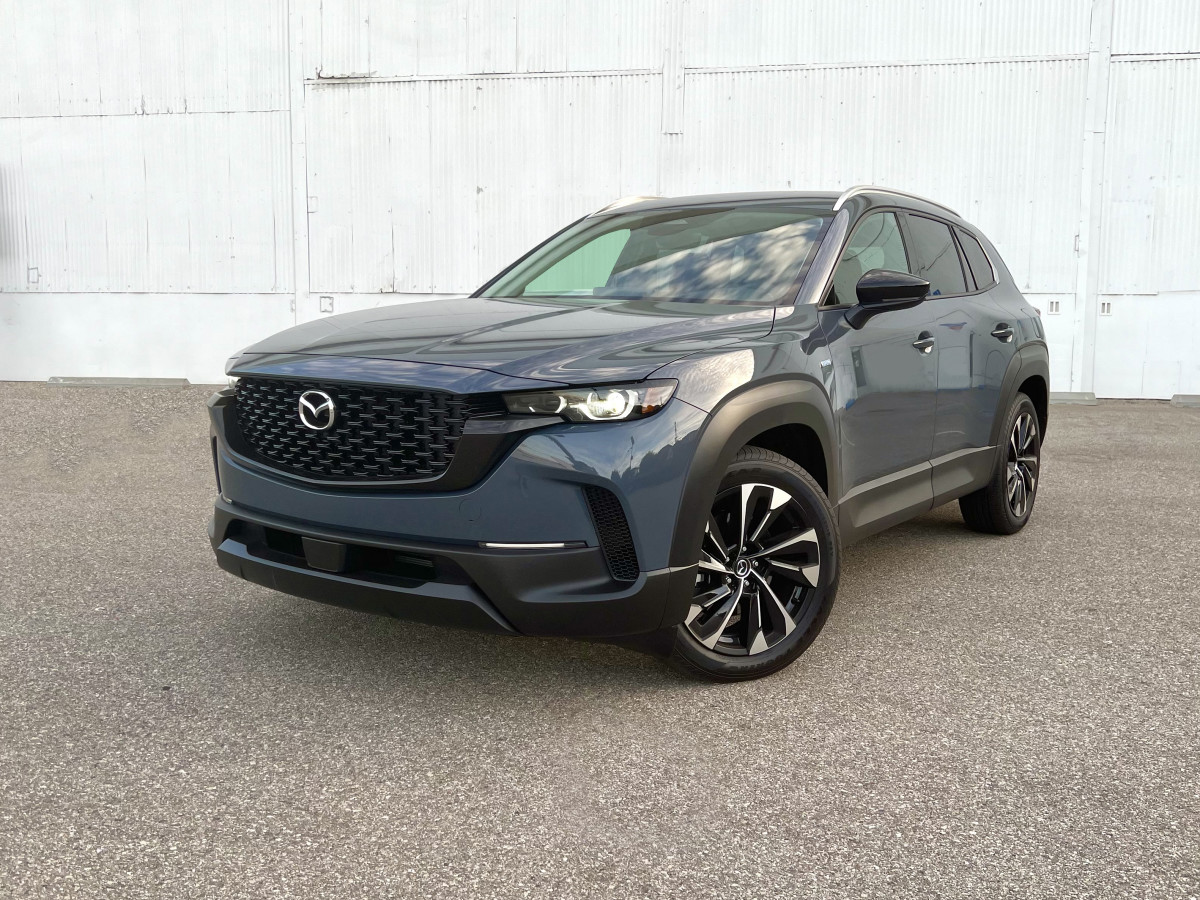
7. Mazda CX-50 Hybrid
2026 EPA-rated fuel economy: 38 mpg combined
CarGurus expert rating: 6.5 out of 10
CarGurus user rating: 4.5 out of 5
Percentage of Good and Great Deals available on CarGurus: 32.7%
Overall CarGurus rating: 4.4 out of 5
| Pros | Cons |
|---|---|
| Stylish design | Not much cargo space |
| Fun to drive | Limited rear-seat space |
| Fuel-efficient | Outdated technology |
If you like the idea of a small SUV that feels more upscale than its price suggests, the 2025 Mazda CX-50 Hybrid is worth a look. Mazda pairs a 2.5-liter four-cylinder with three electric motors for a combined 219 hp and 163 lb-ft of torque, sending power to all four wheels through an e-CVT designed to mimic a conventional automatic. The big headline is efficiency: The EPA estimates 38 mpg combined, a meaningful jump over the non-hybrid’s 28 mpg, and enough to help justify the roughly $2,000-$2,500 hybrid premium over time for many drivers.
Where the CX-50 Hybrid leans more “Mazda” than “appliance” is in how it drives, with sporty suspension tuning that keeps body roll in check, even if it rides a bit firmer than some rivals. The tradeoff is practicality: Cargo space is 29.2 cubic feet behind the rear seats, and rear-seat room is merely average for the class. Tech is a bit old-school, with a 10.25-inch screen primarily operated by a console dial (touch works mainly with Apple CarPlay/Android Auto), but safety credentials are reassuring, including strong NHTSA crash-test results and a full suite of standard driver-assistance features.
The CarGurus Verdict: "The 2025 Mazda CX-50 Hybrid brings a potent yet efficient powertrain to an already sporty SUV. Combined with attractive styling and a near-luxury interior, it would be hard to beat if it weren't for its limited passenger and cargo space." - Mark Takahashi
Read our most recent Mazda CX-50 Hybrid review
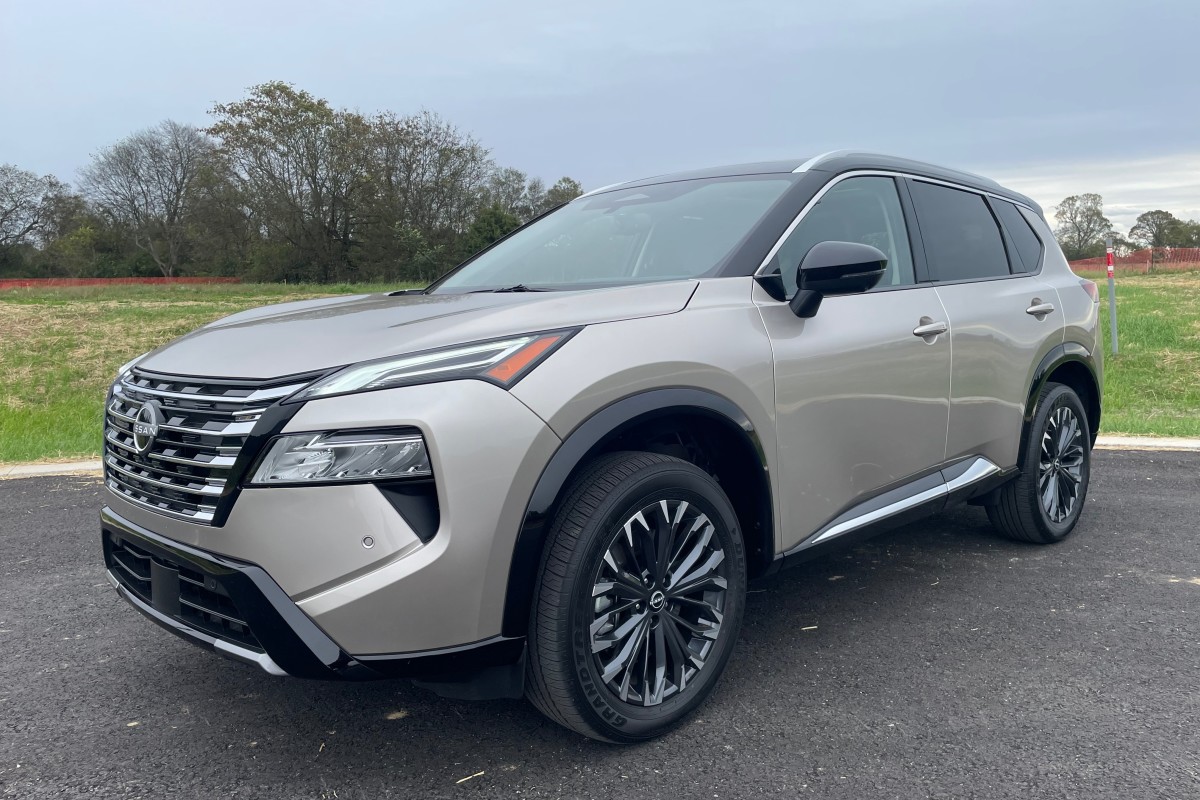
8. Nissan Rogue
2026 EPA-rated fuel economy: 32 mpg combined FWD, 31 AWD
CarGurus expert rating: 7.7 out of 10
CarGurus user rating: 4.4 out of 5
Percentage of Good and Great Deals available on CarGurus: 22.0%
Overall CarGurus rating: 4.5 out of 5
| Pros | Cons |
|---|---|
| Comfortable ride | Modest acceleration and passing power |
| Good fuel economy | Upper trims less of a value |
| Upscale interior | Some rivals are sportier, more fun to drive |
A FWD 2025 Rogue is rated at up to 33 mpg combined, while adding AWD drops that figure to 31 mpg combined. The more rugged Rogue Rock Creek trim, with its standard AWD and all-terrain tires, is the thirstiest of the lineup at 29 mpg combined. The upside is that the Rogue stays easygoing on longer drives, with a smooth CVT and a comfortable ride that make it a good match for commuters and road-trippers watching fuel spend.
Efficiency doesn’t come at the expense of everyday usefulness. The Rogue offers 31.6 cubic feet of cargo space behind the second row, plus a wide, easy-to-load cargo area and available Divide-and-Hide underfloor storage to help keep smaller items organized. Up front, the cabin emphasizes practical controls (including dedicated HVAC buttons) and a high-quality look, while available tech like Google built-in on the 12.3-inch infotainment touchscreen and Nissan’s ProPilot Assist 2.1 can reduce fatigue on highway slogs; it also brings a strong safety story, including a five-star NHTSA overall crash-test rating.
The CarGurus Verdict: "With its reasonable price tag and impressive array of comfort features and tech touches, the Rogue is aimed right at the heart of the compact SUV segment. This year’s improvements add a little more polish to the Rogue, particularly with the outdoorsy Rock Creek model and latest generation of Nissan’s hands-free highway driving technology. This is an extremely well-rounded choice, though not everything is perfect." - Nick Kurczewski
Read our most recent Nissan Rogue review
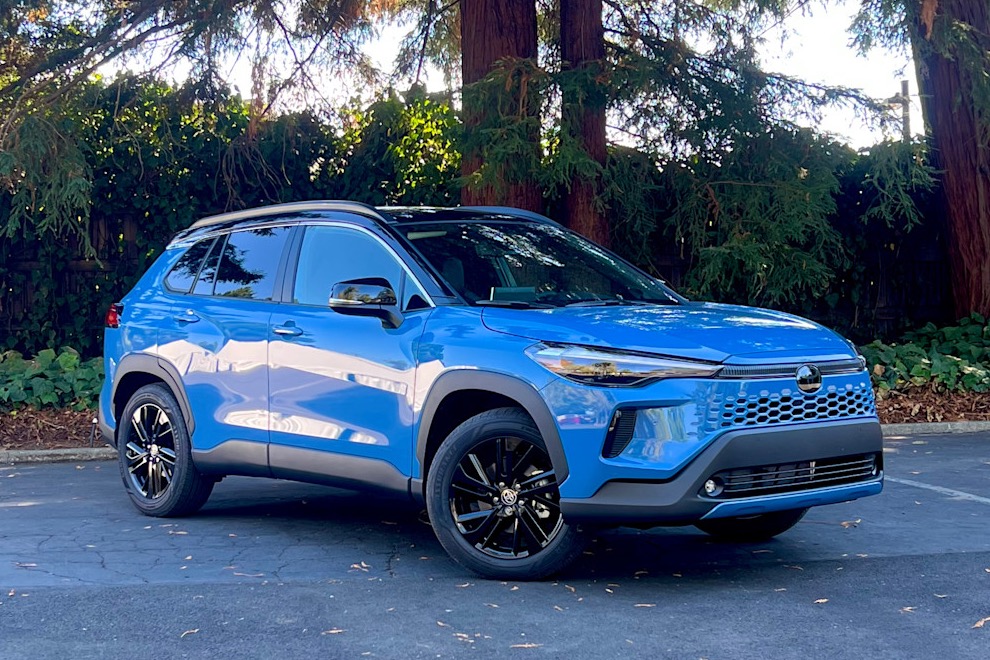
9. Toyota Corolla Cross Hybrid
2026 EPA-rated fuel economy: 42 mpg combined
CarGurus expert rating: 6.5 out of 10
CarGurus user rating: 4.4 out of 5
Percentage of Good and Great Deals available on CarGurus: 25.6%
Overall CarGurus rating: 4.1 out of 5
| Pros | Cons |
|---|---|
| Fuel-efficient | Sluggish performance |
| Standard all-wheel drive | Not much cargo space |
| Easy-to-use technology | Noisy engine under acceleration |
If your goal is to spend less time (and money) at the pump, the 2026 Toyota Corolla Cross Hybrid is tuned for efficiency above all else. Toyota estimates 46 mpg city, 39 mpg highway, and 42 mpg combined, and the Hybrid also comes standard with on-demand AWD thanks to an additional rear electric motor. Power comes from a 2.0-liter four-cylinder paired with electric motors for a combined 196 hp, which is helpful for everyday driving—even if the hybrid system’s gearless feel can make acceleration seem less urgent than the numbers suggest.
As a small SUV, the Corolla Cross Hybrid is easy to drive and comfortable, and it leans on straightforward controls like physical climate knobs plus standard wireless Apple CarPlay and Android Auto. Practicality is more mixed: AWD models offer 17.1 cubic feet of cargo space behind the rear seats, which is on the small side, and the sloping rear glass can make bulky items trickier to load. Safety is a strong suit, with Toyota Safety Sense 3.0 standard (including automatic emergency braking, adaptive cruise control, and lane-keep assist), though some shoppers may miss a surround-view camera.
The CarGurus Verdict: "It’s not very exciting to drive, but the Corolla Cross delivers on comfort, safety, and ease of use." - Mark Takahashi
Read our most recent Toyota Corolla Cross Hybrid review
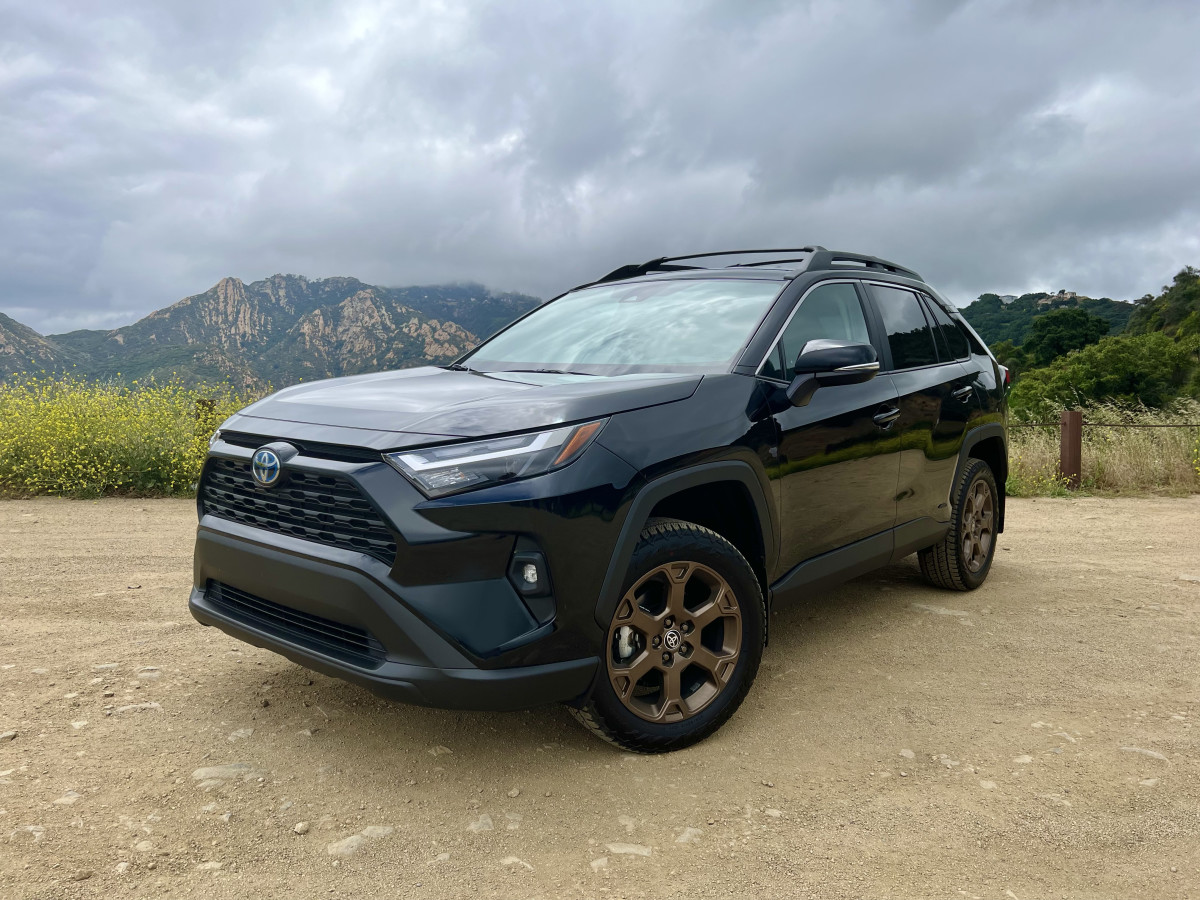
10. Toyota RAV4 Hybrid
2026 EPA-rated fuel economy: 43 mpg combined
CarGurus expert rating: 6.3 out of 10
CarGurus user rating: 4.5 out of 5
Percentage of Good and Great Deals available on CarGurus: 29.8%
Overall CarGurus rating: 4.3 out of 5
| Pros | Cons |
|---|---|
| Fuel-efficient | Interior isn't as refined as some rivals |
| Standard all-wheel drive | Smaller-than-average cargo capacity |
| Easy-to-use technology |
The Toyota RAV4 Hybrid remains an easy one to put on your shopping short list. It’s well-designed and known for delivering around 40 mpg in everyday driving, without demanding any special habits from the driver. Every RAV4 Hybrid also comes with AWD, which is a practical perk for shoppers in snow-belt states who don’t want to give up efficiency just to get better foul-weather traction.
The hybrid system pairs a 2.5-liter four-cylinder with electric motor assistance for a combined 219 hp, routed through a CVT, and the result is calm, confident acceleration for commuting and highway merging. Inside, the upright dash design is functional, and the updated infotainment system brings more modern graphics plus standard wireless Apple CarPlay and Android Auto; a wireless charging pad is optional. Family usability is strong, too, with adult-friendly seating and 37.5 cubic feet of cargo space behind the rear seats, while safety credentials include a 5-star overall NHTSA rating and standard Toyota Safety Sense 2.5 driver assists.
The CarGurus Verdict: "The 2023 Toyota RAV4 Hybrid is a solid choice in its rather limited class, with an easily attained 40 mpg, pleasant driving characteristics, and high levels of comfort. A new infotainment system helps its standing, as does a new off-road capable Woodland Edition." - Mark Takahashi
Read our most recent Toyota RAV4 Hybrid review
Top Small SUVs with the Best Gas Mileage in 2026 - FAQs
Which small SUV on this list gets the best gas mileage? The 2026 Kia Sportage Hybrid in front-wheel-drive (FWD) configuration and the 2026 Toyota Corolla Cross Hybrid are tied for the top spot, both offering an EPA-estimated 42 mpg combined.
Do I have to buy a hybrid to get good fuel economy? Not at all. While hybrids generally offer the highest MPG figures, some gasoline-only models are very efficient. For example, the 2025 Nissan Rogue with FWD is rated at up to 33 mpg combined, and the FWD Chevrolet Trailblazer achieves 30 mpg combined, both of which are excellent for non-hybrid SUVs.
How much does all-wheel drive (AWD) affect gas mileage? Opting for AWD almost always results in a slight decrease in fuel economy. The difference varies by model. For instance, the Kia Sportage Hybrid drops from 42 mpg combined with FWD to 35 mpg with AWD. The gas-powered Nissan Rogue sees a smaller drop, from 33 mpg with FWD to 31 mpg with AWD. It's worth considering if you truly need the extra traction for the weather conditions in your area.
What are the common trade-offs for a fuel-efficient small SUV? To maximize MPG, some models may have less powerful engines, leading to what's described as "sluggish" or "pedestrian" performance, especially during highway merging. Other trade-offs can include compromising on cargo space to accommodate the larger battery, as seen in the Lexus UX Hybrid and Toyota Corolla Cross Hybrid, or a higher initial purchase price, which is common for hybrid models compared to their gas-only counterparts.
Which of these fuel-efficient SUVs are best for families? For those needing more space, the Honda CR-V Hybrid and Hyundai Tucson Hybrid are strong choices. The CR-V Hybrid boasts an impressive 76.5 cubic feet of cargo space with the seats folded, and the Tucson Hybrid offers a generous 38.8 cubic feet behind the rear seats, plus reclining rear seats for passenger comfort.
What Makes CarGurus Best Cars Guides Different?
Most car-shopping websites publish lists of the best cars across a variety of categories, with recommendations generally driven by editorial expertise. Here's what makes ours different: In addition to the insights and verdicts of our team of car-testing experts, our best cars guides take into account other factors that we know matter to buyers-real owner experiences and current market value.
Our expert reviewers are among this country's most trusted automotive journalists, also writing for publications including US News and World Report, Edmunds, Digital Trends, J.D. Power, and Car & Driver. They put each car through real-world testing and create detailed reviews of performance in a range of categories, from practicality and driving manners to cost-effectiveness and safety.
We also analyze hundreds of thousands of used car listings on CarGurus.com to track which models consistently offer the highest percentage of best deals relative to how many are listed for sale. Then we factor in reviews from owners-people who actually live with these cars every day. Our proprietary Best Cars algorithm then creates a final Overall CarGurus rating combining expert scores, user reviews, and the percentage of listings that have earned the Good or Great Deal rating. This multi-pronged approach reveals not just which cars excel on paper, but which ones deliver satisfaction and value when you're ready to buy.
The CarGurus market data used in this guide was last updated in March of 2026. Values were accurate at time of publication and should be used as a guide only.