The Honda Passport nameplate has been around for more than 30 years, spanning four model generations. The two most recent versions fill the gap between the compact CR-V and the three-row Pilot as practical, powerful crossover SUVs that blend everyday usability with weekend adventure capability. As unibody vehicles sharing a platform with the Pilot, they offer a comfortable ride, generous cargo space, and Honda's reputation for reliability—all in a package that's easier to maneuver than its larger sibling.
The two earlier Passport models, on sale between 1993 and 2002, were less sophisticated and essentially rebadged Isuzu Rodeos. Today's Passport competes in the two-row midsize SUV segment against vehicles such as the Chevrolet Blazer, the Ford Edge (now discontinued), the Jeep Grand Cherokee, the Hyundai Santa Fe, and the Nissan Murano. When equipped with the TrailSport trim, the Honda also draws comparisons to more rugged offerings such as the Toyota 4Runner. The current Passport can tow up to 5,000 pounds and seats five comfortably, making it well worth a test drive for buyers who don't need a third row but want more space and capability than a compact crossover provides.
Honda Passport Buying Guide: Cost, Reliability, and the Best Years to Buy
- Frequently Asked Questions
- Pros and Cons
- Honda Passport Generations
- Honda Passport Fourth Generation (2026-Present)
- Honda Passport Third Generation (2019-2025)
- Honda Passport Second Generation (1998-2002)
- Honda Passport First Generation (1994-1997)
Frequently Asked Questions
Which Honda Passport years are the best?
The all-new 2026 Passport represents a significant leap forward with its rugged redesign, improved off-road capability, and updated interior technology. If a new fourth-generation model is out of budget, buyers should look for 2022-2025 models from the refreshed third generation, which brought updated styling, a more tepid version of the TrailSport trim, and improved standard equipment. The 2024-2025 TrailSport models are particularly compelling, as Honda added genuine off-road hardware including an upgraded suspension and all-terrain tires.
Which Honda Passport years are the worst?
The 2019-2021 models are worth avoiding. While mechanically sound, these early third-generation Passports had a dated front end, fewer standard features, and some owners reported infotainment issues. The 2019-2020 models in particular had less standard equipment, while Apple CarPlay and Android Auto weren't standard on all trims until 2021.
Is a used Honda Passport a good deal?
Yes. Across recent model years, used Passports list on CarGurus start at around $13,000 for older examples and exceeding $40,000 for recent low-mileage models. For a vehicle that starts in the mid-$40,000s new (and can exceed $55,000 for top trims), there's solid value in the used market. Honda's strong reputation for reliability and the Passport's broad appeal help it hold its value better than many competitors, but this also means you won't find the same deep discounts as with some U.S. rivals.
Pros and Cons
Pros:
- Excellent cargo space for a two-row SUV
- Honda's reputation for reliability and resale value
- TrailSport offers genuine off-road capability
Cons:
- Fuel economy trails some competitors; no hybrid option
- Third-generation infotainment system felt dated
- Higher price point than some rivals
Honda Passport Generations
Honda Passport Fourth Generation (2026-Present)
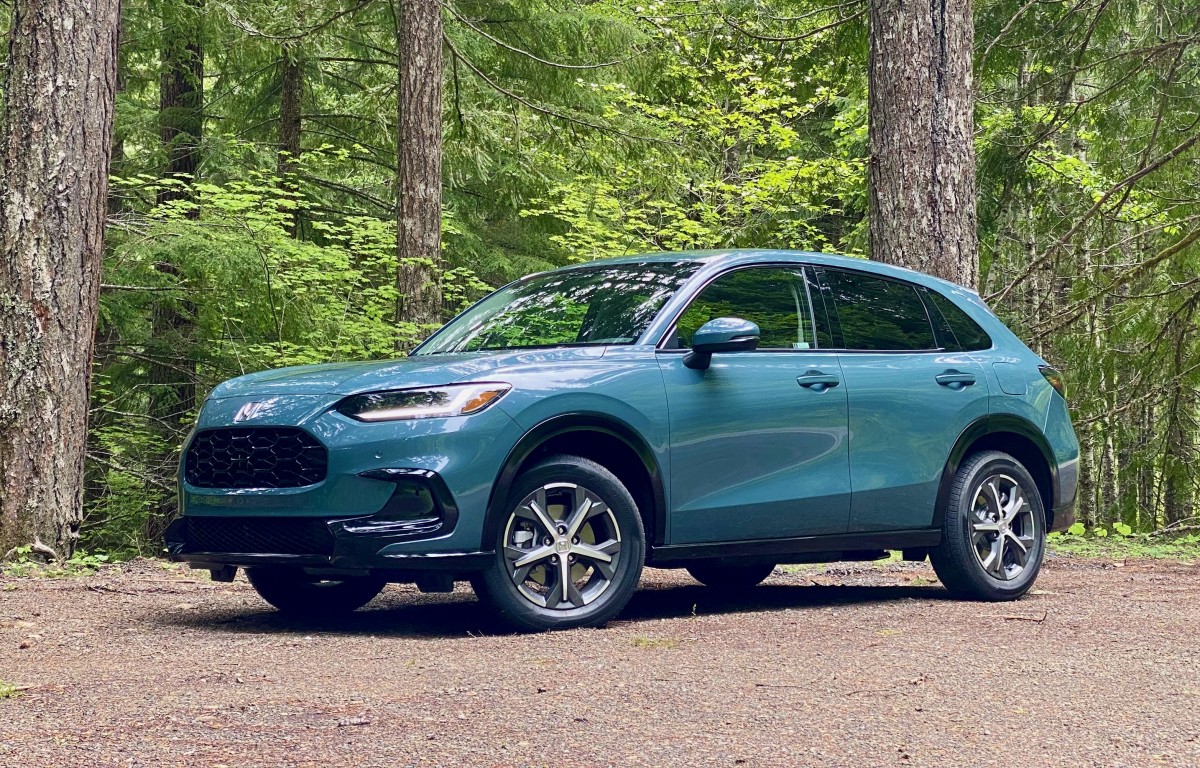
The 2026 Passport represents a comprehensive redesign that transforms Honda's two-row SUV from a mild-mannered crossover into a genuinely rugged adventure vehicle. Honda has positioned the new Passport, particularly the TrailSport trim, as a competitor to Toyota’s longstanding 4Runner SUV. While the Toyota’s off-road capabilities exceed those of this Passport, the Trailsport is still a compelling model that will suit the actual use case of most buyers.
The 2026 Passport rides on a longer wheelbase with a wider track, resulting in 1.3 inches of additional rear-seat legroom and a larger cargo area compared with the previous generation. Ground clearance increases to 8.3 inches (up from 8.1), and a shorter front overhang improves the approach angle for off-road driving. The chassis is significantly stiffer, and the suspension has been upgraded across all trims.
The 3.5-liter V6 returns with a modest power bump to 285 horsepower and 262 pound-feet of torque (up 5 hp from before). More important is the new 10-speed automatic transmission that replaces the previous 9-speed unit, bringing smoother shifts and better efficiency.
In our testing of a Trailsport model, we liked the V6's raw power and easy acceleration, especially in an age of wheezing turbocharged four-cylinder rivals or fuel-sipping hybrids. But owners will pay for this at the pump, as the Passport is thirstier than most competitors.
Fuel economy is rated at 19 mpg city and 25 mpg highway for RTL trims (21 combined), with TrailSport models achieving 18/23/20 mpg due to their all-terrain tires. Our assessment revealed those EPA numbers to be spot-on; in nearly 600 miles of testing, we averaged 20.1 mpg.
All models now come standard with Honda's second-generation i-VTM4 torque-vectoring all-wheel-drive system. Towing capacity remains at 5,000 pounds.
Inside, this latest Passport gets a complete overhaul, with a 10.2-inch digital instrument cluster and a 12.3-inch infotainment touchscreen featuring Google built-in, wireless Apple CarPlay, and wireless Android Auto. Honda listened to customer feedback and retained physical buttons and knobs for climate and volume controls, which we heartily endorse.
Standard equipment includes heated front seats, a power tailgate, and the full Honda Sensing suite of safety features. We also liked the flat floor in the rear seats, allowing for three adults to ride back there without it feeling like a penalty box. Another plus was the hearty build quality, and the Passport certainly punches above its weight in terms of refinement and comfort.
The 2026 lineup consists of three main trim levels: RTL, TrailSport, and TrailSport Elite, each available in standard or Blackout variants. The RTL serves as the base Honda Passport trim (replacing the former EX-L) and comes well-equipped with features such as part-leather-trimmed seating, 18-inch alloy wheels, adaptive cruise control, blind-spot monitors, and a power tailgate.
The TrailSport adds genuine off-road hardware including all-terrain tires, an off-road-tuned suspension, steel skid plates, high-visibility recovery hooks, and a standard trailer hitch with a seven-pin connector. TrailSport models also feature unique amber daytime running lights and rugged styling elements. Passport TrailSport Elite trim (replacing the Black Edition) adds premium features such as ventilated front seats, a heated steering wheel, rear climate controls, a panoramic sunroof, and a 12-speaker Bose premium audio system with a subwoofer.
Base MSRPs for the 2026 Passport start at $44,950 for the RTL, $48,650 for the TrailSport, and $52,650 for the TrailSport Elite. Blackout packages add approximately $1,200 to each trim, and the RTL Towing model (with integrated trailer hitch) is $45,650. All prices exclude the $1,295 destination charge.
At the time of writing, a very small number of used 2026 Honda Passports had reached dealerships, with those available showing a small saving on the MSRP when new.
Honda Passport Third Generation (2019-2025)
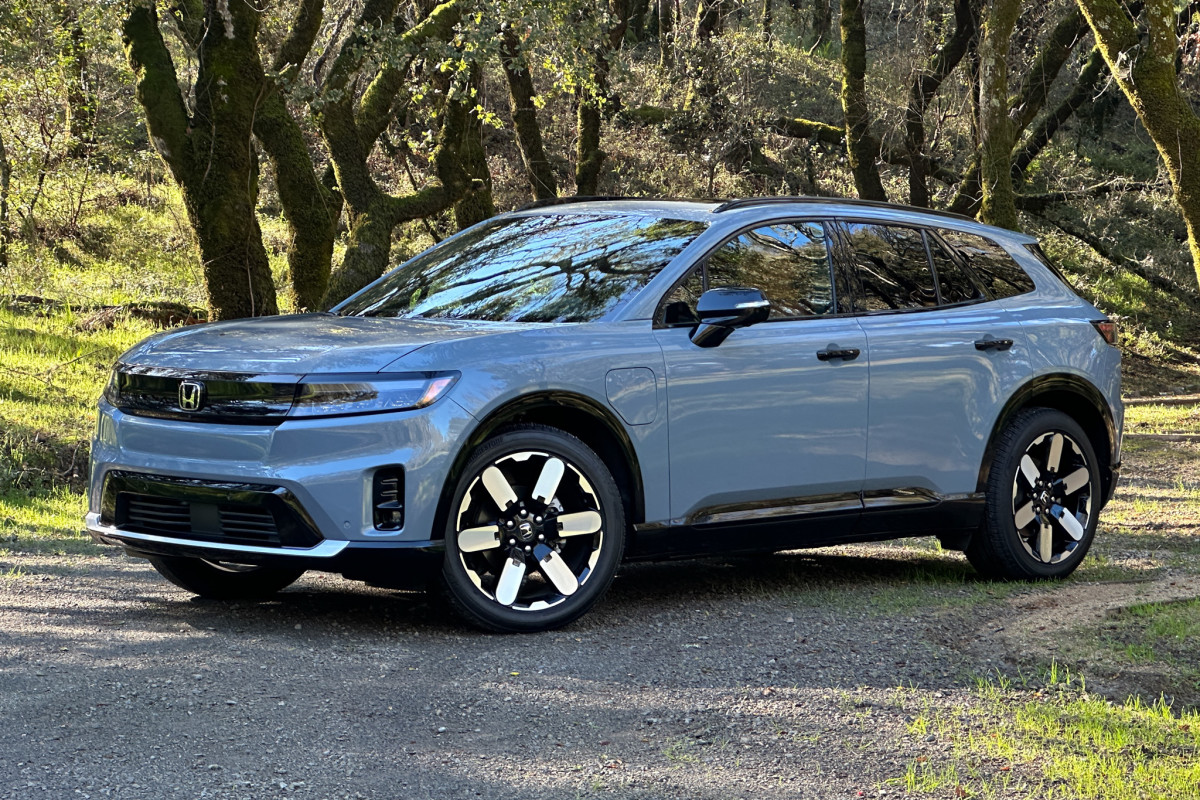
After a 17-year absence, Honda revived the Passport nameplate in 2019 as an all-new two-row crossover SUV. Unlike its Isuzu-based predecessor, this third-generation Passport was designed in the United States and built at Honda's Alabama plant alongside the Pilot. It was essentially a shortened version of the third-generation Pilot, losing roughly 6 inches of overall length (all from behind the rear wheels) and the third-row seating. This created a vehicle with a sportier profile, better departure angles, and slightly more ground clearance than the Pilot.
The 2019 Passport debuted with a 3.5-liter V6 engine producing 280 horsepower and 262 lb-ft of torque, paired with a nine-speed automatic transmission. Front-wheel drive was standard, with Honda's i-VTM4 torque-vectoring AWD system available as an option (or standard on upper trims). Ground clearance measured 7.5 inches for FWD models and 8.1 inches for AWD versions. The Intelligent Traction Management system offered selectable drive modes for Normal, Sand, Snow, and Mud conditions. Towing capacity was rated at 5,000 pounds when properly equipped.
Initial trim levels included Sport, EX-L, Touring, and Elite. Standard equipment was generous even on base models, including an 8-inch touchscreen, tri-zone automatic climate control, and Honda Sensing safety features. The Elite trim added features such as a panoramic moonroof, ventilated front seats, heated rear seats, and a hands-free power tailgate.
Cargo space was a strong suit, with 41 cubic feet behind the second row and 78 cubic feet with the rear seats folded—both figures were competitive or class-leading at launch. Clever under-floor storage compartments added versatility for organizing smaller items. For 2021, all trims received the 8-inch touchscreen with Apple CarPlay and Android Auto compatibility as standard equipment.
2022 updates: Honda gave the Passport a substantial mid-cycle update for 2022 with new styling from the windshield forward, adopting the more truck-like front end styling of the Ridgeline pickup. The refresh introduced the Honda Passport TrailSport trim—the first in what would become a series of adventure-focused Hondas. However, the initial TrailSport was primarily an appearance package with orange stitching accents, unique badging, and 18-inch wheels with rugged-style all-season tires. It did include standard AWD and the i-VTM4 system but lacked the upgraded suspension specs or all-terrain tires that came later. The Sport and Touring trims were discontinued, simplifying the lineup to EX-L, TrailSport, and Elite.
The 2022 models also added a wireless phone charger and rear-seat reminder and rear-seatbelt reminder systems as standard across the lineup. An HPD (Honda Performance Development) package became available, adding sportier visual elements.
2023 updates: All-wheel drive became standard across the entire Passport lineup for 2023, eliminating the front-wheel-drive option.
2024 updates: Honda made more meaningful changes to the TrailSport for 2024, finally giving it genuine off-road hardware. The TrailSport received an off-road-tuned suspension with revised spring rates, altered damper tuning, and upgraded stabilizer bars. General Grabber A/Tx all-terrain tires replaced the previous all-season rubber. A new Diffused Sky Blue color exclusive to TrailSport added visual distinction. Inside, all 2024 Passports gained a wider center console with more storage and a larger armrest—addressing a common complaint about the previous narrow console design. The Black Edition replaced the Elite as the top trim, featuring gloss-black exterior accents (including ‘blackout’ treatments for the headlight trim and fog lights) and red interior highlights.
2025 updates: There were no significant changes for the final year of the third generation, as Honda prepared for the complete redesign launching as the 2026 model.
Throughout the third generation, the Passport earned generally positive reviews for its comfortable ride, spacious interior, and strong V6 powertrain. Criticisms typically focused on the dated infotainment system (the 8-inch touchscreen felt small compared to competitors' larger displays), the lack of a hybrid option, and—until 2024—the TrailSport's styling-over-substance approach to off-road capability.
Reliability for the third-generation Passport has generally been good, consistent with Honda's reputation, and RepairPal gives it a 4.5 out of 5 reliability rating. Common owner complaints have included occasional infotainment glitches, minor transmission hesitation, and some wind noise at highway speeds. Honda issued several recalls affecting various model years, including issues with fuel filler components and rearview camera systems—most addressed under warranty. Consumer Reports and J.D. Power surveys have shown the Passport performing at or above average for the segment.
Average list prices on CarGurus for 2019-2025 Honda Passport models ranged from approximately $13,000 for high-mileage 2019 examples to more than $40,000 for recent low-mileage 2024-2025 TrailSport and Black Edition models at the time of writing. The sweet spot for value appears to be 2022-2023 models, which benefit from the refreshed styling and improved standard equipment while offering meaningful depreciation from new.
Honda Passport Second Generation (1998-2002)
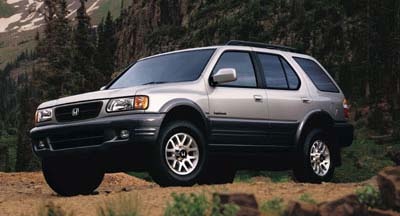
The second-generation Honda Passport continued to be based on an Isuzu Rodeo. This model featured a shorter wheelbase than the first, but had a long body and more aerodynamic styling. The four-cylinder engine was discontinued, making the 3.2-liter V6 standard across all models. Output increased to 205 horsepower and 214 lb-ft of torque and anti-lock brakes and rack-and-pinion steering became standard equipment.
Honda discontinued the Passport in 2002, as the brand's partnership with Isuzu wound down. The Honda Pilot, an all-new Honda-designed unibody crossover, arrived for 2003 as a direct replacement, establishing the template for Honda's modern SUV lineup.
These second-generation Passport models are now few and far between, with too few for sale to give an accurate idea of pricing. Frame rust issues led to recalls affecting 1998-2002 models, and parts availability is limited, and they represent a historical footnote rather than a viable used car option.
Honda Passport First Generation (1994-1997)
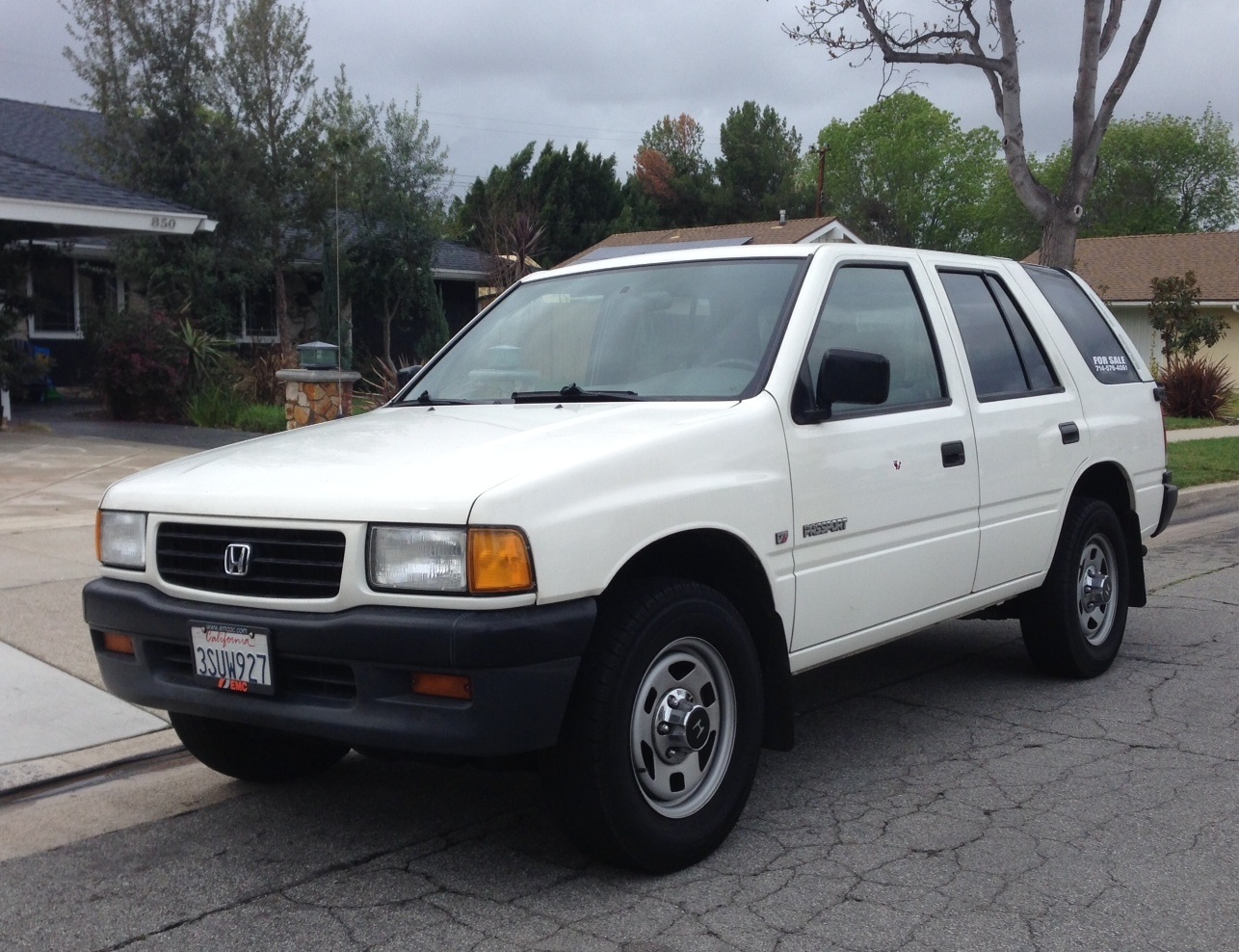
The original Honda Passport has nothing in common with today's model beyond the name. It was a rebadged Isuzu Rodeo, produced as part of a partnership between Honda and Isuzu during the 1990s SUV boom. Built at Subaru-Isuzu Automotive's plant in Lafayette, Indiana, the Passport allowed Honda to quickly enter the SUV market without developing an all-new platform.
The initial Passport offered three trim levels—DX, LX, and EX. Base models featured a 2.6-liter four-cylinder engine producing 120 horsepower with a five-speed manual transmission and rear-wheel drive. The LX and EX trims came with a 3.2-liter V6 making 175 horsepower, with an available four-speed automatic transmission and optional four-wheel drive. The Passport competed against other truck-based SUVs of the era such as the Ford Explorer and the Jeep Cherokee.
Very few first-generation Honda Passports remain, and those that are still roadworthy should be cheap, since they're not likely to become collectible models.