The F-250 Super Duty proves a truck can have immense capability and work potential and yet still be comfortable enough for the daily commute. But that was not always the case for this venerable heavy-duty pickup. It, along with its big brother the F-350 Super Duty, was created for work. After a couple of decades of trying to suit the needs of civilian and commercial buyers with a single F-Series lineup, Ford spun off the F-250 and F-350 into the new Super Duty lineup in 1998.
The F-250 itself was not new then, having served as the F-Series “Three-quarter ton” truck for decades. But this time, as the Super Duty, it got an entirely chassis and body design, visually similar to the redesigned 1997 F-150, but bigger and stronger, with higher payload and towing limits. Ford hedged its bets early on by keeping a “Light Duty” F-250 on offer until 1999, but the Super Duty quickly became the truck to beat in the heavy duty sector, offering class-leading brawn and a wide array of truck configurations.
Early examples are as spartan as you might imagine a farm or work truck from the 1990s to be, but the Super Duty models quickly added available amenities. The F-250, being the smallest of the Super Duties (they range up to F-550 commercial trucks) and the most F-150-like of the lot, eventually added some of the same civilian options that make its little brother the most popular truck on the market. Today, the F-250 Super Duty is a comfortable and sophisticated machine with luxury and off-road trims aimed at consumers as much as workers. Unlike the F-350, the F-250 only comes in single-rear-wheel (SRW) configurations and has since its debut.
The Ford F-250 competes in a fairly limited segment. Shoppers looking for capabilities such as large trailer towing and maximum payload capacity might also consider the Chevrolet Silverado 2500HD, the GMC Sierra 2500HD, and the Ram 2500. The Nissan Titan XD is the only foreign truck that competes with this set, but it’s not nearly as capable as the others and is soon to be discontinued.
Here, we’ve outlined each generation of F-250 Super Duty and included some advice on what to watch out for and what to pay.
Ford F-250 Super Duty Buying Guide: Cost, Reliability, and the Best Years to Buy
- Frequently Asked Questions
- Ford F-250 Super Duty Pros and Cons
- Ford F-250 Super Duty Generations
- Fifth Generation (2017-Present)
- Fourth Generation (2017-2022)
- Third Generation (2011-2016)
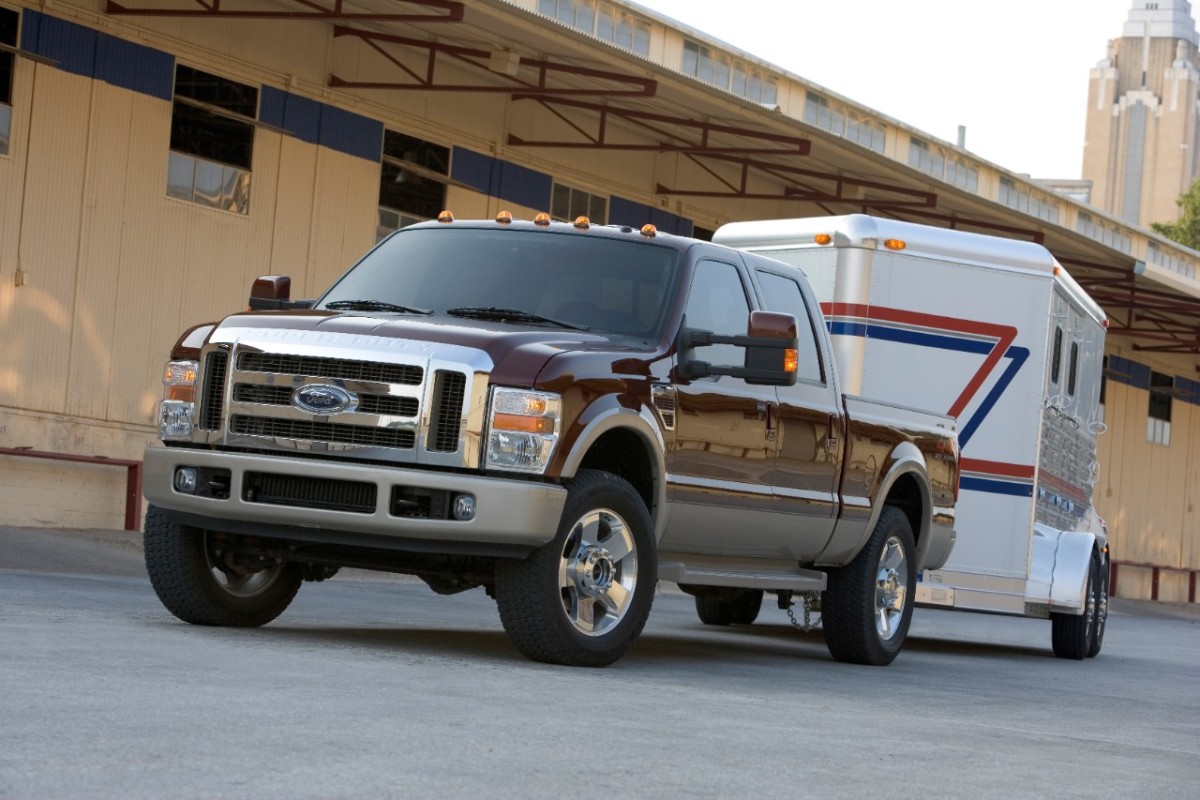
- Second Generation (2008-2010)
- First Generation (1999-2007)
Frequently Asked Questions
Which Ford F-250 Super Duty years are the best?
The third-generation F-250 Super Duty, built from 2011 to 2016, has a better record than the later 2017 to 2022 fourth-generation models, but not every reliability tracking outlet agrees on this. The 2020 to 2022 models also generate very few complaints and fewer criticisms, which makes them strong candidates for the best years, but they’re still very new. Complaints about the 2011 to 2016 models, and the earlier 2008 to 2010 second-generation trucks, tend to center on normal things that go wrong with heavy-duty towing trucks, like worn-out suspension and steering components.
What are the worst Ford F-250 Super Duty years?
Among recent models, the 2017 to 2019 models have come in for more criticism than other years, and in particular, harsh criticism from Consumer Reports. However, owners report transmission trouble on diesel-powered models and the same suspension-related issues common to later Super Duties. They’re big trucks and they drive like it, but when suspension bushing and pieces go, they can get very wobbly, and that seems to be a common experience in these years. Early F-250 Super Duty models from 1998 to 2001 also have a fair number of problems, including rust and “spark plug throwing” on the base “Triton” V8, a situation that occurs because the plug threads aren’t deep enough into the block.
Is a used Ford F-250 Super Duty a good deal?
Yes. In the “2500” class of heavy-duty trucks, the F-250 typically has the highest payload and towing limits. It isn’t necessarily as comfy or stylish as options from Ram or GM, but if it’s the outer limits of capability you’re after, this is where you’ll find it. It also isn’t much more expensive than the Ram 2500. Notably, no heavy-duty pickup can be described as “cheap,” as even 20-year-old trucks can sometimes sell for $20,000 or more, but the F-250 has been a market leader since its introduction for good reasons.
Ford F-250 Super Duty Pros and Cons
Pros:
- Immensely powerful
- Designed for worksites
- Wide range of trims and configurations
Cons: - Rough ride, sloppy handling - Poor sight-lines over towering front end - Bare-bones in early models
Ford F-250 Super Duty Generations
## Fifth Generation (2017-Present)
Redesigned from the ground up, the current Ford F-250 Super Duty bowed in the fall of 2022. This newest Super Duty shares some style, cab, and interior elements with the Circa-2021 fourteenth-generation F-150, but once a beefy frame of its own and some heavier-hitting powertrains.
The standard engine is a new 6.8-liter gas-powered V8, but Ford also carried over the 7.3-liter “Godzilla” V8 from the previous generation, and it’s standard on higher trims. In addition to the standard version, there’ also new high-output 6.7-liter Power Stroke turbodiesel V8 with an astonishing 1,200 pound-feet of torque.
That new turbodiesel allows the F-250 single-rear-wheel up to 22,000 pounds with a conventional hitch, or up to 23,000 pounds with a gooseneck hitch. Most configurations tow less, but even the wimpiest F-250 Super Duty can lug more than 14,000 pounds with a conventional hitch, making the F-250’s baseline about where the F-150 maxes out and quite a bit higher than the F-150 on average. Payload capacity ranges from around 1,700 pounds to over 3,600 pounds at the most extreme edge, but most models fall between 2,500 and 2,800 pounds of cargo weight, enough for a big slide-in camper.
These new Super Duties mostly come with four-wheel drive by default rather than having it as an option. You can still get rear-wheel drive XL models (work trucks, which often have the highest capacities), but all other trims are now four-wheel drive, a big value add on mid-range models like the XLT. The traditional cab and bed configurations are also unchanged, with regular, SuperCab (extended), and crew cabs mated to 6.75- or 8-foot beds. The styling is evolutionary but features Ford’s latest “C-Clamp” lighting and functional hood vents.
Beyond the new powertrains, Ford filled the redesigned Super Duty with lots of new technology. Even the most basic model now comes with an 8.0-inch infotainment screen in its modern, mature-looking dashboard, while higher trims get a 12.0-inch display and a configurable 12.0-inch digital gauge cluster with wireless Apple CarPlay and Android Auto. A 5G WiFi hotspot is standard and Ford’s software includes fleet management and telematics apps that can help track the truck’s use, and the option list contains in-cabin and in-bed power options.
There are also many innovative and helpful driver assist features, including onboard scales, a surround-view monitoring system that takes into account a trailer, adaptive cruise control with lane centering, trailer navigation that plans routes around potentially difficult obstacles for a trailer, tailgate-down backup cameras and sensing units, and Pro Trailer hitch, which automatically backs the truck up to perfectly align with a waiting trailer.
The work-grade XL sits at the bottom of the lineup, followed by the mainstream XLT and Lariat, with the luxury-oriented King Range, Platinum, and Limited at the top, that last one topping $100,000 off the lot if you add any options. Though this is at heart a working beast, Ford has also created several options primarily for the F-250, particularly the off-road Tremor package. While the Tremor doesn’t turn this truck into an F-250 Raptor, it does add an electronically locking rear differential, a front limited-slip differential, off-road shocks, skid plates, 35-inch all-terrain tires, and trail and rock crawl control, among other things.
The fifth-generation Super Duty has gotten generally good reviews so far, including from CarGurus. We reviewed it in 2023 and gave it a rating of 8.5 out of 10.
## Fourth Generation (2017-2022) Ford introduced the fourth generation F-250 Super Duty for the 2017 model year. Though the previous trim levels continued—XL, XLT, Lariat, King Ranch, and Platinum—Ford eventually added an even-plusher ultra-luxury model, the Limited, to the lineup in 2018. In 2020, it added the off-road Tremor package, which goes well beyond the traditional FX4 off-road option, a long-running component of all of Ford’s truck lines except for the Maverick. The Tremor continues in the fifth-generation model (see above).
Though the redesigned Super Duty’s styling was updated and it got a host of new features, the biggest change was in the metal itself. The 2017 Super Duty trucks followed the path set by the 2015 F-150 and vastly increased the use of high-strength aluminum alloy in the body, which made the trucks 700 pounds lighter than their immediate predecessors on average and more fuel efficient without sacrificing towing capacity.
The fourth-generation Super Duty also featured modern driver assistance and safety features, including adaptive cruised control, blind-spot monitoring, forward collision avoidance, and lane departure warnings. Ford also fitted an optional seven-camera surround-view monitoring system, a huge plus in a truck of this size and bulk. One of these cameras provides a view of the bed and includes guidelines for backing up to a trailer. The redesigned F-250 also offered Ford’s Pro Trailer Backup Assist, which helps hitch and maneuver both truck and trailer.
Ford carried over the F-250’s base engine, the 6.2-liter “Boss” V8, from the third-gen models. It made 385 horsepower and 430 pound-feet of torque and was the only gas V8 available from 2017 to 2019. In 2020, Ford began offering the optional 7.3-liter “Godzilla” gas V8, making 430 horsepower and 475 pound-feet of torque. There were also two iterations of Ford’s 6.7-liter Power Stroke diesel. It offered 440 horsepower and 925 pound-feet of torque from 2017 to 2019, then 475 horses and 1,050 pound-feet from 2020 to 2022. In its early years, the F-250 used a six-speed automatic but a lighter-duty unit than the one in the big F-350. In 2020, it was replaced by a more robust ten-speed automatic.
In 2018 F-250 Super Duty could tow up to 18,000 pounds with a conventional hitch and 18,500 with a gooseneck. The lack of added capacity with fifth-wheel/gooseneck setups reflects the F-250’s SRW-only status, but this is still a big brawny bruiser. It can handle up to 3,866 pounds of cargo in the bed and it typically tows 3,000 to 4,000 pounds more than an equivalent F-150. The increased power of the turbodiesel in 2020 also lifted the max conventional towing limit to 20,000 pounds.
The long-running cab and bed combinations remained, but thanks to the new aluminum construction, the F-250, and other Super Duties shared some metal with the F-150. On higher trims, the F-250 also gained LED lighting with distinctive signatures and many new lighting options including mirror-mounted lights and an in-bed floodlight for night work.
Inside, the available touchscreen infotainment system and Ford’s SYNC 3 software and MyFord Touch system were also renewed. The base XL work truck had only a 4.2-inch LCD screen and a very rudimentary “infotainment” setup, but other trims used 8.0 or 12.0-inch screens and much more extensive software. SYNC 3 also now included Apple CarPlay and Android Auto, which became standard in later years. In 2022, Ford upgraded the F-250 and other Super Duties to SYNC 4, which has wireless Apple CarPlay and Android Auto.
Standard safety features were limited, but adaptive cruise control, lane departure warnings with lane keep assist, blind spot monitoring, and more were available. Optional equipment and appearance packages can also add everything from blacked-out running boards, logos, and aluminum wheels to a trailer tow camera system complete with pro trailer backup assist.
This generation of F-250 Super Duty doesn’t have a great reliability record, sadly, with problems seeming to focus on the 2017 to 2019 models and their underwhelming six-speed automatic “TorqShift” transmissions and wobbly front suspensions (there’s actually a condition called “Death wobble” that owners regularly refer to). There are also engine and other suspension woes in those years, and they don’t rate well in the opinions of places like RepairPal, CarComplaints, or Consumer Reports. That said, they’re still class leaders in hauling ability. If you want a more capable truck from another brand, you’ll probably have to go to the 3500 level, where the F-350 is also waiting.
These are not cheap trucks, and despite owner’s beefs with the 2017 to 2019 models (especially the ‘17s), there really aren’t “cheaper” years. Good XL trim work trucks with under 100,000 miles on the clock start at about $28,000, and XLT and Lariat Trims range into the mid $40,000 range. Diesels cost a little more (and are easier to find) model for model, while King Ranch and Platinum luxury models start in the high $40,000 range and can extend to over $60,000. As on the F-350, the best value of the lineup when they were new was the Lariat, and it offers configurations that the King Ranch, Platinum, and Limited don’t. Unfortunately, as a used truck, it’s not much less than those top-tier versions.
Third Generation (2011-2016)
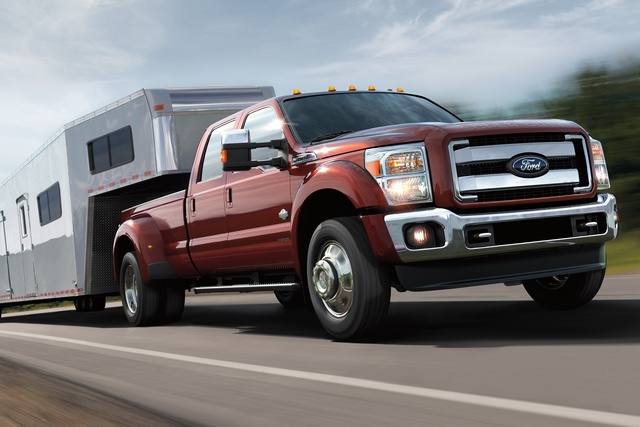
The third-generation Super Duty came hot on the heels of the second, just four years after its predecessor debuted. As a result, it was mostly an evolutionary change, with the most obvious difference being updated styling. There were many engineering updates, though, including the end of the old “Triton” 5.4-liter V8 and 6.8-liter V10 engines, which were dropped from the F-250 line. In their place was a new gas V8, the 6.2-liter “Boss.” The Power Stroke diesel remained but grew from 6.4 to 6.7 liters. The trucks also got major infotainment and technology upgrades.
In 2011, there were four trims: XL, XLT, Lariat, and King Ranch. In 2013, Ford added the ultra-luxury Platinum, with finer interior materials and various other upgrades over the King Ranch. The old Harley Davidson trim package continued for several years in this generation.
The new 6.2-liter V8 made 385 hp and 405 lb-ft of torque, routing power to a six-speed automatic transmission. The 6.7-liter Power Stroke turbodiesel V8 made 390 horsepower and 735 pound-feet of torque when new. Towing capacity was up to 14,000 pounds with a conventional hitch and 16,700 with a fifth-wheel setup. Later models with this powertrain put out as much as 440 horsepower and 860 pound-feet of torque, but the tow ratings didn’t change much. By 2016, payload capacity ranged from 2,880 to 4,040 pounds, but most versions hovered around 3,300 pounds.
As in earlier generations, rear-wheel drive was standard, but the F-250 Super Duty is also offered with part-time four-wheel drive. Depending on the trim selected, it comes with manual or auto-locking hubs, electronic low-range gear selection, and hill-hold braking. Both engines come standard with an auxiliary transmission fluid cooler. Body and bed configurations remained the same: crew, extended, and regular cabs mated to 6.75- or 8-foot beds. All F-250s in these years used a six-speed automatic transmission.
Ford offered a dizzying array of options on these trucks, including a Work Solutions Package with an in-dash computer. fifth-wheel hitches on long-beds, camper packages, transmission power take off (PTO), navigation, and loads of wheel options up to 20 inches. The King Ranch trim was the most luxurious model in this Super Duty era, with extras like heated and ventilated front seats and Chapparal leather trim. In 2012, Ford added a new top trim, the Platinum. There was no dedicated off-road trim yet, but most models offered the FX4 off-road package.
The infotainment systems in these trucks, using Ford’s SYNC system, are more basic than later versions but good for their day. The standard screen was a 4.2-inch unit, but an 8.0-inch unit was fitted on higher trims.
This F-250 has a better reliability record than its successor. However, 2011 models do come in for criticism for suspension and transmission issues, and the transmission is a weak point for the model generally. Still, this pickup can tow and haul more than its competitors and is a fairly reliable long-term companion. Gas mileage isn’t great, but it’s roughly comparable to that of its GM rivals. The EPA doesn’t rate heavy-duty trucks for mpg, but crowdsourced data on apps like Fuelly reveal the Ram 2500 diesel to be the most frugal in this class.
As with other Super Duty models, these trucks don’t come cheap, but they’re a good value for what they are. Basic XL work trucks in decent shape with under 100,000 miles can be found for as little as $18,000, but decently equipped XL, XLT and Lariat models sell for $22,000 to $28,000. Top trim King Ranch and Platinum models can still command prices as high as $40,000, but most are in the $28,000 to $38,000 range. Diesel models, which cost more new and tow more, still command a premium over gas versions.
Second Generation (2008-2010)
After a nearly decade-long run, Ford redesigned the entire Super Duty lineup for 2008, though this redesign wasn’t a clean-sheet redo. Issues with quality control and engineering of its diesel engine also delayed its introduction, pushing it back from debuting as a 2007 model and instead making it a 2008. It actually got announced in late 2006.
The new F-250 was available in three trims: XL, XLT, and Lariat, though the FX4 off-road package was sometimes also an official trim in 2009 and 2010. Beyond that, there was also a Harley-Davidson-themed appearance package and, in 2010, a Cabela’s trim. In these years, the top-dog King Ranch was still an option package rather than a trim, and there were no Platinum or Tremor variations.
In these years, the gas engines from the first-generation were carried over. The base engine continued to be the 5.4-liter Triton V8, with 300 horsepower and 365 pound-feet of torque. It pairs to either a six-speed manual in lower trims or a five-speed automatic in the rest of the lineup. The 6.8-liter Triton V10 remained an option, making up to 362 horsepower and 457 pound-feet of torque.
However, the new engine was worth getting for maximum towing brawn, the 6.4-liter Power Stroke turbodiesel V8. A new design, this motor made up to 650 lb-ft of torque, allowing the truck to tow up to 12,500 pounds when properly equipped. It was available in all trim levels of the F-250. Payload capacity also ranged from 2,390 to 3,130 pounds, with most variations hovering around 3,000 pounds.
This F-250 was pretty bare-bones in the lower trims. The base XL Regular Cab came with 17-inch painted steel wheels, a trailer hitch (and wiring), vinyl upholstery, air conditioning, and an AM/FM stereo with two speakers. The SuperCab and Crew Cab versions used a split-folding rear bench seat. The F-250 XLT added standard cloth upholstery, power windows, power door locks, heated mirrors, cruise control, tilt-wheel steering, and floor mats (front and rear in SuperCab and Crew Cabs). It also added a CD player with four speakers. Ford’s TowCommand and TowBoss trailer assistance packages were optional on all models.
The high-end F-250 Lariat SuperCab or Crew Cab came with standard leather upholstery, heated front seats, dual-zone climate control, Bluetooth functionality, and a USB connection. If you wanted fancier appointments, you had to order the King Ranch or Lariat two-tone packages, which also got special exterior paint colors. As in later generations, most models offered the off-road FX4 package.
Strangely, while these years are not the best for the bigger F-350 regarding reliability, they draw few complaints about the F-250, though the diesel tends to have more problems than the holdover gas V8s.
They’re more basic than later versions but also cheaper, which does not hurt. Good XL and XLT work trucks from this generation cost roughly $10,000 to $18,000, and the top trims aren’t too much further off, though loaded King Ranch and Harley models can still fetch up to $30,000. We capped our search at trucks with 140,000 miles or less, but even cheaper ones are available with higher mileages.

First Generation (1999-2007)
The F-250 name had been around for decades by 1998, the long-running “three-quarter ton” companion to the F-150 (and before that, the F-100) “half ton.” But as the needs of F-150 buyers and heavy-duty truck users diverged in the 1990s, Ford had an increasingly hard time building a proper fleet and commercial heavy-duty model on the same basic chassis as the regular F-150, even with beefed-up frame rails in the case of the old F-250.
Built from the ground up as a heavy-duty machine in response to the success of the remade 1994 Ram 2500, the F-250 Super Duty got a larger and stronger frame of its own and diverged entirely from the F-150 and the old F-250. That old model continued into 1999 as the “light duty” F-250, overlapping with the new Super Duty for about 18 months in the showroom. It’s easy to conflate the two on paper, but the light-duty F-250 looks exactly like a 1997 F-150 except for its seven-lug wheels and nothing like the big new Super Duty.
Ford offered the new heavy-duty truck in regular cab, SuperCab, and SuperCrew configurations. The SuperCab was an extended cab truck with conventionally hinged doors, and the SuperCrew was a full-size four-door truck with a large interior. The Super Duty got a three-slot grille in 2004 and received some modest styling updates in 2005. Underneath, four-wheel disc anti-lock brakes were a concession to modernity, but the hardware was all traditional truck stuff: a big straight-sided frame and front and rear leaf spring suspensions for extra heavy loads.
Inside, the Super Duty cosmetically took after the F-150, but had its own dash and gained some features such as an additional glovebox and auxiliary switches for things like plows.
There were three trim lines: the utilitarian XL, which didn't even come with air conditioning at first; the mid-range XLT, which added air, power features, and chrome bumpers; and the upscale Lariat, featuring leather seats, a power driver's seat, and a sliding rear window. Luxury features were few at first, and the first years of the Super Duty were spartan, but by 2003, Ford had added the King Rach and Harley Davidson packages, both of which dressed up the F-250 Lariat with special paints, fabrics, and trim and in some cases substituted the crew cab’s rear bench seat for lush captain’s chairs.
Buyers could choose from one of three powerplants. The 5.4-liter “Triton” V8, shared with the F-150 and light-duty F-250, was standard, with 235 horsepower and 335 pound-feet of torque. Countering the Ram 2500’s V10 was Ford’s then-new 6.8-liter Triton V10, with 275 horsepower and 410 pound-feet of torque. It was the first V10 used in an F-Series pickup and only the second V10 ever used in an American consumer truck (after Ram’s).
The new F-250 also inherited a diesel engine, the International Harvester-sourced 7.3-liter Power Stroke turbodiesel used in the previous-generation F-250 and F-350 models. It now made 235 horsepower and 500 pound-feet of torque. In 2003, an updated 6.0-liter Power Stroke V8 joined the 7.3 and ultimately replaced it, making 325 horsepower and 560 pound-feet of torque. In 2005, the 6.0's torque rose to 570 pound-feet. Buyers could choose a five-speed manual, a six-speed manual, or a four-speed automatic transmission.
The first F-250 Super Duty could tow up to 12,500 pounds with a conventional hitch and 13,700 with a fifth-wheel setup, and even the base model with the lowest rating could lug 7,800 pounds. Payload limits ranged from 2,390 to 3,195 pounds. Those front leaf springs helped with these high limits, but they also made the Super Duty drive a big, heavy truck. This first-generation Super Duty isn’t much fun to drive, and it would much rather cruise in a straight line than be hustled around even moderate curves.
This F-250 is ancient now, and it doesn’t have the best reliability record, particularly in the very early years (1999 to 2002). These trucks are also rust-prone, so it’s a good idea to inspect the metal, cab, bed floors, and frame thoroughly. Low mileage and high-trim models are hard to find now, but these are still good workhorses, and they start at around $6,000 for a decent, if basic XL with under 140,000 miles, which is a genuine deal for something that can haul this much. Depending on trim and configuration, nice examples shouldn’t cost you more than $20,000.