When you need to move a lot of people and their things, or tow a heavy trailer, nothing beats the sheer size and capability of a large SUV. For a long time, accepting this utility meant accepting a hefty fuel bill as an unavoidable trade-off. These vehicles are, by their nature, big and heavy, two major factors that work against fuel efficiency. However, as technology has advanced, automakers have found clever ways to make these giants a bit more moderate in their fuel consumption, saving you money at the pump without sacrificing the space and power you need.
The key to finding a large SUV with good gas mileage is to look beyond just the traditional V8 engine. Today's most efficient large SUVs often feature advanced powertrains, including smooth and torquey diesel engines, mild-hybrid systems that give the gas engine a bit of an electric boost, or even plug-in hybrid (PHEV) variants that can handle daily errands on electricity alone. This guide highlights the large SUVs that best balance the demands of space and capability with the practical need for reasonable fuel economy, helping you find a vehicle that can handle family road trips and trailer towing without requiring a fuel stop at every other exit.
The Best Large SUVs for Gas Mileage
- Chevrolet Tahoe
- Ford Expedition
- GMC Yukon
- BMW X7
- Chevrolet Suburban
- Mercedes-Benz GLS-Class
- Land Rover Range Rover
- Lincoln Navigator
- Lexus LX
- Toyota Sequoia
FAQs What Makes CarGurus Best Cars Guides Different Shopping Tools Related Topics
1. Chevrolet Tahoe
CarGurus expert rating: 7.7 out of 10
CarGurus user rating: 4.5 out of 5
Percentage of Good and Great Deals available on CarGurus: 33.8%
Overall CarGurus rating: 4.5 out of 5
| Pros | Cons |
|---|---|
| Brilliant diesel engine | Tight cargo space with all rows in place |
| Huge touchscreen upgrade | Thirsty V8 engines |
| High towing capacity |
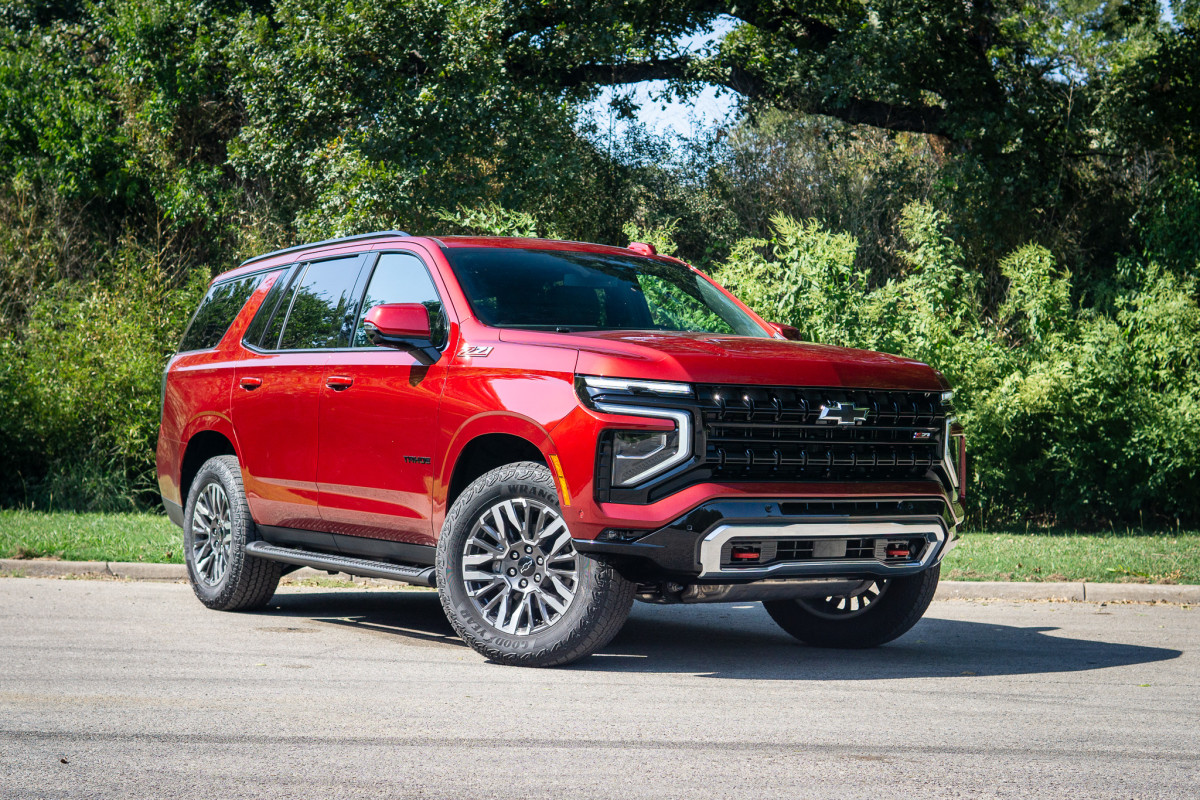
For a large SUV guide focused on gas mileage, the Tahoe's headline is its available 3.0-liter Duramax turbodiesel inline-six, updated for 305 hp and 495 lb-ft of torque. It's notably smooth and quiet for a diesel, and it's rated at up to 27 mpg on the highway—an especially useful advantage on long trips in a full-size, three-row SUV. Pair that efficiency with the Tahoe's 24-gallon fuel tank and you're looking at an estimated highway cruising range approaching 650 miles in the right configuration, while still keeping the towing capability many shoppers need (up to 8,400 pounds with the 5.3-liter V8, rear-wheel drive (RWD), and the Max Trailering package).
The 2025 refresh also makes day-to-day driving easier, with a much more modern cabin built around a standard 17.7-inch touchscreen, plus available large driver displays; importantly, Chevy keeps key climate functions on physical controls. Just keep practicality in mind if you're planning family road trips: cargo space is only 25.5 cubic feet behind the third row, even though it expands to 72.6 cubic feet with the third row folded and 122.9 cubic feet with both rear rows down. On the safety front, every Tahoe includes a strong set of standard driver-assistance features like automatic emergency braking and lane-keeping assist, even if the most recent Tahoe crash-test results haven't been class-leading.
The CarGurus Verdict: "Although the Tahoe receives only mild mechanical updates for the 2025 model year, its interior takes a healthy step forward. Its primary competitors–the Ford Expedition and the Jeep Wagoneer–no longer look or feel significantly nicer. An upgraded diesel engine also helps separate the Tahoe from the field, offering impressive fuel economy (for a vehicle of this size) and excellent performance." - Matt Smith
Read our most recent Chevrolet Tahoe review
2. Ford Expedition
CarGurus expert rating: 7.5 out of 10
CarGurus user rating: 4.4 out of 5
Percentage of Good and Great Deals available on CarGurus: 35.9%
Overall CarGurus rating: 4.5 out of 5
| Pros | Cons |
|---|---|
| Powerful engines | Thirsty engines |
| Impressive technology | Tech requires additional subscription |
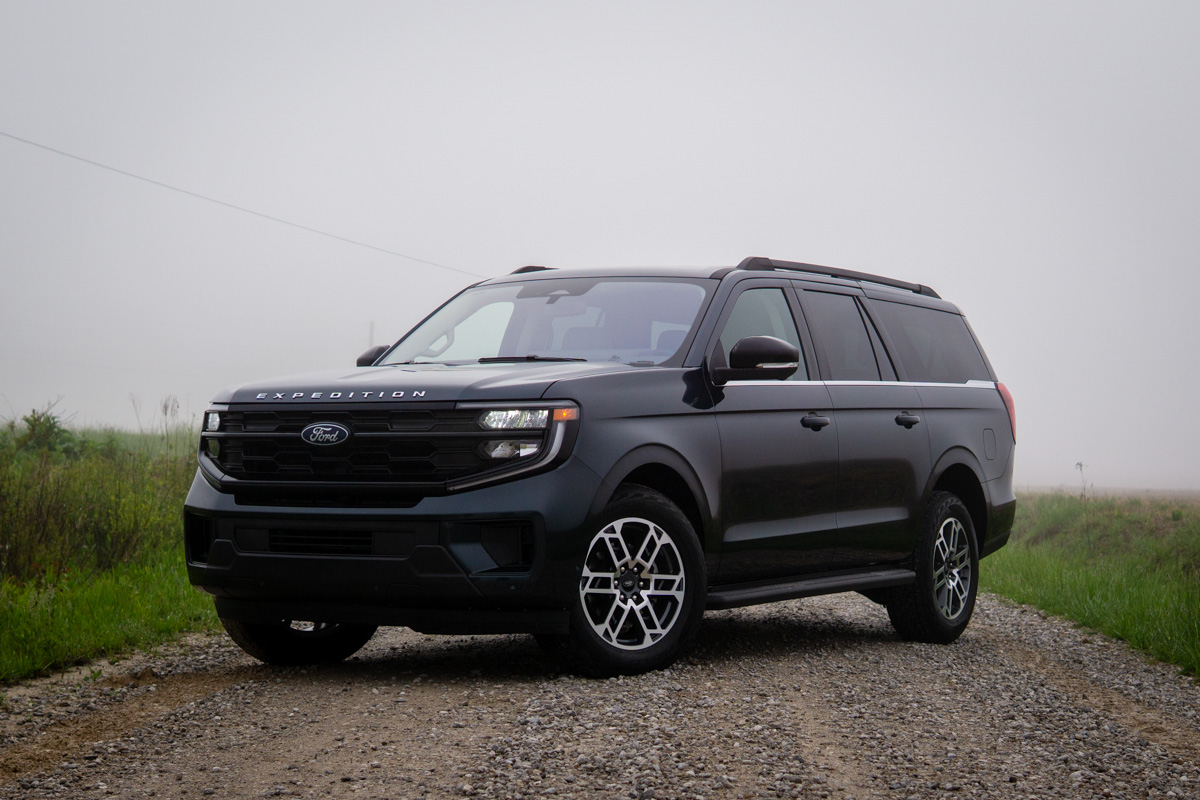
If you're reading a "best large SUVs for gas mileage" list, the 2025 Ford Expedition is here mostly as a reality check: this is a big, body-on-frame family hauler designed around space and towing, not sipping fuel. Every Expedition uses a twin-turbo 3.5-liter V6 (400 hp and 480 lb-ft of torque in standard form), and the EPA rates 2WD models at 16 mpg city/24 highway/18 combined; four-wheel drive (4WD) versions drop to 15/22/18. In our testing with a 4WD King Ranch, we saw 13.8 mpg, which tracks with what you'd expect from a nearly three-ton SUV.
That said, for shoppers who truly need three rows plus serious capability, the Expedition's strengths can still matter more than its fuel use. It can tow up to 9,600 pounds, and the Expedition MAX body style adds meaningful cargo flexibility (36.1 cubic feet behind the third row, up to 123.1 cubic feet with all rear seats folded), which can reduce the temptation to step up to an even larger vehicle. Ford also pairs the powertrain with a 10-speed automatic that feels relaxed on long highway drives, and the tech-heavy cabin—anchored by a huge 24-inch driver display—makes it easy to monitor trip and routing data, though some of the best built-in features require a paid connectivity plan after the included trial.
The CarGurus Verdict: "The Tremor is undeniably cool, and for such a large vehicle, the Expedition is surprisingly easy to drive in everyday circumstances. With a starting price just shy of $64,000 (or nearly $67K for a Ford Expedition MAX), there's no disputing that Ford's selling an expensive vehicle. However, both the Expedition and Expedition MAX offer a ton of standard equipment, and given their capability, both are priced in line with the Chevrolet Tahoe and Chevrolet Suburban." - Matt Smith
Read our most recent Ford Expedition review
3. GMC Yukon
CarGurus expert rating: 7.5 out of 10
CarGurus user rating: 4.5 out of 5
Percentage of Good and Great Deals available on CarGurus: 34.3%
Overall CarGurus rating: 4.5 out of 5
| Pros | Cons |
|---|---|
| Multiple powertrain options | Poor fuel economy |
| Powerful engine | Poor value for money |
| Plenty of cargo space |
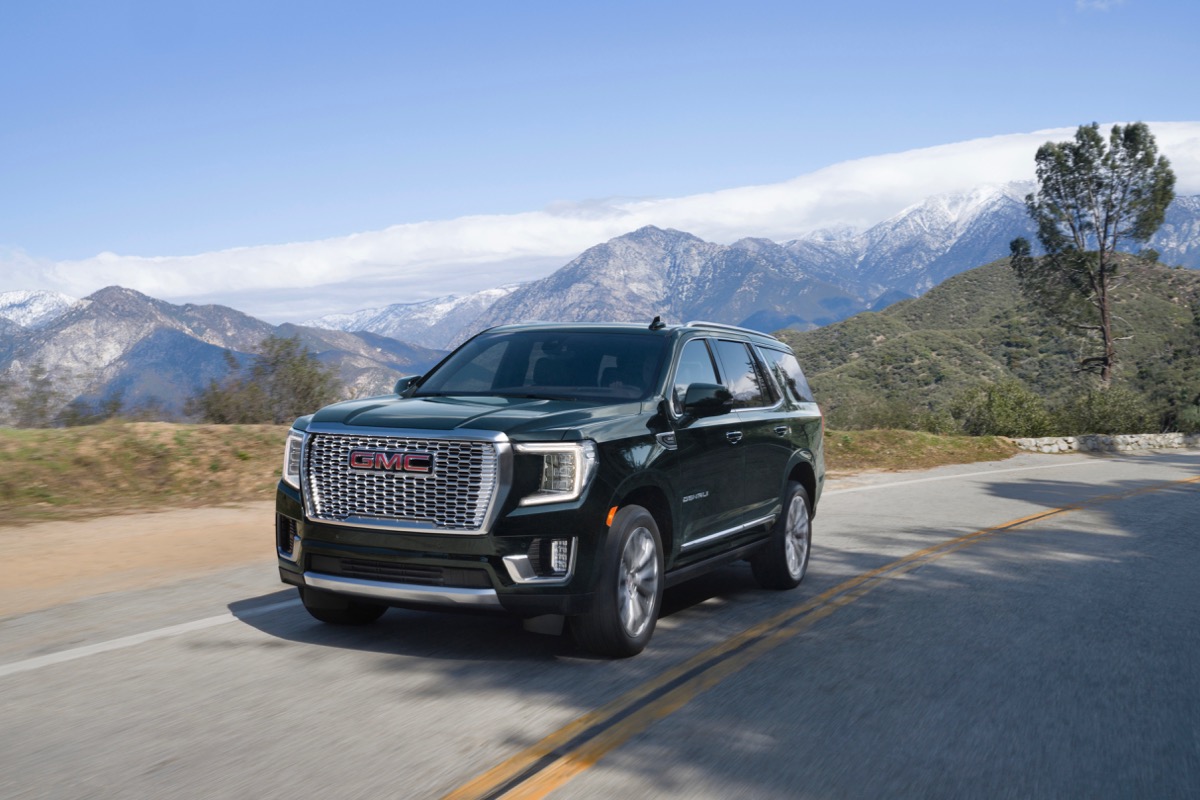
For a big three-row SUV, the 2022 GMC Yukon gives fuel-economy-minded shoppers a rare option: a 3.0-liter turbodiesel that makes 277 hp and 460 lb-ft of torque. GMC says the diesel Yukon can travel up to 648 miles on a tank, and EPA estimates land around 22–23 mpg combined—meaning it's the configuration to prioritize if your "large SUV" needs include long highway slogs, lots of family road trips, or frequent towing where torque and efficiency both matter. By comparison, the V8 options are much thirstier at about 16–17 mpg combined, and our V8 test vehicle averaged an indicated 14.9 mpg in mostly city driving.
Efficiency isn't the only reason to consider the Yukon, either: the 2021 redesign brought independent rear suspension, which helps ride comfort and usability in a vehicle this size, and it also unlocked much better third-row space (third-row legroom grew to 34.9 inches). Cargo room behind the third row increased to 25.5 cubic feet, which is helpful when you're trying to keep a big SUV from feeling like a big compromise on everyday errands. Add in standard driver-assistance tech (automatic emergency braking and lane-keeping assistance, among other features) plus available towing tech like Hitch View and trailer-specific blind-spot warning, and the Yukon is built to cover a lot of ground between fill-ups—especially if you choose the diesel.
The CarGurus Verdict: "Offering a lineup of "Professional Grade" trucks and SUVs with premium features, enhanced capabilities, and unique exterior and interior designs, GMC toes the line between Chevrolet and Cadillac." - Jeff Youngs
Read our most recent GMC Yukon review
4. BMW X7
CarGurus expert rating: 7.3 out of 10
CarGurus user rating: 4.7 out of 5
Percentage of Good and Great Deals available on CarGurus: 32.5%
Overall CarGurus rating: 4.4 out of 5
| Pros | Cons |
|---|---|
| Great handling | Potentially polarizing design |
| Easy-to-use technology | Unimpressive interior materials |
| Reasonable value for money |
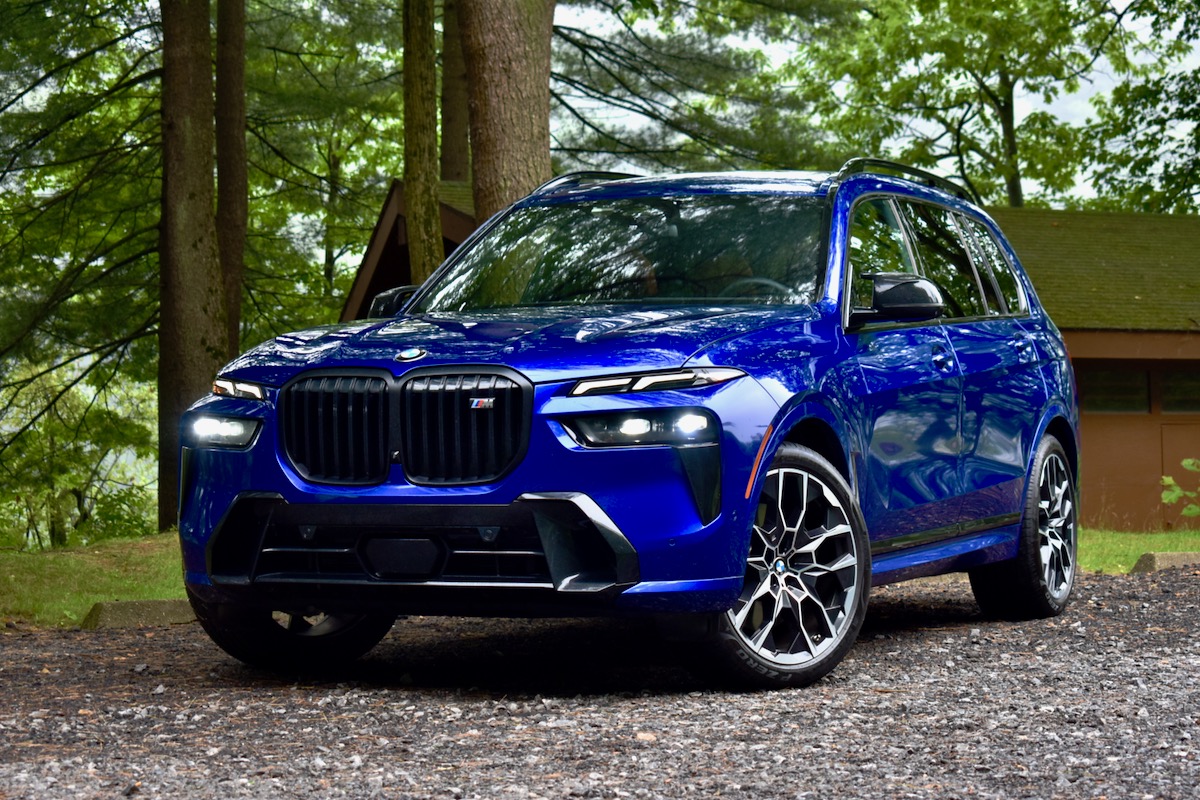
The 2025 BMW X7 is a full-size, three-row luxury SUV that tries to balance family-hauling usefulness with the brand's driver-first feel, and it does so with powertrains that include a 48-volt mild-hybrid system designed to take some load off the engine in everyday driving. For shoppers focused on fuel economy in a large SUV, the six-cylinder X7 xDrive40i is the one to target: its turbocharged 3.0-liter inline-six makes 375 hp and 398 lb-ft of torque and is rated up to 22 mpg combined (20 city/24 highway). Step up to the twin-turbo V8 X7 M60i xDrive (523 hp, 553 lb-ft) and efficiency drops to 17 mpg combined (16 city/20 highway), so the extra performance comes with a noticeable fuel-cost tradeoff.
Beyond mpg numbers, the X7's comfort and refinement help on long highway miles where big SUVs tend to rack up distance quickly. Interior space is competitive in all three rows, and cargo capacity is a strong point for the class: 48.6 cubic feet behind the rear seats and 90.4 cubic feet with the second and third rows folded, useful for road-trip packing without needing a roof box that can hurt efficiency. Tech is modern and generally easy to live with thanks to BMW's curved display (12.3-inch digital cluster plus a 14.9-inch touchscreen) and standard wireless Apple CarPlay and Android Auto, while safety tech like adaptive cruise control and hands-free Highway Assistant requires an options package—worth considering if you want the SUV to help manage speed and spacing during long commutes.
The CarGurus Verdict: "BMW loyalists will find more of what they love about the brand, while the X7's superb driving dynamics and reasonable pricing (for this high-end segment, that is) should give customers of rival brands something to think about." - Stephen Edelstein
Read our most recent BMW X7 review

5. Chevrolet Suburban
CarGurus expert rating: 8.2 out of 10
CarGurus user rating: 4.5 out of 5
Percentage of Good and Great Deals available on CarGurus: 35.4%
Overall CarGurus rating: 4.4 out of 5
| Pros | Cons |
|---|---|
| Excellent performance from the diesel engine | Ungainly size |
| Impressive technology | Expensive in every trim level |
| Massively useful cargo space | Skip the 24-inch wheels |
Big three-row SUVs aren't known for thrift at the pump, but the 2025 Chevrolet Suburban gives mileage-minded shoppers a smart workaround: the updated 3.0-liter Duramax turbodiesel inline-six. With 305 hp and 495 lb-ft of torque, it delivers strong everyday shove without leaning on high revs, and it's EPA-rated at 21 mpg city, 27 mpg highway, and 23 mpg combined. Pair that efficiency with the Suburban's standard 28-gallon fuel tank and you're looking at the potential for 700+ highway miles between fill-ups—exactly the kind of real-world road-trip advantage this class rarely offers.
That fuel-sipping range comes in the same huge, family-ready package the Suburban name is known for, including 41.5 cubic feet of cargo space behind the third row, 93.8 cubic feet with the third row folded, and a max of 144.7 cubic feet with both rear rows down. For 2025, a major interior tech makeover also matters on long drives: every Suburban gets a crisp 17.7-inch infotainment touchscreen (plus an 11-inch driver display), and standard driver aids like automatic emergency braking and lane-keeping assist help reduce fatigue. The tradeoff is cost—pricing starts at $63,495 including destination—and you'll want to avoid the available 24-inch wheels if ride comfort is a priority on rough pavement.
The CarGurus Verdict: "Z71 shoppers will love the newly available 3.0-liter diesel, but the majority of shoppers are going to want a new 2025 Suburban because of its impressive 17.7-inch touchscreen display." - Matt Smith
Read our most recent Chevrolet Suburban review
6. Mercedes-Benz GLS-Class
CarGurus expert rating: 8.5 out of 10
CarGurus user rating: 4.6 out of 5
Percentage of Good and Great Deals available on CarGurus: 34.1%
Overall CarGurus rating: 4.4 out of 5
| Pros | Cons |
|---|---|
| Comfortable | AMG Line Package impedes entry/exit |
| Premium interior materials | Third-row seat access |
| Easy-to-use technology | Touch-sensing controls |
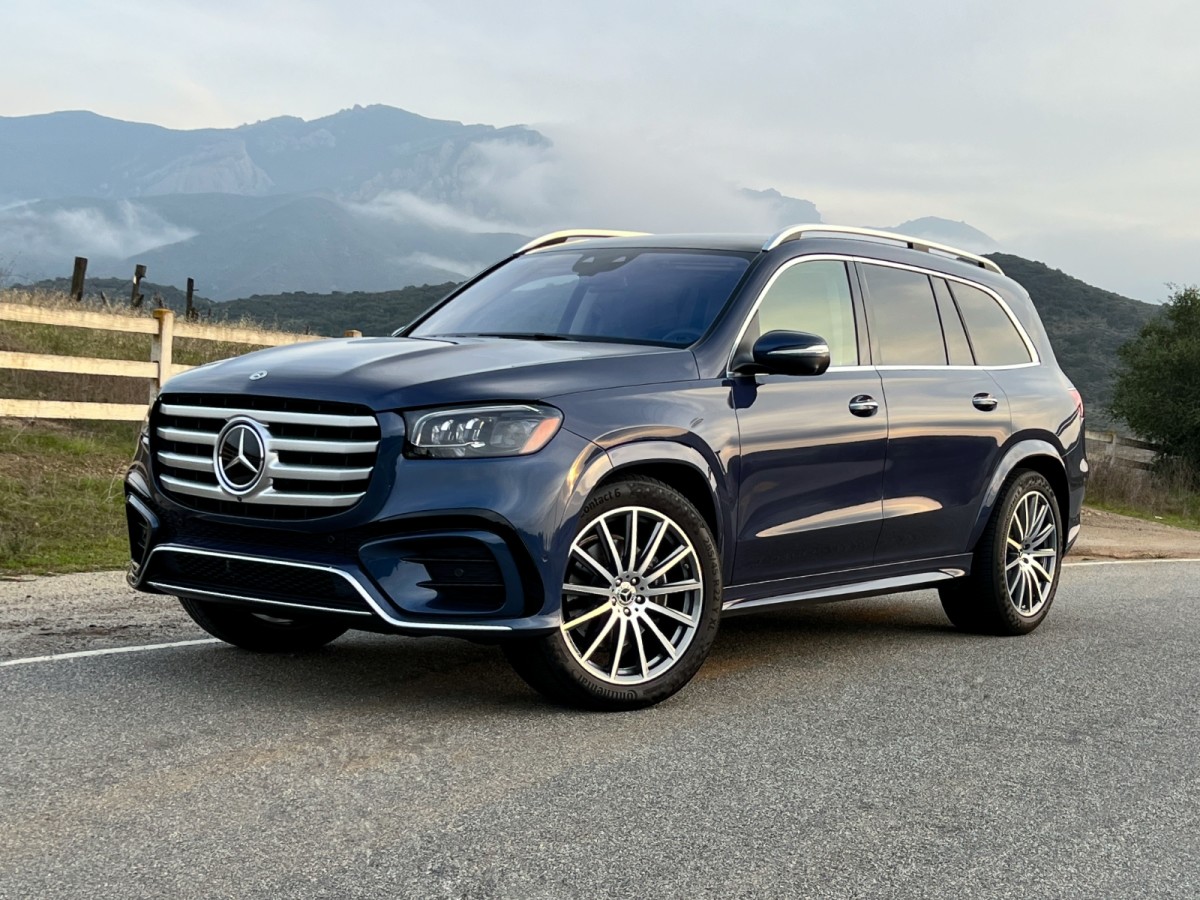
If you're shopping large three-row SUVs with gas mileage in mind, the GLS 450 is the version to know. It uses a turbocharged 3.0-liter inline-six with mild-hybrid tech, making 375 hp and 369 lb-ft of torque, and it's rated at 21 mpg combined—impressive for a 5,489-pound luxury SUV with standard 4Matic all-wheel drive (AWD). The mild-hybrid integrated starter-generator also adds an instant 148 lb-ft of torque off the line, so it feels quick without pushing you toward the pricier (and thirstier) V8 models.
Efficiency doesn't come at the expense of daily livability, either. The GLS is quiet and comfortable on long highway drives, and its adaptive cruise control and lane-centering assistance work smoothly when you're racking up miles. It's also genuinely useful as a family hauler with 17.4 cubic feet of cargo space behind the third row, 42.7 behind the second, and up to 84.7 with the rear seats folded—though it's worth noting that third-row access can be slow and fiddly, and some touch-sensitive controls (especially on the steering wheel and center console) can be easier to trigger than you'd like.
The CarGurus Verdict: "Often, when you buy something expensive, it fails to meet expectations. That's not the case with the terrific 2024 Mercedes-Benz GLS-Class. Yes, the price of entry is steep. But the gratification of living with one every day makes it worthwhile." - Christian Wardlaw
Read our most recent Mercedes-Benz GLS-Class review

7. Land Rover Range Rover
CarGurus expert rating: 7.7 out of 10
CarGurus user rating: 4.5 out of 5
Percentage of Good and Great Deals available on CarGurus: 31.0%
Overall CarGurus rating: 4.3 out of 5
| Pros | Cons |
|---|---|
| Multiple powertrain options | Unintuitive technology |
| Stylish design | Poor value for money |
| Standard all-wheel drive |
The 2025 Land Rover Range Rover puts refinement and capability ahead of fuel economy, yet still offers efficiency-minded powertrain choices for shoppers who want them. The base turbocharged 3.0-liter inline-six with mild-hybrid assistance is rated up to 21 mpg combined (19 city/24 highway), while the twin-turbo 4.4-liter V8 (523 hp and 553 lb-ft of torque in most trims) dips to about 19 mpg combined (and as low as 18 mpg combined in 606-hp SV form). The best route for fuel-saving day-to-day driving is the available plug-in hybrid, which carries an EPA-rated 53 miles of electric range—enough to cover many commutes and errands without burning gas.
Efficiency isn't the only reason people cross-shop a Range Rover, but its real-world usability helps justify choosing a larger SUV that's not focused purely on mpg. Available long-wheelbase versions deliver generous passenger space (up to 48 inches of second-row legroom in the two-row LWB configuration), and towing capacity reaches 8,200 pounds, putting it in the expected range for the segment. The cabin's minimalist design looks the part, but the touchscreen-heavy Pivi Pro interface can make basic adjustments more distracting than they should be, which is worth keeping in mind if you're trying to drive smoothly and maximize economy.
The CarGurus Verdict: "The Range Rover excels in refinement, while offering competitive interior space and towing capacity. But its user interface remains a weak point." - Stephen Edelstein
Read our most recent Land Rover Range Rover review
8. Lincoln Navigator
CarGurus expert rating: 7.7 out of 10
CarGurus user rating: 4.4 out of 5
Percentage of Good and Great Deals available on CarGurus: 35.3%
Overall CarGurus rating: 4.3 out of 5
| Pros | Cons |
|---|---|
| Stylish design | Poor ride quality |
| Powerful engine | Cramped back seats |
| Impressive technology | Too few physical controls |
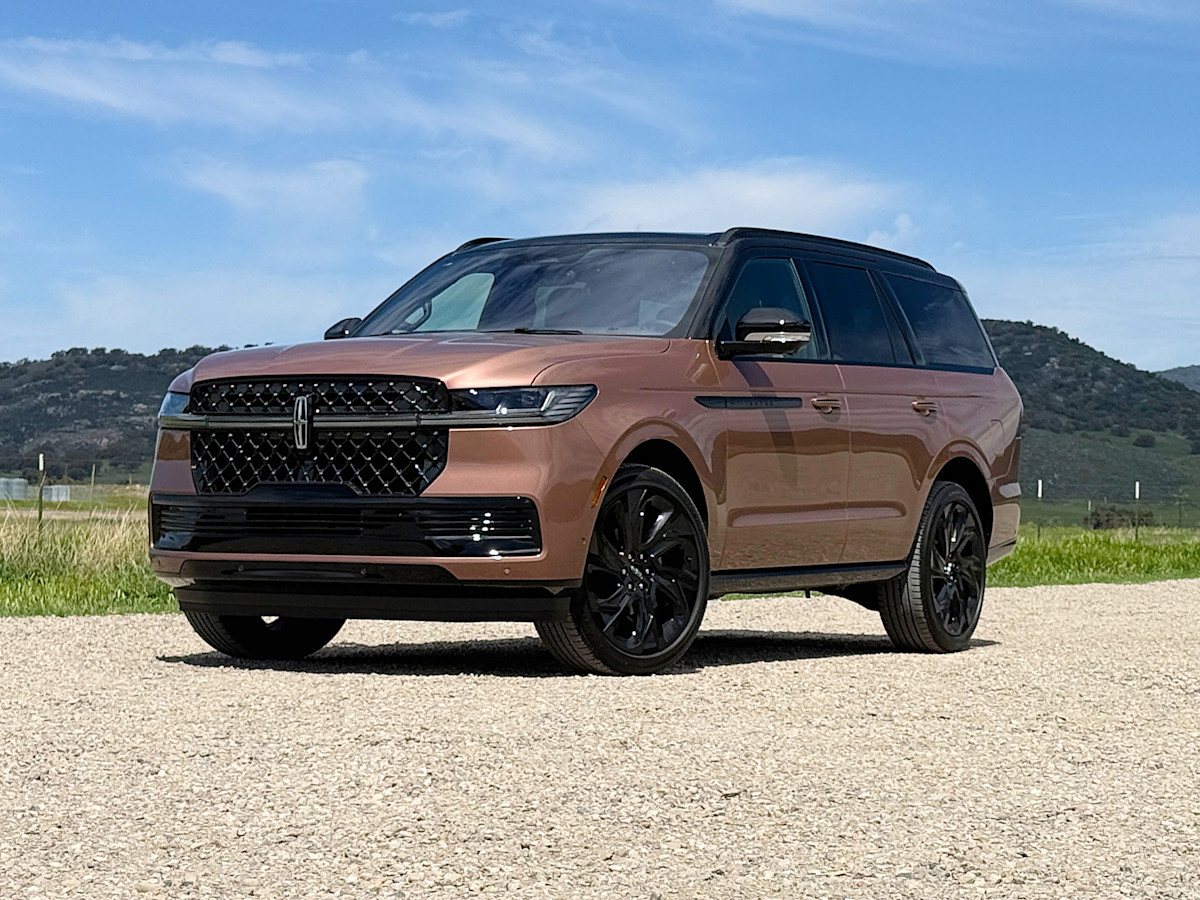
If you need a large three-row SUV but still care about gas mileage, the 2025 Lincoln Navigator sets expectations clearly: it's EPA-rated at 17 mpg combined, yet our observed fuel economy on a mostly highway route was 20.3 mpg (helped by a significant elevation drop). The drivetrain is a twin-turbocharged 3.5-liter V6 with 440 hp and 510 lb-ft of torque paired with a 10-speed automatic, and 4WD is standard—great for confident all-weather use, but it's also part of why efficiency won't match smaller crossovers. Wheel choice matters here, too: the available 24-inch wheels look the part, but they can make the ride feel rougher, which is a real-world downside on the long, steady drives where you're trying to maximize fuel economy.
On the usability front, the Navigator brings serious comfort for road trips, including Lincoln's Rejuvenate wellness programs (a "spa on wheels" approach) plus BlueCruise hands-free driving with a complimentary four-year subscription—both features that can reduce fatigue on long highway stints. The cabin redesign centers around the Lincoln Digital Experience with a 48-inch panoramic display and an 11.1-inch touchscreen, though the move to screen-based controls (even for air vents and some seat functions) can be distracting. For family hauling, the standard-length Navigator provides 21.6 cubic feet behind the third row, while the Navigator L expands that to 36.1 cubic feet, helping you carry more luggage without resorting to a roof box that can hurt mpg; the new Split Gate tailgate adds flexibility, even if it can make reaching far-forward cargo more difficult.
The CarGurus Verdict: "At its heart, the 2025 Lincoln Navigator is a truck-based, full-size luxury SUV that shares plenty with the more affordable Ford Expedition. In exchange for the premium you'll pay, the Navigator has exclusive design, materials, and features, and the luxurious Black Label trim is almost decadent inside. We think it might be worth its high price tag." - Christian Wardlaw
Read our most recent Lincoln Navigator review
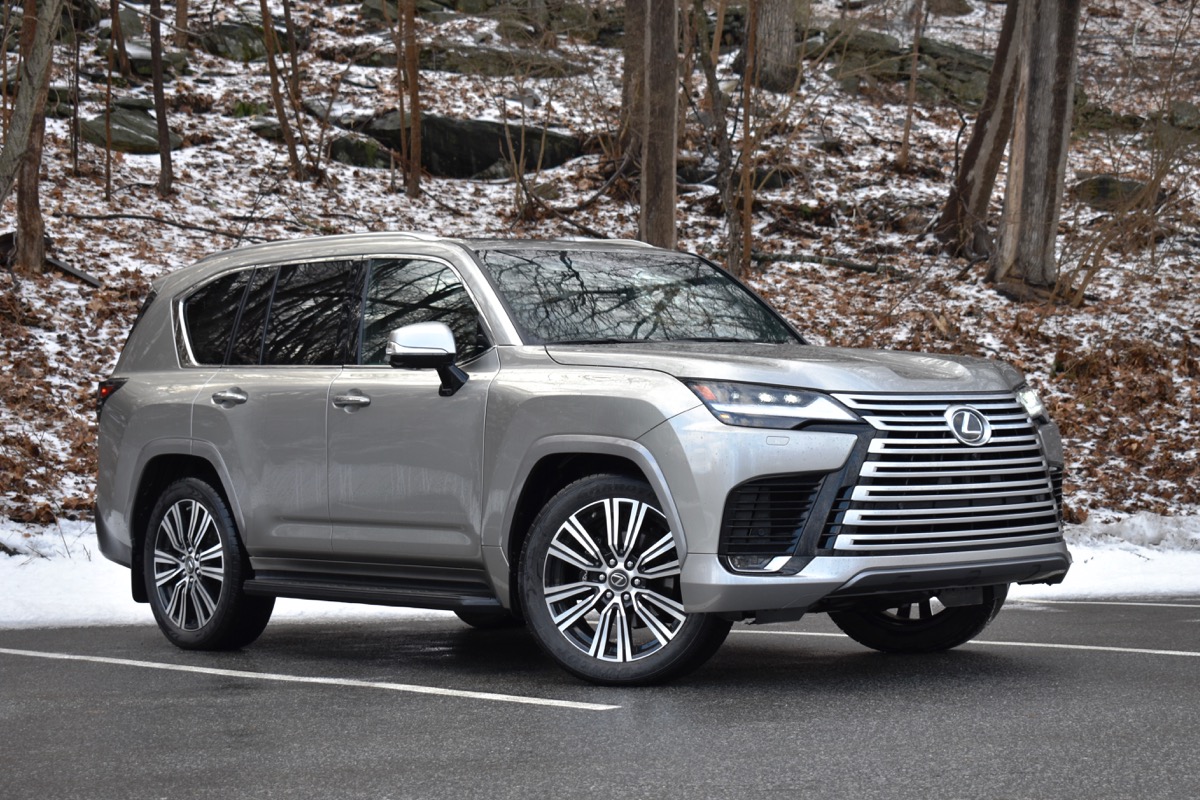
9. Lexus LX
CarGurus expert rating: 7 out of 10
CarGurus user rating: 4.5 out of 5
Percentage of Good and Great Deals available on CarGurus: 27.0%
Overall CarGurus rating: 4.2 out of 5
| Pros | Cons |
|---|---|
| Standard all-wheel drive | Potentially polarizing design |
| Comfortable | Poor fuel economy |
| Wireless Apple CarPlay/Android Auto | Unintuitive technology |
In a world of big, heavy three-row SUVs, the redesigned Lexus LX 600 is notable for one reason that matters in a gas-mileage guide: it finally moves the needle in the right direction. Switching from the prior V8 to a 3.5-liter twin-turbo V6 with 409 hp and 479 lb-ft of torque (paired with a 10-speed automatic and standard 4WD) brings an EPA-rated 19 mpg combined (17 city/22 highway), a major improvement over the old model's 14 mpg combined. That said, Lexus' own body-on-frame flagship still isn't "efficient" by most standards, and a real-world 16.5 mpg observed average shows how easy it can be for a large luxury SUV to miss its window sticker when you mix in traffic, hills, and highway speed.
If your goal is to balance fuel use with genuine capability, the LX pairs that improved mileage with a comfortable, controlled ride and features that can help avoid wasted fuel on long trips, like standard adaptive cruise control. The trade-offs are familiar for the segment: cargo room trails some rivals (64 cubic feet with the rear two rows folded, and just 11 cubic feet with all three rows in place), and the new dual-screen infotainment setup packs in features like wireless Apple CarPlay/Android Auto but can be frustrating to operate efficiently day-to-day. For drivers who want a large SUV that can tow up to 8,000 pounds (when properly equipped) and still return better mpg than its predecessor, the LX's redesign makes the biggest difference at the pump—even if it remains a costly way to chase fuel savings.
The CarGurus Verdict: LThe LX lacks the on-road driving prowess of the BMW X7 and Range Rover, the subtlety of the Mercedes GLS, and the sheer interior space of Cadillac Escalade and Lincoln Navigator, but it still has a lot going for it. The Lexus’ comfortable ride and (relatively) manageable size make a difference and real-world driving, and impressive off-road capability means this is no poseur SUV. While no longer a trendsetter, the 2022 LX 600 makes Lexus’ flagship SUV relevant again." - Stephen Edelstein
Read our most recent Lexus LX review
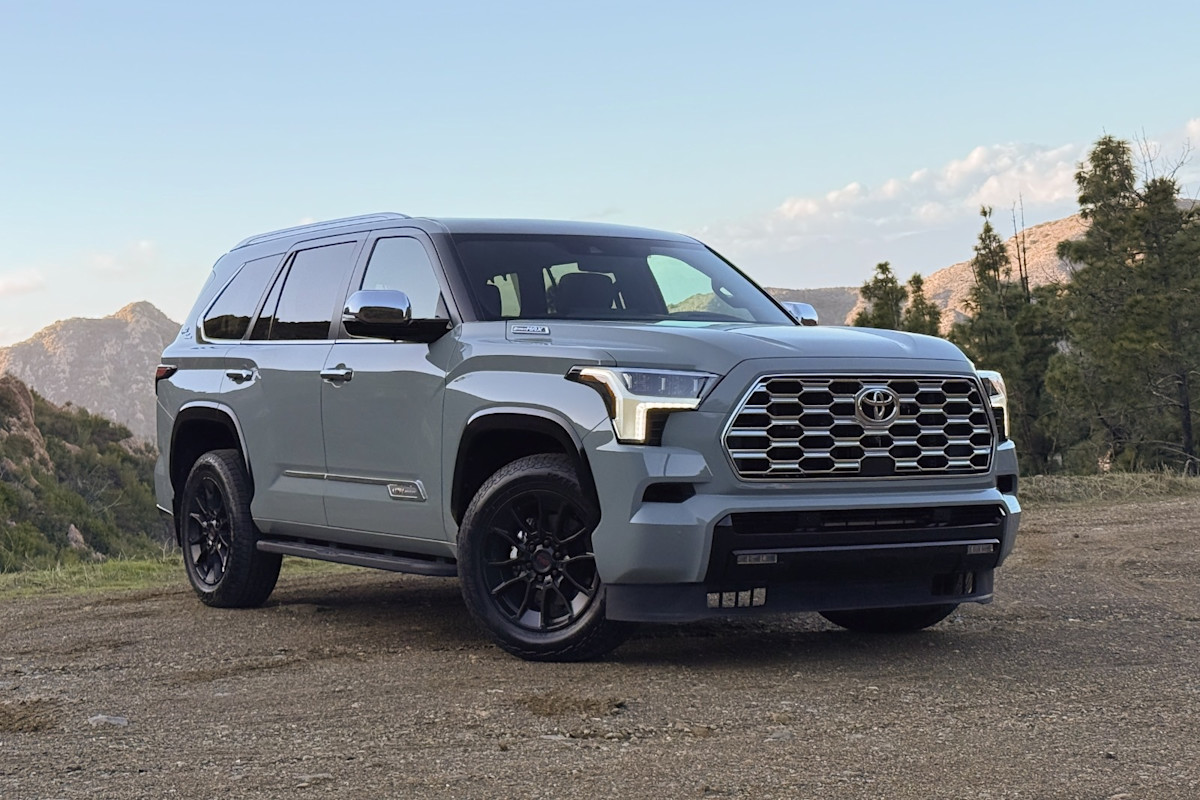
10. Toyota Sequoia
CarGurus expert rating: 5.5 out of 10
CarGurus user rating: 4.4 out of 5
Percentage of Good and Great Deals available on CarGurus: 33.9%
Overall CarGurus rating: 4.1 out of 5
| Pros | Cons |
|---|---|
| Stylish design | Poor fuel economy |
| Powerful engine | Cramped third row |
| Easy-to-use technology | Not much cargo space |
Toyota's Sequoia is a full-size, body-on-frame SUV with a standard i-Force Max hybrid powertrain, pairing a twin-turbo 3.4-liter V6 with an electric motor for 437 hp and 583 lb-ft of torque. That muscle is the point—especially if you're towing (up to 9,520 pounds depending on configuration)—but it's not the kind of hybrid that belongs near the top of a "best gas mileage" list. EPA estimates for 4WD models sit at 20 mpg combined, and our experience in 2-Hi (RWD) driving showed just 16.2 mpg on the evaluation loop, a reminder that this is a 6,000-plus-pound SUV designed more for work than thrift.
Efficiency-minded shoppers also need to weigh practicality, because Sequoia's packaging compromises cut into everyday usability: with the third row up, cargo space is just 11.5 cubic feet, expanding to 49 cubic feet with the third row folded, and topping out at 86.9 cubic feet with the second and third rows down. The new 1794 Edition adds upscale touches and modern tech (including a 14-inch touchscreen and available camera aids), but it can't change the fundamentals—if you don't truly need big towing numbers, Toyota's own lineup (and rival full-size SUVs with roomier third rows) may make more sense for family hauling and fuel stops alike.
The CarGurus Verdict: "People buy full-size SUVs to carry lots of people, haul lots of cargo, and tow lots of weight. However, due to its packaging requirements, the Sequoia is a rock star only if you're attaching a trailer to it, and even then, it's not class-leading in capability." - Christian Wardlaw
Read our most recent Toyota Sequoia review
The Best Large SUVs for Gas Mileage FAQs
Which large SUV gets the best gas mileage?
Based on EPA estimates, the most fuel-efficient large SUVs on this list are the Chevrolet Tahoe and Chevrolet Suburban when equipped with the available 3.0-liter Duramax turbodiesel engine. They can achieve up to 27 mpg on the highway, which is an impressive figure for such large vehicles.
Are diesel SUVs a good choice for fuel economy?
Yes, for highway driving in particular, diesel engines can be an excellent choice. The Chevrolet Tahoe, Suburban, and GMC Yukon all offer a turbodiesel engine that provides strong torque for towing and a significantly better highway fuel-economy rating than their V8 gasoline counterparts. This translates to a much longer cruising range, which is ideal for road trips.
Do hybrid large SUVs actually save gas?
It depends on the type of hybrid. A plug-in hybrid (PHEV) like the Land Rover Range Rover can cover many daily driving needs on electricity alone, saving a lot of gasoline if you can charge it regularly. Other models, like the Toyota Sequoia, use a standard hybrid system that is more focused on generating power and torque for towing, and our testing shows its real-world fuel economy may not be a significant improvement over some gasoline-only competitors.
Which is more fuel-efficient, a V6 or a V8 engine in a large SUV?
Generally, a modern turbocharged V6 engine will offer better fuel economy than a larger V8. For example, the Ford Expedition and Lincoln Navigator use a twin-turbo V6. However, the most efficient options in this class are often not gasoline engines at all, but rather the diesel engines found in the GM full-size SUVs or the mild-hybrid and plug-in hybrid systems offered by luxury brands like BMW and Land Rover.
What Makes CarGurus Best Cars Guides Different?
Most car-shopping websites publish lists of the best cars across a variety of categories, with recommendations generally driven by editorial expertise. Here's what makes ours different: In addition to the insights and verdicts of our team of car-testing experts, our best cars guides take into account other factors that we know matter to buyers-real owner experiences and current market value.
Our expert reviewers are among this country's most trusted automotive journalists, also writing for publications including US News and World Report, Edmunds, Digital Trends, J.D. Power, and Car & Driver. They put each car through real-world testing and create detailed reviews of performance in a range of categories, from practicality and driving manners to cost-effectiveness and safety.
We also analyze hundreds of thousands of used car listings on CarGurus.com to track which models consistently offer the highest percentage of best deals relative to how many are listed for sale. Then we factor in reviews from owners-people who actually live with these cars every day. Our proprietary Best Cars algorithm then creates a final Overall CarGurus rating combining expert scores, user reviews, and the percentage of listings that have earned the Good or Great Deal rating. This multi-pronged approach reveals not just which cars excel on paper, but which ones deliver satisfaction and value when you're ready to buy.
The CarGurus market data used in this guide was last updated in March 2026. Values were accurate at time of publication and should be used as a guide only.