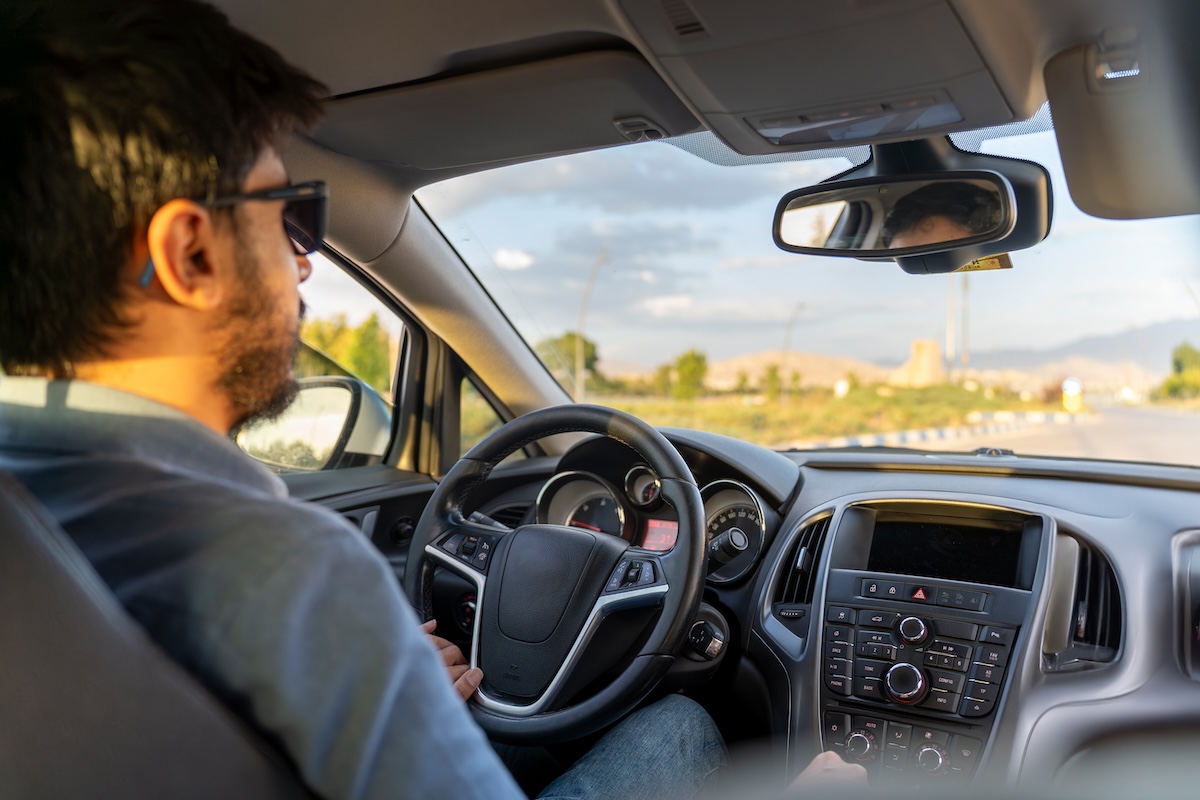
Hard to believe, but the percentage of teenagers with driver's licenses decreased from 65 to 40 percent between 1995 and 2021. Yet that doesn't mean there aren't growing numbers of new drivers hitting America's roads every year — whether people are getting their licenses later in life or arriving from another country, there remains a very real market for vehicles that cater to first-time motorists.
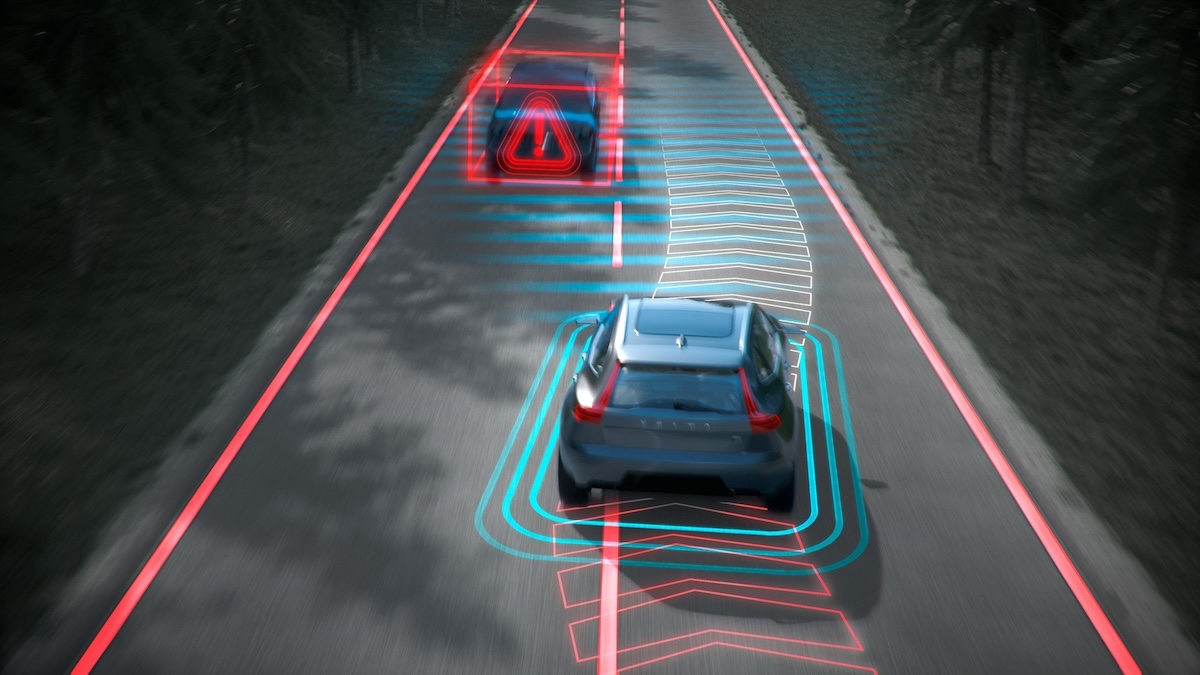
The top priority for new drivers is safety, since limited experience makes them more accident-prone. That's why this buyer's guide focuses on models that earn strong marks from the National Highway Traffic Safety Administration (NHTSA) and the Insurance Institute for Highway Safety (IIHS) for crashworthiness, while also weighing ease of use and the availability of active-safety technologies like automatic emergency braking (AEB) and blind spot monitoring.
Accessing that kind of technology often means shopping the new car market, which can clash with new and teen drivers' second major concern: affordability. That covers not just the sticker price, but also maintenance, fuel, insurance, parking, registration, and beyond. Because insurance premiums can run high, it's wise to avoid sports cars like Ford Mustangs, Subaru BRZs, or quick BMW coupes. Large pickup trucks are worth skipping too, as they can be harder to handle, tend to carry fewer safety features, and cost more to fuel and insure.
To save you the legwork, we've put together a solid ranking of the 10 best first cars for new drivers that tick all the right boxes. Because buyers have different needs and preferences, we've included a mix of cars, trucks, SUVs, and crossovers. Every new and used option on this list comes in well under $30,000, with pre-owned versions often available for considerably less than their brand-new equivalents.
The Best First Cars for New Drivers in 2026
- Chevrolet Equinox
- Ford Fusion Hybrid
- Honda Civic
- Mazda Mazda2
- Hyundai Ioniq Hybrid
- Hyundai Venue
- Kia Forte
- Subaru Impreza
- Toyota Corolla
- Toyota Sienna
FAQs What Makes CarGurus Best Cars Guides Different Shopping Tools Related Topics

Chevrolet Equinox
For buyers set on going new, the fully redesigned Chevrolet Equinox is a compelling pick for first-time drivers, bringing fresh styling, updated technology, and strong value to the table. Priced from $29,995, it's available in LT, RS, and ACTIV trims, with all-wheel drive offered as a $2,000 add-on. Under the hood, a 1.5-liter turbocharged four-cylinder produces 175 horsepower and returns up to 31 mpg on the highway, paired with a new eight-speed automatic transmission on AWD variants for a more refined driving experience.
The cabin features an upgraded 11.3-inch touchscreen with standard wireless Apple CarPlay and Android Auto. The RS trim brings a striking black-and-red interior treatment, while the ACTIV gets a rugged Maple Sugar and Black color scheme. Cargo versatility is a strength, with up to 63.5 cubic feet of total storage space.
Safety is a genuine highlight, with Chevy Safety Assist now encompassing blind-zone monitoring and an enhanced emergency braking system. Teen Driver Technology allows parents to cap speed and audio volume — a useful tool for households with newer drivers. Squaring off against rivals like the Toyota RAV4 and Honda CR-V, the Equinox holds its own with a contemporary design and well-equipped trim levels at an approachable price point.
Ford Fusion Hybrid
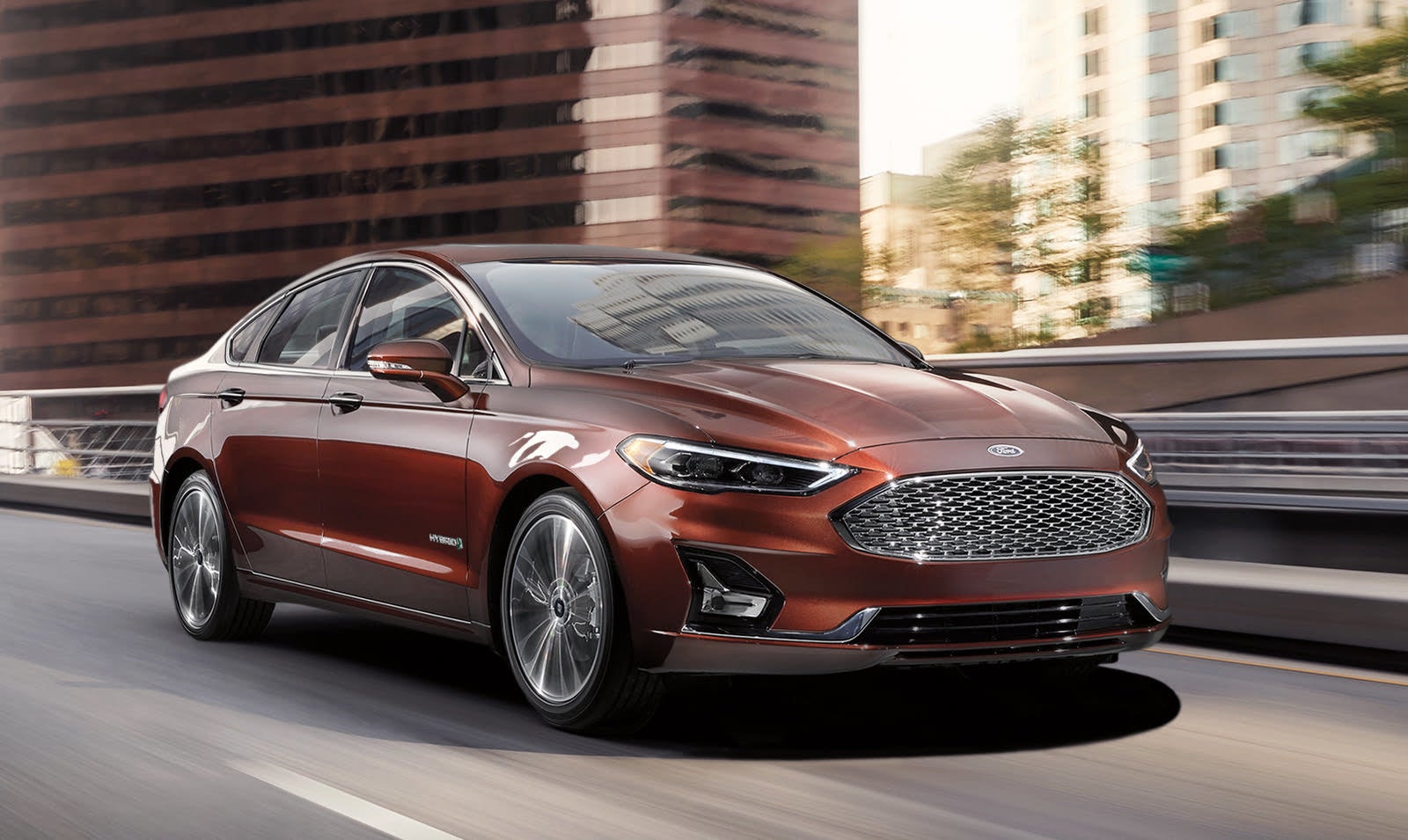
For used-car shoppers, the Ford Fusion Hybrid deserves a close look. Ford wrapped up production of the Fusion Hybrid sedan after the 2020 model year, and prices on these later examples have settled comfortably under $20,000. A plug-in hybrid version, the Fusion Energi, was also available but tends to command a slight premium. The standard non-hybrid Fusion is a respectable vehicle in its own right, though its fuel economy pales in comparison. Midsize sedans have fallen out of favor — part of the reason Ford stopped building them — but the Fusion remains an engaging car to drive, with a spacious interior, a touch of visual flair, and a well-rounded safety package.
The front-wheel-drive Fusion Hybrid comes in several trim levels, all sharing a gas-electric powertrain rated by the EPA at 43 mpg city and 41 mpg highway. Beyond that efficiency, buyers get a comfortable midsize sedan with solid crash-test scores, along with standard forward automatic emergency braking (AEB) and blind-spot monitoring on 2017 and newer models. Lane-departure warnings and a driver alertness monitor were also available across the lineup.
While it's no performance machine, the 195-hp Fusion Hybrid offers capable everyday performance and a respectable reliability record — durable enough, in fact, that mid-2000s examples were a favorite among New York City taxi fleets. The infotainment system is intuitive and integrates Apple CarPlay, Android Auto, and Amazon Alexa with ease.
Honda Civic
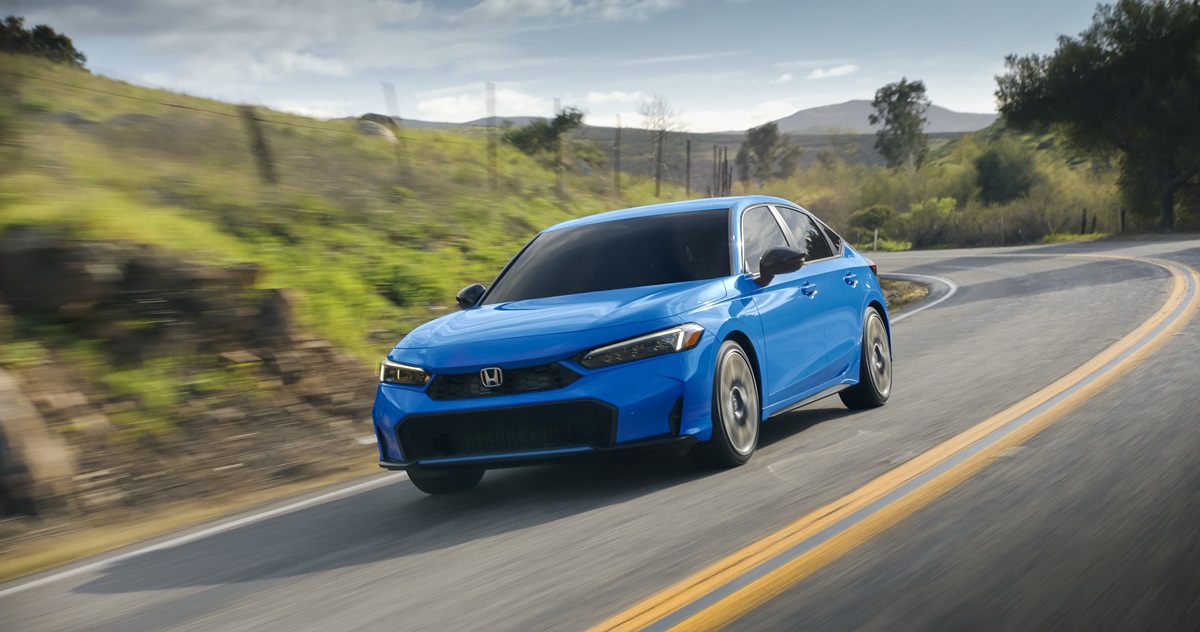
Poll a room of drivers about their first new car and there's a solid chance the "Honda Civic" comes up more than once. For generations, buyers have turned to the Civic — in all its configurations — for its winning combination of value and dependability. That reputation holds just as firmly today, and both the tenth-generation (2016-2021) and current eleventh-generation (2022-present) models stand out as excellent choices for new drivers. We'd even put it ahead of its bigger Honda Accord sibling or the German rival, the Volkswagen Jetta.
Civics are compact without feeling fragile, and the 2022-and-newer models offer rear-seat space that rivals many midsize sedans, including the Fusion above. The engines are modest in displacement but punchy in practice, and the handling is engaging yet forgiving — communicating the car's limits to the driver in a way that builds confidence rather than anxiety. The high-performance Type R is best left to more experienced hands. Standard Civics (all front-wheel drive) are powered by 2.0-liter or 1.5-liter four-cylinder engines ranging from 158 to 205 hp, paired with either a continuously variable automatic transmission (CVT) or a six-speed manual.
Every engine delivers strong fuel economy, and the Civic's reliability reputation is essentially unimpeachable. Perhaps most importantly for new drivers, Honda loads the Civic with an extensive suite of driver-assist features as standard equipment — including AEB with pedestrian detection and lane-departure warnings — and even manual-transmission models get adaptive cruise control. Additional safety tech is available as an option, helping the Civic consistently earn IIHS "Top Safety Pick" recognition. Add in a low purchase price and manageable insurance costs, and the Civic makes a near-perfect first car.
Mazda Mazda2
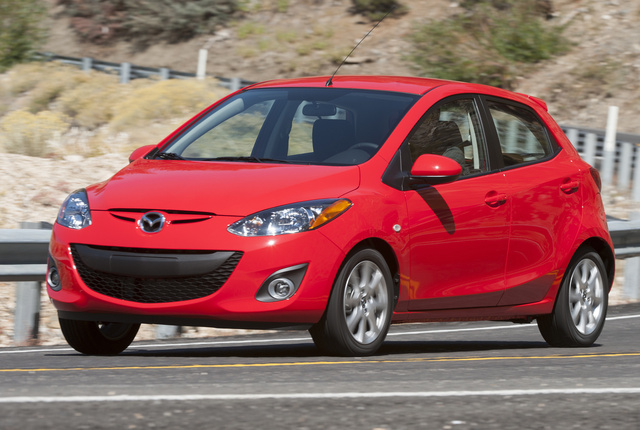
Mazda no longer brings its quirky little five-door Mazda2 subcompact hatchback to U.S. shores, but a healthy supply of used examples — typically priced between $4,000 and $12,000 — can be found through CarGurus' used vehicle listings. The EPA rates it at 29 mpg city and 35 mpg highway, making it one of the most budget-friendly options on this list to run. And while 100 hp and 98 lb-ft of torque might not sound impressive on paper, it's enough to hustle the little Mazda from zero to 60 mph in under nine seconds.
Affordability is just one piece of the appeal, though. Like other Mazda models, the 2 has built a reputation as one of the more reliable cars produced in the last 15 years, earning strong scores from Consumer Reports and a dependability award from J.D. Power. It also holds up well in crash testing, with solid ratings from both the IIHS and NHTSA. It doesn't pack advanced safety tech beyond ABS and stability control, but it compensates with excellent outward visibility and braking performance that's impressive for its class.
It's also a genuinely fun and responsive hatchback — often described as a front-wheel-drive Miata — that teaches new drivers about car control and feedback in the best possible way. It'd be right at home at an autocross event or a high-performance driving event (HPDE).
Practically speaking, the Mazda2 punches well above its weight. Inside, it can realistically seat four passengers (five in a squeeze), and folding the rear seats opens up a surprisingly useful cargo area. Think of it as a tiny minivan — a handy addition to any household with a new driver. It's equally well-suited as a daily driver for city dwellers or students working with a tight budget.

Hyundai Ioniq Hybrid
If the Hyundai Ioniq bears a resemblance to a Toyota Prius, that's very much by design. Hyundai took note of the Prius's success and set out to build a hybrid hatchback of its own. While Toyota has continued to raise the bar, the 2017-2022 Ioniq improved on the original Prius formula in several meaningful ways — starting with exterior styling that's more conventional and, frankly, easier on the eyes. Behind that cleaner shell sits a roomier interior with more supportive front seats, noticeably more rear passenger space, and greater cargo capacity behind the back seats.
At the pump, the Ioniq edges out the Prius, returning 55 mpg combined across most trims and climbing to 58 mpg in the efficiency-focused Blue model, compared to 52 and 56 mpg combined for the Prius. Like Toyota, Hyundai offered a plug-in hybrid (PHEV) variant and a fully electric Ioniq — both reasonable first-car candidates, though they carry higher price tags and are harder to track down. While Hyundai initially offered fewer standard active-safety features than the Prius, from 2020 onward the Ioniq came equipped with standard AEB and lane-departure warnings, with blind-spot monitoring and other systems available on higher trims.
The Ioniq didn't rack up as many IIHS "Top Safety Pick" awards as the Prius did during comparable model years, but it remains a safe and approachable vehicle to drive — if not a particularly spirited one. A redesigned Hyundai Elantra hybrid arriving in 2021 made it harder to justify continuing the Ioniq nameplate, and Hyundai eventually repurposed the Ioniq name for its electric vehicle lineup starting in late 2022. Even so, the original Ioniq Hybrid remains a smart first-car choice.
Hyundai Venue
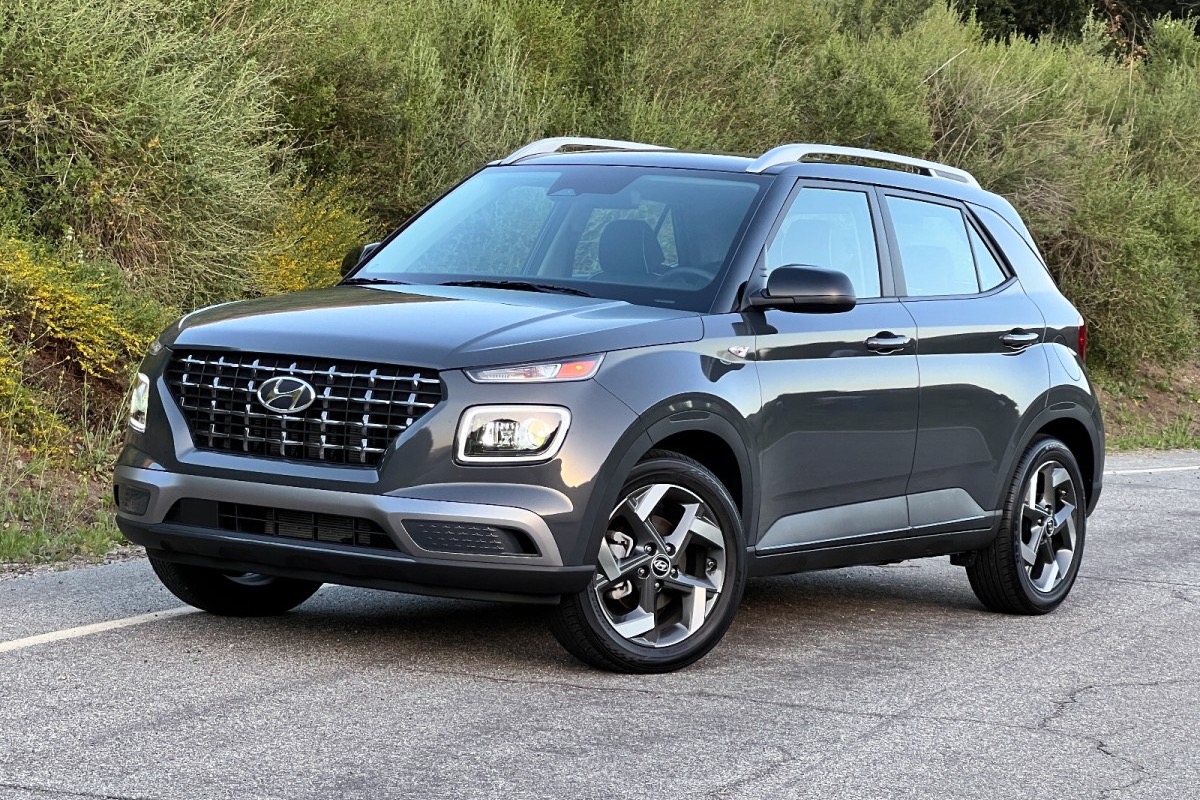
The Hyundai Venue holds the title of smallest SUV on sale in the U.S. and the most compact vehicle on this list. Calling it a true "SUV," though, requires a bit of imagination — it's really a tall hatchback dressed up in crossover styling inspired by the brand's larger Palisade. The Venue is also among the most affordable entries in the crossover segment, starting just above $20,000, which means used examples can be found for even less. Hyundai hasn't made sweeping changes since its 2021 introduction, so slightly older models represent solid value.
Whatever you call it and whatever you pay, the Venue comes standard with AEB, pre-collision and lane-departure warning systems, an 8-inch touchscreen with Apple CarPlay and Android Auto, and a 121-hp engine capable of returning up to 33 mpg on the highway. That's the baseline SE trim; for around $2,000 more, the Venue SEL adds alloy wheels, a sunroof, and expanded safety features that are well worth considering.
While it's front-wheel drive only and not particularly thrilling to pilot, the Venue is safe, dependable, and straightforward to live with. Like every new Hyundai, it's also backed by a 10-year/100,000-mile powertrain warranty and comes with complimentary scheduled maintenance for three years or 36,000 miles.

Kia K4
Much like the Honda Civic, the Kia K4 delivers affordability, reliability, generous interior space, and a strong roster of standard safety features. Introduced as the Forte's successor for the 2025 model year, it arrives exclusively as a compact four-door sedan — but don't let the single body style fool you. The rear seat and trunk (nearly 15 cubic feet) are impressively large for a car in this class. Starting around $22,000 brand new, the 2025 Kia K4 includes automatic emergency braking with pedestrian detection, lane-departure warnings, lane-keeping assist, and forward collision warnings right out of the box. Adaptive cruise control and lane-centering assist come standard as well.
Most new drivers will want to pass on the 190-hp, 1.6-liter turbocharged GT-Line Turbo — though it draws comparisons to the Civic Si — and the lack of a manual transmission option may disappoint some. Reviewers note, however, that the eight-speed automatic on that variant shifts with satisfying urgency. The standard K4 pairs a 2.0-liter naturally aspirated four-cylinder making 147 hp with a CVT. All trims are front-wheel drive. The base K4 won't set your pulse racing, but it's smooth, refined, and genuinely easy to operate day to day. Fuel economy is a highlight too, with up to 30 mpg in the city and 40 mpg on the highway — impressive figures by any measure.
K4s feature a 12.3-inch touchscreen running Apple CarPlay and Android Auto, and like the car itself, Kia's infotainment interface is intuitive from the first use. Available upgrades include built-in navigation, wireless charging, a premium Harman Kardon audio system, and more.

Subaru Impreza
A consistent winner of IIHS "Top Safety Pick" and "Top Safety Pick+" awards, the Subaru Impreza received a thorough redesign for 2024 and continued to earn top marks from the safety organization. Calling it entirely new would be a stretch, though — it shares its engines, standard symmetrical AWD system, and comprehensive safety technology with the previous-generation 2017-2023 model on which it's closely based.
The 2024 redesign brought meaningful refinements, sharper styling, and a shift to hatchback-only body styles, but the prior generation remains equally appealing for new drivers and is available at lower price points. That earlier model also came as a four-door sedan for those who prefer the traditional look, though the hatchback offers more practical versatility. Subaru's standard symmetrical AWD system provides confident traction across a wide range of conditions, and the EyeSight driver-assist suite — included as standard equipment — covers everything from AEB to adaptive cruise control with lane-centering.
As in prior model years, 2025 Imprezas are powered by 2.0- or 2.5-liter four-cylinder engines producing 152 or 182 hp, though the manual transmission option has been retired, leaving CVTs across the lineup. Since manual-equipped models previously had to sacrifice many EyeSight features, the loss isn't as significant as it might seem. The Impreza isn't especially exciting to drive and won't win any fuel economy contests, and older Subaru engines have historically been prone to head gasket issues — but for more recent model years, predicted reliability looks encouraging.
Toyota Corolla
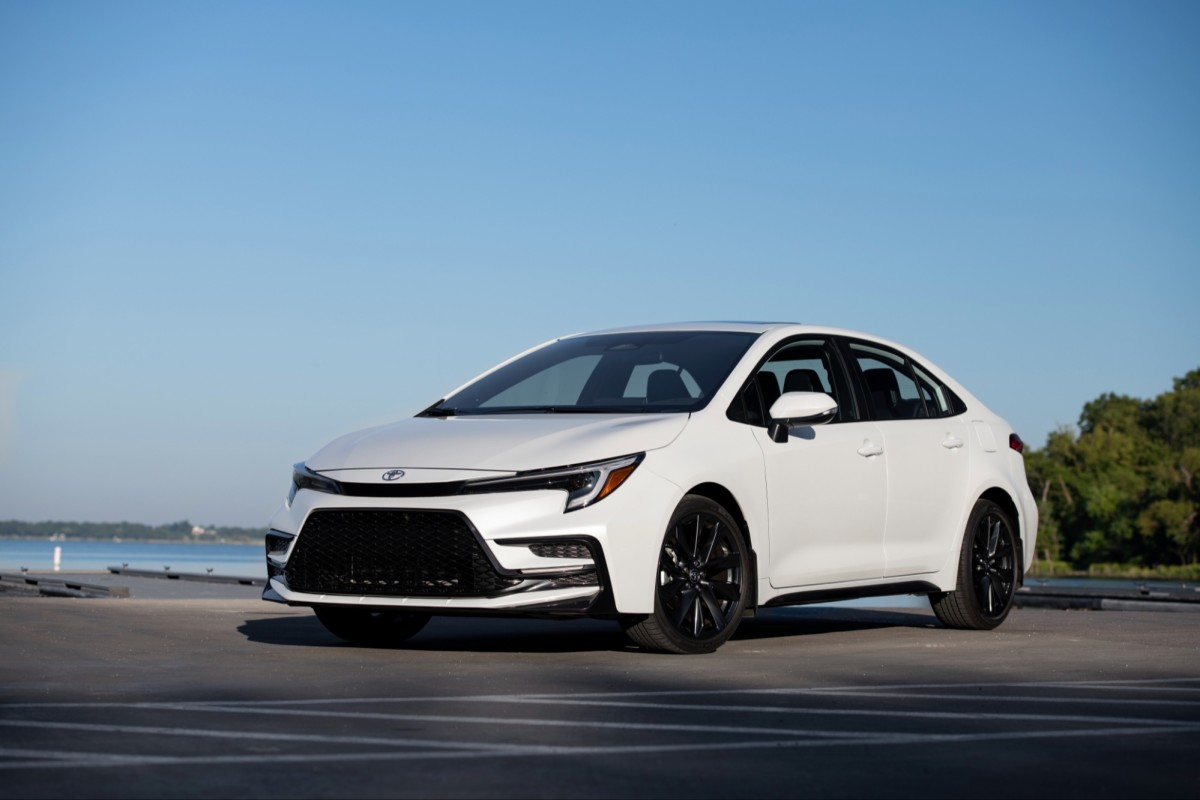
As countless young drivers have discovered since 1966, it's difficult to make a wrong turn with a Toyota Corolla, and today's lineup offers something for nearly every type of buyer. For 2026, Toyota covers the spectrum from the no-frills LE sedan to the spirited XSE and GR hatchbacks, with a crossover variant in the form of the Corolla Cross and an available hybrid powertrain for maximum efficiency.
With a starting price just north of $22,000, the Corolla isn't the cheapest option around, but it delivers solid value backed by one of the strongest reliability records in the industry — meaning it should serve its owner faithfully for years. It has also earned repeated IIHS "Top Safety Pick" recognition, including in 2023 when the organization significantly raised the bar for that designation. The main criticisms? Outside of the track-focused GR model (which isn't a fit for new drivers), the Corolla isn't particularly engaging behind the wheel, and rear-seat space is modest — most notably in the hatchback, which offers the least rear headroom and legroom of any car in the compact class.
If a new Corolla stretches the budget, the used market offers plenty of low-mileage examples that deliver comparable efficiency and dependability, even if they lack some of the newer model's technology upgrades. Many come with Toyota-certified warranty coverage, including limited roadside assistance and 100,000 miles of powertrain protection. New drivers seeking similar levels of safety and reliability in a more spacious package should also take a look at the Toyota Camry.
Toyota Sienna
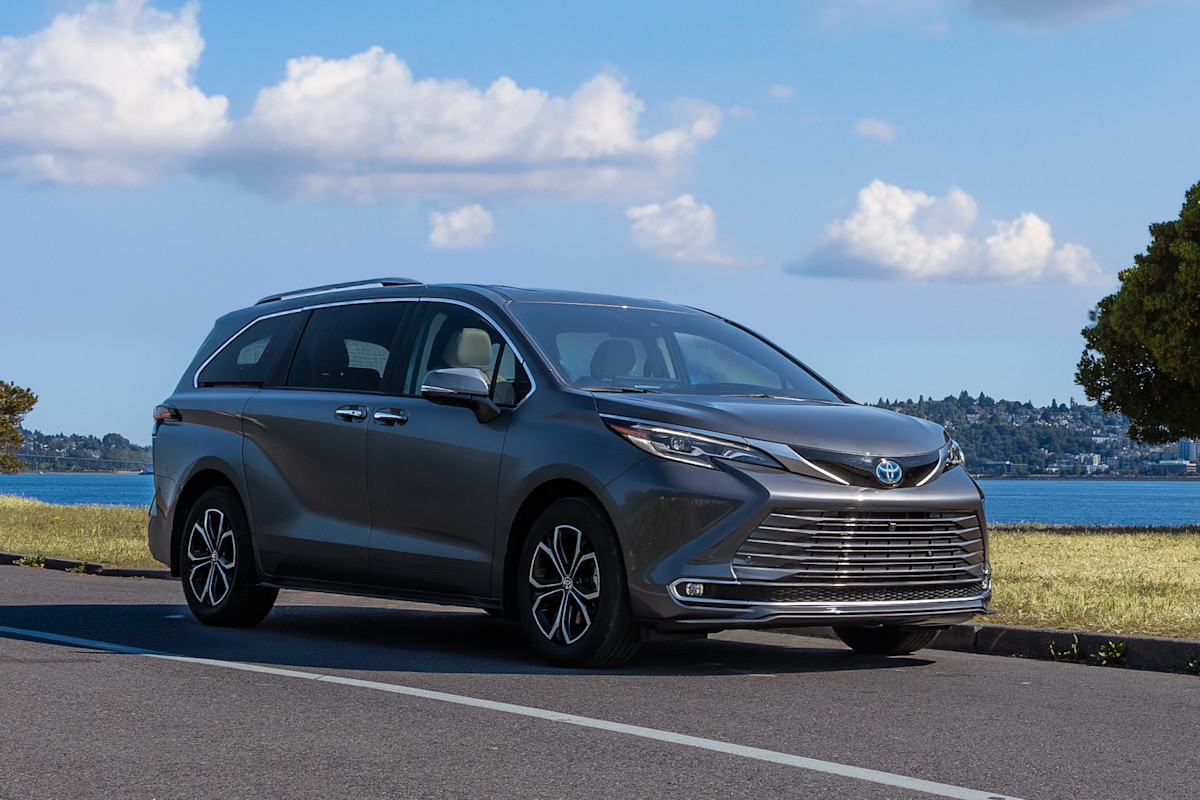
Few first-time adult drivers will gravitate toward a minivan, but for families with teenagers learning the ropes, a minivan that can pull double duty as a family hauler and a new driver's vehicle is a genuinely practical solution. The current-generation Sienna, which arrived for the 2021 model year and has seen little change since, may not match the Chrysler Pacifica or Honda Odyssey in outright utility or driving satisfaction, but it brings a few meaningful advantages of its own.
Chief among them is the Sienna's legendary reliability, a reputation that stretches back to the original model from the 1990s. In the years since, the Sienna has also gained a standard hybrid drivetrain and optional all-wheel drive. In front-wheel-drive form, it returns 36 mpg — dropping only slightly to 35 mpg with AWD — figures that no other minivan can match short of the pricier Pacifica plug-in hybrid.
Toyota has long been generous with safety technology on the Sienna, bundling in automatic emergency braking and adaptive cruise control as standard fare. While those features are now more common across the minivan segment, their presence on used Siennas makes older examples particularly attractive. Like all minivans, the Sienna offers a cavernous interior, though its seating configurations aren't quite as flexible as those of its rivals. It moonlights well as a road-trip or camping vehicle, and young drivers heading off to college or starting a new job elsewhere might appreciate its 3,500-pound tow rating. It may be an unconventional first car, but the Sienna's safety credentials, affordability, ease of use, and reliability make it a legitimate contender.
The Best First Cars for New Drivers in 2026 FAQs
What should a new driver look for when buying their first car?
Safety and affordability are the two biggest priorities for first-time drivers. That means focusing on models with strong crash-test ratings from the NHTSA and IIHS, standard active-safety features like automatic emergency braking and blind-spot monitoring, and a total cost of ownership — including insurance, fuel, and maintenance — that fits a realistic budget.
What types of cars should new drivers avoid?
Sports cars like the Ford Mustang or Subaru BRZ tend to carry higher insurance premiums and can encourage risky driving habits, making them a poor fit for inexperienced motorists. Large pickup trucks are also worth skipping, as they can be harder to handle, often come with fewer safety features, and cost more to fuel and insure.
What is the best first car for a new driver on a budget?
The Honda Civic is a standout choice, offering a low purchase price, manageable insurance costs, strong reliability, and an extensive suite of standard driver-assist features including AEB with pedestrian detection and lane-departure warnings. For buyers open to the used market, options like the Ford Fusion Hybrid — available under $20,000 — or the Mazda2, typically found between $4,000 and $12,000, offer excellent value without sacrificing safety.
Are there good first-car options for families with a teen driver?
The Chevrolet Equinox includes Teen Driver Technology that lets parents cap speed and audio volume, making it a practical pick for households with newer drivers. For families who need a vehicle that can serve double duty, the Toyota Sienna offers strong safety credentials, standard AEB, and impressive fuel economy for a minivan — all while providing the space and versatility a growing family needs.
What Makes CarGurus Best Cars Guides Different?
Most car-shopping websites publish lists of the best cars across a variety of categories, with recommendations generally driven by editorial expertise. Here's what makes ours different: In addition to the insights and verdicts of our team of car-testing experts, our best cars guides take into account other factors that we know matter to buyers-real owner experiences and current market value.
Our expert reviewers are among this country's most trusted automotive journalists, also writing for publications including US News and World Report, Edmunds, Digital Trends, J.D. Power, and Car & Driver. They put each car through real-world testing and create detailed reviews of performance in a range of categories, from practicality and driving manners to cost-effectiveness and safety.
We also analyze hundreds of thousands of used car listings on CarGurus.com to track which models consistently offer the highest percentage of best deals relative to how many are listed for sale. Then we factor in reviews from owners-people who actually live with these cars every day. Our proprietary Best Cars algorithm then creates a final Overall CarGurus rating combining expert scores, user reviews, and the percentage of listings that have earned the Good or Great Deal rating. This multi-pronged approach reveals not just which cars excel on paper, but which ones deliver satisfaction and value when you're ready to buy.
The CarGurus market data used in this guide was last updated in March 2026. Values were accurate at time of publication and should be used as a guide only.