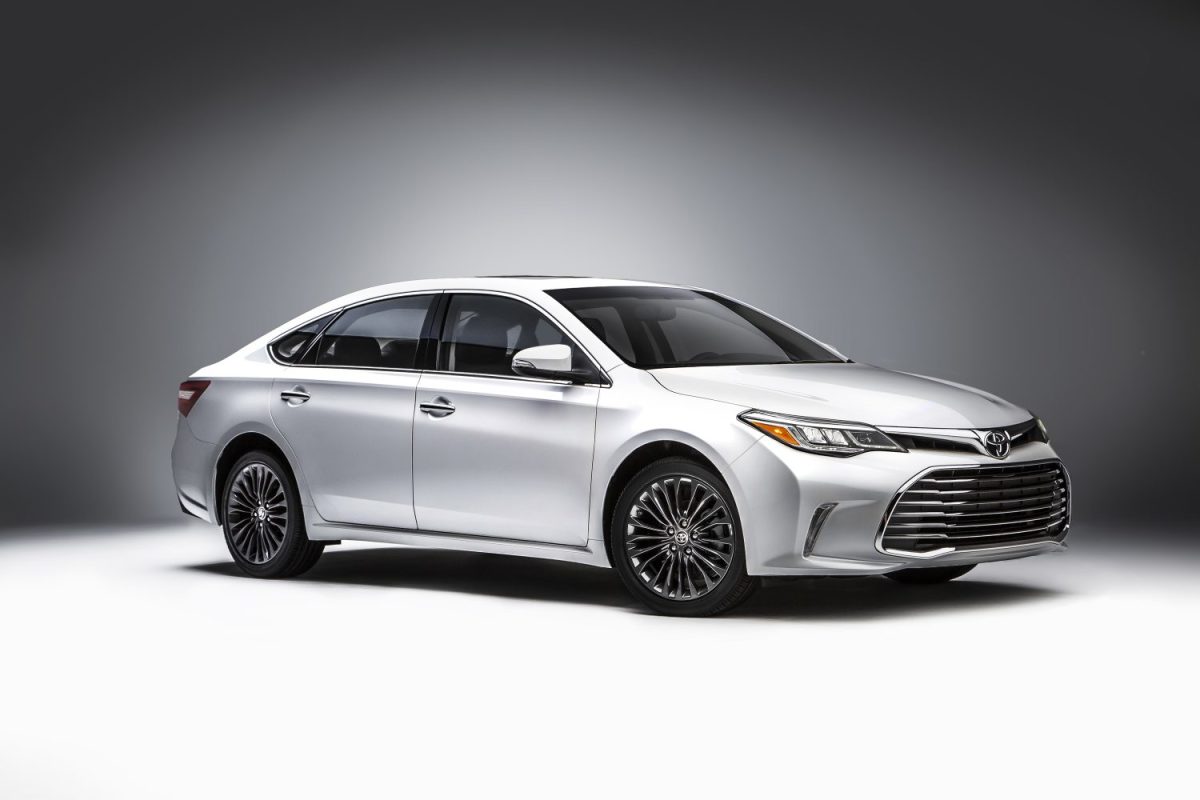
While SUVs and crossovers have become the default choice for many families, the classic sedan still holds significant appeal for those who prioritize a comfortable ride, better fuel economy, and more engaging driving dynamics. A family sedan offers a practical solution for daily commutes, school runs, and weekend road trips, providing ample space for passengers and cargo without the larger footprint of an SUV. They often feature a lower center of gravity, which contributes to a smoother and more composed feel on the road, and their inherent efficiency can lead to savings at the gas pump.
This guide highlights the best family sedans available today, covering a range of priorities from budget-friendly efficiency to all-weather capability and luxury comfort. Whether you need the all-wheel-drive confidence of a Subaru Legacy for snowy climates, the impressive hybrid mileage of a Toyota Camry, or the premium interior of a Mercedes-Benz E-Class, there's a sedan that fits your family's needs. We'll explore key features like cargo space, rear-seat room, standard safety technology, and overall value to help you make an informed decision.
The Best Family Sedans
- Toyota Camry
- Hyundai Sonata
- BMW 3 Series
- Honda Accord Hybrid
- Kia K5
- Mercedes-Benz E-Class
- Nissan Altima
- Genesis G80
- Subaru Legacy
- Mazda Mazda3
FAQs What Makes CarGurus Best Cars Guides Different Shopping Tools Related Topics

1. Toyota Camry
CarGurus expert rating: 8 out of 10
CarGurus user rating: 4.3 out of 5
Percentage of Good and Great Deals available on CarGurus: 32.9%
Overall CarGurus rating: 4.6 out of 5
| Pros | Cons |
|---|---|
| Fuel-efficient | Noisy engine |
| Competitively priced | Finicky voice assistant |
| All-wheel drive available on every trim |
The Toyota Camry is a straightforward, easy-to-live-with midsize sedan, offering efficiency, safety, and day-to-day comfort. It’s now hybrid-only, using Toyota’s fifth-generation hybrid system with a 2.5-liter four-cylinder and electric motors; output is 225 hp in FWD form or 232 hp with available electronic AWD, and Toyota estimates 51 mpg combined for FWD and 50 mpg combined for AWD. That AWD availability across every trim is a practical win for shoppers in snowy or rainy climates, and the Camry’s planted feel and normal, non-grabby brake response help it stay relaxing on commutes and school runs—even if the engine can get noisy when you push it to pass.
Inside, the redesigned dashboard and Toyota Audio Multimedia setup keep family usability front and center. An 8-inch touchscreen with wireless Apple CarPlay and Android Auto is standard (higher trims can upgrade to a 12.3-inch screen), and there’s a standard wireless charging pad plus five USB ports to keep devices topped up. The Camry also brings strong standard driver-assistance tech with Toyota Safety Sense 3.0, including blind-spot monitoring and rear cross-traffic alert on every trim, and available parking aids like a panoramic view monitor. Value is a key part of the pitch, too: the base MSRP starts at $28,400 (before destination), and cargo capacity should remain around the prior Camry’s 15.1 cubic feet—good for strollers and grocery hauls, even if some rivals offer more trunk space.
The CarGurus Verdict: "Verdict: Toyota knows its audience. The new 2025 Toyota Camry gives the people what they want, with up-to-date styling and tech, a strong value proposition helped along by excellent fuel economy, and, most importantly, no fatal flaws that might push a brand loyalist out of their comfort zone." - Natalie Harrington
Read our most recent Toyota Camry review

2. Hyundai Sonata
CarGurus expert rating: 9 out of 10
CarGurus user rating: 4.4 out of 5
Percentage of Good and Great Deals available on CarGurus: 31.3%
Overall CarGurus rating: 4.5 out of 5
| Pros | Cons |
|---|---|
| Fun to drive | Potentially polarizing design |
| Comfortable | Poor fuel economy |
| Great safety ratings | Limited all-wheel drive availability |
The Hyundai Sonata blends everyday comfort with lots of practical touches. The cabin feels airy in N Line form thanks to the standard panoramic glass sunroof, and Hyundai’s layout is easy to live with, from clearly marked controls to the wide, modern dual-screen setup. The back seat is adult-friendly, and Hyundai added rear-seat air vents for 2025—a small change that matters on hot-school-run days. In the trunk, the Sonata provides 15.6 cubic feet of cargo space, and the enclosed hinge design helps when you’re packing groceries or loading full-size suitcases without worrying about crushing soft items.
Safety and value are key reasons to put the Sonata on a family-sedan shortlist. It earns an IIHS Top Safety Pick+ rating (for 2025 models built after November 2024) and includes Hyundai SmartSense driver assists like automatic emergency braking with pedestrian/cyclist detection and blind spot monitoring; N Line also brings Highway Driving Assist for easier highway trips. If you want extra punch without jumping to a premium badge, the Sonata N Line’s turbo 2.5-liter makes 290 hp and 311 lb-ft of torque, though fuel economy can be a trade-off and AWD isn’t offered on N Line (it’s limited to certain SEL models). Tech value is a highlight across trims, with standard wireless Apple CarPlay and Android Auto plus complimentary Bluelink+ connected services for original owners.
The CarGurus Verdict: "Hyundai refreshed the Sonata in 2024 and improved its safety rating in 2025, keeping it competitive against midsize sedan rivals. All versions offer compelling value and are impressively safe, while the N Line model is pleasantly sporty." - Christian Wardlaw
Read our most recent Hyundai Sonata review
3. BMW 3 Series
CarGurus expert rating: 8 out of 10
CarGurus user rating: 4.5 out of 5
Percentage of Good and Great Deals available on CarGurus: 33.6%
Overall CarGurus rating: 4.4 out of 5
| Pros | Cons |
|---|---|
| Fun to drive | Snug interior |
| Easy-to-use technology | Front seat comfort on longer trips, hot days |
| Great safety ratings | Confusing, inconsistent names for technology |
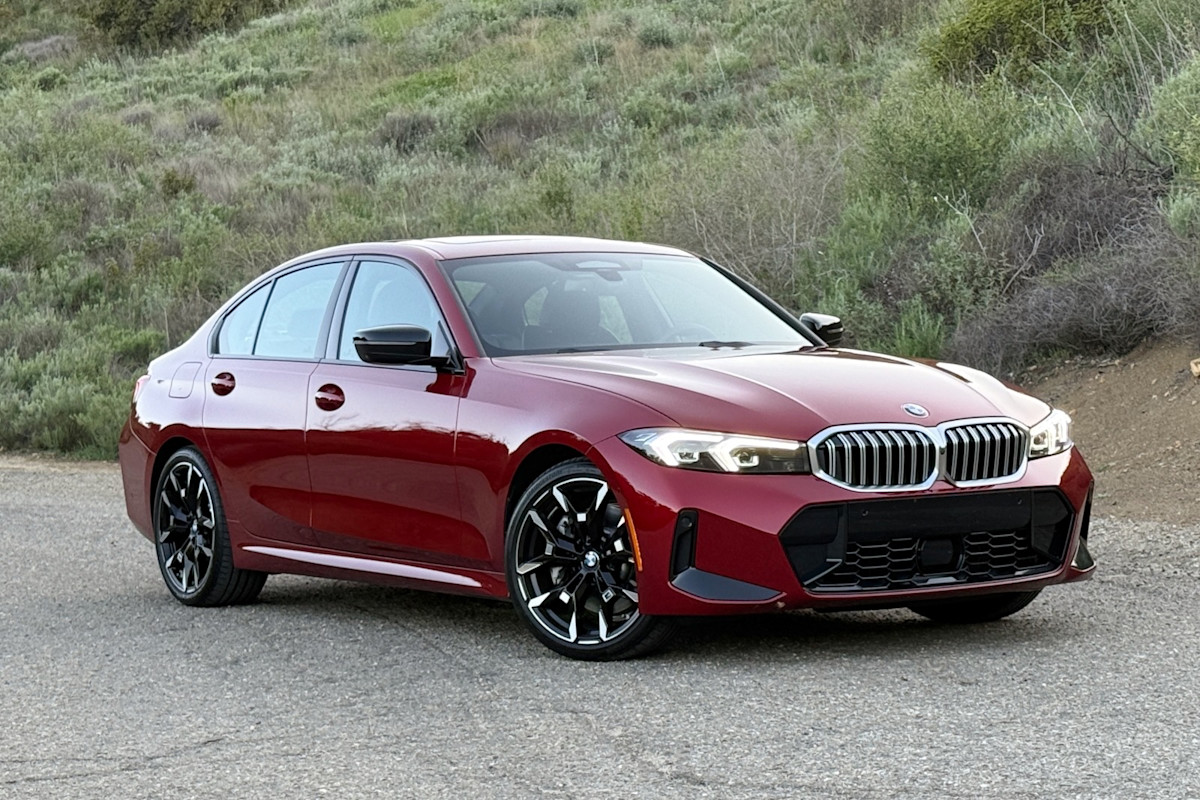
The BMW 3 Series is a great option for families who want a sedan that feels special without giving up everyday usability—especially in 330i form with the M Sport Package, which delivers the classic BMW “thrill” without forcing you into the pricier M340i or M3. The turbocharged 2.0-liter four-cylinder mild-hybrid setup makes 255 hp and 295 lb-ft of torque, and it blends quick response with real efficiency (31 mpg combined per the EPA). The cabin design is conservative by BMW standards, but the materials and build quality feel appropriately upscale for kid-hauling duty, and the latest iDrive 8.5 system is easy to live with thanks to its clear Home screen layout, quick controls, and strong voice assistant performance.
As a family sedan, the 3 Series is best for households that prioritize a comfortable fit for four rather than maximum passenger space. The back seat is supportive once you’re in, but entry/exit is a little deliberate, and taller families will notice the snug overall packaging. Cargo space is a strong point for the class, with a 16.9-cubic-foot trunk and a 40/20/40-split folding rear seat for longer items. On safety, it earns a five-star NHTSA rating, and available driver-assist tech can add adaptive cruise control plus more advanced lane-centering and hands-free capability in low-speed traffic on approved highways—though BMW’s feature names and package structure can be confusing when you’re shopping.
The CarGurus Verdict: "The 2025 BMW 3 Series isn’t perfect, but it’s perfectly enjoyable to drive. Also, for a car nearing the end of its current generation, it offers remarkably advanced technology. A redesign is coming soon, but the current version remains one of our favorites." - Christian Wardlaw
Read our most recent BMW 3 Series review
4. Honda Accord Hybrid
CarGurus expert rating: 7.5 out of 10
CarGurus user rating: 4.5 out of 5
Percentage of Good and Great Deals available on CarGurus: 32.2%
Overall CarGurus rating: 4.4 out of 5
| Pros | Cons |
|---|---|
| Fuel-efficient | Noisy |
| Fun to drive | No front-passenger seat height adjuster |
| Great safety ratings | Restrictive paint, interior, wheel, and equipment packaging |
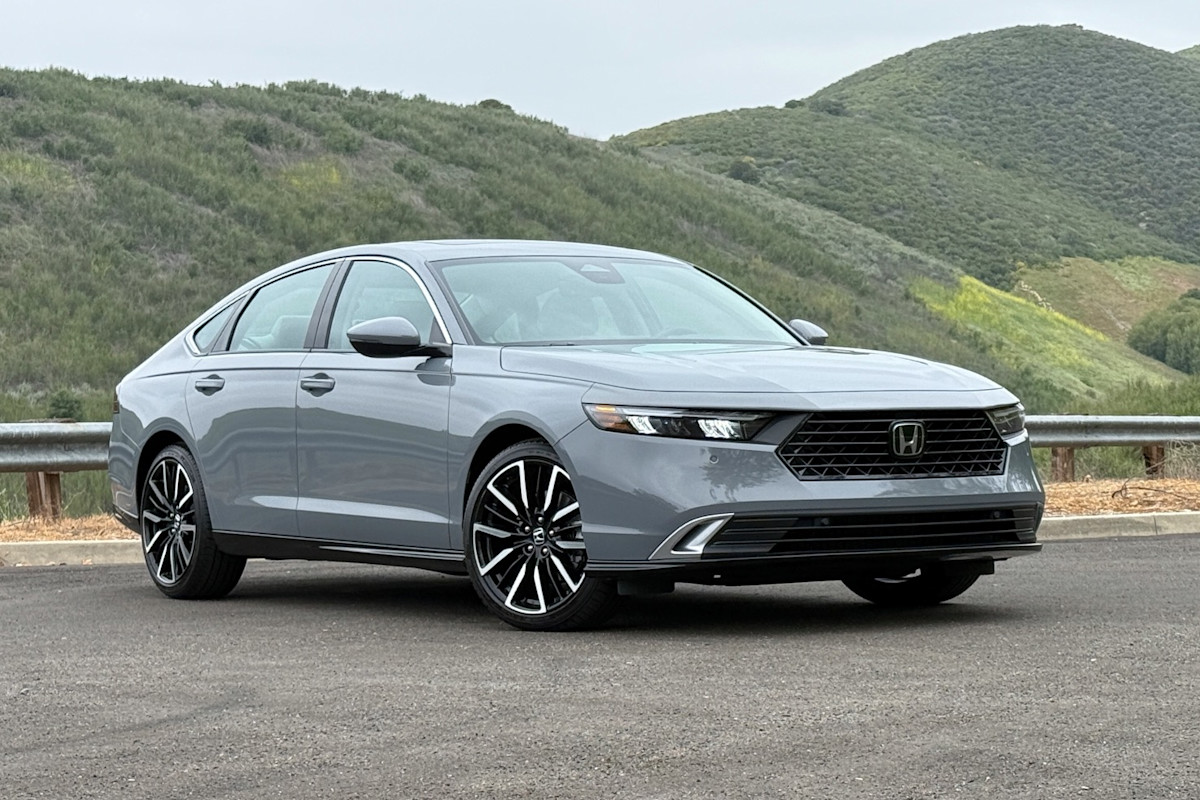
The Honda Accord Hybrid emphasizes the benefits of the sedan body style. Along with the lower step-in height and easy access to the cargo area, it also offers a huge back seat (among midsize sedans, it’s the roomiest) and a segment-leading 16.7-cubic-foot trunk that easily swallows full-size suitcases. Honda also made the kind of everyday updates that improve family usability, including standard rear A/C vents and rear USB-C ports, plus standard heated front seats, wireless Apple CarPlay and Android Auto, and a wireless phone charger.
Under the hood, every Accord Hybrid uses Honda’s two-motor hybrid setup rated at 204 hp and 247 lb-ft of torque, delivering quick, predictable response around town and confident, well-tuned handling that makes school runs and road trips feel less like a chore. It can be loud inside on the highway, and the front passenger seat still lacks a height adjuster, but the safety story is reassuring: Honda Sensing comes standard, and the Accord earns a five-star overall NHTSA rating plus an IIHS Top Safety Pick+ award for 2025.
The CarGurus Verdict: "Cars like the Accord used to be the traditional choice for a family of four. Now, consumers generally prefer crossover SUVs, so selecting an Accord is unconventional. Those that do will get a lot for their money, though. The 2025 Honda Accord Hybrid is roomy, comfortable, great to drive, safe in a collision, and budget-friendly." - Christian Wardlaw
Read our most recent Honda Accord Hybrid review

5. Kia K5
CarGurus expert rating: 7.3 out of 10
CarGurus user rating: 4.8 out of 5
Percentage of Good and Great Deals available on CarGurus: 27.4%
Overall CarGurus rating: 4.4 out of 5
| Pros | Cons |
|---|---|
| Stylish design | No hybrid powertrain |
| Great ride quality | Touch-sensing climate controls |
| Impressive technology | Not much fun to drive (all but GT) |
The refreshed 2025 Kia K5 is easy to like, especially if you want a family sedan that looks sharp in the school pickup line and feels comfortable on real-world roads. Updated lighting and revised front and rear styling keep the K5’s design fresh, while its day-to-day demeanor is tuned for comfort: in trims like the EX, the ride is quiet, soft, and smooth in town, and it does a nice job taking the edge off highway ripples that can wear on families during longer drives. Inside, there’s generous storage, supportive seating, rear air vents, and a practical trunk with 15.6 cubic feet of cargo space for strollers, sports gear, or airport runs.
For family-sedan shoppers who prioritize technology and safety features per dollar, the K5 delivers a lot of equipment, including a 12.3-inch touchscreen with wireless Apple CarPlay and Android Auto, plus available features like a surround-view camera system and Highway Driving Assist (depending on trim). Power for most K5 models comes from a 2.5-liter four-cylinder with 191 hp and 182 lb-ft of torque paired with an eight-speed automatic, and AWD is available if you choose the GT-Line—useful for winter climates. The trade-offs are worth noting: there’s no hybrid option, and the touch-sensing, dual-action climate/infotainment control panel can be distracting, so it’s a car that rewards spending a few minutes setting up steering-wheel shortcuts before the daily routine begins.
The CarGurus Verdict: "Unfortunately, the 2025 Kia K5 still doesn’t offer a hybrid powertrain like its corporate cousin, the Hyundai Sonata, does. It’s also less enjoyable to drive, thanks to this year’s engine swap. However, the new tech impresses, the K5 remains stylish and comfortable, and it costs less than some rivals." - Christian Wardlaw
Read our most recent Kia K5 review

6. Mercedes-Benz E-Class
CarGurus expert rating: 8.3 out of 10
CarGurus user rating: 4.6 out of 5
Percentage of Good and Great Deals available on CarGurus: 34.4%
Overall CarGurus rating: 4.4 out of 5
| Pros | Cons |
|---|---|
| Great ride quality | High price |
| Premium interior materials | Poor fuel economy |
| Impressive technology | Minor driving assistance irritations |
The redesigned Mercedes-Benz E-Class leans hard into comfort, quiet, and an upscale cabin experience, making even routine errands feel special. In E 350 4Matic form, the E-Class offers a turbo 2.0-liter four-cylinder with 255 hp and 295 lb-ft of torque, standard AWD, and a 48-volt mild-hybrid system that can add up to 23 hp and 148 lb-ft of torque to smooth out launches and low-speed responses. The available Airmatic air suspension (as tested) helps deliver that “gliding” ride quality luxury buyers expect, though this is still a pricey way to move a family—and our experience echoed the review’s fuel-economy gripe, with observed mpg falling short of the EPA’s 27-mpg combined estimate.
Day-to-day usability is strong for a midsize luxury sedan, with smart storage throughout the cabin and a trunk rated at 19.1 cubic feet plus a 40/20/40-split folding rear seat for longer items. Rear-seat access can be tight thanks to intrusive rear wheel wells, and the back seat isn’t the roomiest place for three across, but it offers good leg support and a higher seating position that helps on longer drives. Tech-forward families will appreciate the latest MBUX setup with wireless Apple CarPlay and Android Auto, multiple driver profiles, and available Superscreen extras, while safety shoppers should note that many advanced driver aids are bundled into the optional Driver Assistance Package; it’s feature-rich, but some systems (like speed adaptation and lane-change automation) can be annoying depending on where and how you drive.
The CarGurus Verdict: "Based on observations from several days spent with the E 350 4Matic sedan, the 2024 Mercedes-Benz E-Class remains at the top of its midsize luxury sedan game when equipped with all the extras. Refined, sophisticated, and soothing to drive, it embodies what a car like this should be." - Christian Wardlaw
Read our most recent Mercedes-Benz E-Class review

7. Nissan Altima
CarGurus expert rating: 5.8 out of 10
CarGurus user rating: 4.4 out of 5
Percentage of Good and Great Deals available on CarGurus: 18.9%
Overall CarGurus rating: 4.4 out of 5
| Pros | Cons |
|---|---|
| Stylish design | Fairly pedestrian performance |
| Comfortable | Interior materials feel cheap |
| Easy-to-use technology | Outdated technology |
The Nissan Altima keeps the traditional four-door formula alive with a comfortable, easygoing approach—especially if you value a lower step-in height and sedan-like handling. Every Altima uses a 2.5-liter four-cylinder paired with a CVT; front-wheel-drive models make 188 hp and 180 lb-ft of torque, while opting for all-wheel drive drops output to 182 hp and 178 lb-ft of torque. The driving experience is calm rather than sporty, but it’s quiet for the class and its real-world efficiency can line up with its EPA numbers (the AWD car is rated 28 mpg combined and returned 28.3 mpg in testing), which matters for families doing lots of commuting and weekend miles.
Where the Altima makes the strongest family-case is day-to-day comfort and practicality. Nissan’s “Zero Gravity” front seats are genuinely supportive on longer trips, the rear seat is adult-friendly, and the trunk’s 15.4 cubic feet is useful for strollers, groceries, and luggage (with the 60/40 rear seat folded, Nissan says cargo volume can expand to 58.1 cubic feet). Tech depends heavily on trim: base cars get an 8-inch touchscreen with wired Apple CarPlay/Android Auto, while SV Special Edition and SL models offer a 12.3-inch setup with wireless smartphone integration and charging. Safety basics are covered with standard Safety Shield 360 and the Altima earns a five-star overall NHTSA rating, but families should note the more concerning IIHS results in updated tests, making trim selection—and a careful test drive of driver-assist behavior—particularly important.
The CarGurus Verdict: "Is the 2025 Nissan Altima a good car? It has terrific front seats, available AWD, and SL and SR Premium Package models offer competitive technology. Otherwise, it simply doesn’t have what it takes to attract customers better served by other midsize cars." - Christian Wardlaw
Read our most recent Nissan Altima review

8. Genesis G80
CarGurus expert rating: 8.2 out of 10
CarGurus user rating: 4.7 out of 5
Percentage of Good and Great Deals available on CarGurus: 29.2%
Overall CarGurus rating: 4.3 out of 5
| Pros | Cons |
|---|---|
| Excellent value for money | Poor fuel economy |
| Great ride quality | Fairly pedestrian performance |
| Premium interior materials |
The Genesis G80 plays to the things that matter day to day: a quiet cabin, an easy ride, and lots of comfort and convenience features even in lower trims. The refreshed interior’s huge 27-inch OLED display modernizes the dash, and wireless Apple CarPlay and Android Auto come standard, so it’s simple to keep everyone connected on school runs and road trips. Practical touches help, too, from the abundance of cabin storage to a trunk that measures 13.1 cubic-feet, plus a pass-through for longer gear like skis.
On the road, the G80 is more about smooth cruising than sporty reflexes, which fits what many families want in a sedan. The base turbo 2.5-liter makes 300 hp and 311 lb-ft of torque, while the available 3.5-liter twin-turbo V6 delivers 375 hp and 391 lb-ft of torque; either way, all-wheel drive is standard for added confidence in bad weather. Safety is a strong point thanks to a long list of standard driver-assistance tech and Highway Drive Assist for less stressful highway miles, and Genesis backs it up with a standout warranty (including a 10-year/100,000-mile powertrain warranty). The main tradeoff is efficiency—especially with the V6, which is rated at 19 mpg combined—so it’s worth weighing fuel costs if you pile on family miles.
The CarGurus Verdict: "There is plenty to like about the 2025 Genesis G80 and it certainly represents good value, just don’t expect to be the quickest car in the class." - Emme Hall
Read our most recent Genesis G80 review
9. Subaru Legacy
CarGurus expert rating: 8.3 out of 10
CarGurus user rating: 4.5 out of 5
Percentage of Good and Great Deals available on CarGurus: 30.6%
Overall CarGurus rating: 4.3 out of 5
| Pros | Cons |
|---|---|
| Standard all-wheel drive | Uninspired styling |
| Comfortable | Sluggish performance |
| Standard advanced safety features | Interior materials feel cheap |
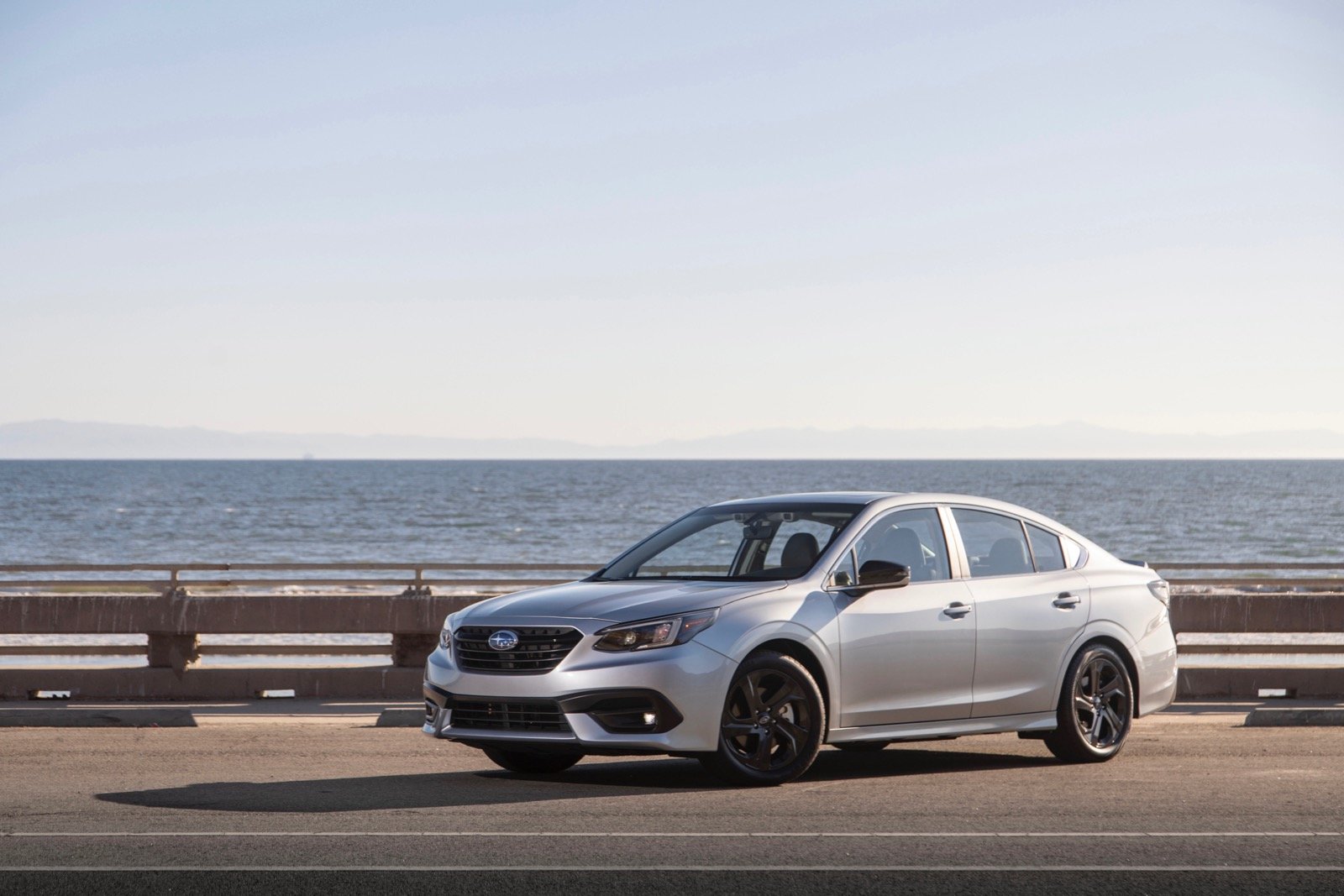
The Subaru Legacy has a big practical advantage for families regularly facing messy weather: standard all-wheel drive, something you typically have to pay extra for (or can’t get at all) in this class. It’s a comfortable five-seater with improved seat positioning for long drives and generous rear-seat legroom for adult passengers, plus a trunk that’s easy to load thanks to a wide opening (15.1 cubic feet). Engine choices range from a 182-hp 2.5-liter four-cylinder (176 lb-ft of torque) to a 260-hp turbo 2.4-liter (277 lb-ft of torque), both paired with a CVT; either way, the Legacy aims more at calm, secure commuting than sporty responses.
Safety is another family-friendly strength. The Legacy earns top marks from IIHS and a five-star overall NHTSA rating, and it comes standard with Subaru EyeSight features such as adaptive cruise control with lane centering and automatic emergency braking. Tech is straightforward, with Apple CarPlay and Android Auto standard and an available 11.6-inch touchscreen on most trims, though the system’s look and constant alerts can be distracting until you adjust the settings. Value is part of the appeal, too—pricing starts at $22,895 including destination, helping explain why the Legacy’s mix of AWD, safety equipment, and strong fuel economy is a draw for shoppers in snow and rain states.
The CarGurus Verdict: "The Subaru Legacy delivers a lot of what the typical Subaru customer is looking for, including standard all-wheel drive (AWD)—it's the only vehicle in its class to offer that. It is also fuel-efficient, has comfortable seats, and ranks as one of the safest vehicles on the market today. But, fit-and-finish questions linger, and the EyeSight safety technology can prove annoying, with frequent beeps and chimes." - Eileen Falkenberg-Hull
Read our most recent Subaru Legacy review
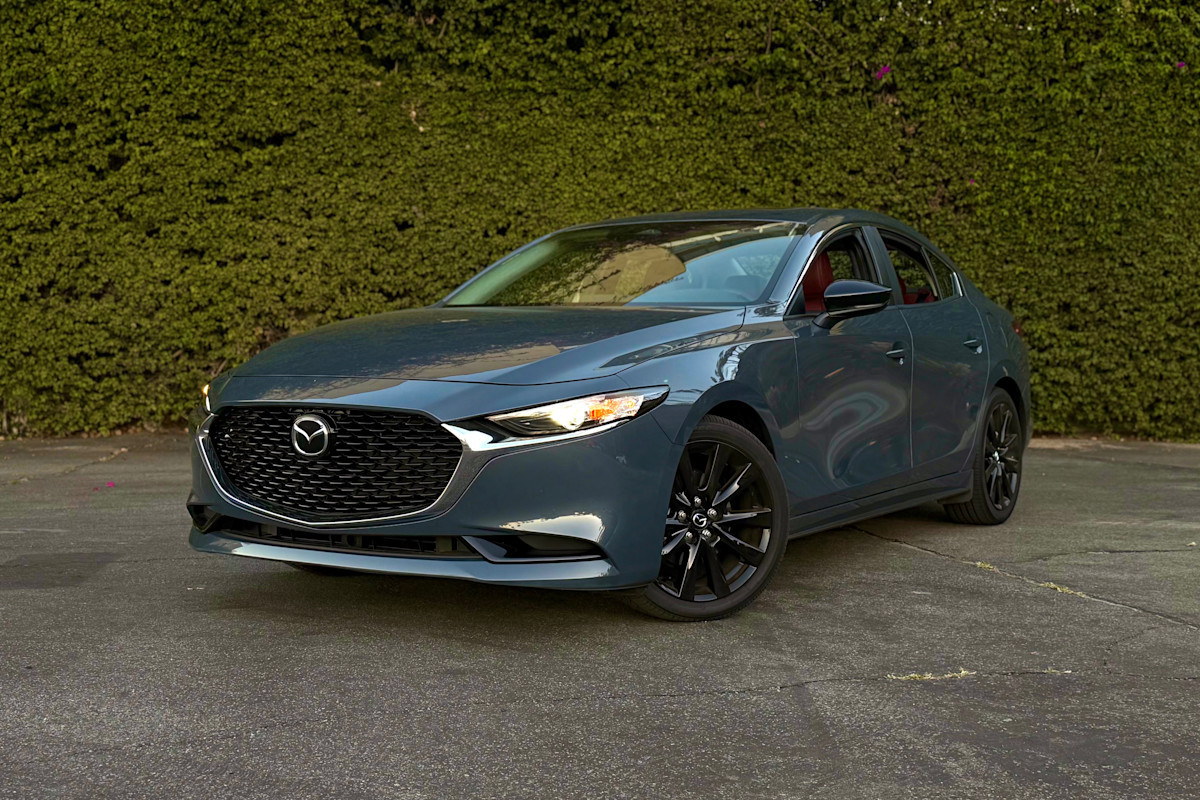
10. Mazda Mazda3
CarGurus expert rating: 6.5 out of 10
CarGurus user rating: 4.5 out of 5
Percentage of Good and Great Deals available on CarGurus: 29.8%
Overall CarGurus rating: 4.2 out of 5
| Pros | Cons |
|---|---|
| Available all-wheel drive | Underwhelming base engine |
| Stylish design | Cramped back seat |
| Fun to drive | Outdated technology |
The Mazda Mazda3 feels a bit nicer than the usual compact-car fare, with its upscale cabin materials, clean dashboard layout with real buttons and knobs for climate control, and a composed ride for commutes and road trips. Safety is a plus, too: the Mazda3 earns top marks from NHTSA and IIHS, and every model includes key driver-assistance features like automatic emergency braking, adaptive cruise control, lane-departure warning, lane-keep assist, and automatic high beams. If you live where weather can turn ugly, the available i-Activ AWD (standard on the Carbon Edition and the 2.5 Turbo Premium Plus) can add welcome traction and a more confident feel in everyday driving.
The tradeoff for that premium vibe is space, which matters in a family-sedan conversation. The front seats are roomy, but the back seat is tight for adult passengers and can feel limiting if you’re regularly fitting child seats or taller teens, and the hatchback’s thick rear pillars can create larger blind spots. Cargo room is decent for groceries and strollers in sedan form (13.2 cubic feet), while the hatchback is the better pick for bulkier family gear (up to 20.1 cubic feet). Power ranges from a 191-hp, 186-lb-ft 2.5-liter four-cylinder (adequate, but not quick) to a turbo upgrade with 227 hp and 310 lb-ft of torque on regular gas (or 250 hp and 320 lb-ft with premium), though the infotainment setup is more old-school than many rivals, with a small standard 8.8-inch display and a rotary controller instead of touch.
The CarGurus Verdict: "The Mazda 3 proves that small cars don’t have to be boring." - Mark Takahashi
Read our most recent Mazda Mazda3 review
The Best Family Sedans FAQs
Which family sedans offer all-wheel drive (AWD)? AWD is a great feature for families in regions with rain or snow, and several sedans on this list offer it. The Subaru Legacy comes with standard AWD on all trims, and the Toyota Camry, Nissan Altima, Kia K5 (GT-Line), BMW 3 Series, Mercedes-Benz E-Class, Genesis G80, and Mazda3 all offer AWD, either as an available option or standard on certain trims.
What are the most fuel-efficient family sedans on this list? If fuel economy is your top priority, the hybrid models are the best choice. The 2025 Toyota Camry is now hybrid-only and offers an estimated 51 mpg combined. The Honda Accord Hybrid is another excellent option, also known for its high efficiency thanks to its two-motor hybrid system.
Are there any luxury options for family sedans? Yes, this list includes several premium choices. The Mercedes-Benz E-Class, BMW 3 Series, and Genesis G80 all provide a luxury experience with high-end interior materials, advanced technology, superior ride comfort, and powerful engine options, making them great for families who want a more upscale vehicle.
Which sedan has the most cargo space? For families needing to haul strollers, sports equipment, or luggage, trunk space is key. The Mercedes-Benz E-Class offers a very generous 19.1 cubic feet of cargo space. The BMW 3 Series is also impressive with 16.9 cubic feet, and the Honda Accord Hybrid leads the mainstream midsize class with 16.7 cubic feet. Most other midsize sedans on the list offer around 15 cubic feet, which is still very practical for daily use.
What Makes CarGurus Best Cars Guides Different?
Most car-shopping websites publish lists of the best cars across a variety of categories, with recommendations generally driven by editorial expertise. Here's what makes ours different: In addition to the insights and verdicts of our team of car-testing experts, our best cars guides take into account other factors that we know matter to buyers-real owner experiences and current market value.
Our expert reviewers are among this country's most trusted automotive journalists, also writing for publications including US News and World Report, Edmunds, Digital Trends, J.D. Power, and Car & Driver. They put each car through real-world testing and create detailed reviews of performance in a range of categories, from practicality and driving manners to cost-effectiveness and safety.
We also analyze hundreds of thousands of used car listings on CarGurus.com to track which models consistently offer the highest percentage of best deals relative to how many are listed for sale. Then we factor in reviews from owners-people who actually live with these cars every day. Our proprietary Best Cars algorithm then creates a final Overall CarGurus rating combining expert scores, user reviews, and the percentage of listings that have earned the Good or Great Deal rating. This multi-pronged approach reveals not just which cars excel on paper, but which ones deliver satisfaction and value when you're ready to buy.
The CarGurus market data used in this guide was last updated in March of 2026. Values were accurate at time of publication and should be used as a guide only.