One of the most exciting parts of attending auto shows is getting up close with the striking and imaginative concept cars on display. Their bold, forward-looking designs fire the imagination, offer consumers a glimpse of where each brand is headed, and—perhaps most importantly—generate a genuine sense of excitement.
Sadly, though, not all of them ever reach the assembly line. A wide range of obstacles can derail a concept car's journey to production, from stringent safety regulations to a misplaced decimal in an accounting spreadsheet. That's precisely why it's so gratifying when some actually do make the cut—and a select few even go on to become enduring icons that resonate across generations.
Join us as we explore some of the best concept cars that successfully made it to production. We'll keep our focus largely on accessible, everyday cars and trucks that most buyers can realistically attain, setting aside the rarified Italian and British exotica from the likes of Ferrari, Lamborghini, Pininfarina, Bertone, Aston Martin, and Bentley for a separate guide. If there's one lesson these undeniably cool machines share, it's that automakers are rewarded handsomely when they dare to be bold.
The Best Concept Cars That Made It to Production
- Ford Mustang
- Mazda Miata
- MINI Cooper
- Volkswagen Beetle
- Dodge Challenger
- Ford GT
- Lexus LFA
- Audi TT
- Kia Soul
- Ford Bronco
FAQs What Makes CarGurus Best Cars Guides Different Shopping Tools Related Topics
Ford Mustang
Best for: Blue oval-sourced horsepower lovers
Priced from: $32,000
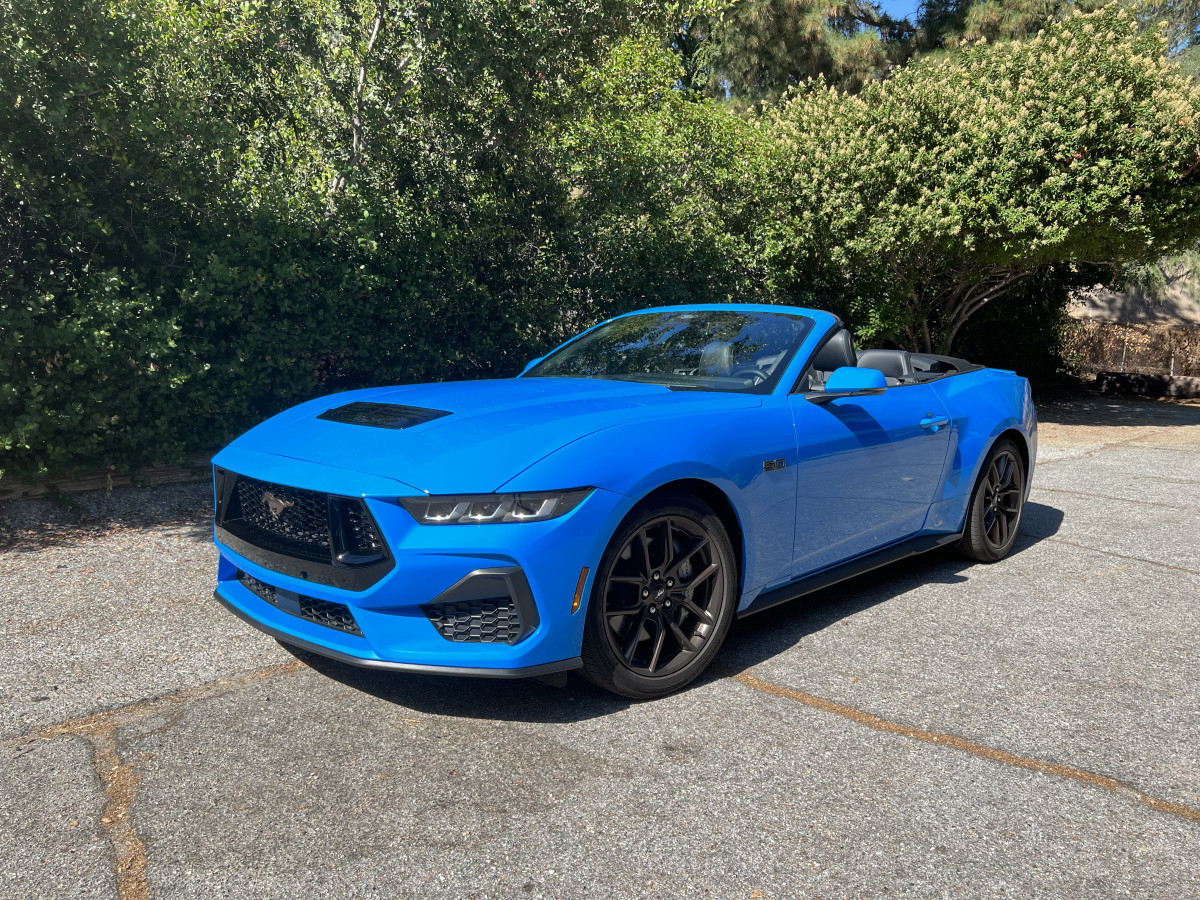
The Mustang set a standard that no one else has quite managed to match. Its arrival more than 50 years ago was nothing short of a cultural earthquake. Henry Ford II unveiled a production-ready Mustang on April 17, 1964, before an enormous crowd at the New York World's Fair—the very same day the car went on sale at Ford dealerships nationwide. But what Ford put on display at the World's Fair wasn't technically the "concept car."
Nearly two full years before that landmark day, Ford had already shown two distinct concepts—fittingly named Mustang I and Mustang II—starting with a non-running fiberglass mockup alongside a fully functional car, both revealed at the U.S. Grand Prix at Watkins Glen, NY, in the summer of 1962. Then, more than a year later, in October 1963, Ford unveiled a second Mustang concept—once again at Watkins Glen—nudging the famous pony car even closer to production the day before the U.S. Grand Prix.
Forty years on, Ford revealed the concept for the revitalized D2C-based Mustang, internally codenamed S-197, at the 2004 North American International Auto Show in Detroit. With only minor refinements, it became the production version of the new car that debuted in 2005.
Mazda Miata
Best for: Those in search of lightweight, rear-wheel drive bliss
Priced from: $29,000
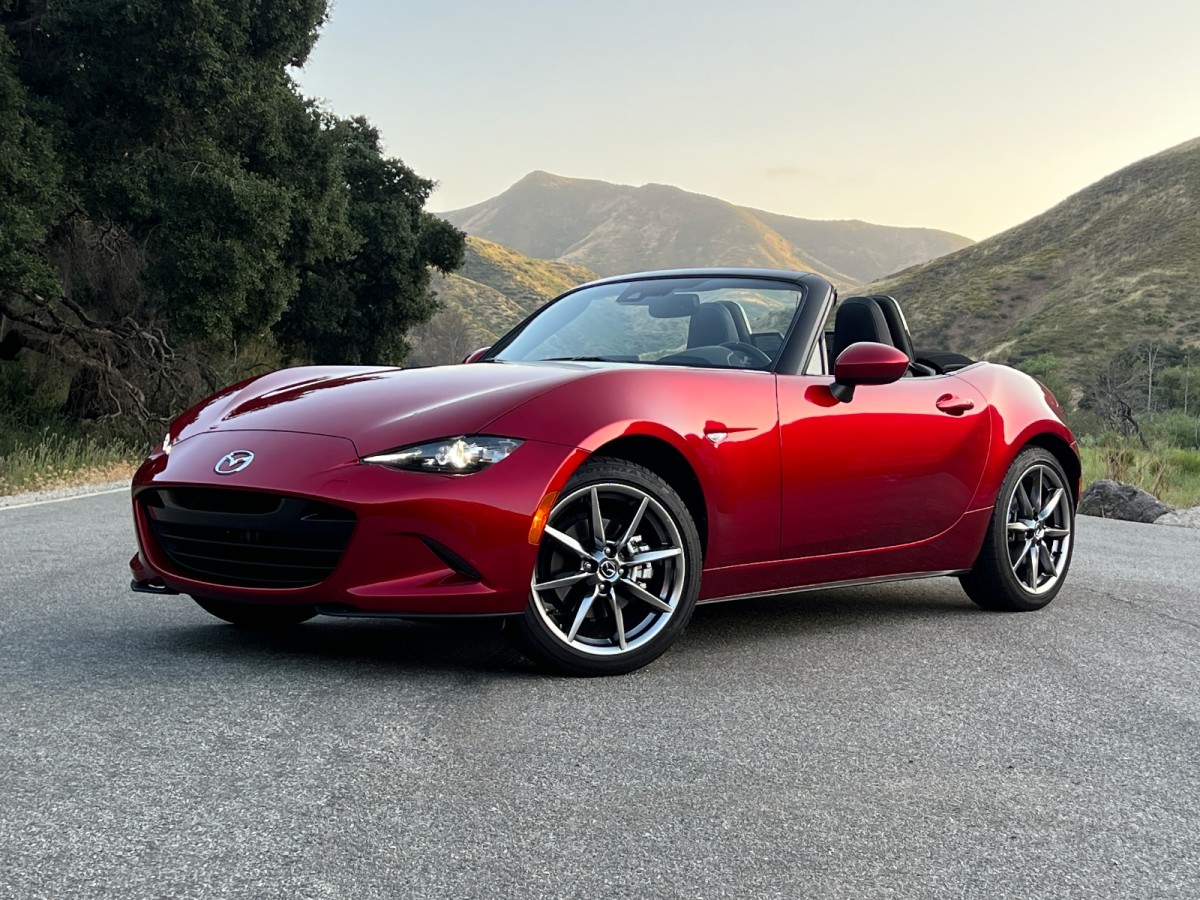
In the late 1980s, at the urging of former Automotive News journalist Bob Hall, Mazda set to work on a two-seat roadster powered by an engine borrowed from the front-wheel-drive Mazda 323, rotated on its axis and mounted longitudinally in the chassis. At the time, Japanese sports cars had drifted far from the elemental, stripped-back machines they had been in the 1950s and 1960s. By 1988, the Toyota Supra tipped the scales at 3,500 pounds, as did heavy hitters like the twin-turbo Nissan 300ZX. Convertibles had nearly vanished from the market altogether. There simply wasn't a single affordable, genuinely fun two-seat sports car to be found.
Mazda took an unconventional approach to gauging interest in the Miata—rather than splashing a concept across major auto show stages, it shipped one heavily disguised prototype to California to measure public reaction, which was overwhelmingly positive. The car Mazda revealed at the 1989 Chicago Auto Show was a near-production-ready version of the Miata it would begin selling as a 1990 model later that same year. In its first full year of production, it moved more than 35,000 units—clear evidence that designing for driving enthusiasts is a winning formula.
MINI Cooper
Best for: Enthusiasts who need functionality, yet can't give up something that's fun-to-drive everyday
Priced from: $29,000
MINI Coopers have felt like a permanent fixture of the automotive landscape, yet they were never particularly strong sellers—even during their heyday in their home market of the UK. They were among the few British cars that never made it to the United States in meaningful numbers. Following the success of compact enthusiast cars like the Miata, however, BMW recognized the untapped potential of a small, exportable car with genuine appeal for American buyers.
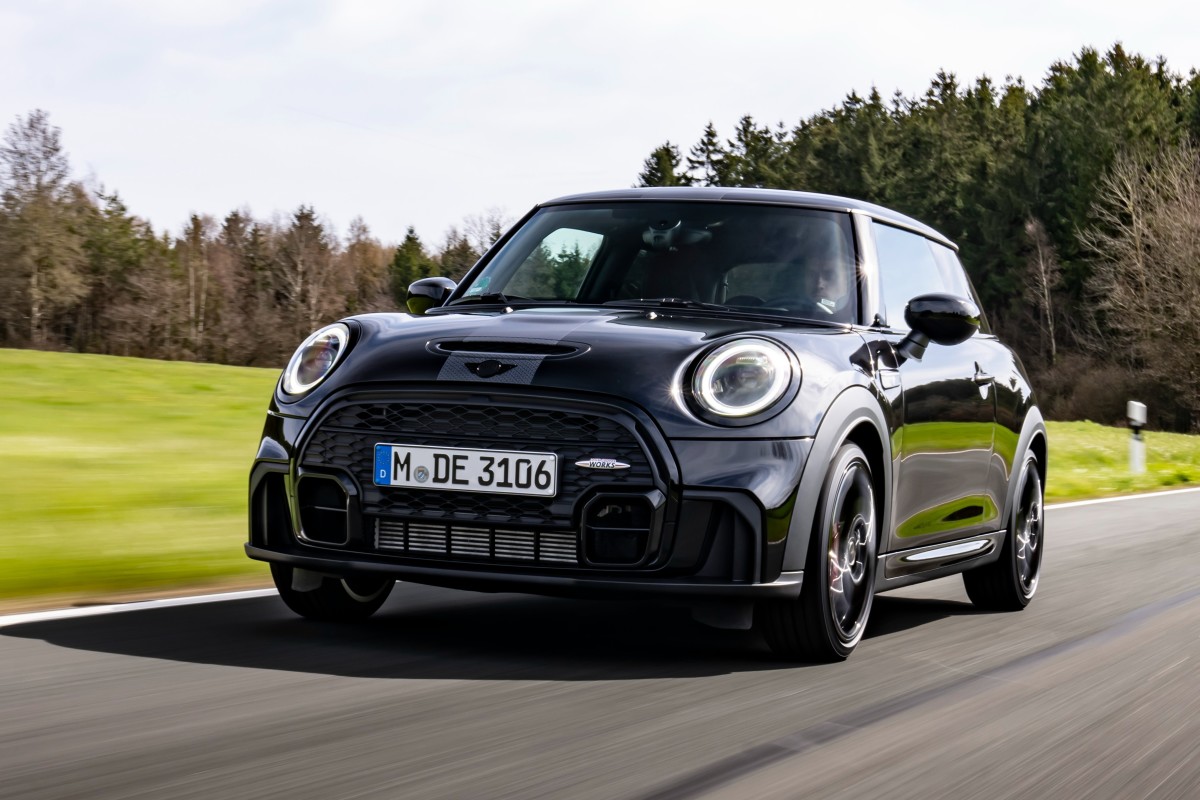
BMW already had a roadster of its own in the Z3, but the German luxury brand lacked a true entry-level offering after quickly phasing out the 318ti. Having acquired MINI's parent company Rover, BMW set its sights on breathing new life into the small car brand with a clear eye toward the U.S. market. The concept it produced was the 1997 MINI ACV 30—its name an anagram for Anniversary Concept Car 30—unveiled to mark the 30th anniversary of the original Mini Cooper's triumph at the Monte Carlo Rally.
With its muscular fender flares, open grille, and rally-spec driving lamps, the ACV 30 telegraphed exactly the kind of brand BMW intended to launch in America. It took four more years and considerable design evolution, but by 2001, BMW had successfully relaunched MINI as a standalone brand.
Today, MINI has proven to be a lively and profitable contributor to the BMW Group portfolio, and has even stepped into the electric era with the MINI Cooper 500E. Here's hoping this beloved brand continues to thrive for many years to come.
Volkswagen Beetle
Best for: Anyone wanting a true design study on wheels
Priced from: $21,000 (new 2019 model MSRP)
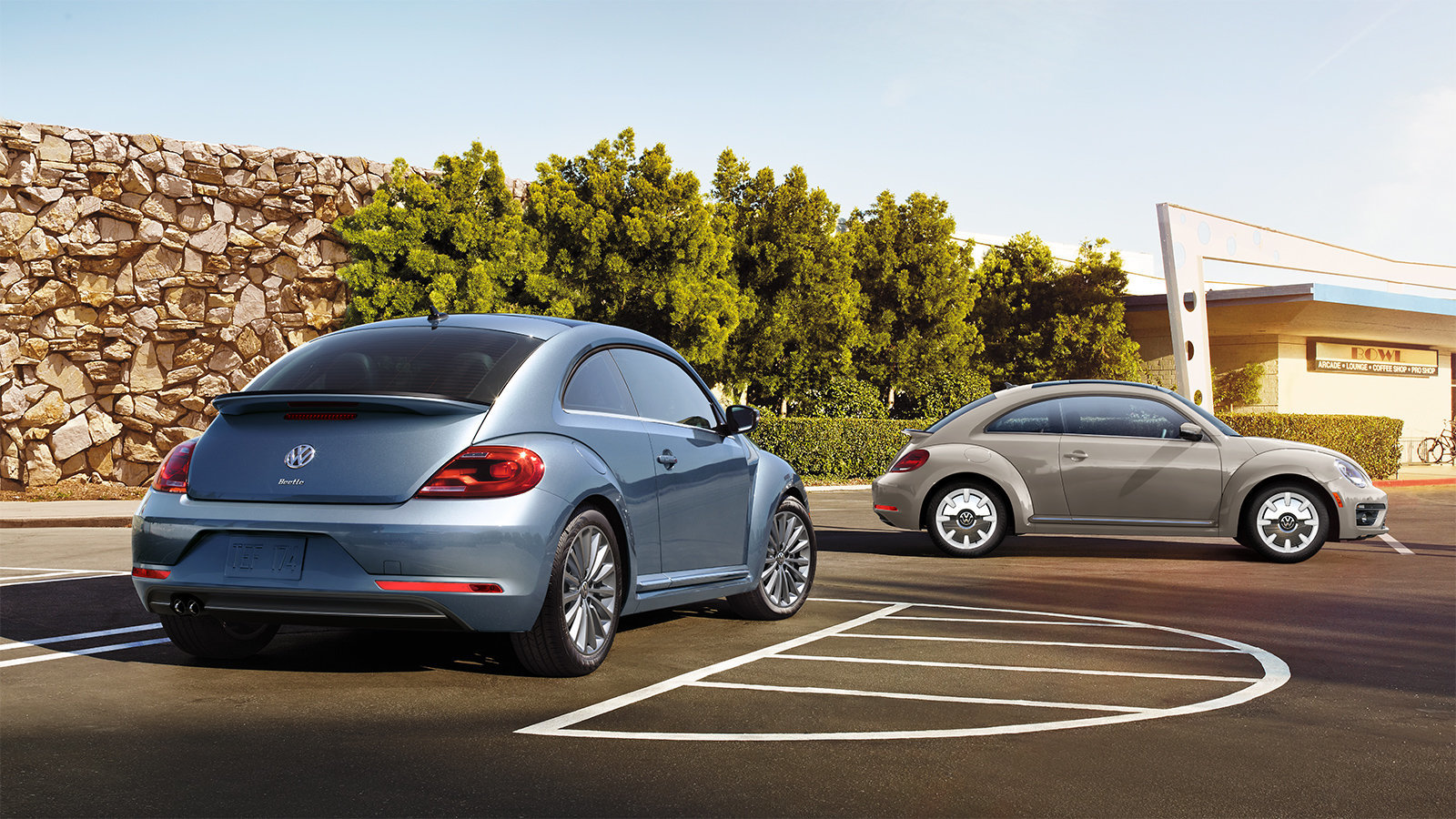
It's easy to forget just how wildly popular the Volkswagen New Beetle was when it landed in the U.S. in 1997. It's equally easy to forget how long the journey from concept to showroom actually took. The first New Beetle concept was called the Concept One, unveiled at the 1994 North American International Auto Show. Like the retro-styled Mustang, the Concept One was the work of designer J Mays and was built on a VW Polo platform.
As concept cars go, the Concept One struck all the right chords—charming, cohesive, and never so extreme that a production version seemed out of reach. A year later, Volkswagen followed up with a second concept, the Concept Two, on display at the 1995 Tokyo Motor Show. This iteration refined the more complex and costly elements of the Concept One into something that was practically ready for the assembly line.
When the production vehicle arrived in 1998, it was a near-perfect match for the Concept Two. In that debut year alone, Volkswagen sold 107,090 New Beetles. Sales climbed another 49 percent the following year to 160,147—a peak the Beetle would never reach again. After years of steadily declining demand, Volkswagen retired the Beetle at the end of the 2019 model year.
Dodge Challenger
Best for: Muscle car fanatics
Priced from: $32,465
When Chevrolet made the ill-fated decision to pull the plug on the Camaro in 2002, it handed Ford a monopoly on the pony car segment. Whenever a gap like that opens up, it's only a matter of time before rival automakers recognize the opportunity and move to fill it—see also: the Nissan Frontier as the lone midsize pickup, or the Jeep Wrangler as the only two-door, removable-top SUV on the market.
Dodge had been watching the muscle car wars from the sidelines since the Nixon era. After 28 years on the bench, the decision-makers at Dodge finally decided they'd had enough, and set about building a serious challenger to Ford's grip on the segment. The Dodge Challenger Concept made its debut at the 2006 North American International Auto Show, and the crowd reaction was so electric that Dodge could have set up an order desk on the spot.
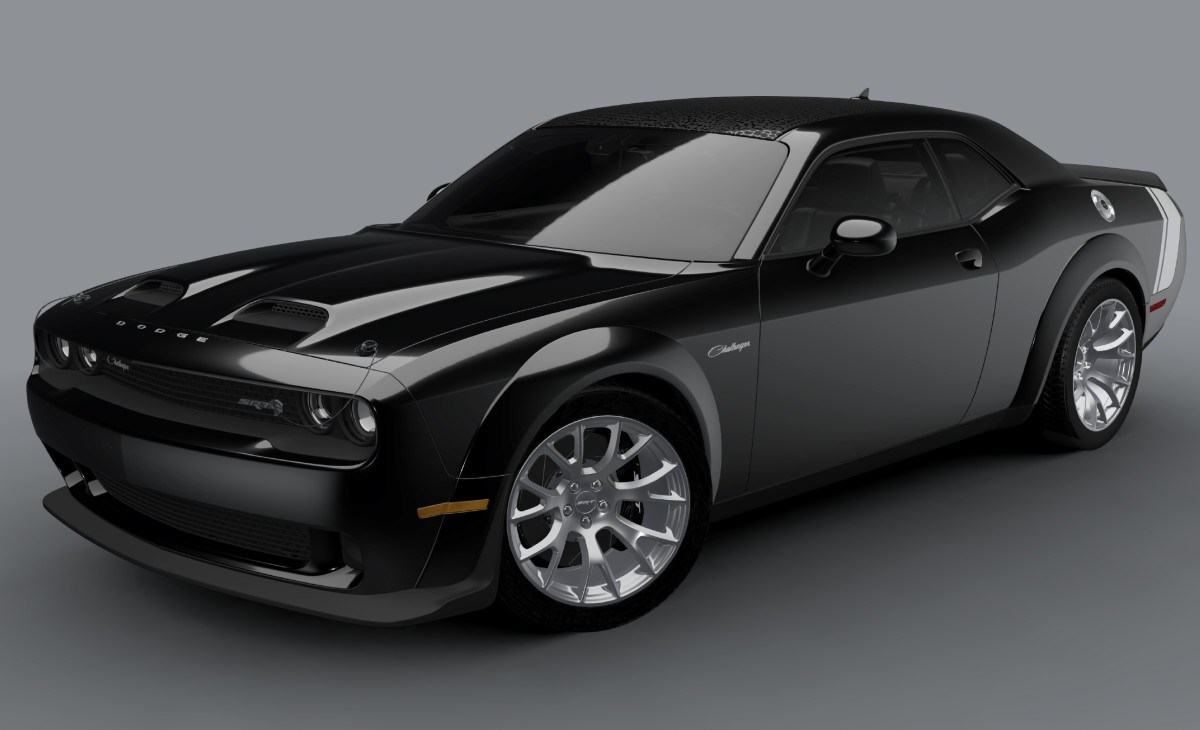
A few elements from the concept didn't survive the transition to production—among them the full-width neon taillamp, functional hood scoops, carbon fiber racing stripes, and "CHALLENGER" lettering stamped across the rear flanks. But the overall look, feel, and—crucially—the proportion of wheel size to wheel opening remained remarkably faithful to the original concept.
In production trim, the final top-spec 2023 model year Challenger SRT Hellcat Redeye cranked out 797 hp and 707 pound-feet of torque, delivering the kind of gut-punch acceleration that rivals an electric motor. The sprint to 60 mph took just 3.4 seconds, though traction was always a negotiation. Chevrolet may have reached supercar territory with the Corvette, but for those who live and breathe old-school American muscle, Dodge's fire-breathing creation remains the gold standard.
Ford GT
Best for: Drivers who want a screaming, supercharged V8 directly behind their seat
Priced from: $151,245 (new 2005 model MSRP)
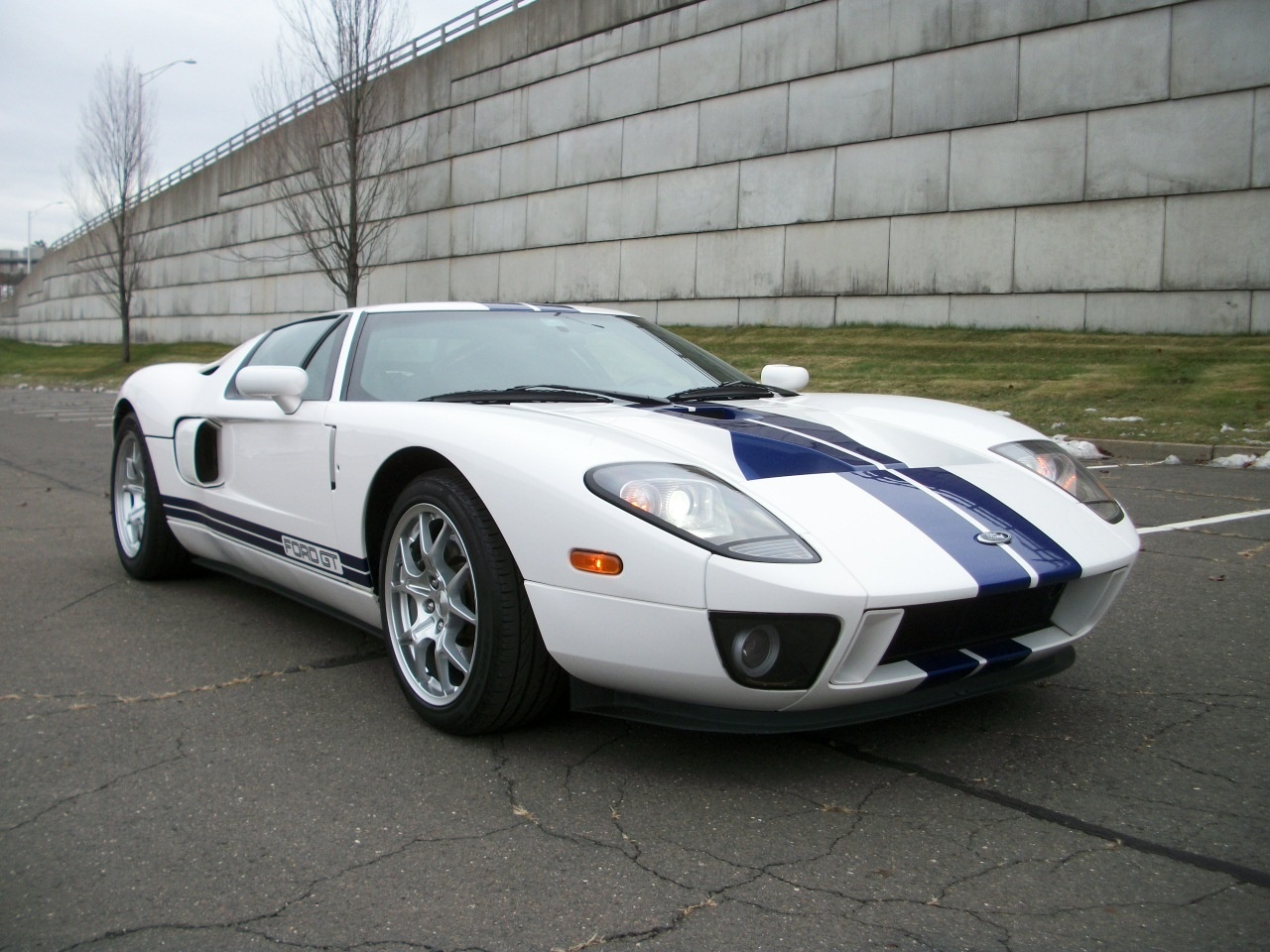
When Ford lured J Mays away from Volkswagen, his Retrofuturism design philosophy left its fingerprints on roughly 92% of everything the Blue Oval produced during his tenure. Many of those projects never made it beyond the show stand. Compelling concepts like the Ford Forty-Nine, the Lincoln MK9, and the Lincoln Mark X each generated enormous buzz at the major auto shows, only to be quietly shelved for one reason or another.
Perhaps that's because Ford channeled its resources into bringing the Ford GT to life—debuting it alongside the revived Ford Thunderbird, a car that still looked half-finished even when it reached dealer showrooms.
The Ford GT-40 was unveiled at the 2002 North American International Auto Show and, save for a little editorial correction crossing out "-40" on the press materials, it was virtually indistinguishable from the sleek, aerodynamically sculpted production car. While valuations on other early-2000s supercars have plateaued or slipped, Ford GTs have appreciated dramatically, with examples now commanding close to half a million dollars at auction.
Lexus LFA
Best for: Enthusiasts who want a taste of peak automotive engineering from the early 2010s
Priced from: $375,000 (new 2012 model MSRP)
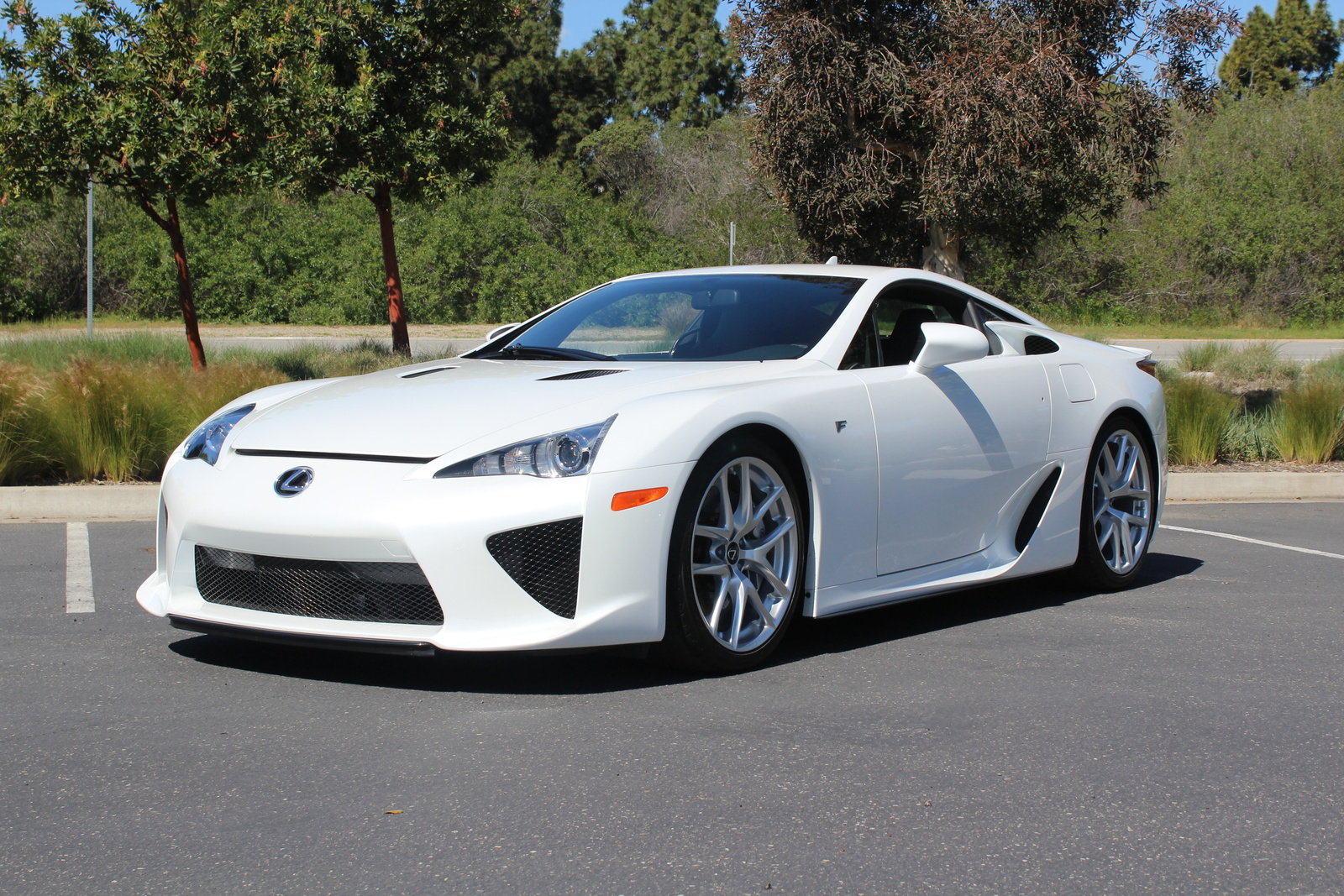
Lexus built its reputation on producing competent, inoffensive entry-luxury sedans and crossover SUVs that appealed to a comfortable, risk-averse buyer. Building supercars was simply not in its DNA—nor in that of its parent company, Toyota. It took a genuine rebel with a passion for motorsport—CEO Akio Toyoda, the man whose family name graces the company's headquarters—to push this manufacturer of supremely dependable but largely uninspiring automobiles into genuinely thrilling territory.
The LFA concept spent four years in development before its debut at the North American International Auto Show in 2005. When it was revealed, it came with the familiar caveat that neither Toyota nor Lexus had any intention of putting it into production. In 2008, Lexus returned with a second concept—this time a roadster version—that embarked on an extensive tour of the events frequented by those who might actually afford a $375,000 car: Pebble Beach, the U.S. Open, the Geneva Auto Show, and beyond.
Then, in 2009, Akio Toyoda made it official: the LFA was going into production, equipped with a 552-hp V10 engine that placed it squarely in the company of the world's greatest supercars.
Audi TT
Best for: Connoisseurs of small-car driving thrills in a beautiful package
Priced from: $51,200 (new 2023 model MSRP)
At this point, we've touched on nearly every concept car that J Mays successfully guided from show stand to showroom. A common thread runs through all of them: a nostalgic nod to the 1960s, wrapped around thoroughly modern mechanicals and materials.
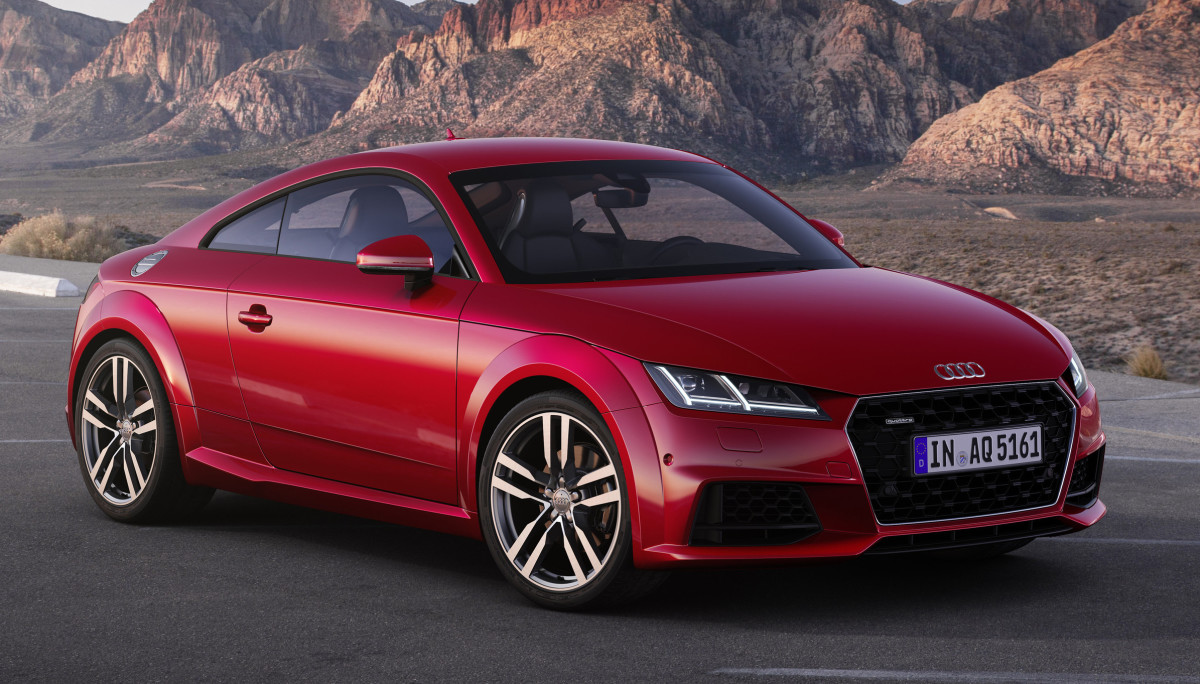
Development of the 1995 Audi TT Concept ran in parallel with the Concept One that Mays was simultaneously developing for Volkswagen. Work began in 1994 at the Volkswagen Group Design Center in California, and the TT Concept made its public debut at the 1995 Frankfurt Motor Show. An interesting footnote: much of the inspiration behind the Audi TT was drawn from rear- and mid-engine motorsport machinery of the era, particularly the NSU Prinz TT—a spirited little coupe that punched well above its weight in European hill climb competition.
Both the TT and the New Beetle share essentially the same platform, and that shared heritage is perceptible in each concept. But while the VW is clearly paying homage to the silhouette of the original Beetle, the TT charts its own course entirely. Its dramatically lower roofline gives the coupe a far more lithe and athletic presence. More than 25 years on, the TT Concept's design still feels fresh—and when it entered production for the 1998 model year, it was nearly identical to the concept that had wowed show-goers years earlier.
Kia Soul
Best for: Entry-level car owners with personality
Priced from: $19,990
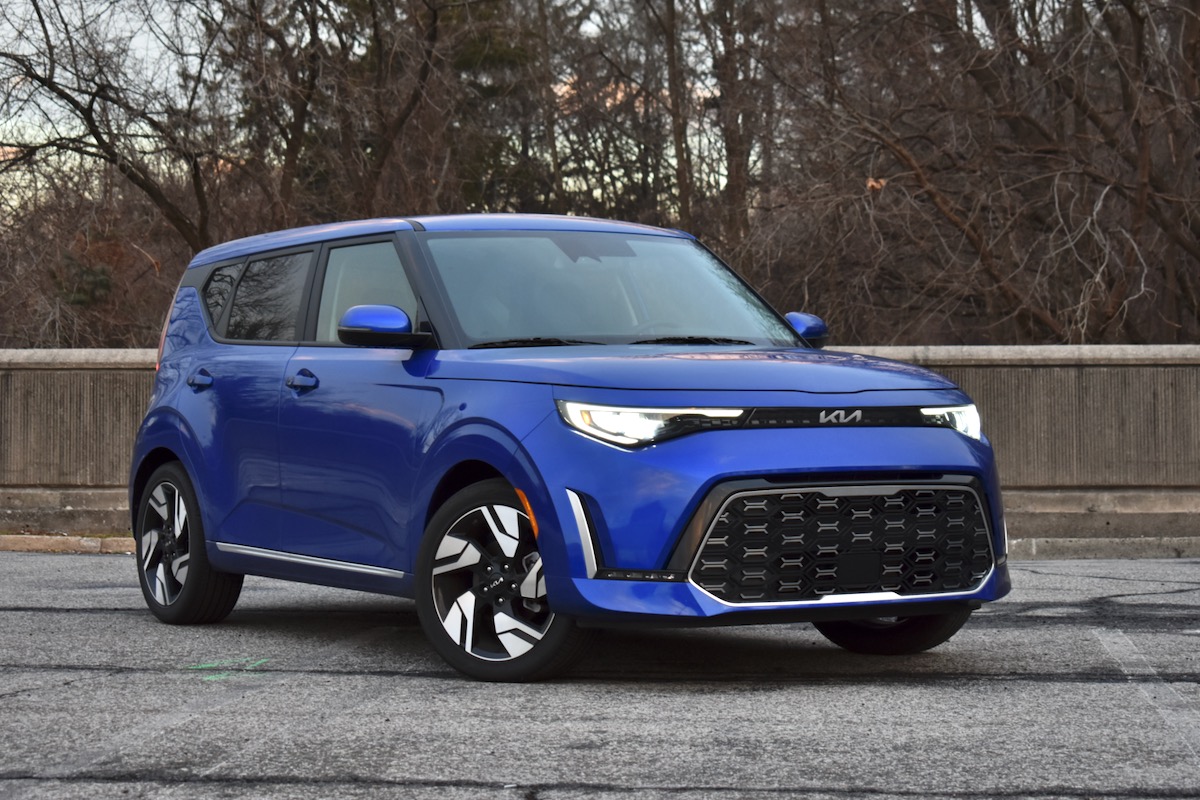
"Wait, there was a Kia Soul concept car?" Absolutely—and it was genuinely impressive. When it appeared at the 2006 North American International Auto Show, few people gave it a second thought. Car and Driver noted at the time, "The four-door Soul concept gives us an idea as to what the future Kia Sorento and perhaps other Kia SUVs might look like." Yet within two years, Kia unveiled the Soul production model at the 2008 Paris Motor Show, and to the surprise of nearly everyone—possibly including Kia itself—it became the brand's best-selling model, generating revenue that helped fund the development of halo cars like the Stinger GT.
The Soul concept lost remarkably little in its translation to the production car, retaining details like rear-hinged back doors and the absence of a B-pillar between the front and rear openings. The production vehicle stayed impressively faithful to the vision laid out by the 2006 concept. With its unapologetically boxy proportions, the Soul stands as an early indicator of the Italdesign-inspired design language that Hyundai and Kia would go on to embrace so boldly.

Ford Bronco
Best for: Ford fans who are almost ready to buy a Jeep
Priced from: $38,000
Few vehicles can claim a gestation period quite as drawn-out as that of the Ford Bronco. The full-size Bronco took its final bow after the 1996 model year, and Ford seemed content to let the nameplate fade into memory while it was busy cashing in on the Explorer's runaway success. Eight years later, at the 2004 North American International Auto Show, Ford quietly unveiled the Bronco Concept—a short-wheelbase, two-door compact SUV riding on an Escape platform and powered by a turbocharged 2.0-liter four-cylinder engine.
The modern Bronco's design immediately evokes the spirit of the original 1966 Ford Bronco, delivering every element that today's off-road enthusiast demands in a capable, adventure-ready machine.
Then sixteen years slipped by. Speculation about a Bronco revival filled online forums and fan communities. At the 2019 Baja 1000, Ford unveiled the Bronco R Prototype as a real-world testbed for the powertrain destined for a production vehicle the brand had been teasing for what felt like forever. Finally, after a 25-year absence, Ford brought the Bronco roaring back for the 2026 model year, and its retrofuturistic design ranks among the most compelling we've seen in recent memory.
The Best Concept Cars That Made It to Production FAQs
What is a concept car, and do they ever actually make it to production?
A concept car is a vehicle built by an automaker to showcase a bold design direction, test public reaction, or generate excitement at auto shows. While many concept cars never reach dealerships — derailed by safety regulations, cost concerns, or shifting priorities — a select few do make it to production, and some go on to become true automotive icons like the Ford Mustang, Mazda Miata, and Dodge Challenger.
Which concept cars stayed the most faithful to their original design when they went into production?
Several production cars came remarkably close to their concept originals. The Audi TT, for example, entered production for the 1998 model year looking nearly identical to the concept that debuted at the 1995 Frankfurt Motor Show, and the Volkswagen New Beetle was described as a near-perfect match for its Concept Two when it arrived in showrooms in 1998. The Ford GT was similarly faithful — essentially indistinguishable from the concept unveiled at the 2002 North American International Auto Show.
Which concept car had the longest gap between its debut and reaching production?
The Ford Bronco holds a strong claim to that title. Ford unveiled a Bronco Concept at the 2004 North American International Auto Show, and the production model didn't arrive until the 2026 model year — a gap of roughly 22 years from concept to showroom, following an initial nameplate absence of 25 years after the original Bronco was discontinued after 1996.
Which concept car turned into the biggest commercial surprise once it hit the market?
The Kia Soul is arguably the most unexpected success story on the list. When the concept debuted at the 2006 North American International Auto Show, it was largely overlooked, but the production model launched at the 2008 Paris Motor Show went on to become Kia's best-selling model — generating enough revenue to help fund the development of performance halo cars like the Stinger GT.
What Makes CarGurus Best Cars Guides Different?
Most car-shopping websites publish lists of the best cars across a variety of categories, with recommendations generally driven by editorial expertise. Here's what makes ours different: In addition to the insights and verdicts of our team of car-testing experts, our best cars guides take into account other factors that we know matter to buyers-real owner experiences and current market value.
Our expert reviewers are among this country's most trusted automotive journalists, also writing for publications including US News and World Report, Edmunds, Digital Trends, J.D. Power, and Car & Driver. They put each car through real-world testing and create detailed reviews of performance in a range of categories, from practicality and driving manners to cost-effectiveness and safety.
We also analyze hundreds of thousands of used car listings on CarGurus.com to track which models consistently offer the highest percentage of best deals relative to how many are listed for sale. Then we factor in reviews from owners-people who actually live with these cars every day. Our proprietary Best Cars algorithm then creates a final Overall CarGurus rating combining expert scores, user reviews, and the percentage of listings that have earned the Good or Great Deal rating. This multi-pronged approach reveals not just which cars excel on paper, but which ones deliver satisfaction and value when you're ready to buy.
The CarGurus market data used in this guide was last updated in March 2026. Values were accurate at time of publication and should be used as a guide only.