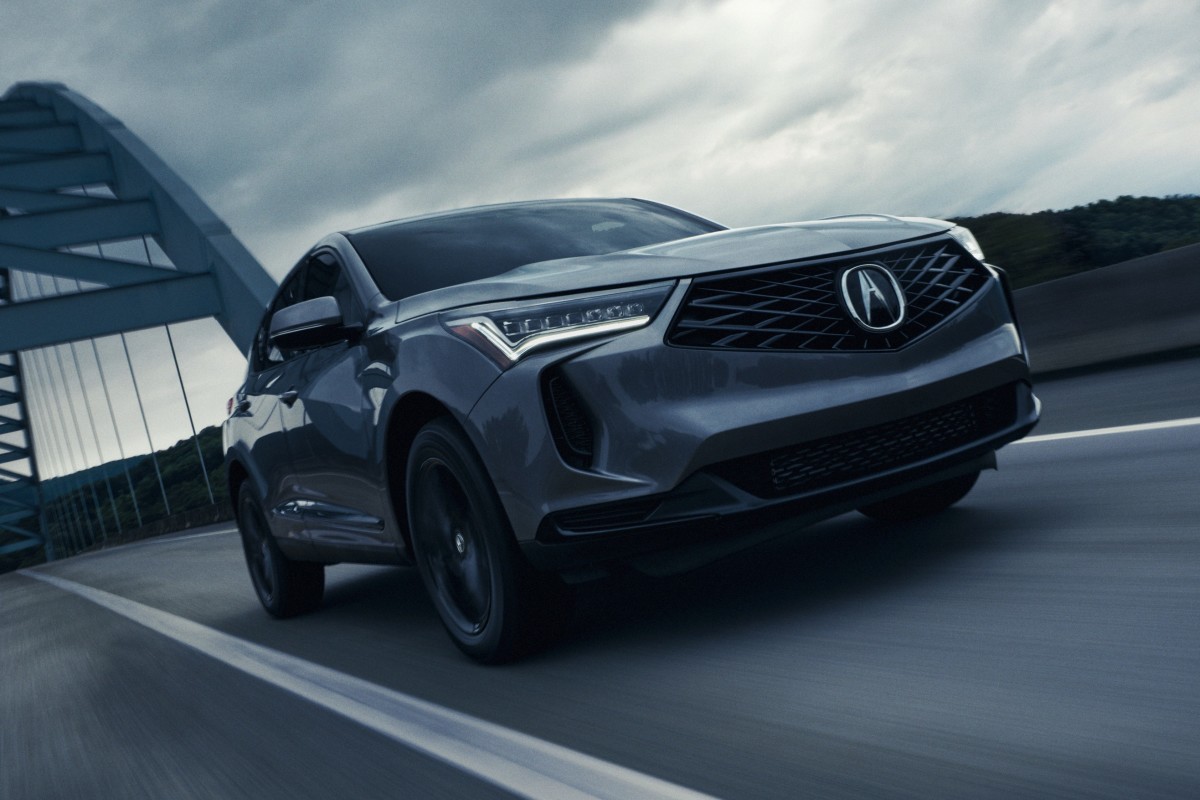
Choosing a first car is a major milestone, bringing new freedom and responsibility. For new drivers, the ideal vehicle is one that inspires confidence behind the wheel. This means it should be easy to drive, simple to park, and equipped with modern safety features that act as a helpful backup while you're still gaining experience. Predictable handling, good visibility, and manageable power are key ingredients for a car that feels like a partner, not a challenge, on the road.
This guide focuses on vehicles that excel in areas crucial for first-time owners. We've selected cars, trucks, and SUVs that prioritize safety, practicality, and user-friendly technology. Many of the models on our list come standard with comprehensive driver-assistance suites, including features like automatic emergency braking and blind-spot monitoring. We also considered long-term ownership factors like fuel efficiency and reliability, ensuring that a great first car is also a smart investment. Whether you need the versatility of an SUV, the efficiency of a sedan, or even the utility of a pickup, this list offers a starting point for finding a vehicle that makes every drive a little less stressful.
The Best Cars for New Drivers in 2026
- Best Subcompact Car: Nissan Versa
- Best Compact Car: Honda Civic
- Best Midsize Car: Subaru Legacy
- Best Sports Car: BMW 2 Series
- Best Electric Vehicle: Hyundai Ioniq 5
- Best Subcompact Crossover SUV: Hyundai Kona
- Best Compact Crossover SUV: Ford Bronco Sport
- Best Midsize Crossover SUV: Honda Pilot
- Best Minivan: Chrysler Pacifica
- Best Pickup Truck: Honda Ridgeline
FAQs What Makes CarGurus Best Cars Guides Different Shopping Tools Related Topics
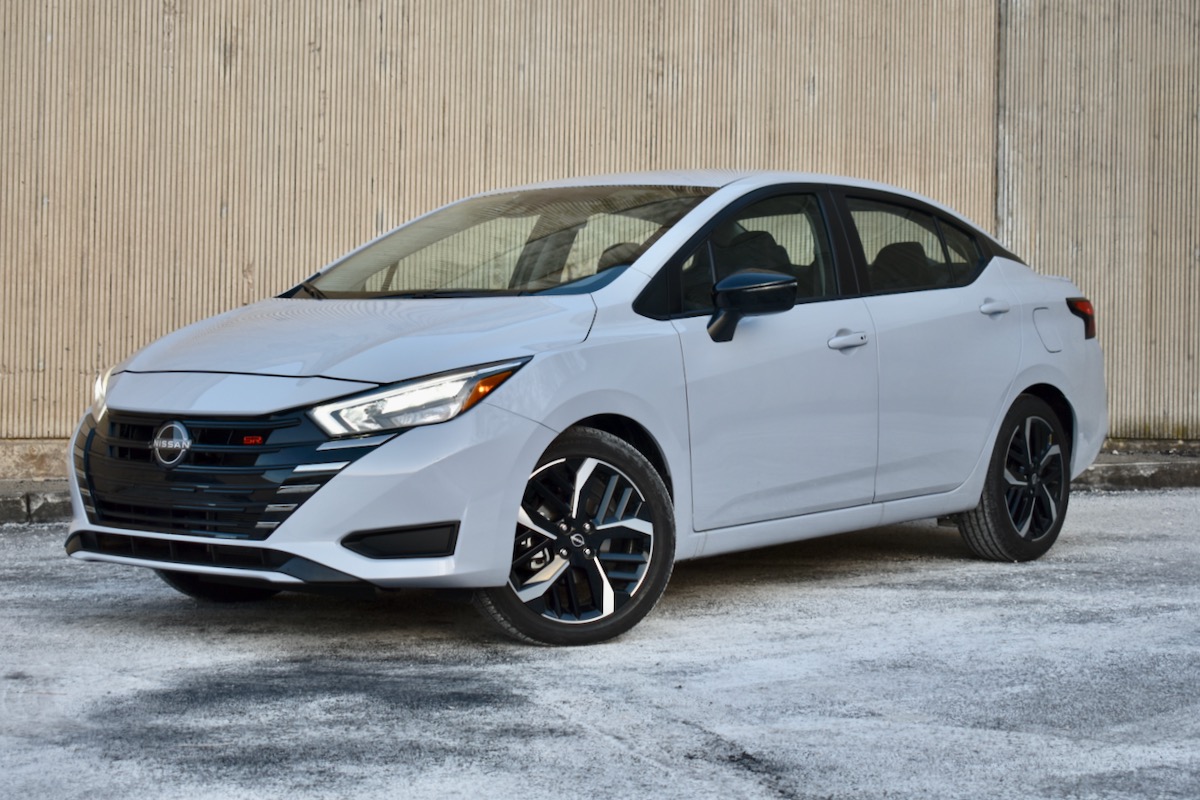
Best Subcompact Car for New Drivers: Nissan Versa
CarGurus expert rating: 7.3 out of 10
CarGurus user rating: 4.2 out of 5
Percentage of Good and Great Deals available on CarGurus: 36.6%
Overall CarGurus rating: 4.3 out of 5
| Pros | Cons |
|---|---|
| Stylish design | Fairly pedestrian performance |
| Fuel-efficient | Outdated technology |
| Excellent value for money |
The Versa’s appeal is in how “normal” and confidence-inspiring it feels for the money. It’s an easy car to place in traffic thanks to a relatively low dashboard and good outward visibility, and its small footprint makes parking lots less stressful. Power comes from a 1.6-liter four-cylinder with 122 hp and 114 lb-ft of torque driving the front wheels; it won’t feel fast, but it’s responsive enough for everyday merging and commuting, and the ride is impressively comfortable for an entry-level sedan. It also delivers strong fuel economy—up to an EPA-estimated 35 mpg combined with the CVT—helping keep running costs low.
Safety and value are where the Versa makes the strongest case for first-time owners. Even the base trim includes automatic emergency braking with pedestrian detection plus lane-departure warning, with available additions like blind-spot monitoring and rear cross-traffic alert (SV) and adaptive cruise control (SR). NHTSA gives the 2023 Versa a five-star overall safety rating, and there’s a solid warranty backing it up (3 years/36,000 miles basic, 5 years/60,000 miles powertrain). Practicality is respectable, too, with a trunk that ranges from 14.7 to 15 cubic feet depending on trim; just note that Apple CarPlay and Android Auto require the S Plus Package or stepping up to SV or SR, and the infotainment graphics feel dated compared with newer systems.
The CarGurus Verdict: "It’s getting hard to find a basic subcompact sedan, but Nissan is keeping the faith. But, as is always the case in this market segment, shoppers must also consider whether to buy a new car like the Versa or a potentially better equipped used car for similar money." - Stephen Edelstein
Read our most recent Nissan Versa review

Best Compact Car for New Drivers: Honda Civic
CarGurus expert rating: 6.8 out of 10
CarGurus user rating: 4.4 out of 5
Percentage of Good and Great Deals available on CarGurus: 31.9%
Overall CarGurus rating: 4.3 out of 5
| Pros | Cons |
|---|---|
| Choice of body styles | All-wheel drive not available |
| Enjoyable to drive | Noisy at speed |
| Premium interior materials | Outdated technology |
The Honda Civic is a familiar sight, but it’s well worth a second look, especially if you want something that feels “right” from the driver’s seat. Even in Civic LX and Sport trims with the base 2.0-liter engine (150 hp and 133 lb-ft of torque), power is merely adequate, but the payoff is easy, predictable behavior for new drivers—plus a CVT that mostly stays in the background. The Civic’s steering is precise and the suspension tuning helps it feel confident in corners, and the Normal/Sport/Econ drive modes make it simple to tailor the car to your comfort level. The tradeoff is that all-wheel drive isn’t available, and road noise on certain pavement can get tiring on longer drives.
Safety and day-to-day usability are strong points. Every 2026 Civic comes with Honda Sensing driver aids (including automatic emergency braking, lane-keeping, lane-centering, and adaptive cruise control), and the Civic Sport adds blind-spot monitoring and rear cross-traffic alert (note: those aren’t available on the base LX). The NHTSA gives the 2026 Civic sedan a five-star overall rating. Inside, the controls are clear and logically laid out, but the standard 7-inch screens and wired Apple CarPlay/Android Auto feel dated; on the plus side, that simplicity can be less distracting when you’re still building driving confidence. Practicality is solid, too, with a 14.8-cubic-foot trunk and a 60/40-split folding rear seat, and long-term ownership tends to pencil out thanks to strong reliability, good resale value, and respectable fuel economy.
The CarGurus Verdict: "You’ll pay a premium to buy a Honda Civic. In many ways, it’s worth the extra money. In others, not so much. Still, while there are better deals in the compact car class, few are as satisfying to drive, and that’s true even when the Civic is equipped with its base engine." - Christian Wardlaw
Read our most recent Honda Civic review
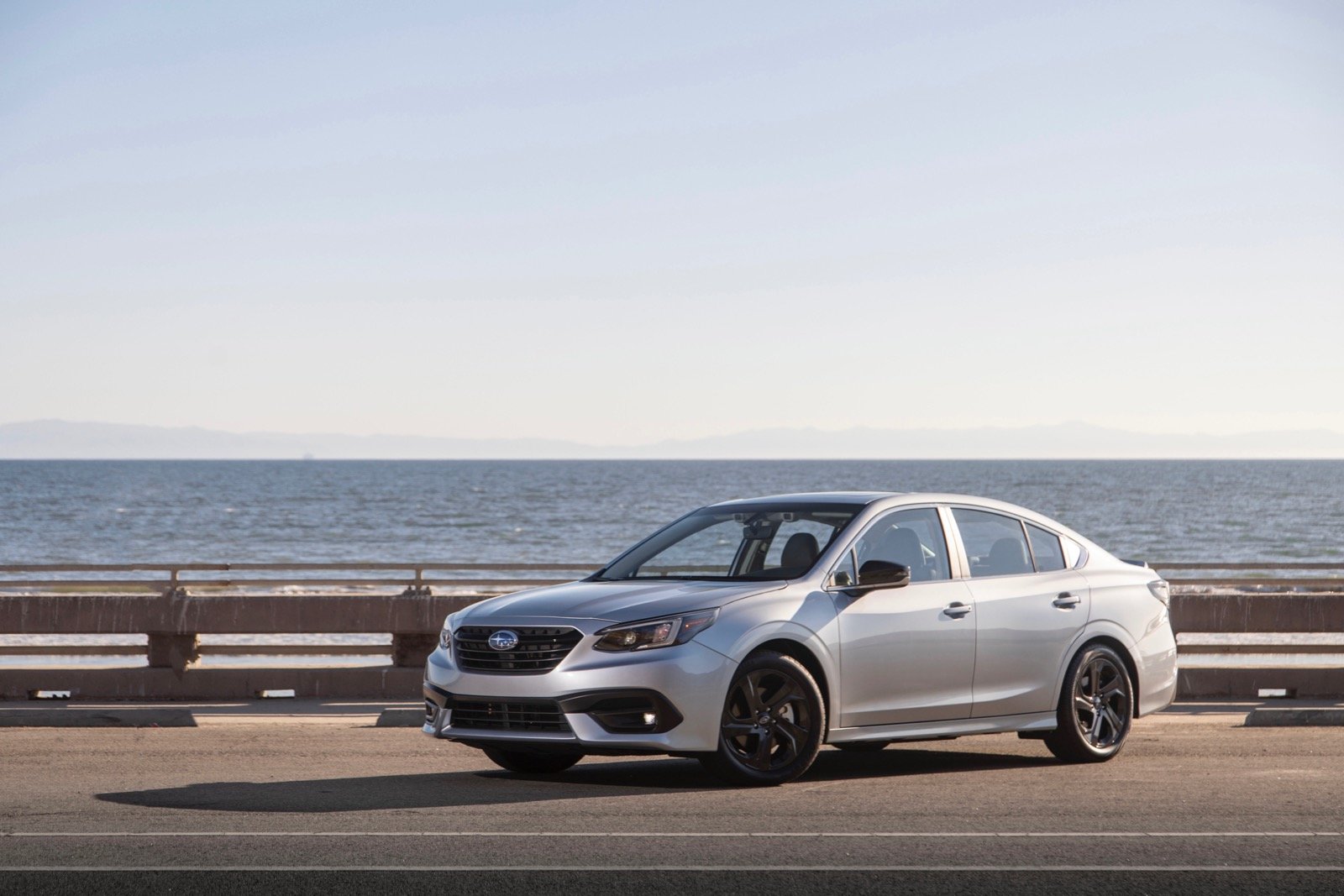
Best Midsize Car for New Drivers: Subaru Legacy
CarGurus expert rating: 8.3 out of 10
CarGurus user rating: 4.5 out of 5
Percentage of Good and Great Deals available on CarGurus: 30.6%
Overall CarGurus rating: 4.3 out of 5
| Pros | Cons |
|---|---|
| Standard all-wheel drive | Uninspired styling |
| Comfortable | Sluggish performance |
| Standard advanced safety features | Interior materials feel cheap |
The Subaru Legacy is a great option for new drivers thanks to its standard all-wheel drive—an uncommon feature in the midsize sedan class—and a calm, confidence-building demeanor in bad weather. It also comes standard with Subaru EyeSight driver-assistance tech, including adaptive cruise control with lane centering and pre-collision automatic emergency braking, and it backed that up with top marks from the IIHS (including Top Safety Pick status) plus a five-star overall NHTSA rating.
Day to day, the Legacy is easy to live with: Steering is light in parking lots, the cabin feels roomy for a five-seater, and the seats are comfortable enough for longer commutes. Most trims use a 182-hp 2.5-liter four-cylinder (176 lb-ft of torque) paired with a CVT, while XT models upgrade to a 260-hp turbo 2.4-liter (277 lb-ft of torque) for easier merging and passing. Tech is straightforward, with Apple CarPlay and Android Auto standard, and higher trims get Subaru’s 11.6-inch touchscreen; just note the styling and some interior materials can feel a bit downmarket, and the trunk is a modest 15.1 cubic feet.
The CarGurus Verdict: "The Subaru Legacy delivers a lot of what the typical Subaru customer is looking for, including standard AWD—it's the only vehicle in its class to offer that. It is also fuel-efficient, has comfortable seats, and ranks as one of the safest vehicles on the market today. But, fit-and-finish questions linger, and the EyeSight safety technology can prove annoying, with frequent beeps and chimes." - Eileen Falkenberg-Hull
Read our most recent Subaru Legacy review

Best Sports Car for New Drivers: BMW 2 Series
CarGurus expert rating: 6.3 out of 10
CarGurus user rating: 4.6 out of 5
Percentage of Good and Great Deals available on CarGurus: 32.3%
Overall CarGurus rating: 4.3 out of 5
| Pros | Cons |
|---|---|
| Fun to drive | Uninspired styling |
| Standard all-wheel drive | Unintuitive technology |
| Plenty of cargo space | Firm ride quality |
The 2 Series Gran Coupe is an “entry-level BMW” that still feels appropriately sporty and secure. Standard all-wheel drive helps take stress out of wet-weather driving, and the car comes with a solid set of driver-assistance features right out of the box, including forward collision warning with automatic emergency braking, blind-spot monitoring, lane-departure warning, and front/rear parking sensors. BMW also includes a semi-automated parking system, which can be a real confidence booster in tight lots; just keep in mind that NHTSA and IIHS crash-test results for this redesigned model haven’t been published yet.
Day to day, the 2 Series Gran Coupe is sized like a compact sedan, which helps it feel less intimidating in traffic and easier to place on narrow streets. The dual-clutch automatic is notably smooth at parking-lot speeds, and the cabin’s driving position is modern and focused, with an available head-up display to help keep eyes up. Tech is plentiful—wireless Apple CarPlay/Android Auto, wireless charging, and a Harman Kardon audio system are standard—but some controls and menu layouts can be more complicated than they need to be, which may frustrate newer drivers. Practicality is respectable for the class, too, with a 12-cubic-foot trunk and handy seatback releases, though rear-seat headroom can be tight for taller passengers and the ride can get firm on rougher pavement.
The CarGurus Verdict: "The all-new 2025 BMW 2 Series Gran Coupe is a relative bargain among compact luxury cars, leading shoppers to the brand’s pricier and more athletic models. However, if your preferences favor performance over practicality, you might want to consider spending just a bit more for the two-door 2 Series coupe." - Mark Takahashi
Read our most recent BMW 2 Series review
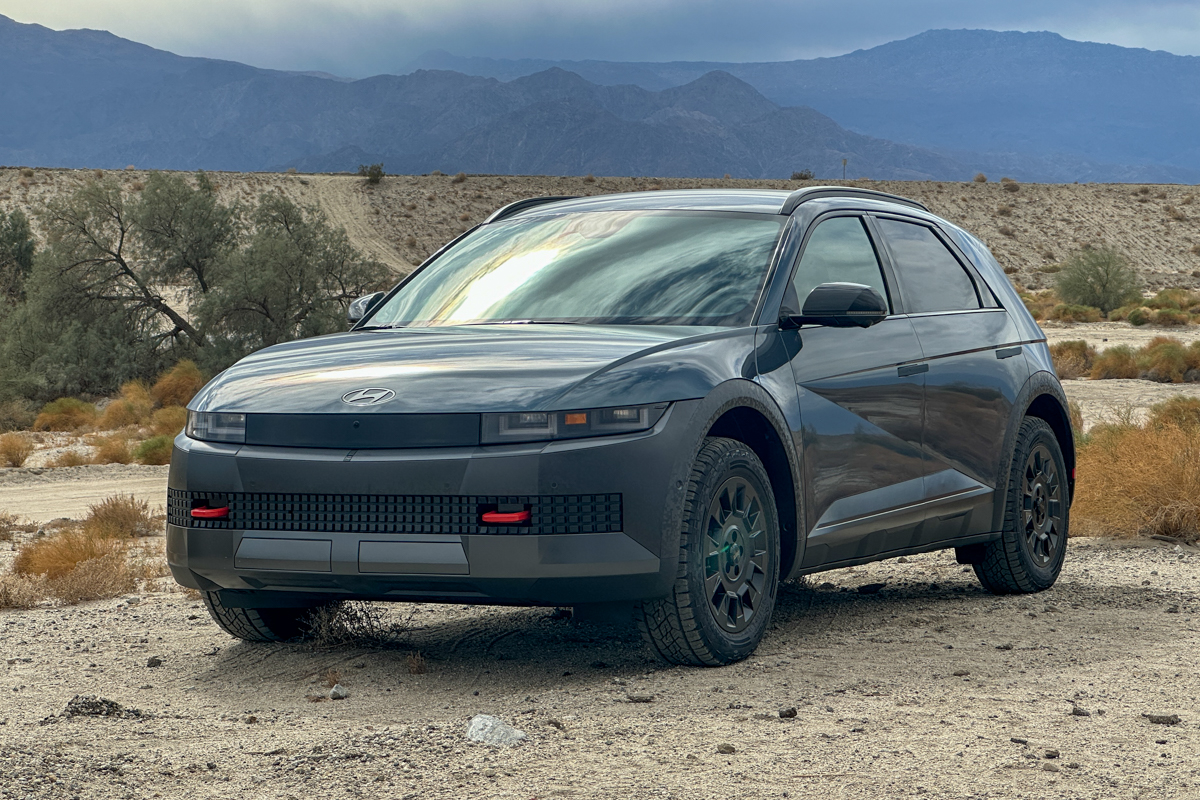
Best EV for New Drivers: Hyundai Ioniq 5
CarGurus expert rating: 8.7 out of 10
CarGurus user rating: 4.6 out of 5
Percentage of Good and Great Deals available on CarGurus: 23.0%
Overall CarGurus rating: 4.4 out of 5
| Pros | Cons |
|---|---|
| Broad public charging network | Competitors have more storage space |
| Standard advanced safety features | Real leather not available |
| Stylish design |
Some EVs are noticeably different to drive than gas- and hybrid-powered vehicles. Others, like the Hyundai Ioniq 5, offer settings that allow you to select a more traditional driving experience, making them better options for new drivers. The Ioniq 5 pairs these easy everyday manners with a deep bench of safety tech. It’s already earned a five-star NHTSA rating, and the model has a long-running history of IIHS Top Safety Pick+ recognition. For 2025, Hyundai also expands its standard driver-assistance and parking support, including enhanced driver attention monitoring (with haptic steering wheel feedback and hands-on detection) plus forward and reverse parking-distance warning—helpful confidence builders when you’re still learning spacing in parking lots and tight garages.
The Ioniq 5 also gets practical updates that matter in real life, like a now-standard rear windshield wiper and a cleaner, more functional center-console layout with easy-to-reach controls. Tech is friendly, too: wireless Apple CarPlay and Android Auto are now standard, and the dual 12.3-inch displays keep key info clear without feeling cluttered. For families trying EV life with a first-time driver, the switch to the Tesla-style NACS port is a big convenience win for public charging access, while the strong one-pedal-style regenerative braking can reduce the need to constantly move between accelerator and brake in stop-and-go traffic.
The CarGurus Verdict: "Hyundai makes minor but welcome changes and avoids tweaking the many things that were working well, successfully making a good thing better." - Natalie Harrington
Read our most recent Hyundai Ioniq 5 review

Best Subcompact Crossover for New Drivers: Hyundai Kona
CarGurus expert rating: 8 out of 10
CarGurus user rating: 4.5 out of 5
Percentage of Good and Great Deals available on CarGurus: 32.9%
Overall CarGurus rating: 4.5 out of 5
| Pros | Cons |
|---|---|
| Plenty of cargo space | Fairly pedestrian performance |
| Standard advanced safety features | Potentially polarizing design |
| Spacious |
If you have your heart set on an SUV but don't need a ton of space, the Hyundai Kona is a manageably sized option that’s easy to live with day to day. It’s compact enough to park without stress, but the second-generation model’s extra size pays off in useful room for friends and gear. Cargo space is a practical 25.5 cubic feet behind the rear seats (63.7 cubic feet with them folded), and the cabin layout helps reduce distraction, with physical climate controls and a tidy center area thanks to the column-mounted shifter. Up front, there’s good adjustability for a comfortable driving position, plus lots of storage spots for essentials like a phone and wallet.
Safety and tech are also key Kona strengths for first-time buyers. Even the base trims come with a generous suite of driver assists, including Forward Collision-Avoidance Assist with pedestrian and cyclist detection, lane-keeping aids, blind-spot monitoring, and Safe Exit Warning, and the Kona has earned an IIHS Top Safety Pick+ award. The standard 12.3-inch infotainment display includes wireless Apple CarPlay and Android Auto across the lineup, and fuel economy can be excellent for a starter SUV—up to an EPA-estimated 31 mpg combined with the 147-hp 2.0-liter four-cylinder and CVT (Hyundai’s IVT). If you want quicker responses merging onto highways, the 190-hp turbo option (with 195 lb-ft of torque and an eight-speed automatic) is available on higher trims, though it’s still tuned more for competence than thrills.
The CarGurus Verdict: "That there are no major changes beyond a couple of new trim levels for the 2025 Hyundai Kona is neither a surprise nor a bad thing. Not a surprise because this second-generation model only made its debut one year ago, making it too soon to expect any major updates. And not a bad thing because, frankly, this second-generation Kona was already a great subcompact SUV." - Chris Knapman, Editorial Director
Read our most recent Hyundai Kona review

Best Compact Crossover for New Drivers: Ford Bronco Sport
CarGurus expert rating: 7.8 out of 10
CarGurus user rating: 4.4 out of 5
Percentage of Good and Great Deals available on CarGurus: 33.9%
Overall CarGurus rating: 4.5 out of 5
| Pros | Cons |
|---|---|
| Great handling | Excessive touchscreen controls |
| Standard all-wheel drive | Mediocre fuel economy |
| Stylish design |
The Ford Bronco Sport offers the confidence of standard AWD in a compact footprint that’s easy to place in traffic and parking lots. Ford’s boxy “baby Bronco” styling also brings practical benefits: upright sightlines, clear corners, and fender “trail sights” that help you judge the vehicle’s edges. Under the hood, most trims use a 180-hp turbo 1.5-liter three-cylinder (200 lb-ft of torque), while the Badlands steps up to a 250-hp turbo 2.0-liter four-cylinder (280 lb-ft), both with an eight-speed automatic; either way, it’s tuned to feel composed and comfortable on everyday drives, even when equipped for weekend dirt-road adventures.
Safety and tech are big parts of the Bronco Sport’s appeal for first-time owners. NHTSA gives it a five-star overall safety rating, and the standard Co-Pilot360 suite includes automatic emergency braking, blind spot monitoring, rear cross-traffic alert, lane-keeping assist, adaptive cruise control with lane centering, and automatic high beams—useful backup when experience is still building. The 2025 update also brings Sync 4 with a 13.2-inch touchscreen and a 12.3-inch digital gauge cluster, plus wireless Apple CarPlay and Android Auto, though you’ll want to get comfortable with the screen-heavy approach for functions like climate controls. Practical touches like the dashboard device tray, plentiful USB ports, and up to 32.5 cubic feet of cargo space behind the rear seats (65.2 with them folded, depending on trim) make it easy to live with, but keep in mind fuel economy is only average for the segment.
The CarGurus Verdict: "The Bronco Sport was designed primarily with off-road enthusiasts in mind, but it’s still a good all-around crossover." - Stephen Edelstein
Read our most recent Ford Bronco Sport review
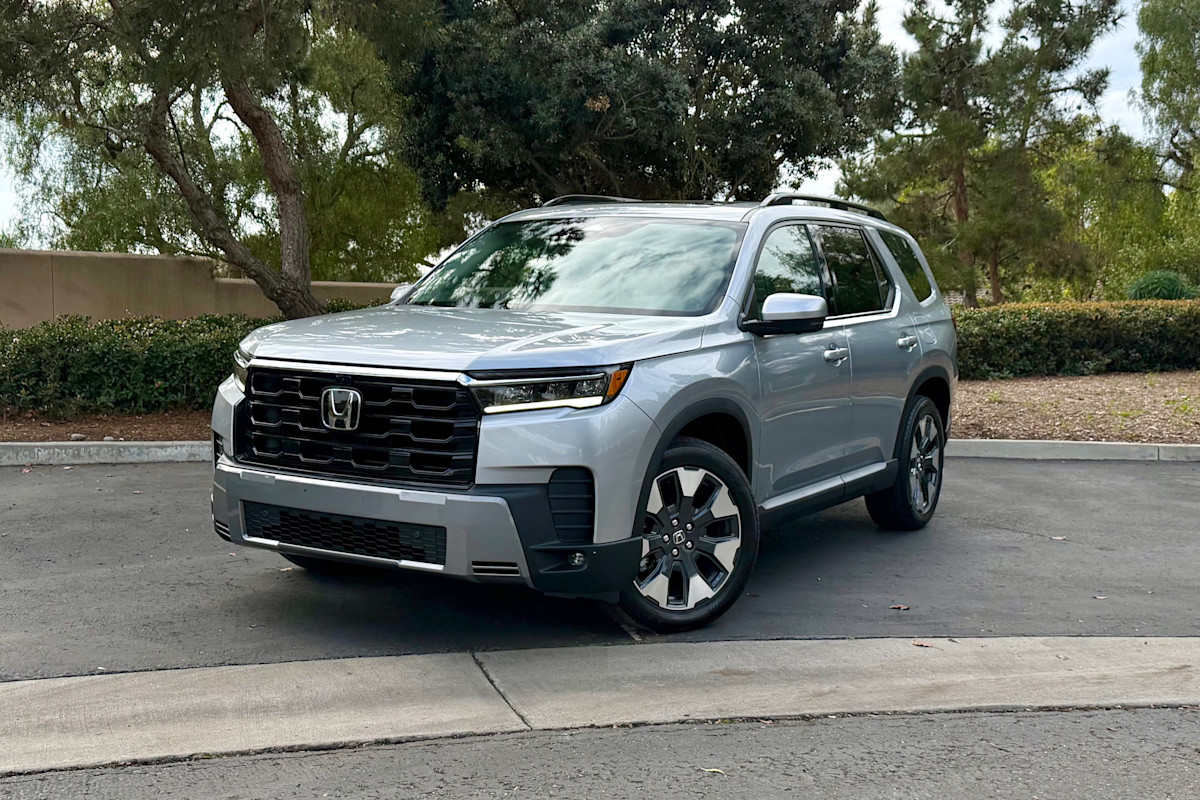
Best Midsize Crossover for New Drivers: Honda Pilot
CarGurus expert rating: 7 out of 10
CarGurus user rating: 4.5 out of 5
Percentage of Good and Great Deals available on CarGurus: 23.6%
Overall CarGurus rating: 4.2 out of 5
| Pros | Cons |
|---|---|
| Comfortable | No hybrid option |
| Plenty of cargo space | |
| Plenty of passenger space |
The Honda Pilot is the kind of easygoing SUV that takes stress out of everyday driving. The 3.5-liter V6 makes 285 hp and 262 lb-ft of torque, and the 10-speed automatic delivers confident acceleration for merging and passing without requiring you to mash the throttle. Honda also revised the steering for 2026 to feel more stable on-center at highway speeds, which is a meaningful confidence boost for less experienced drivers.
The Pilot’s biggest advantage for real life is how adaptable it is. The removable second-row center seat lets you switch between a full bench and a more open captain’s-chair-style walkway, while cargo space ranges from 22.4 cubic feet behind the third row up to 112.4 cubic feet with the rear seats folded. Tech is straightforward, too, with a standard 12.3-inch touchscreen, wireless Apple CarPlay and Android Auto, and Honda’s multi-angle camera views that can make parking less intimidating. Every trim includes the Honda Sensing driver-assist suite, and while official 2026 crash scores weren’t available at the time of writing, the structurally similar 2025 Pilot earned a five-star NHTSA rating and IIHS Top Safety Pick recognition.
The CarGurus Verdict: "Clever features help the Pilot stand out from other three-row SUVs. Our only major complaint is the lack of a more fuel-efficient model." - Mark Takahashi
Read our most recent Honda Pilot review
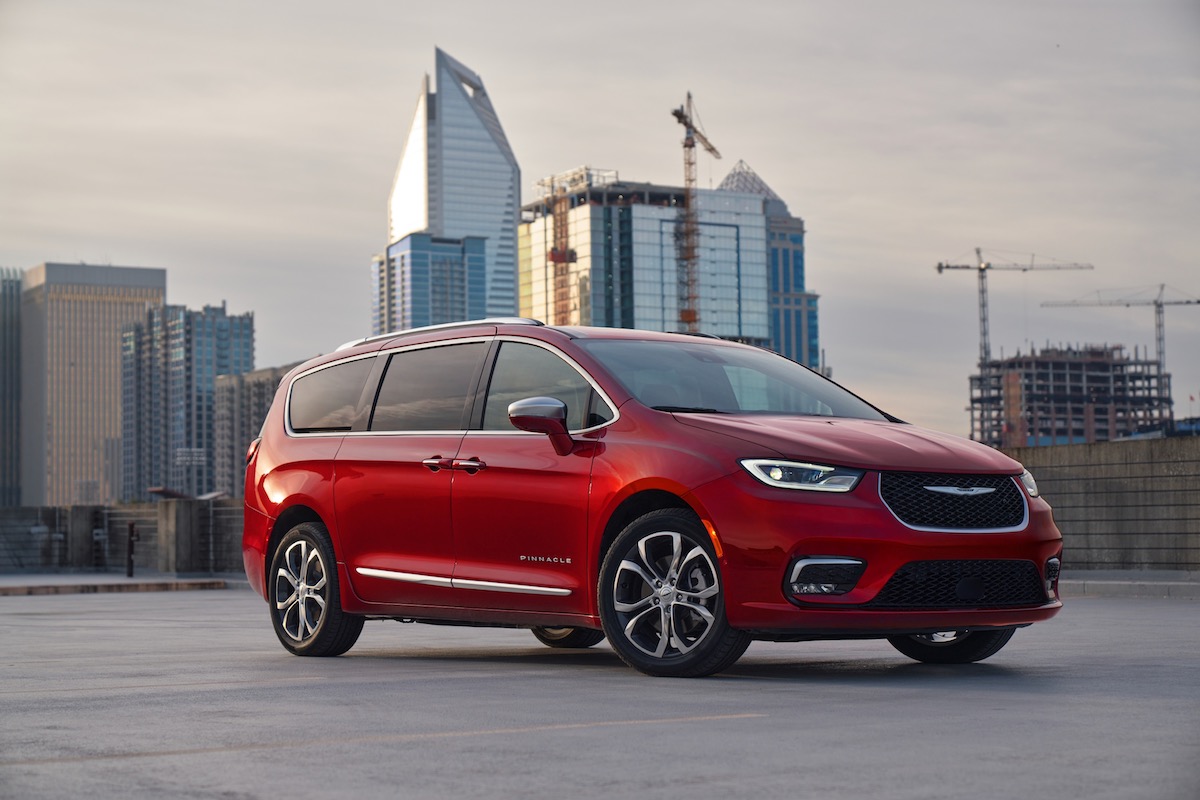
Best Minivan for New Drivers: Chrysler Pacifica
CarGurus expert rating: 8.2 out of 10
CarGurus user rating: 4.4 out of 5
Percentage of Good and Great Deals available on CarGurus: 36.3%
Overall CarGurus rating: 4.6 out of 5
| Pros | Cons |
|---|---|
| Stylish design | Fairly pedestrian performance |
| Comfortable | Interior materials feel cheap |
| Easy-to-use technology | Interior design looks nice but has functional issues |
The Chrysler Pacifica makes daily driving feel less stressful by pairing a calm, comfortable ride with a long list of standard driver-assist features. Every Pacifica includes blind-spot monitoring with rear cross-traffic alert, forward-collision warning with automatic emergency braking and pedestrian detection, lane-departure warning, adaptive cruise control, and rear park assist—useful safeguards when you’re still building confidence in traffic and parking lots. Safety scores are strong, too, with a five-star overall rating from NHTSA, and there’s also a new-for-2024 Emergency Vehicle Alert System that displays warnings through the Uconnect infotainment screen.
That screen is a 10.1-inch unit running Uconnect 5 with wireless Apple CarPlay and Android Auto, so navigation and music are easy to manage without fumbling with cables. Under the hood, the standard 3.6-liter V6 (287 hp, 262 lb-ft of torque) has enough punch to merge cleanly and keep up with fast-moving highway traffic, while the overall tuning prioritizes stability and comfort over sharp handling. For families handing down a vehicle to a new driver, the Pacifica’s practicality is a major plus: available Stow ’n Go seating and generous cargo capacity (32.3 cu ft behind the third row; 87.5 cu ft behind the second; 140.5 cu ft with the second and third rows folded on non-hybrid models) make it easy to haul sports gear, dorm-room boxes, or weekend-trip luggage, and FWD models return an EPA-estimated 22 mpg combined to help keep fuel costs manageable.
The CarGurus Verdict: "Verdict: The Pacifica checks all of the boxes, with only small issues to detract from its overall goodness." - Stephen Edelstein
Read our most recent Chrysler Pacifica review
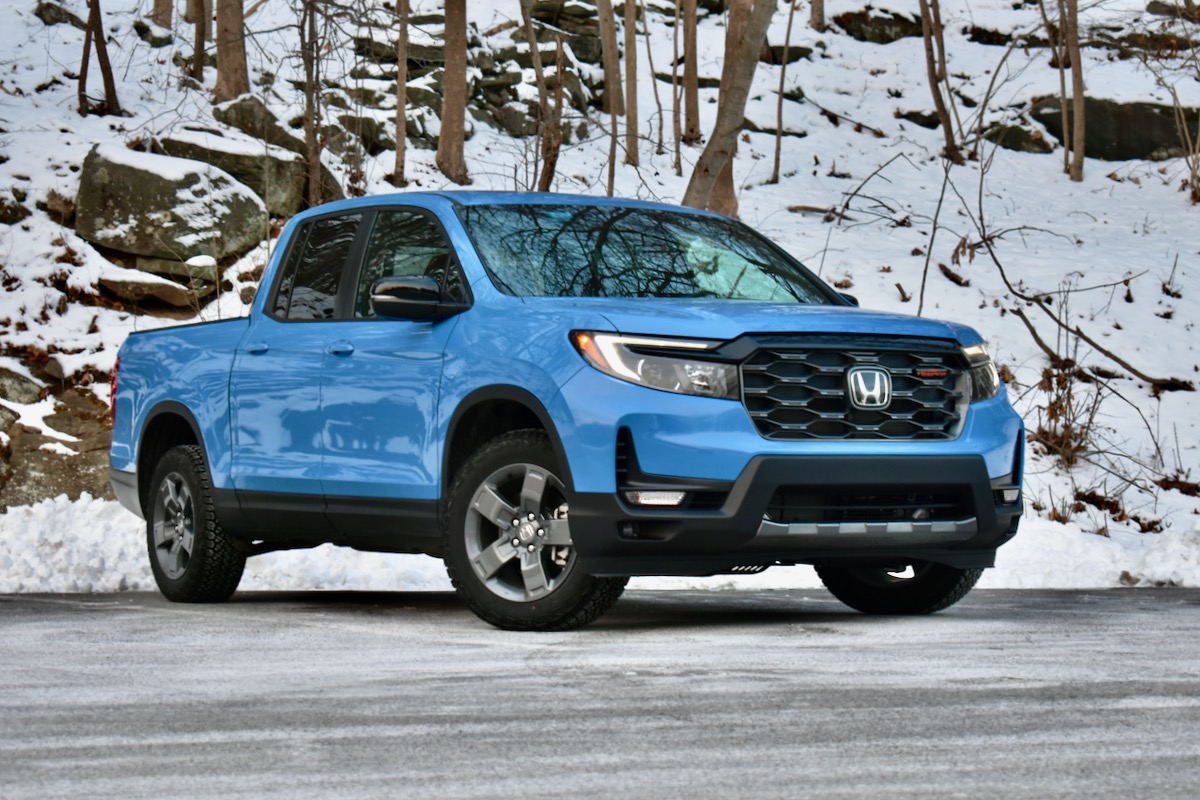
Best Pickup Truck for New Drivers: Honda Ridgeline
CarGurus expert rating: 7.8 out of 10
CarGurus user rating: 4.6 out of 5
Percentage of Good and Great Deals available on CarGurus: 29.1%
Overall CarGurus rating: 4.3 out of 5
| Pros | Cons |
|---|---|
| Comfortable | Limiting towing capacity for a midsize pickup |
| Great handling | Outdated technology |
| Standard all-wheel drive |
The Honda Ridgeline’s biggest advantage for new drivers is that it feels more like a crossover than a traditional body-on-frame pickup. Its unibody construction, fully independent suspension, and torque-vectoring AWD help it feel stable and predictable on pavement, and the 280-hp 3.5-liter V6 (262 lb-ft of torque) pairs well with the nine-speed automatic for smooth, easy power delivery. Honda also keeps the cabin refreshingly straightforward: physical buttons for key controls, wireless Apple CarPlay and Android Auto, and a wireless charging pad placed where it won’t get in the way.
It’s also a practical choice for a first-time owner who needs real utility without the usual “truck compromises.” There’s only one configuration (crew cab with a 5-foot, 4-inch bed), and it’s packed with smart storage, including a 7.3-cubic-foot lockable in-bed trunk and a dual-action tailgate that can swing open or fold down. Safety is a strong point, too, with a five-star overall NHTSA rating and a full suite of standard driver-assistance features. The main trade-offs are size and capability: it’s easier to live with than many midsize trucks, but its 5,000-pound max tow rating and aging infotainment presentation may matter depending on your needs.
The CarGurus Verdict: "It doesn’t offer the towing capacity or off-road capability of more traditional trucks, but the Ridgeline is much easier to live with." - Stephen Edelstein
Read our most recent Honda Ridgeline review
The Best Cars for New Drivers FAQs
What are the most important safety features for a new driver?
For new drivers, look for a car with a strong suite of standard advanced driver-assistance systems (ADAS). Key features to prioritize include Forward-Collision Warning with Automatic Emergency Braking, which can help prevent or mitigate frontal crashes. Blind-Spot Monitoring and Rear Cross-Traffic Alert are also invaluable for building confidence during lane changes and while backing out of parking spots. Many cars on this list, like the Chrysler Pacifica and Hyundai Kona, include these as standard equipment.
Should a new driver get an SUV or a sedan?
Both have their advantages. A compact sedan like the Honda Civic or Nissan Versa is often easier to maneuver and park due to its smaller size and can be more fuel-efficient. However, a compact SUV like the Ford Bronco Sport or Hyundai Kona can offer better visibility due to a higher seating position and the added confidence of available all-wheel drive (AWD), which is a major benefit in regions with inclement weather. The choice often comes down to personal preference and the primary driving environment.
Is an electric car a good choice for a first car?
An EV can be an excellent choice for a new driver, provided home charging is accessible. The Hyundai Ioniq 5, for example, offers a quiet, smooth driving experience and strong regenerative braking that allows for "one-pedal" driving, which can simplify speed control in traffic. The instant torque makes merging easy, and the extensive standard safety features provide peace of mind. The main considerations are the initial purchase price and ensuring access to convenient charging.
How important is all-wheel drive (AWD) for a new driver?
All-wheel drive is not a necessity for every new driver, but it can be a significant confidence-booster, especially in areas with frequent rain or snow. It provides extra traction and stability in slippery conditions. Several vehicles on our list, such as the Subaru Legacy and Ford Bronco Sport, come standard with AWD, making them particularly good choices for those in four-season climates.
What Makes CarGurus Best Cars Guides Different?
Most car-shopping websites publish lists of the best cars across a variety of categories, with recommendations generally driven by editorial expertise. Here's what makes ours different: In addition to the insights and verdicts of our team of car-testing experts, our best cars guides take into account other factors that we know matter to buyers-real owner experiences and current market value.
Our expert reviewers are among this country's most trusted automotive journalists, also writing for publications including US News and World Report, Edmunds, Digital Trends, J.D. Power, and Car & Driver. They put each car through real-world testing and create detailed reviews of performance in a range of categories, from practicality and driving manners to cost-effectiveness and safety.
We also analyze hundreds of thousands of used car listings on CarGurus.com to track which models consistently offer the highest percentage of best deals relative to how many are listed for sale. Then we factor in reviews from owners-people who actually live with these cars every day. Our proprietary Best Cars algorithm then creates a final Overall CarGurus rating combining expert scores, user reviews, and the percentage of listings that have earned the Good or Great Deal rating. This multi-pronged approach reveals not just which cars excel on paper, but which ones deliver satisfaction and value when you're ready to buy.
The CarGurus market data used in this guide was last updated in March 2026. Values were accurate at time of publication and should be used as a guide only.