Few things capture the spirit of American automotive culture quite like muscle cars. To the untrained eye, these long-bodied, sleek coupes might look like any other classic car you'd spot at a Saturday morning show. But to anyone who knows cars, they're enduring symbols of high-performance American engineering. Whether they're running a big-block or small-block V8 under the hood, these machines were built to lay down massive burnouts and conquer the quarter-mile in the shortest time possible.
Even today, while many examples live in museums and private collections, plenty of American muscle cars are still being wrenched on by dedicated owners chasing the perfect performance build. And beyond the classics, a solid number of newer models have emerged since the muscle car's golden era, proving that the appetite for thunderous straight-line speed, intoxicating torque curves, and glorious eight-cylinder exhaust notes is alive and well.
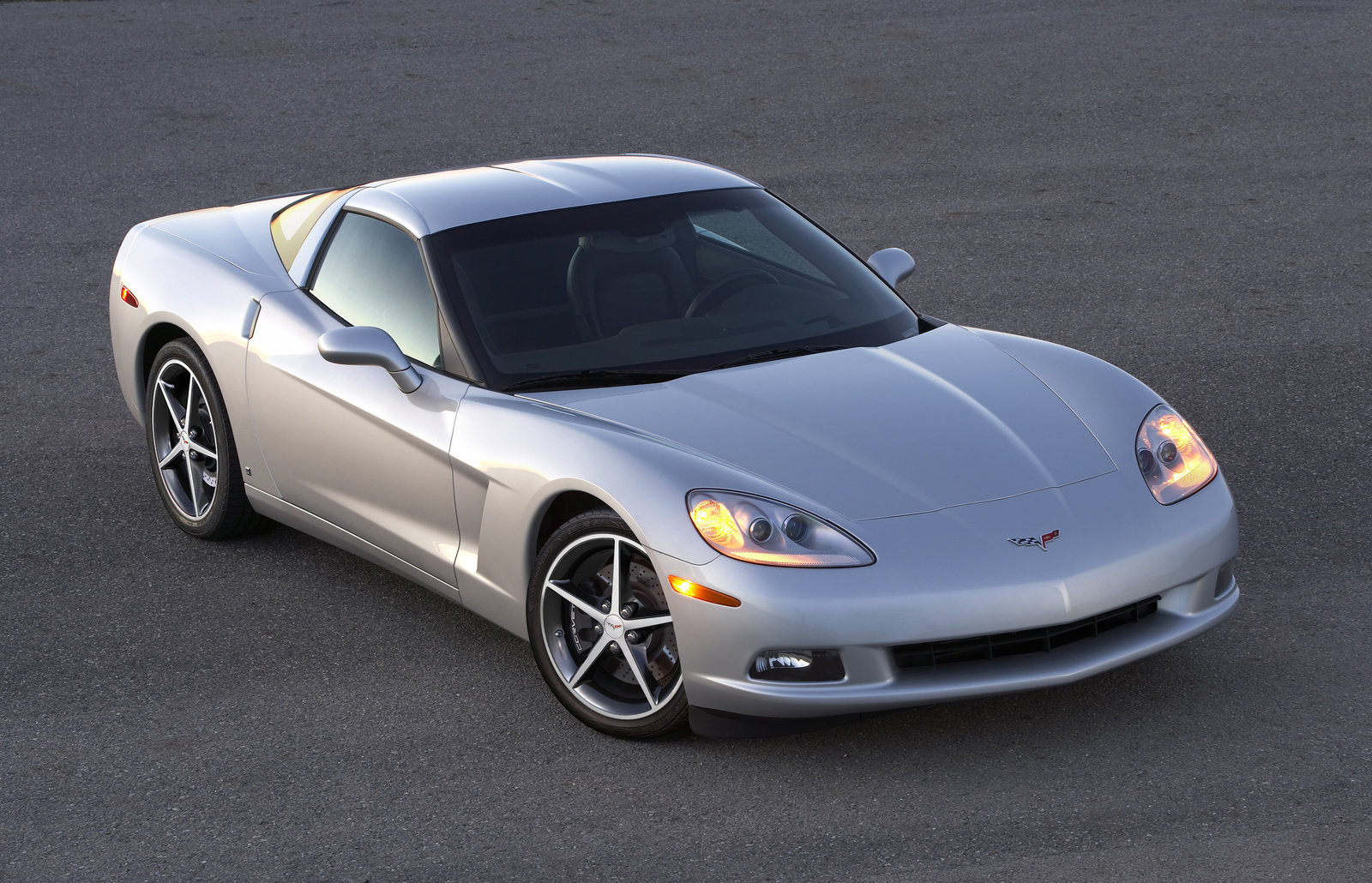
This list covers some of the most iconic Detroit-bred muscle cars ever made, alongside a few modern contenders and some honorable mentions worth knowing. We've steered clear of nameplates that lean more toward the sports car category—like the Chevrolet Corvette—and anything from exotic foreign marques such as Ferrari, Lamborghini, or Aston Martin.
The Best American Muscle Cars: New and Classic in 2026
- Buick Grand National
- Chevrolet Camaro
- Chevrolet Chevelle SS
- Cadillac CTS-V
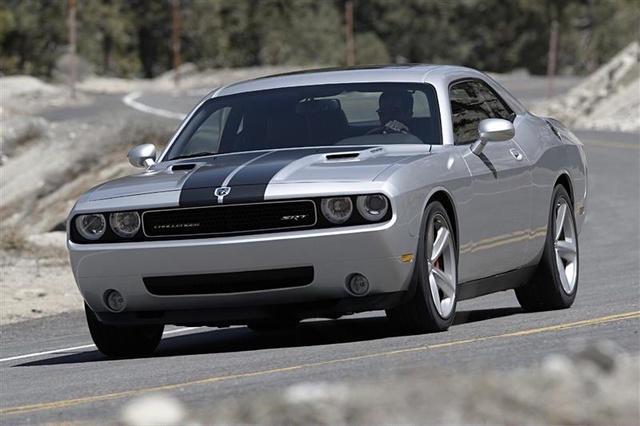
- Dodge Challenger
- Ford Mustang
- Oldsmobile 442
- Plymouth Road Runner
- Pontiac GTO
- Shelby Cobra 427
FAQs What Makes CarGurus Best Cars Guides Different Shopping Tools Related Topics
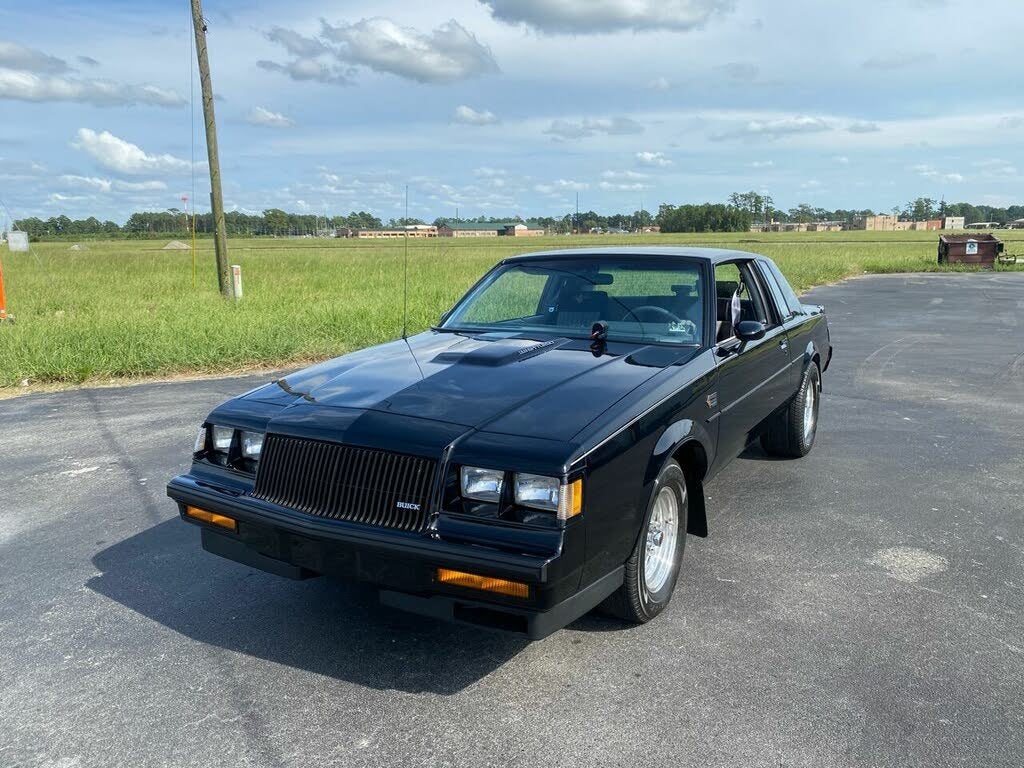
Buick Grand National
Best for: Stealthy muscle-car fun
Original MSRP: $14,349
Model years: 1986-1987
If your image of Buick has been shaped entirely by what the brand has put out in recent years, you might raise an eyebrow at seeing it on this list. But dig back into the Buicks of the 1960s and '70s and you'll discover Gran Sport models packing big V8s with north of 400 pound-feet of torque.
The 1986-87 Buick Grand National is the one that truly stands apart. After more than a decade of tightening emissions regulations had nearly snuffed out the muscle car market entirely, this unassuming two-door Buick coupe arrived to reignite the flame. Built on the Regal platform, the Grand National used a turbocharged 3.8-liter V6 producing 235 horsepower and 330 lb-ft of torque—modest by modern standards, but more than enough to make it the fastest American production car in 1986. For 1987, those figures climbed to 245 hp and 355 lb-ft, and a limited-run GNX variant pushed things even further. Buyers willing to spend an additional $15,000 or so could get a McLaren-tuned version with 300 hp and 420 lb-ft of torque. The result was a rear-wheel-drive Buick capable of reaching 60 mph in under six seconds—a figure that holds up respectably even against many contemporary performance cars.
The Grand National proved that America could compete with anyone in the forced-induction game, and the enthusiast aftermarket has never looked back.
Chevrolet Camaro
Best for: Turning Ford and Dodge loyalists into Chevy fans
Original MSRP: $2,726
Model year: 1969
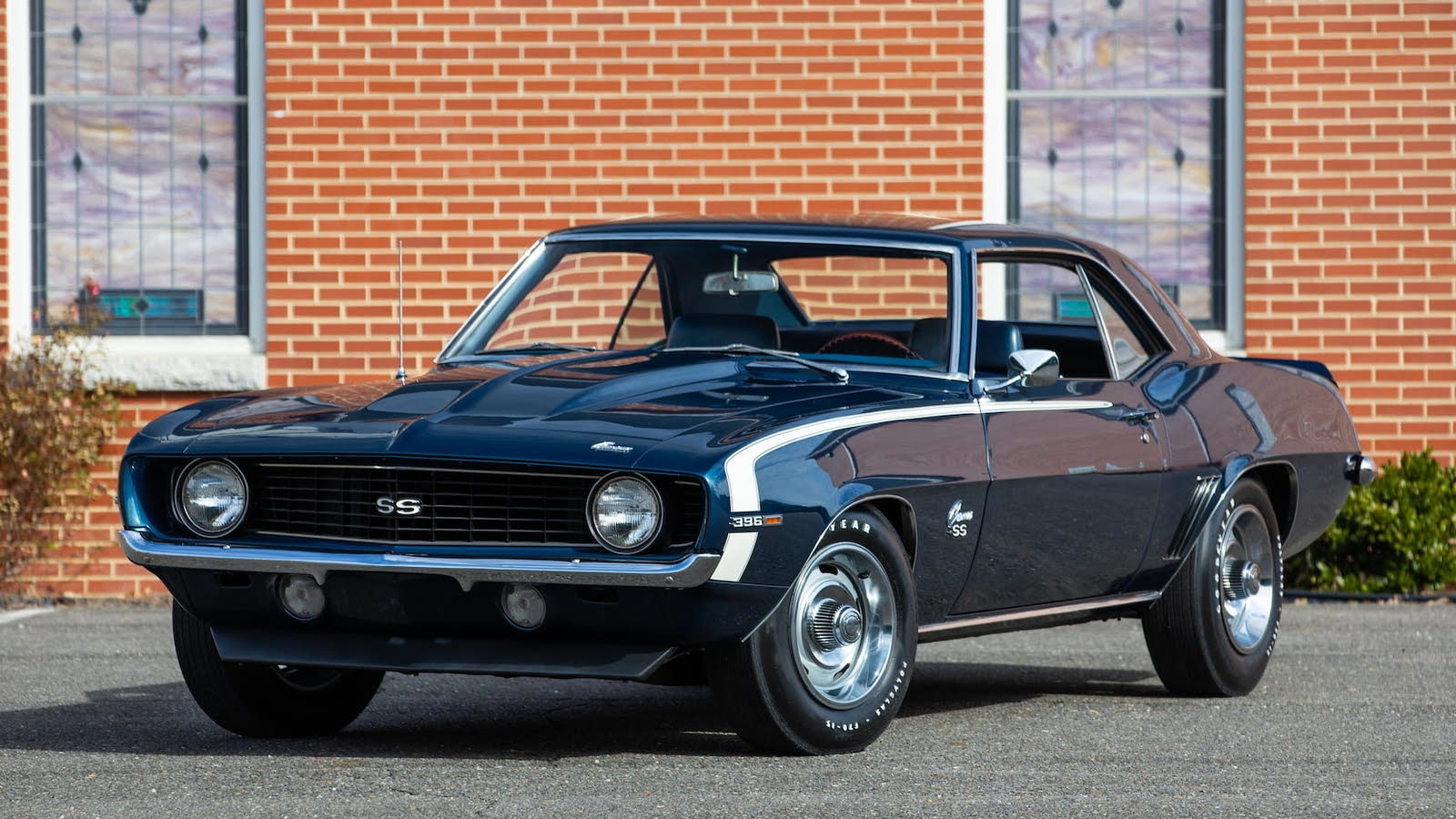
Launched for 1967 as a direct answer to the wildly popular Ford Mustang, the Chevrolet Camaro became one of the defining nameplates of the muscle car era that stretched through the mid-to-late '60s and well into the 1970s. The Camaro has gone through seemingly endless reinventions over the decades, most recently with a seventh generation developed in collaboration with General Motors' Australian Holden brand.
Of all the iterations, the 1969 Chevrolet Camaro is widely regarded as the crown jewel. It shared a similar silhouette with the '68 model but brought an updated interior, revised body panels throughout, and a bold new front end optionally fitted with hide-away headlights. Under the hood, buyers could choose from an impressive lineup of engines: a 290-hp V8 in the Z28, a 375-hp V8 in the SS, and a 430-hp V8 available through the Central Office Production Order (COPO) program.
Fast-forward to the modern era, and the 2023 Chevy Camaro ZL1 1LE packed a supercharged 6.2-liter LT4 V8 producing 650 hp and 650 lb-ft of torque, while still managing up to 20 mpg on the highway. The passage of time has been kind to this nameplate.
Chevrolet Chevelle SS
Best for: Buyers who want the ultimate muscle car
Original MSRP: About $3,000
Model year: 1970
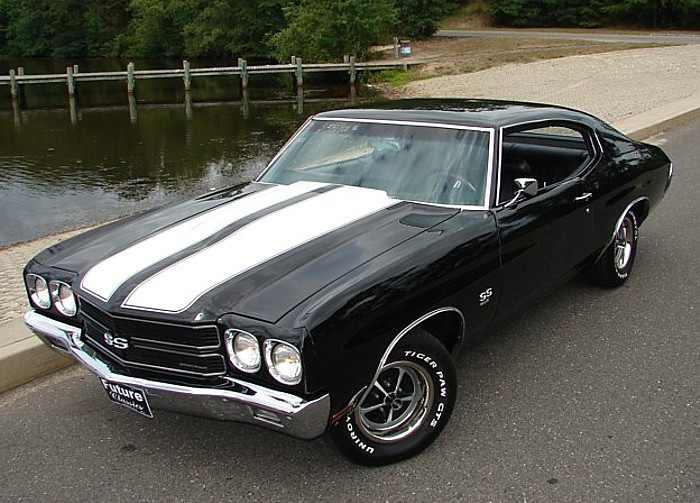
Unlike the purpose-built Camaro, the Chevrolet Chevelle came in enough body styles to suit nearly any buyer. There were four-door sedans, two-door coupes, wagons—the SUVs of their era—and even the Chevelle-based El Camino pickup.
Of the entire lineup, the 1970 Chevrolet Chevelle SS coupe stands above the rest. Under the hood, buyers could choose a 350-hp V8, a 360-hp V8, or the legendary engine simply known as "the LS6." That V8 featured beefed-up internals and a higher compression ratio, delivering a staggering 450 hp and 500 lb-ft of torque. Mated to a four-speed manual transmission, it became one of the most celebrated muscle cars in history. It's almost painful to consider that a buyer could drive home a brand-new Chevelle SS 454 LS6 coupe for under $4,000 in 1970—the equivalent of just over $31,000 in 2026.
Cadillac CTS-V
Best for: Moms and dads who really wanted a Corvette
Original MSRP: $49,300
Model year: 2004
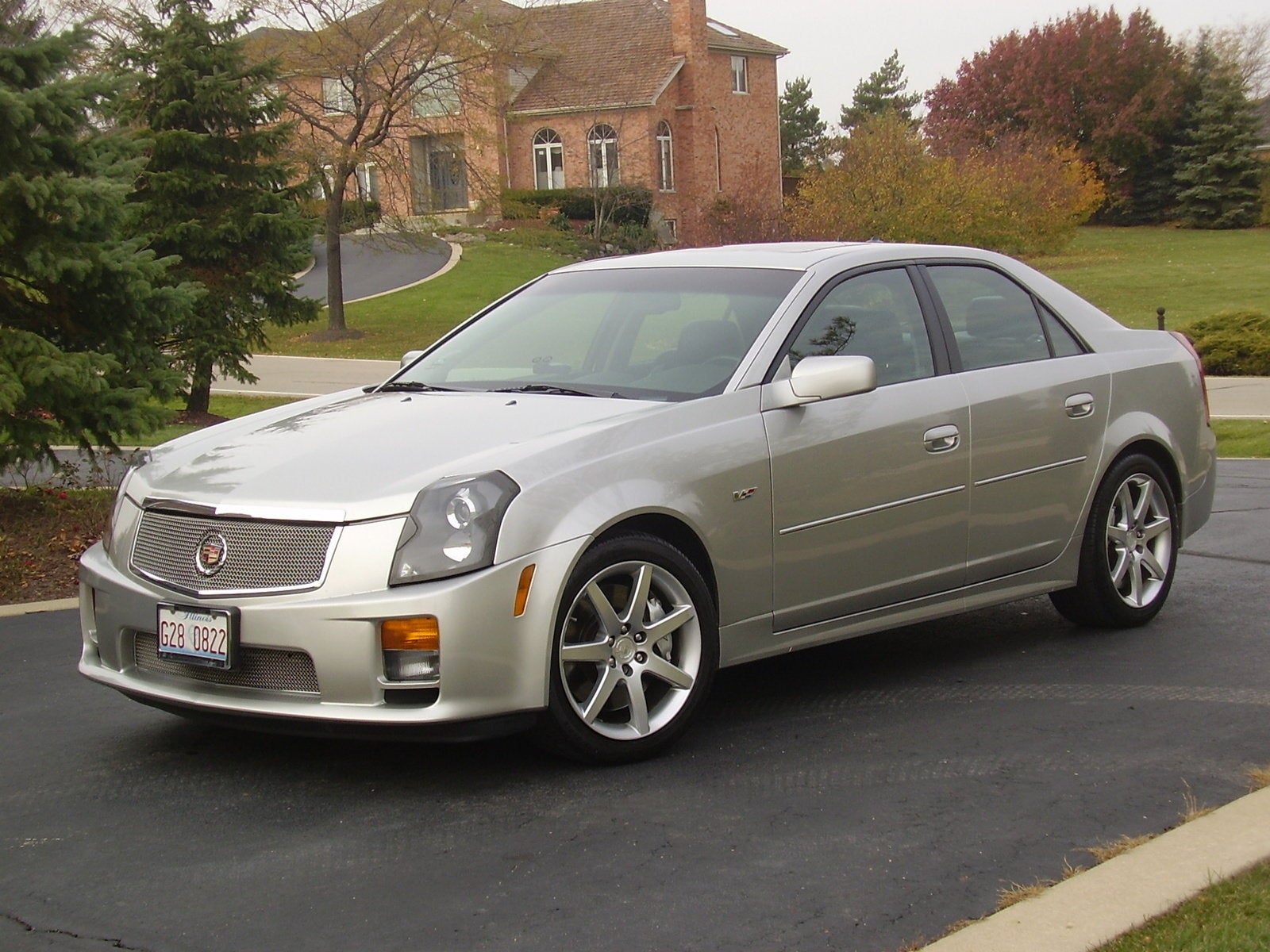
Cadillac isn't the first name that springs to mind when someone says "muscle car." Sure, plenty of high-powered Caddies have rolled off the line over the decades, but the 2004 Cadillac CTS-V genuinely changed the conversation. Armed with 400 hp from a V8 shared with the Chevy Corvette and a six-speed manual gearbox with three pedals on the floor, this four-door rear-wheel-drive luxury sedan could reach 60 mph in under five seconds. Or, if the mood struck, you could dump the clutch and turn the rear tires into smoke. The original CTS-V was simply tremendous fun to drive.
Cadillac continued to build on that formula in the years that followed, adding coupe and wagon variants, greater refinement, and eventually a supercharged V8 cranking out 640 hp. Those upgrades made the car faster and more polished in virtually every respect, but the end product felt more like a high-tech supercar than a proper muscle car.
Dodge Challenger
Best for: Multiple generations of Mopar fans
Original MSRP: $2,851
Model years: 1970, 2023
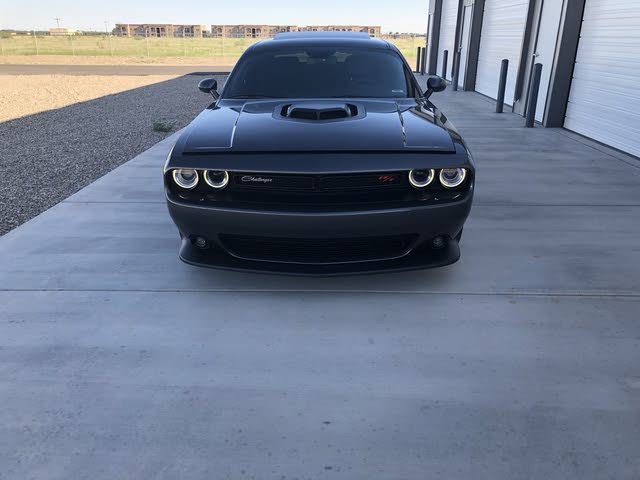
With Chevy dominating conversations through the Camaro and Chevelle, it was only natural that Dodge—and its sister brand Plymouth—would bring their own answers to the muscle car party. The Challenger arrived in coupe and convertible forms with a range of trim levels and engine options, all primed for drag strip duty. Its Plymouth Barracuda and Hemi 'Cuda siblings were equally legendary.
On the original model, buyers could start with a base V6 if they wanted the look without the full performance price tag, or step up to one of four available V8s on the R/T. The crown jewel was a 426 cubic-inch V8 producing 425 hp and 490 lb-ft of torque—a close rival to the Chevelle's 454 LS6. Drivers who wanted full control could select either a three- or four-speed manual transmission.
After 1970, tightening emissions rules took the wind out of the Challenger's sails. By 1982, the Dodge Challenger nameplate had been slapped on a rebadged four-cylinder Mitsubishi. And the less said about the front-wheel-drive (FWD) Dodge Daytona of the '80s, the better. Thankfully, a proper Challenger made its triumphant return in 2008, riding on the same platform as the four-door Charger. In the years that followed, as other automakers chased electrification and downsized turbocharged engines, Dodge kept stuffing more power under the Challenger's long hood. The pinnacle of that relentless pursuit arrived with the drag-strip-bred 2023 Challenger SRT Demon 170, packing a supercharged V8 producing 1,025 hp on E85 ethanol blend and launching to 60 mph in under two seconds.
One one thousand, two one…, and 60 mph. You may now peel yourself away from the seat.
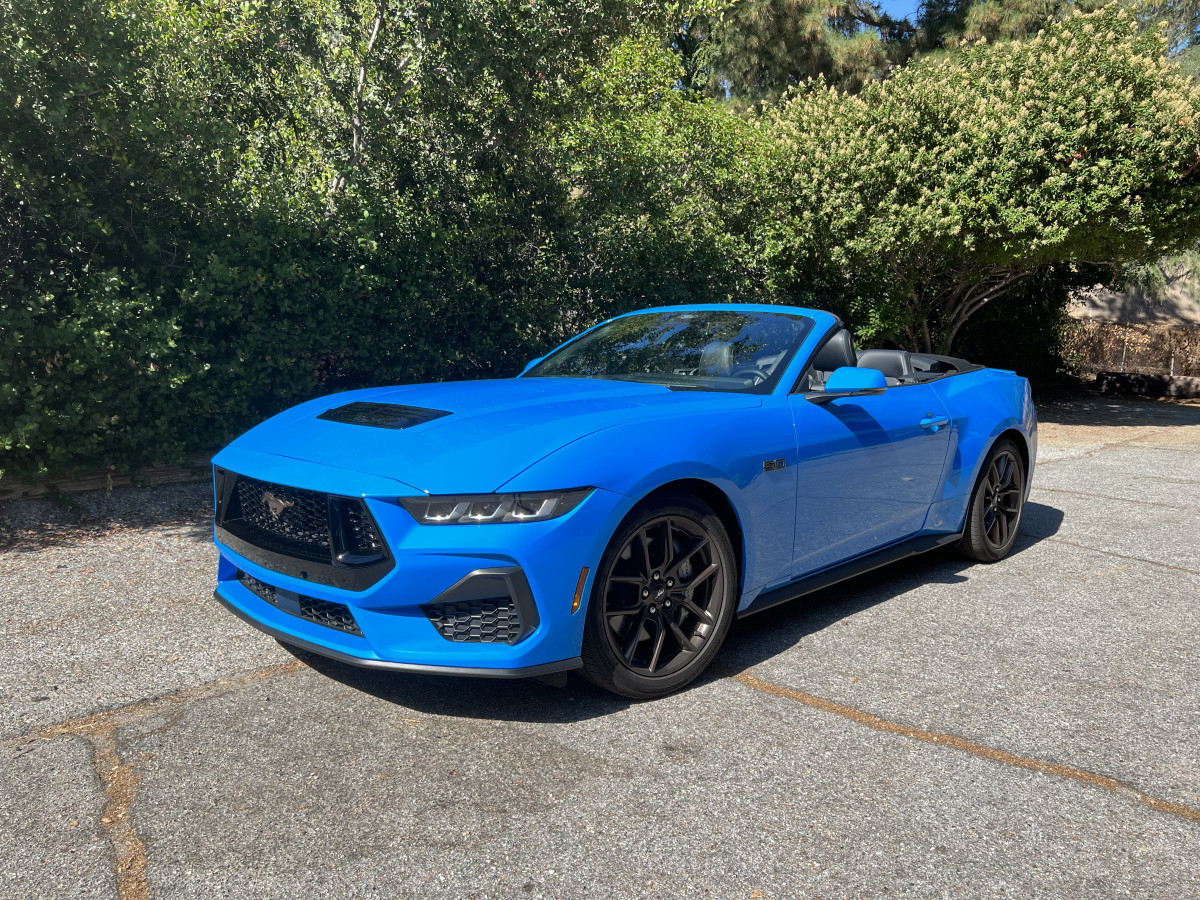
Ford Mustang
Best for: Relatively affordable access to the muscle-car market (classic and late-model Mustangs are everywhere)
Original MSRP: $2,368
Model years: 1965-1968, 2005-Present
There's a certain irony in the fact that Ford's own runaway success is what brought so much muscle car competition roaring to life. The massive popularity of the original Mustang in 1964 is precisely what pushed General Motors—parent company of Chevrolet, Oldsmobile, Pontiac, and others at the time—and Chrysler—parent to Dodge and Plymouth—to develop the Camaro and Challenger.
Spanning more than five decades of history, the Ford Mustang has produced countless versions worthy of a best muscle cars list (the Mustang II of the 1970s notwithstanding). Standouts include the 375-hp 1969 Mustang Boss 429, the 385-hp 2000 SVT Cobra R, the full spectrum of Shelby Mustangs, and the 2005 Mustang GT, which offered 300 hp, pitch-perfect retro styling, and an approachable price tag of around $25,000. Today's entry-level Mustangs run on efficient turbocharged power, while those craving the latest high-performance pony car need look no further than the 2025 Mustang Dark Horse, delivering a formidable 500 hp and 418 lb-ft of torque.
Other recent highlights include the 2022-model-year Mustang Mach 1—a brilliantly conceived parts-bin special combining the higher-output 5.0-liter Coyote V8 from the GT with upgraded brakes, revised suspension components, and the gearbox from the Shelby GT350.
And then there's the Bullitt. If you haven't seen Steve McQueen's iconic chase sequence featuring a 1968 Mustang fastback trading paint with a Dodge Charger through the streets of San Francisco, stop what you're doing and watch it immediately. The actual car from the film sold for millions at auction, but Ford offered a 480-hp 2020 Mustang Bullitt finished in the legendary Highland Green for under $50,000 when new.
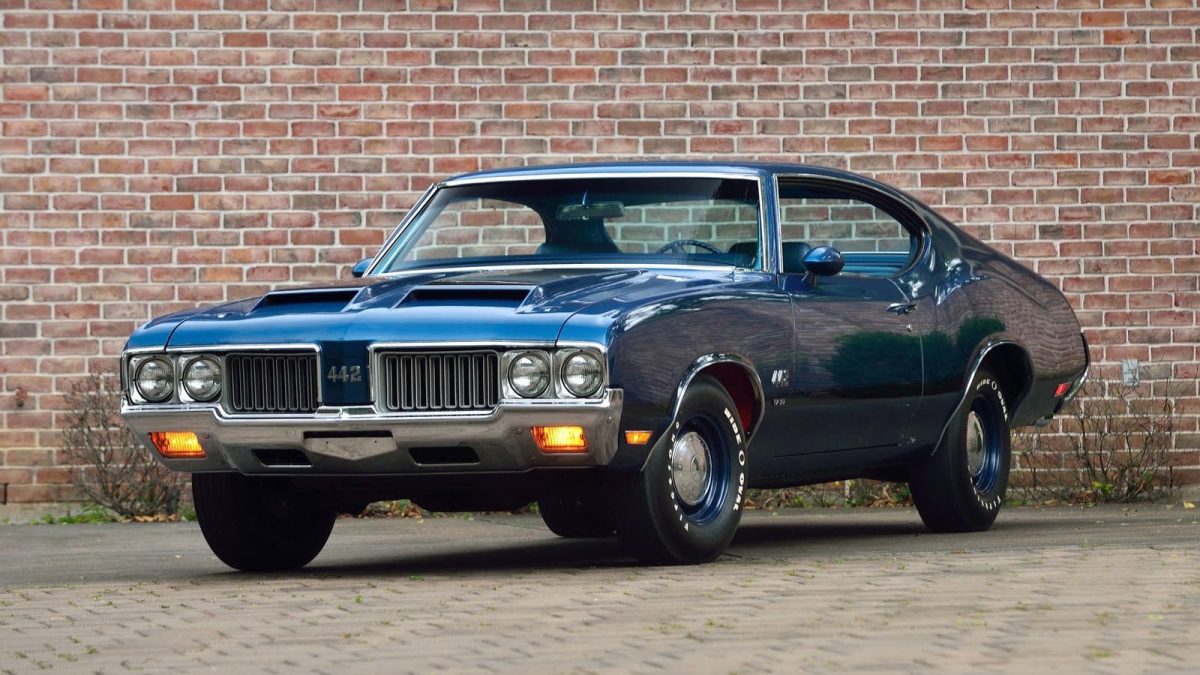
Oldsmobile 442
Best for: Fans of less well-known classic muscle cars
Original MSRP: $3,376
Model year: 1970
Oldsmobile shuttered more than two decades ago, yet the brand's legacy endures—largely because of iconic machines like the 1970 Olds 442. That year, General Motors lifted a corporate restriction that had capped engine displacement at 400 cu in, opening the door for Chevy to unleash the Chevelle SS 454. Despite what the name might suggest, the 442 never used a 442 cubic-inch engine—those numbers were simply carried over from the original 1964 model. For 1970, the 442 received a brand-new 455 cubic-inch V8 rated at 365 hp and 500 lb-ft of torque, paired with an available Hurst four-speed manual transmission to put all that power to the rear wheels.
That alone was plenty impressive, but buyers hungry for even more could tick the box for the optional W-30 package, which added high-performance engine components and shed weight through the use of a fiberglass hood and aluminum parts throughout. Those W-30 models gained an additional five horsepower and could reach 60 mph in under six seconds. This was about as far from your grandmother's '90s Cutlass wagon as you could get.
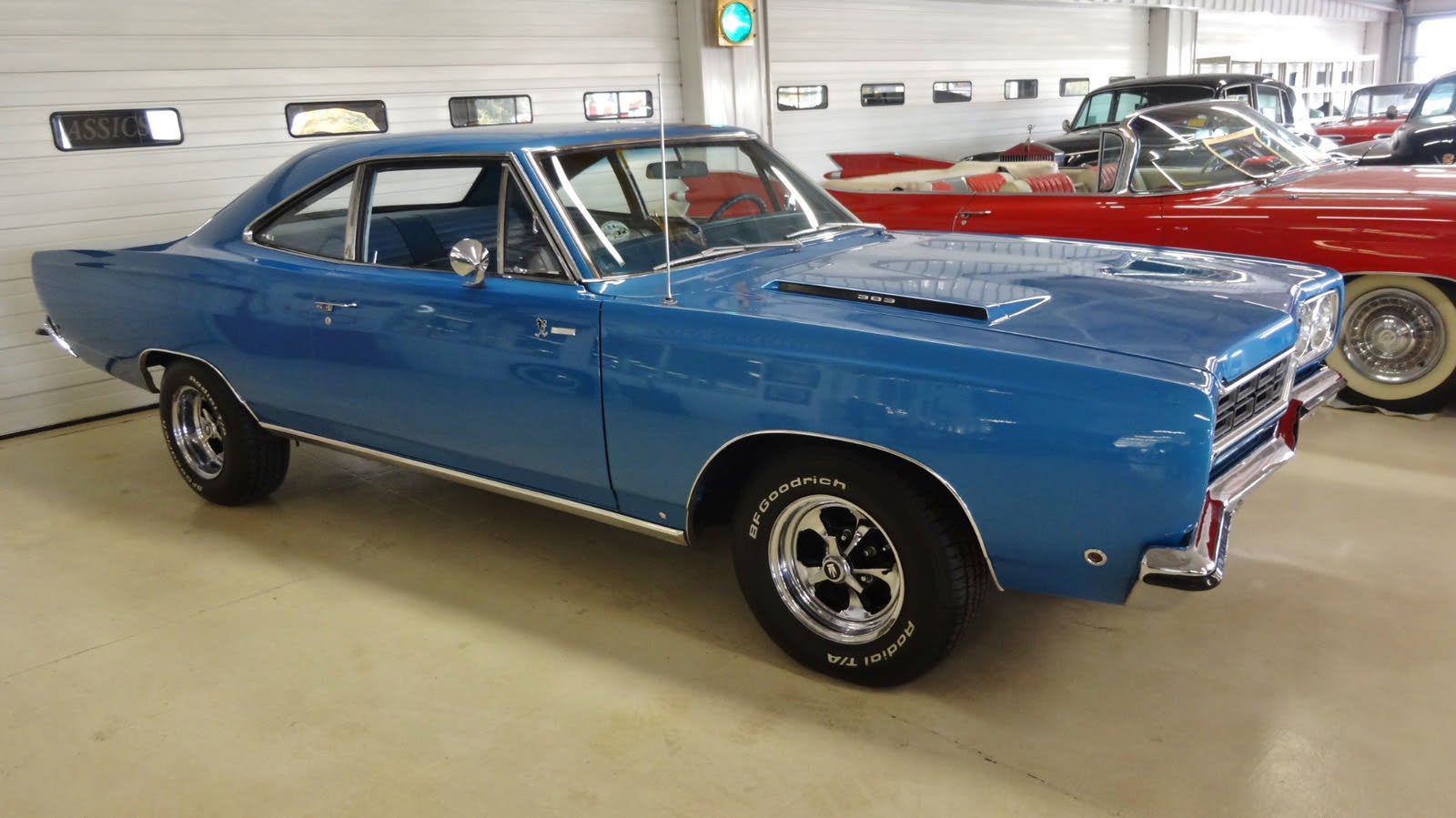
Plymouth Road Runner
Best for: Going fast in a straight line on the cheap
Original MSRP: $3,034
Model year: 1968
Like Oldsmobile, Plymouth is a nameplate that has long since faded into history—though that's difficult to believe when you consider cars like the 1968 Road Runner. Those years represented the absolute peak of classic muscle car design and engineering, and Plymouth attracted a devoted following with this large two-door coupe and its all-V8 engine lineup. There wasn't a six-cylinder in sight. Plymouth offered the TorqueFlite automatic as an option, but the right answer was clearly the Hurst four-speed manual—six days a week and twice on Sunday.
It's remarkable to think that the standard engine was a 383 cubic-inch V8, upgraded from previous years, producing 335 hp and 425 lb-ft of torque. Impressive on its own, but the real headliner was the 426 cubic-inch Hemi V8 with 425 hp and 490 lb-ft of torque. Those numbers were competitive with anything else on the market, yet Plymouth deliberately kept the Road Runner stripped down and priced below the competition—raw, honest muscle for less money.
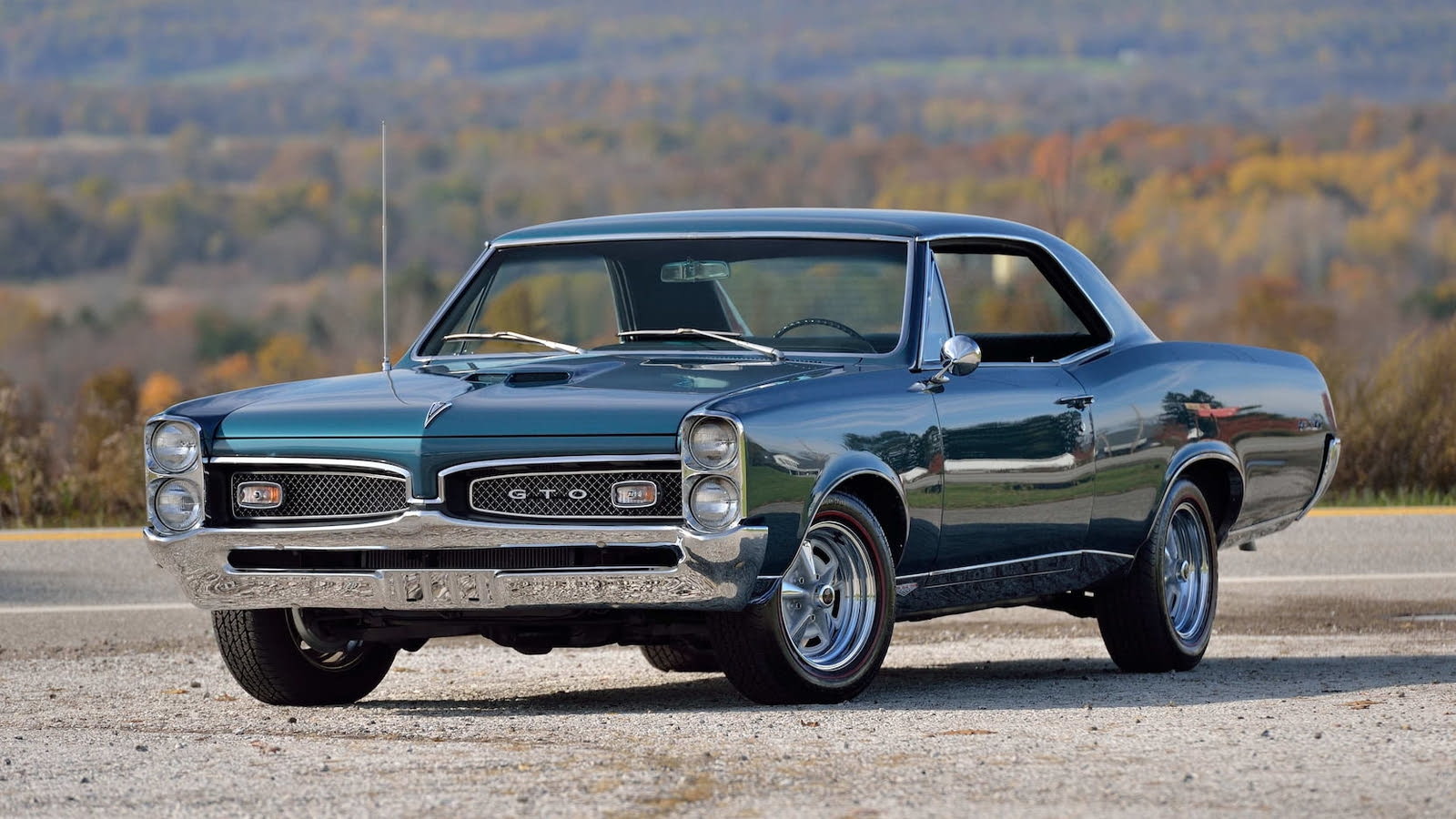
Pontiac GTO
Best for: Appreciating styling as well as muscle
Original MSRP: About $2,900
Model year: 1967
Pontiac may now exist only in the history books, but in its prime it was a genuine powerhouse—home to various generations of the Firebird and a beloved machine affectionately nicknamed "the Goat." That was the GTO, which began life as an option package on the 1964 Tempest before becoming its own standalone model by 1966. Like many General Motors offerings of the era, the GTO hit its stride in 1970 with a 455 under the hood and the same commanding presence shared by the Chevy Chevelle and Oldsmobile 442.
Even so, we'd make the case that the first-generation GTO—specifically the 1967 model—is the one that stands tallest. Compared to the 1966 version, the '67 brought a revised grille insert and sharper taillights while retaining the stacked headlights and long, flowing body lines that defined the generation. By today's standards it reads as elegantly simple, yet it delivered in a big way with a 400 cubic-inch V8 producing up to 360 hp and 438 lb-ft of torque.
Shelby Cobra 427
Best for: Basically strapping yourself atop 360 angry horses
Original MSRP: $7,000
Model year: 1965
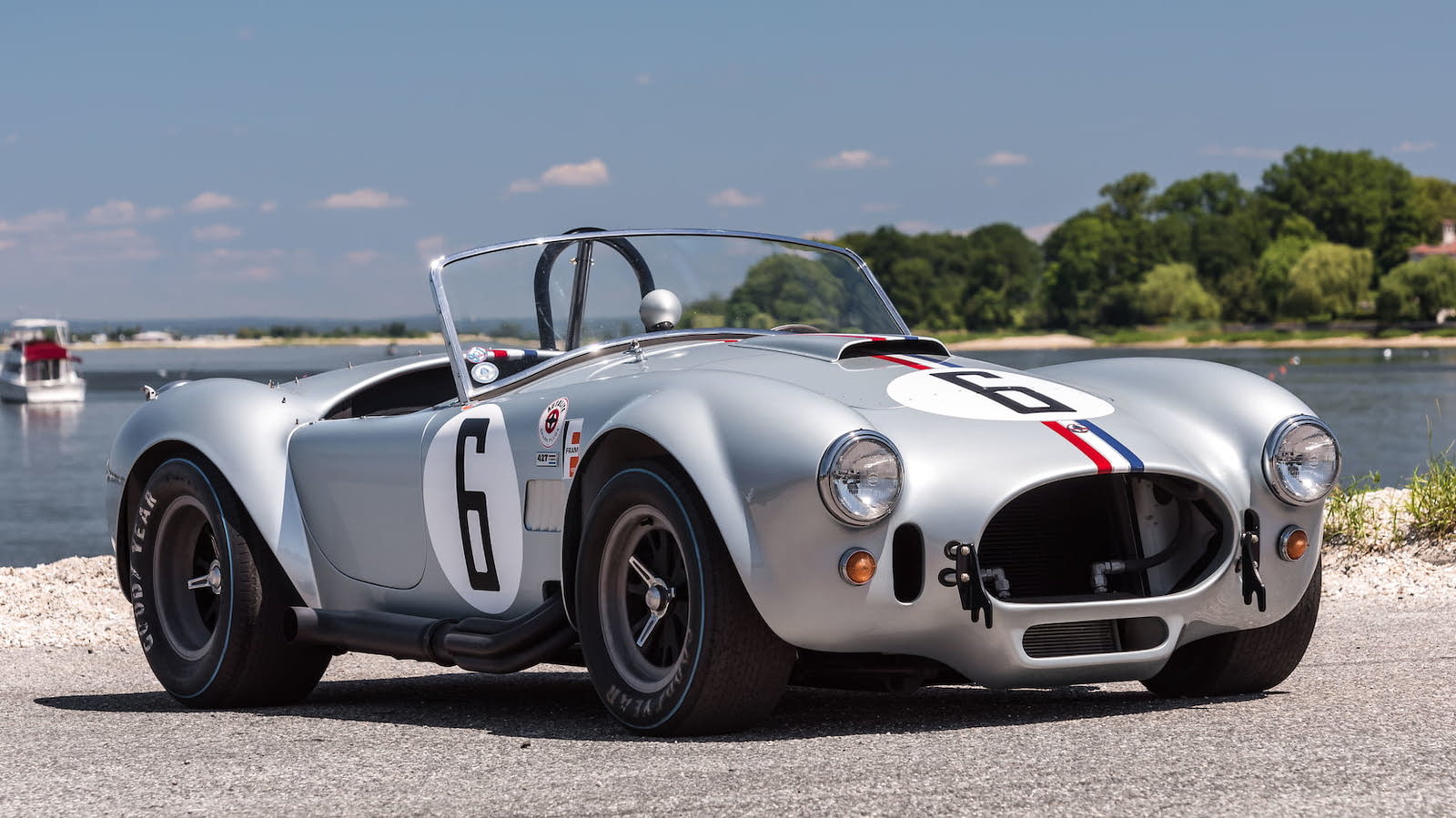
If any road-legal machine ever blurred the line between racecar and street car beyond recognition, it was the 1965 Shelby Cobra 427. Essentially a pair of seats and a steering wheel wrapped around a monstrous engine, the Cobra 427 was the vision of former racing driver Carroll Shelby. The body shells came from British firm AC Cars, but the finished product was the result of a collaboration between Shelby and Ford Motor Company.
Beneath that aluminum skin sat a 427 cubic-inch V8 producing 360 hp and 419 lb-ft of torque, channeled exclusively through a four-speed manual gearbox. In a car tipping the scales at under 2,400 lbs, that was more than enough power to get into serious trouble—or reach 60 mph in roughly four seconds.
Genuine Shelby Cobra 427s are extraordinarily rare today and routinely fetch millions of dollars at auction—when they surface at all. For a fraction of that price, several companies offer Cobra kit cars that faithfully replicate the classic look and can be built around virtually any engine you can fit under the hood.
The Best American Muscle Cars: New and Classic in 2026 FAQs
What makes a car a muscle car?
Muscle cars are American-made, high-performance vehicles — typically long-bodied coupes — built around large, powerful V8 engines and tuned for straight-line speed, particularly on the quarter-mile drag strip. They're distinct from sports cars like the Chevrolet Corvette, which prioritize handling and cornering, and from exotic foreign performance cars. The golden era of muscle cars ran through the mid-1960s to the early 1970s, though strong modern examples continue to carry the tradition forward.
What is the most powerful classic American muscle car ever made?
Among the classics, the 1970 Chevrolet Chevelle SS with the LS6 engine is one of the most celebrated, producing 450 hp and 500 lb-ft of torque from its 454 cubic-inch V8. The 1968 Plymouth Road Runner's optional 426 Hemi and the 1970 Dodge Challenger's 426 V8 were equally formidable, each rated at 425 hp and 490 lb-ft of torque. These figures were extraordinary for their era and remain impressive benchmarks today.
Which modern muscle car makes the most horsepower?
The 2023 Dodge Challenger SRT Demon 170 holds the crown among modern muscle cars, producing a staggering 1,025 horsepower when running on E85 ethanol fuel — enough to launch it from 0 to 60 mph in under two seconds. The 2023 Camaro ZL1 1LE is also a serious contender, delivering 650 hp from a supercharged 6.2-liter V8 while still returning up to 20 mpg on the highway. Both represent just how far the muscle car formula has evolved since the original golden era.
What is the most affordable way to get into classic American muscle?
The Ford Mustang is widely considered the most accessible entry point into classic muscle car ownership, largely because so many were built and so many survive today. The article notes that the 2005 Mustang GT offered 300 hp and retro styling for around $25,000 when new, making it an attainable option even on the modern used market. For buyers drawn to the vintage era, early Mustangs from 1965 to 1968 are among the most plentiful classic muscle cars available.
What Makes CarGurus Best Cars Guides Different?
Most car-shopping websites publish lists of the best cars across a variety of categories, with recommendations generally driven by editorial expertise. Here's what makes ours different: In addition to the insights and verdicts of our team of car-testing experts, our best cars guides take into account other factors that we know matter to buyers-real owner experiences and current market value.
Our expert reviewers are among this country's most trusted automotive journalists, also writing for publications including US News and World Report, Edmunds, Digital Trends, J.D. Power, and Car & Driver. They put each car through real-world testing and create detailed reviews of performance in a range of categories, from practicality and driving manners to cost-effectiveness and safety.
We also analyze hundreds of thousands of used car listings on CarGurus.com to track which models consistently offer the highest percentage of best deals relative to how many are listed for sale. Then we factor in reviews from owners-people who actually live with these cars every day. Our proprietary Best Cars algorithm then creates a final Overall CarGurus rating combining expert scores, user reviews, and the percentage of listings that have earned the Good or Great Deal rating. This multi-pronged approach reveals not just which cars excel on paper, but which ones deliver satisfaction and value when you're ready to buy.
The CarGurus market data used in this guide was last updated in March 2026. Values were accurate at time of publication and should be used as a guide only.