Some people might be surprised to learn that the Acura MDX was not the Japanese luxury brand's first SUV. In the 1990s, it offered a model called the SLX, which was actually an Isuzu Trooper in a fancy suit. While big and tough, the SLX didn't feel much like an Acura. Sensing it could do better and watching the success of the Lexus RX, Acura created the midsize, three-row crossover MDX in 2001. It was similar to the RX in some ways but had three rows of seats and a sportier personality.
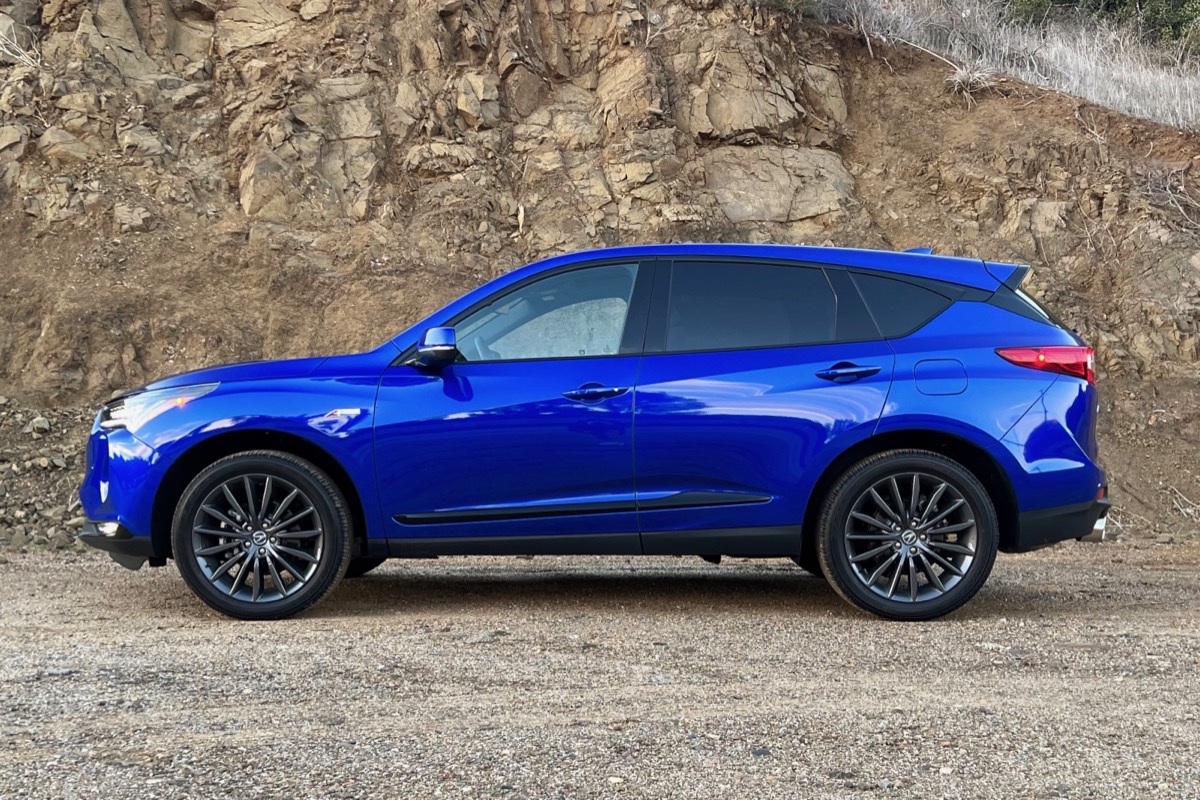
Although the MDX's looks, power output, and technology offerings have changed over the years, that same recipe still informs today's model. It comes standard with powerful V6 engines and plenty of great features, and Acura offers upgrade packages rather than trim levels to add features and tech. Available upgrades include the Advance Package, the Technology Package, and the A-Spec Package. There's also a rowdy Type S model with 355 horsepower and loads of go-fast bits.
For its entire run, the Acura MDX was closely tied to the Honda Pilot, which uses the same platform and first appeared about two years after the original MDX. While some V6-powered Honda products of the 2000s had serious transmission flaws, the MDX doesn't seem to experience these as often as some other models, and it has a solid reliability record and reputation for quality. It's also very comfy and usually feature-packed, though the higher-end trims have always gotten more advanced features before the lower ones.
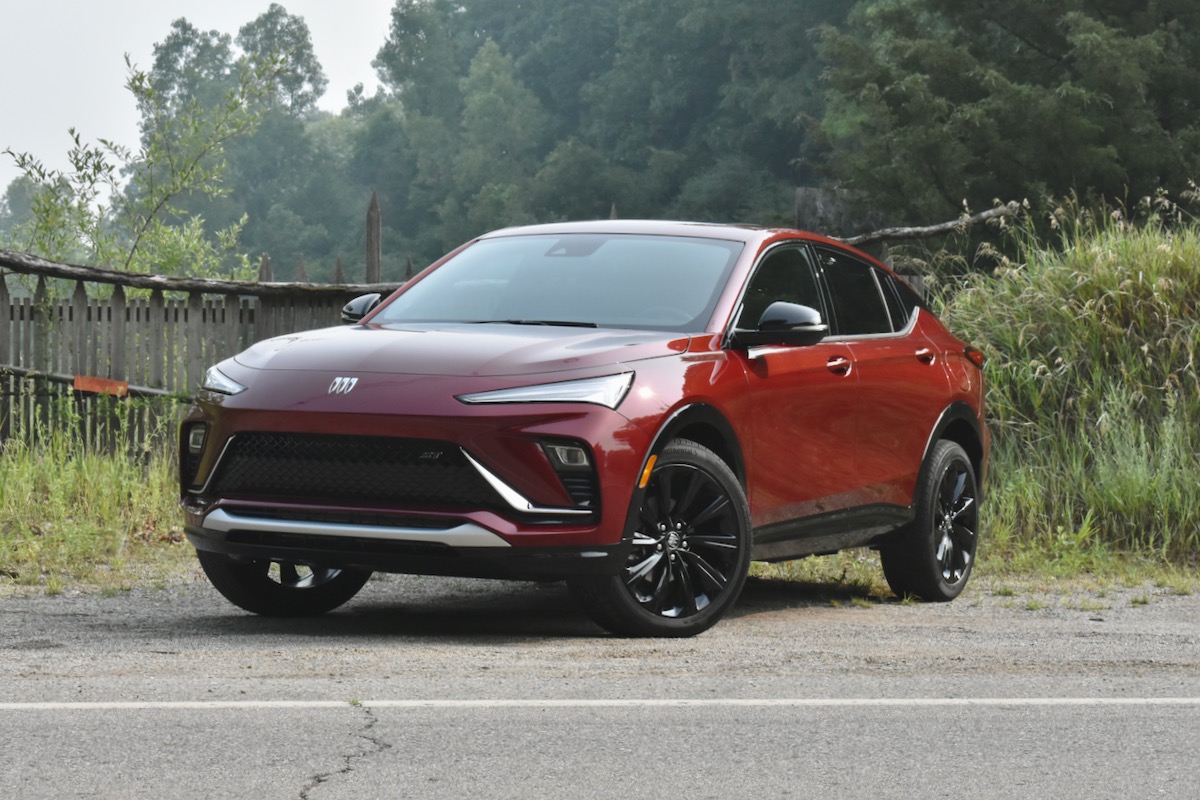
Lexus' RX was, for a long time, the MDX's closest rival, but these days, there are many SUVs in this vein and the RX has since stopped offering any optional third row. The competition includes the Buick Enclave, BMW X5, and Volvo XC90, all long-established machines, but there's also a wide array of newer vehicles on offer, with the Hyundai Palisade and Kia Telluride not far below the MDX in price, and the Genesis GV80 just above it. Acura also offers the smaller two-row RDX, but if you need three rows, the MDX is the choice.
Here, we've put together a guide to each MDX generation, including information about what to look for in each one and what to pay.
Acura MDX: Cost, Reliability, and the Best Years to Buy
- Frequently Asked Questions
- Acura MDX Pros and Cons
- Acura MDX Generations
- Fourth Generation (2022-Present)
- Third Generation (2014-2020)
- Second Generation (2007-2013)
- First Generation (2001-2006)
Frequently Asked Questions
Which Acura MDX years are the best?
All of the Acura MDX's generations have solid repair records and a reputation for quality, but the earlier second-generation models built from 2007 to 2009, 2015 models, and MDXs built from 2018 to the present, stand out as the most trouble-free years, according to sources like Dashboard Light and Consumer Reports.
What are the worst Acura MDX years?
The oldest MDXs, built from 2001 to 2003, and models built from 2010 to 2014, seem to have the largest number of problems, according to outlets like CarComplaints.com and Dashboard Light. 2010 to 2014 models seem to have issues revolving around electrical, suspension, and brake problems, but 2014 is the start of the third generation, and problems with those might just have been teething issues with a new design. Even so, the volume of complaints about these vehicles on crowdsourced sites isn't very large compared to some more troublesome models, and J.D. Power gives some of these years above-average ratings for reliability while giving some later years lower scores.
Is a used Acura MDX a good deal?
It can be. The MDX has always had a third row, which many midsize luxury SUVs often didn't until recently, so there's room for at least six passengers in all versions even if the way-back seat is small. It's also historically (and still) less expensive to buy than rivals from Germany, and it usually comes better equipped and has lower maintenance costs than Audis and BMWs. That's also true for used versions. But the MDX isn't quite as much of a performance machine as some of its rivals, and it has never offered anything but a thirsty V6 engine. Only one hybrid has ever been offered, and only for a very limited time.
Acura MDX Pros and Cons
Pros:
- Sharp styling, powerful V6 engines
- Long list of standard features
- Decent fuel economy
Cons:
- Hard-to-use infotainment
- Tight third row
- Thirsty V6 engines, few high-performance versions
Acura MDX Generations
Fourth Generation (2022-Present)
Acura actually skipped the 2021 model year in favor of sending the MDX straight into 2022 on a whole new platform with the most distinctive (and muscular) styling it has ever had. It still gets a standard 290-horsepower V6, but Acura added an available panoramic sunroof, a new 12.3-inch infotainment display, a configurable digital gauge cluster, and better safety tech. Inside, MDX models offer high-end finishes and niceties such as a 16-way power driver's seat and Alcantara upholstery.
Aside from its dramatic styling, the big story with the fourth-generation MDX is the new Type-S model. It gets a turbo 3.0-liter V6 with 355 horsepower and all-wheel drive (AWD). Though it costs about $5,000 more than the top Advance model, the Type S is about a second faster to 60 mph and drives like a genuine performance machine. It gets adaptive dampers that greatly reduce body roll and improve handling, making the MDX Type-S a seriously sporty family hauler. Sport front seats and paddle shifters complete the package. It isn't as hard-core as the BMW X5 M or Mercedes-AMG GLE 63 S, but it's fast and fun.
Acura continues offering many standard safety systems, making its AcuraWatch suite standard. Available tech includes adaptive cruise control, blind-spot monitoring, a head-up display, a surround-view camera system, forward-collision mitigation, and more. Much of this stuff costs extra on German SUVs. All models get LED headlights, push-button start, automatic climate controls, and navigation, and top trims add wireless charging, an ELS Studio premium audio system, and more.
Unfortunately, regardless of trim level, the touchpad infotainment system is confounding and frustrating to use when the vehicle is in motion. This feature, held over from previous MDXs, works great in Japan where drivers use it to draw language characters, but it doesn't translate. Acura equips a standard navigation system, and AcuraLink apps are also present by default.
The next time the MDX was updated was for the 2025 model year. And the big news is that Acura finally ditched the touchpad. Every MDX now gets a 12.3-inch touchscreen with Google built-in, which is a massive improvement over the old system. You also get wireless Apple CarPlay and Android Auto as standard, and the center console has been redesigned with more storage space and better access to the wireless charging pad.
Visually, the 2025 MDX gets a bolder look with a more aggressive front fascia and a redesigned Diamond Pentagon grille across all trims. There are two new paint colors (Canyon River Blue Metallic and Urban Gray Pearl), and the A-Spec now shares its sportier front end with the Type S. Speaking of the Type S, it now comes standard with the Advance Package, which was previously optional, making it an even better value if you're after a performance model.
There are also two new Bang & Olufsen audio systems available: a 19-speaker, 1,475-watt setup in the Technology package, Advance package, and A-Spec models, and a 31-speaker, 1,760-watt system in the Type S with Advance package. The latter is Acura's most powerful audio system ever and features 24 channels with 12 speakers in the headliner alone.
Acura also addressed another one of the MDX's few complaints: cabin noise. Technology package and above trims now get upgraded fender liners, additional door insulators, and laminated glass in the rear doors, resulting in a 10% reduction in road noise.
Pricing starts at $50,900 for the base model, which is a modest bump over the outgoing version but reasonable given all the upgrades. Fresh off the refresh for 2025, the MDX doesn't get many changes for 2026, though Azurite Blue or Orchid interior options were made available. Pricing increased slightly, at $51,800 for the base model.
The new tech makes a 2025 or 2026 version worth seeking out over a 2022 to 2024 model, especially if you were put off by that touchpad system before.
Third Generation (2014-2020)
Introduced in the spring of 2013, the third-generation MDX brought lots of new technology features to the nameplate and its first hybrid offering, though that didn't appear until 2017. A new dual-screen infotainment setup dominated the dashboard and replaced the previous model's armada of buttons, but wasn't much easier to use. In time, this generation would add Apple CarPlay and Android Auto, which helped ease user interactions, if only a little.
Under the hood, a re-engineered 3.5-liter V6 made 290 horsepower, a little less than the previous 3.7-liter unit, but more torque lower in the rev band. It wasn't quite as sporty as before, in part because it was also tuned for lower emissions and better fuel economy.
With the "Super-Handling All-Wheel Drive," this new MDX earned a 21 mpg combined rating from the EPA, 3 mpg better than its predecessor. Acura also made a front-wheel drive MDX available for the first time, in part to boost fuel economy. That version can get up to 23 mpg combined. A six-speed automatic was standard early on, but Acura bumped it to a nine-speed auto in 2016, again to boost economy.
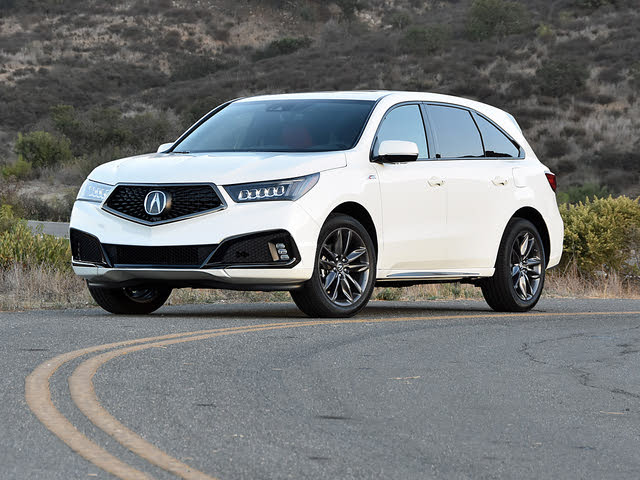
On the outside, this MDX is the least visually interesting, with subdued styling likely created in reaction to the polarizing details of the previous model. A version of the "beak" remained, but a toned-down one, and the rest of the MDX got a little more anonymous-looking. Surprisingly, interior room also shrank. The third-gen MDX's second row seat is smaller than the second-gen versions, with about a 2-inch shrinkage in legroom. It also lost cargo room overall, falling from 83.5 cubic feet to 68.4, though the room behind the third row was about the same.
This isn't to say that it isn't comfortable, but there is a little less room. Conversely, many features that were very new or reserved for top trims on the previous model became much more common on the third-gen MDX, including ventilated seats, and Acura began gradually adding more and more driver-assist gear, such as adaptive cruise control and automatic emergency braking. As of today, the equipment levels are determined by the "packages" rather than trims, so look for Advance or Technology Packages and A-Spec models to get the most gear.
The biggest single change during this generation came with the 2017 refresh. Not only did the MDX get a visual refresh that binned the controversial grille altogether, all of the MDX's formerly optional safety systems became standard. The truly big news, however, was the debut of the MDX Sport Hybrid, with a 3.0-liter V6 and a trio of electric motors (one on the front axle and two on the rear). With 321 system horsepower, the Sport Hybrid was both faster and more efficient than the standard MDX, earning up to 27 mpg combined and 26 in city driving, a big jump from the non-hybrids.
Surprisingly, buyers shied away from the Sport Hybrid, and it proved a weak seller, so it was dropped at the end of 2020. They're hard to find now, despite being only a few years old. Regular MDXs are much more predictable. Nice 2014 to 2016 models with under 100,000 miles should cost $16,000 to $20,000, while 2017 and newer models, which have more standard features and nicer styling, run from around $17,000 to $33,000. Hybrids cost about the same, but since they're so rare (we only found a handful for sale, compared to thousands of non-hybrids), prices can vary pretty wildly and reliability data is incomplete.
Second Generation (2007-2013)
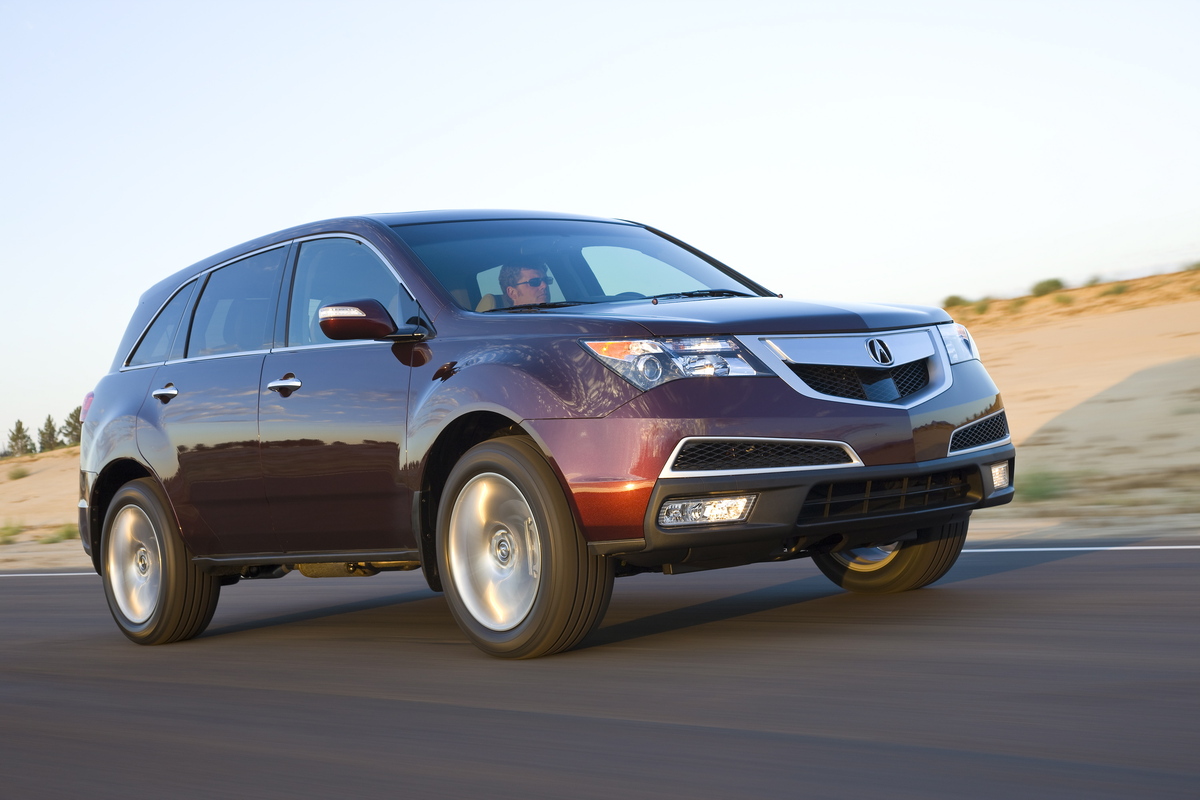
The second-gen MDX landed in 2007 with the now-infamous "beak" grille and bold, muscular looks. In hindsight, it's hard to see why the "beak" was so controversial, since many more radical designs on EVs have come since, but at the time critics and buyers were sharply split on the new MDX's visuals. It was hard to argue with the rest of the vehicle, however.
Acura widened the track and lengthened the wheelbase, then sharpened the chassis' handling at the Nürburgring. The odds of family-minded MDX drivers tackling a track like that were low, but it handled and drove well.
The MDX's V6 grew to 3.7 liters with the new generation. The increase in displacement brought 300 horsepower and 270 pound-feet of torque, a zero-to-60-mph time of 6.5 seconds, though fuel economy was rated at a mediocre 18 mpg combined. Acura also swapped "VTM-4" four-wheel drive (4WD) for Super Handling All-Wheel Drive (SH-AWD), which offered an active rear differential. It could also tow up to 5,000 pounds, up from 4,500 in the first-generation model.
Beyond its controversial styling, the new SUV got a ton of new tech, and upscale finishes and features inside. A power moonroof was standard and heated seats (front and rear!) were available. The various packages included things like DVD-based navigation with real-time traffic updates (which may not work today, keep in mind), surround-sound audio systems, a backup camera (long before they were legally required), adaptive magnetic suspension dampers, a rear seat entertainment system with flip-down screens and wireless headphones, and a variety of other goodies.
The longer wheelbase not only helped vehicle stability, it also made for a bigger back seat, with one additional inch of rear legroom and a more open feeling cabin. It also meant a modest increase in cargo volume from the first generation. The tiny third row, suitable only for kids, remained about the same size.
Models built early in this generation (2007 to 2009) have some of the best reliability records of any MDX, but later ones (2010 to 2013) have some of the worst. The styling and technology features have also aged well despite the DVD component and the initial controversy about the grille. You should be able to pick up solid early-year examples for $8,000 to $12,000. Later ones will cost a little more, and they also have toned-down styling, but there's no real price premium except on the lowest-mileage ones.
First Generation (2001-2006)
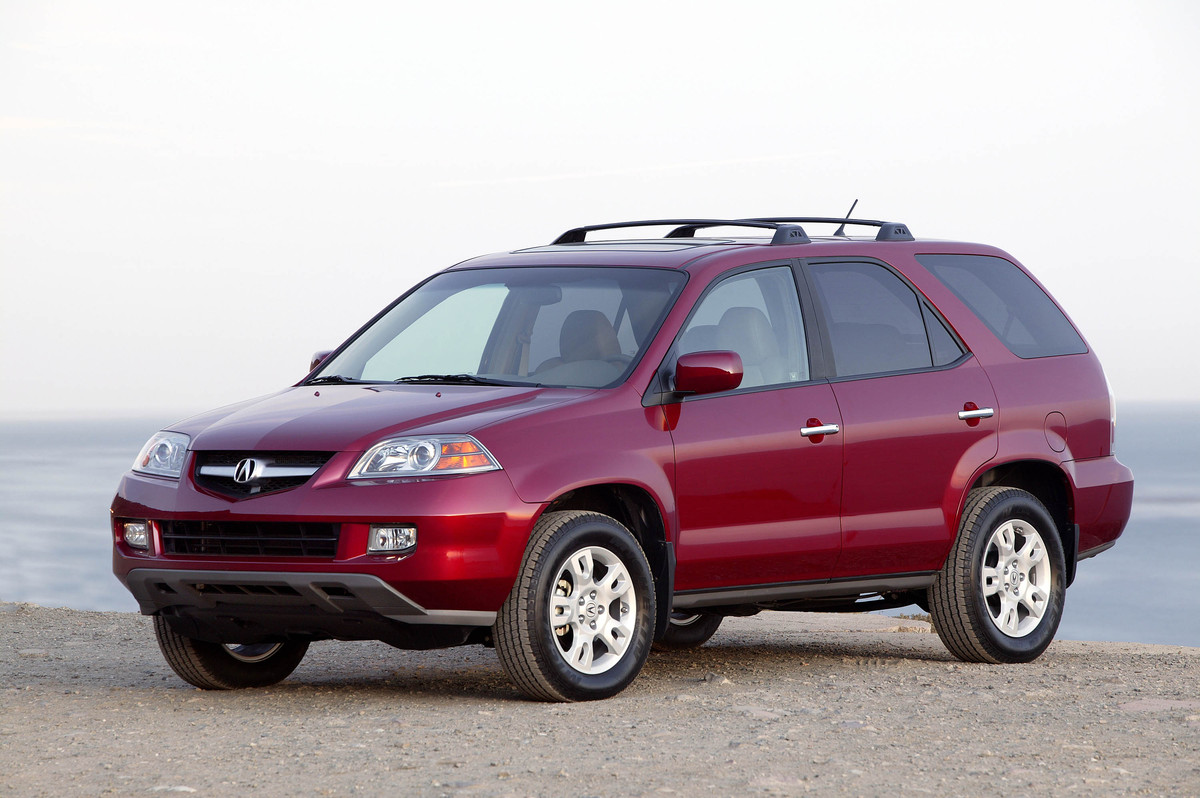
The all-new Acura MDX debuted in 2001 on a platform shared with the Honda Accord and Odyssey, but also the Acura TL. Two years later, the first-generation Honda Pilot would ride on the same underpinnings and new Pilot platforms have followed new MDX designs ever since (including in 2023).
Acura equipped the early MDX with a 3.5-liter V6 producing 240 horsepower and 242 pound-feet of torque mated to a five-speed automatic transmission. This is the only drivetrain offered in this generation. While reasonably powerful for the time and a good handler, the MDX's fuel economy was mediocre at best, with a 17 mpg combined rating that was on par with some other V8-powered SUVs at the time.
Full-time four-wheel drive (Honda's "VTM-4" system) came standard, and no front-wheel drive MDX would be offered for more than a decade. This design provided predictive, rather than reactive, traction. In other words, the system tried to predict when the vehicle would lose grip and would engage four-wheel drive. The rear wheels disengaged during normal driving to provide better fuel economy, to limited effect.
The first MDX was slightly smaller than today's version, and had less room inside, but by the standards of midsize SUVs in 2001, it was roomy and comfortable. In 2024 terms, it's about the same size as a current Kia Sorento. The second-generation MDX has more room, so if you're shopping this vintage, that one is definitely worth looking at as well. This is still a three-row SUV though, with room for seven even if the third row is tiny. Back in 2001, there weren't many luxury three-rows around, even ones with just "occasional" way back seats. That, and the MDX's air of quality, helped establish it as a good seller, far better than the SLX it replaced.
Acura revised the MDX's powertrain in 2006, giving it an additional 20 horsepower and more torque. The improvements raised the SUV's top speed to 137 mph and decreased its zero-to-60-mph time to 7.1 seconds.
By today's standards, the first MDX looks plain and isn't particularly sporty, but it still makes for good transportation. If you're shopping for one, we recommend going as new as you can, as the earliest MDXs seem to have the highest number of problems and they now also have the most wear and tear. The good news is that a clean, sub-130,000-mile first-generation MDX shouldn't cost you very much, with reasonably clean examples selling for $5,000 to $8,000. They're hard to find in good shape though, as they tend to get used hard.