Toyota RAV4 Hybrid vs Hyundai Kona
Overview | |
MSRP$31,225 | MSRP$24,250 |
Listings386 | Listings405 |
Ratings & Reviews | |
User Reviews | User Reviews |
Expert reviews6.3 out of 10 | Expert reviews8.3 out of 10 |
Pros
Cons
| Pros
Cons
|
Reviews SummaryThe 2023 Toyota RAV4 Hybrid is a solid choice in its rather limited class, with an easily attained 40 mpg, pleasant driving characteristics, and high levels of comfort. A new infotainment system helps its standing, as does a new off-road capable Woodland Edition. | |
Reviews SummaryThe previous-generation Hyundai Kona debuted for 2018 and got an electric counterpart when the Kona EV hit the market the following year. Hyundai's subcompact SUV got a refresh for 2022, which also saw the addition of the hot-hatch Kona N to the stable. Now, the Kona kicks off a whole new generation, with a new look, new tech, and, naturally, a new price tag to match. In a crowded segment, do the new features match—or perhaps even exceed—the added cost? | |
Popular Features & Specs | |
Engine2.5L 219 hp I4 Hybrid | Engine2.0L 147 hp I4 |
Drive TrainAWD | Drive TrainFWD |
Seating Capacity5 | Seating Capacity5 |
Horsepower | Horsepower147 hp @ 6200 rpm |
EV Battery Capacity1.6 kWh | EV Battery Capacity |
MPG City41 | MPG City29 |
MPG Highway38 | MPG Highway34 |
Engine | |
Engine Name2.5L 219 hp I4 Hybrid | Engine Name2.0L 147 hp I4 |
Torque | Torque132 lb-ft @ 4500 rpm |
Horsepower | Horsepower147 hp @ 6200 rpm |
DrivetrainAWD | DrivetrainFWD |
Fuel Economy | |
EV Battery Capacity1.6 kWh | EV Battery Capacity |
MPG City41 | MPG City29 |
MPG Highway38 | MPG Highway34 |
Interior | |
Seating Capacity5 | Seating Capacity5 |
Key Features | |
Navigation System | Navigation SystemStandard |
Safety | |
Front Crash Overall4 | Front Crash Overall4 |
Side Crash Overall5 | Side Crash Overall5 |
Dimensions & Capacity | |
Cargo Space37.5 cu ft | Cargo Space25.5 cu ft |
Curb Weight3690 lbs | Curb Weight3005 lbs |
Height67.0 in | Height62.2 in |
Length180.9 in | Length171.3 in |
Width73.0 in | Width71.9 in |
Wheelbase105.9 in | Wheelbase104.7 in |
Maximum Payload1210 lbs | Maximum Payload1085 lbs |
Number of doors4 | Number of doors4 |
Maximum Towing Capacity1750 lbs | Maximum Towing Capacity |
Overview | ||
MSRP | $31,225 | $24,250 |
Listings | ||
Ratings & Reviews | ||
User reviews | ||
Expert reviews | 6.3 out of 10Read full review | 8.3 out of 10Read full review |
Pros & cons | Pros
Cons
| Pros
Cons
|
Summary | The 2023 Toyota RAV4 Hybrid is a solid choice in its rather limited class, with an easily attained 40 mpg, pleasant driving characteristics, and high levels of comfort. A new infotainment system helps its standing, as does a new off-road capable Woodland Edition. | The previous-generation Hyundai Kona debuted for 2018 and got an electric counterpart when the Kona EV hit the market the following year. Hyundai's subcompact SUV got a refresh for 2022, which also saw the addition of the hot-hatch Kona N to the stable. Now, the Kona kicks off a whole new generation, with a new look, new tech, and, naturally, a new price tag to match. In a crowded segment, do the new features match—or perhaps even exceed—the added cost? |
Video | ||
Popular Features & Specs | ||
Engine | 2.5L 219 hp I4 Hybrid | 2.0L 147 hp I4 |
Drive Train | AWD | FWD |
Seating Capacity | 5 | 5 |
Horsepower | 147 hp @ 6200 rpm | |
EV Battery Capacity | 1.6 kWh | |
MPG City | 41 | 29 |
MPG Highway | 38 | 34 |
Engine | ||
Engine Name | 2.5L 219 hp I4 Hybrid | 2.0L 147 hp I4 |
Torque | 132 lb-ft @ 4500 rpm | |
Horsepower | 147 hp @ 6200 rpm | |
Drivetrain | AWD | FWD |
Fuel Economy | ||
EV Battery Capacity | 1.6 kWh | |
MPG City | 41 | 29 |
MPG Highway | 38 | 34 |
Interior | ||
Seating Capacity | 5 | 5 |
Key Features | ||
Navigation System | Standard | |
Safety | ||
Front Crash Overall | 4 | 4 |
Side Crash Overall | 5 | 5 |
Dimensions & Capacity | ||
Cargo Space | 37.5 cu ft | 25.5 cu ft |
Curb Weight | 3690 lbs | 3005 lbs |
Height | 67.0 in | 62.2 in |
Length | 180.9 in | 171.3 in |
Width | 73.0 in | 71.9 in |
Wheelbase | 105.9 in | 104.7 in |
Maximum Payload | 1210 lbs | 1085 lbs |
Number of doors | 4 | 4 |
Maximum Towing Capacity | 1750 lbs | |
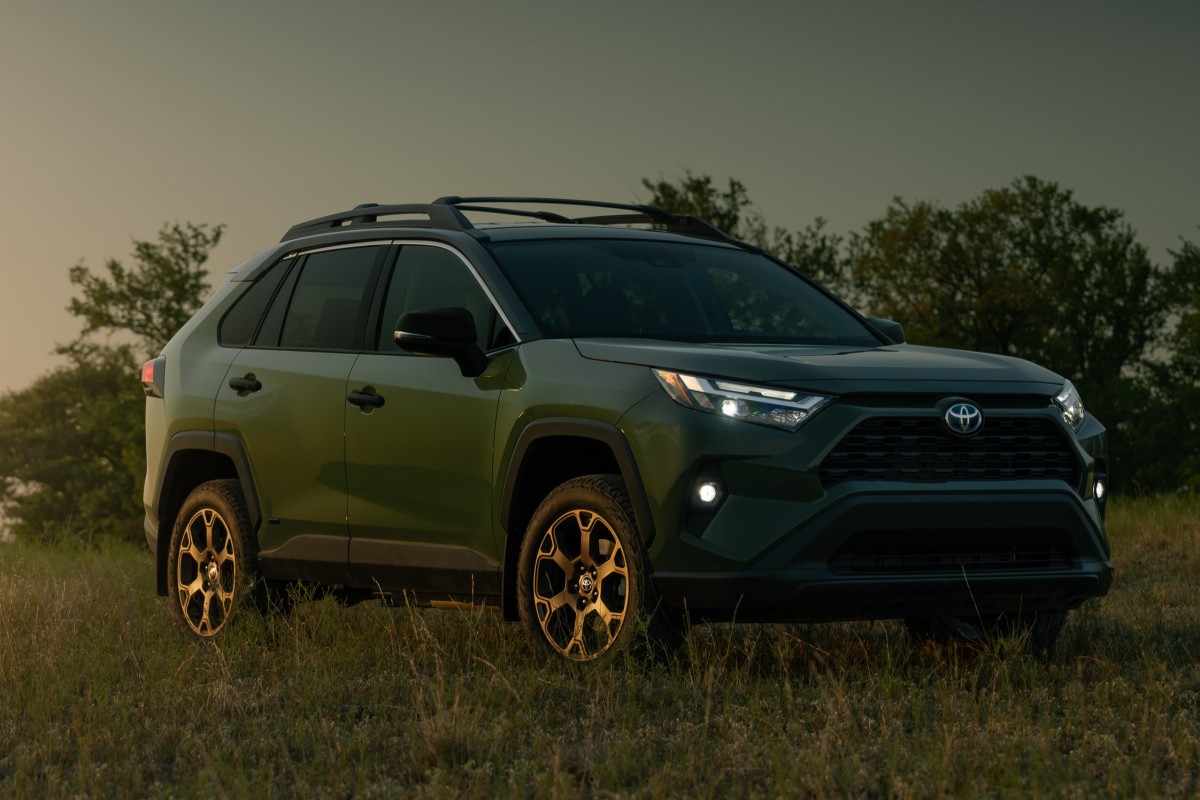
The 2023 Toyota RAV4 Hybrid saw a significant redesign in 2019, shedding its softer crossover elements for a bolder and more substantial blocky appearance. The trapezoidal grille was inspired by Toyota's truck lineup, giving it a heftier frontal presence. Subsequent years saw other carmakers like Honda and Mazda adopt similar design cues. The interior carried an angular theme with a multi-tiered dashboard and beveled cutouts, providing a visually engaging yet fundamentally simple layout. High-traffic touchpoints received light padding, although some trims, including the base model and new Woodland trim, had cheaper-feeling urethane steering wheels and armrests. Most other trims featured leather-wrapped accents. Build quality was robust, adding to the overall solid feel with minimal cabin noise on rough roads.
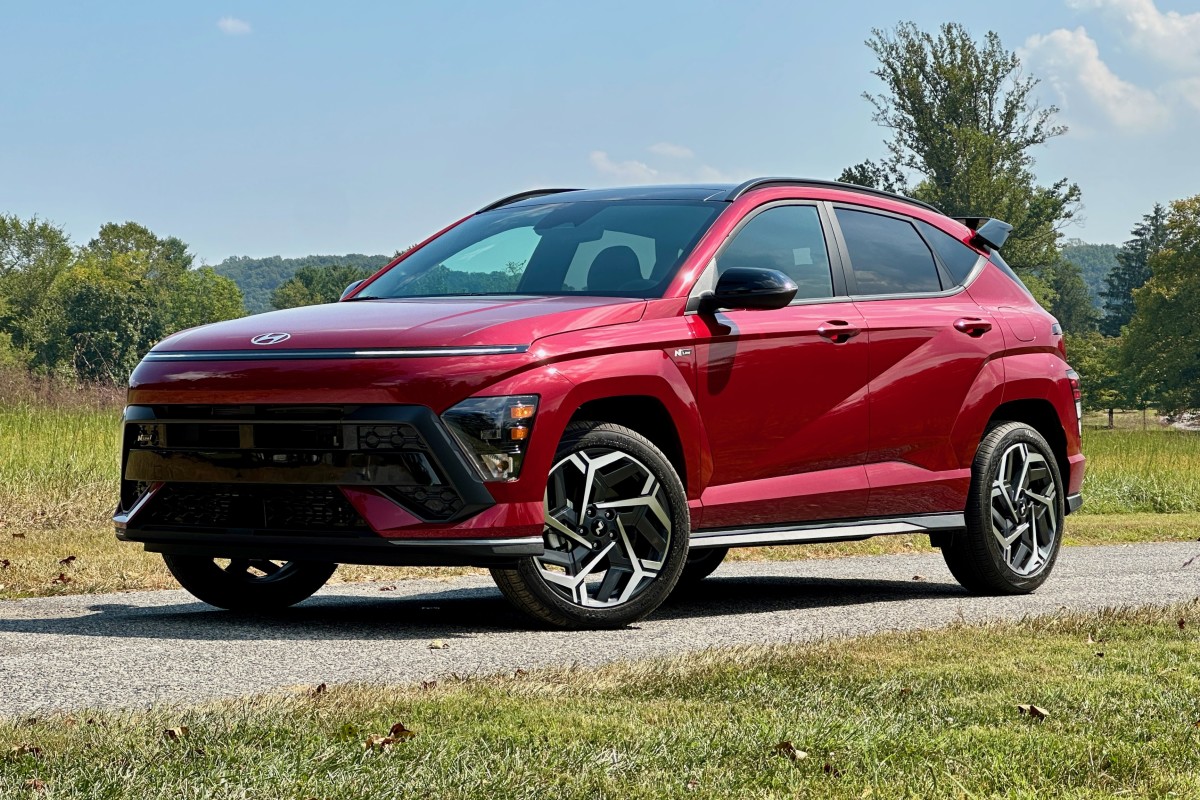
The 2024 Hyundai Kona took its design cues from the electric vehicle segment, closely resembling the Ioniq 5 with its single-piece grille mirroring EV aesthetics. An LED headlight, part of Hyundai’s “seamless horizon” look, dominated the front end, giving it a futuristic vibe. Despite nearly six inches of additional length, the Kona maintained its recognizable silhouette, with visual upgrades such as creased doors and more pronounced black body cladding on base trims. The seamless design continued at the back, with an LED taillight spanning the width of the vehicle. The lineup showcased wheels ranging from 17 to 19 inches, contingent on the trim level. Inside, the Kona featured a driver-oriented center stack and a revamped gear shift placed on the steering column, opening up console space. The update was crowned by a curved display integrating driver information and infotainment.


The 2023 Toyota RAV4 Hybrid combined a 2.5-liter four-cylinder engine with an electric motor-generator setup, linked to a continuously variable transmission (CVT) that powered the front wheels. An additional motor on the rear axle provided all-wheel drive, collectively delivering 219 horsepower. This configuration achieved 0-60 mph in 7.5 seconds. Though the hybrid was about half a second quicker than the standard RAV4, it fell short of the plug-in hybrid RAV4 Prime, which did the sprint in just 5.5 seconds. Compared to competitors, the RAV4 Hybrid was comparable in performance. The braking system seamlessly transitioned from regenerative to physical brakes, maintaining smoothness. The suspension handled bumps well, contributing to a comfortable ride without excelling in sporty dynamics.
The 2024 Hyundai Kona kept the engine options from its predecessor. The SE and SEL trims featured a 2.0-liter four-cylinder with 147 horsepower and 132 lb-ft of torque, coupled with a CVT. The N-Line and Limited came equipped with a turbocharged 1.6-liter four-cylinder engine producing 190 horsepower and 195 lb-ft of torque, now paired with an eight-speed automatic transmission instead of the previous seven-speed dual-clutch. Paddle shifters were included in higher trims and optionally available for the SEL. While we found pickup slightly sluggish, the intuitive steering and nimble handling were notable on city streets. Front-wheel drive was standard, with optional all-wheel drive costing an extra $1,500. AWD models saw a slight reduction in fuel economy, dropping to 24 city, 29 highway, and 26 mpg combined.
The 2023 Toyota RAV4 Hybrid offered spacious front seats and reasonable rear accommodations for average-sized adults, though slightly less rear legroom than competitors. Rear-facing child seats required some adjustment of the front seats. The cargo area boasted 37.5 cubic feet, almost matching the non-hybrid version and only slightly trailing rivals like the Honda CR-V and Kia Sportage. The interior storage featured a wide passenger-side dash shelf, a phone tray, large cupholders, and a substantial center armrest bin, though a wireless charging pad was not available due to a chip shortage.
The 2024 Hyundai Kona's increased length translated to more rear-seat legroom at 38.2 inches—three inches more than its predecessor and six inches over the Toyota Corolla Cross. Headroom increased to 38.3 inches front and rear with a sunroof, but the standout change was the expanded cargo capacity, now at 25.5 cubic feet with the rear seats up and 63.7 cubic feet when folded down, adding almost 20 cubic feet of extra space. A power hands-free liftgate came standard on the Limited trim. The interior featured a passenger-side dash shelf with a rubber surface to secure items and a “guardrail” to hold phones on the wireless charging pad. However, the center console was small and not very practical for larger items. Seating options ranged from cloth on lower trims to a leather/suede combination for higher ones, with new additions like ventilated seats and a heated steering wheel for the Limited trim.
The 2023 Toyota RAV4 Hybrid upgraded its infotainment system, featuring improved graphics and intuitive menu layout. An 8.0-inch touchscreen was standard, with higher trims getting a 10.5-inch display. Wireless Apple CarPlay and Android Auto were standard, although a wireless charging pad remained optional. Over-the-air software updates, a Wi-Fi hotspot, and remote vehicle control were included. The higher trims featured an 11-speaker JBL audio system, adding to the premium feel.
The 2024 Hyundai Kona received a significant tech upgrade with a 12.3-inch touchscreen display standard across all trims, replacing the smaller screens of its predecessor. While wireless Apple CarPlay and Android Auto were deferred to an OTA update for the top trims, a new Wi-Fi hotspot and wireless charging were standard for N-Line and Limited trims. A six-speaker audio system was standard, with an upgraded Bose system available. Dual 12.3-inch screens were part of the panoramic display available in higher trims, and Hyundai’s Bluelink connected services were now provided for the vehicle’s lifetime.
The 2023 Toyota RAV4 Hybrid earned five stars overall from the NHTSA and a Top Safety Pick designation from the IIHS, save for a couple of "Acceptable" ratings. Standard safety features included forward collision warning, adaptive cruise control, lane-keep assist, automatic high beams, and a traffic sign reader. Higher trims added blind-spot monitors, rear cross-traffic alerts, and parking sensors, with optional surround-view cameras and digital rearview mirrors. Adaptive cruise control was notably smooth, and safety features were reliable without false alarms.
The 2024 Hyundai Kona added more advanced safety features to its already robust suite. Standard features now included Safe Exit Warning, blind-spot collision avoidance, and rear cross-traffic collision avoidance. Adaptive cruise control and a Surround View Monitor became standard on higher trims, along with the Lane-Keep Assist system. In practice, Hyundai’s Highway Driving Assist worked smoothly and intuitively, providing near-seamless lane-keeping on highways while still being easy to disable when needed.
CarGurus highlights
According to CarGurus experts, the overall rating for the 2023 Toyota RAV4 Hybrid is 6.3 out of 10, while the 2024 Hyundai Kona scores 8.3 out of 10. Based on these ratings, it is clear that the 2024 Hyundai Kona offers a more compelling package. With its advanced technology, enhanced safety features, and increased space, the Kona comes out on top as the better choice for consumers seeking a modern, versatile, and comfortable compact SUV.
Choose the 2023 Toyota RAV4 Hybrid if:
- You desire a robust and reliable hybrid performance with solid fuel efficiency.
- You need a vehicle with ample cargo space and smart interior storage solutions.
- Safety features are paramount, and a proven track record of high safety ratings is important to you.


Choose the 2024 Hyundai Kona if:
- You value advanced technology with larger standard displays and future-proofing via OTA updates.
- Additional passenger and cargo space are crucial for your lifestyle needs.
- High-quality safety features and semi-autonomous driving capabilities are high on your priority list.


CarGurus highlights
According to CarGurus experts, the overall rating for the 2023 Toyota RAV4 Hybrid is 6.3 out of 10, while the 2024 Hyundai Kona scores 8.3 out of 10. Based on these ratings, it is clear that the 2024 Hyundai Kona offers a more compelling package. With its advanced technology, enhanced safety features, and increased space, the Kona comes out on top as the better choice for consumers seeking a modern, versatile, and comfortable compact SUV.
Choose the 2023 Toyota RAV4 Hybrid if:
Shop Now- You desire a robust and reliable hybrid performance with solid fuel efficiency.
- You need a vehicle with ample cargo space and smart interior storage solutions.
- Safety features are paramount, and a proven track record of high safety ratings is important to you.
Choose the 2024 Hyundai Kona if:
Shop Now- You value advanced technology with larger standard displays and future-proofing via OTA updates.
- Additional passenger and cargo space are crucial for your lifestyle needs.
- High-quality safety features and semi-autonomous driving capabilities are high on your priority list.

By: CarGurus + AI
At CarGurus, our team of experienced automotive writers remain at the heart of our content operation, conducting hands-on car tests and writing insightful guides that are backed by years of industry experience. To complement this, we are harnessing AI to make our content offering more diverse and more helpful to shoppers than ever. To achieve this, our AI systems are based exclusively on CarGurus content, ratings and data, so that what we produce is both unique to CarGurus, and uniquely helpful to car shoppers.

