What is a Good Price for a Used Honda Civic in Atlanta?
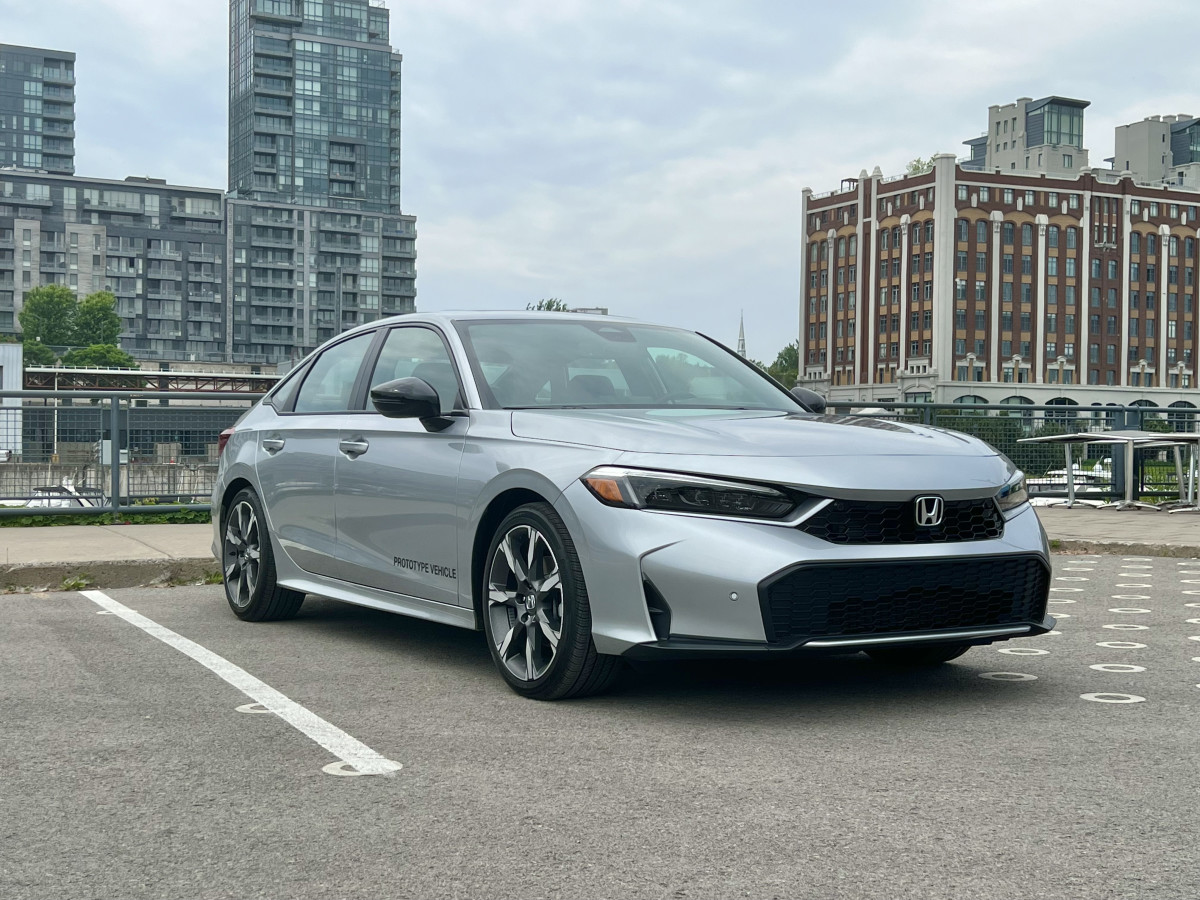
Used Civics in Atlanta average $17,113 — a 9% discount versus the national average of $18,799. For one of the most popular compact cars in America, that’s a meaningful advantage that holds across nearly every model year.
Price by Model Year in Atlanta
The Civic spans several generations on the used market. The eleventh generation (2022–present) is the newest and most refined; the tenth generation (2016–2021) represents the sweet spot for value and features; the ninth generation (2012–2015) offers stellar reliability at budget-friendly prices; and the eighth generation (2006–2011) is the oldest you’ll commonly find in good condition.
| Model Year |
Atlanta Avg. Price |
National Avg. Price |
Atlanta Avg. Mileage |
Inventory Share |
| 2026 |
$26,819 |
$27,822 |
3,831 miles |
19% |
| 2025 |
$25,355 |
$26,054 |
31,743 miles |
39% |
| 2024 |
$25,330 |
$25,207 |
31,846 miles |
56% |
| 2023 |
$24,221 |
$24,346 |
45,276 miles |
63% |
| 2022 |
$21,803 |
$22,583 |
64,976 miles |
58% |
| 2021 |
$18,629 |
$19,556 |
82,048 miles |
61% |
| 2020 |
$18,190 |
$18,880 |
73,975 miles |
61% |
| 2019 |
$17,630 |
$17,626 |
83,696 miles |
59% |
| 2018 |
$16,469 |
$16,341 |
87,469 miles |
54% |
| 2017 |
$14,573 |
$15,221 |
99,817 miles |
49% |
| 2016 |
$14,410 |
$14,142 |
110,586 miles |
46% |
| 2015 |
$11,178 |
$11,878 |
117,316 miles |
38% |
| 2014 |
$10,181 |
$11,471 |
132,903 miles |
34% |
Eleventh Generation (2022–2026): $21,803–$26,819
The newest Civic generation brings a more refined interior, updated technology, and the return of a hybrid option starting in 2025. These models are still relatively new and command near-new pricing. The 2022 model year offers the best entry point at $21,803 in Atlanta, a 3.5% discount versus the national average. The 2026 and 2025 models show Atlanta discounts of 3.6% and 2.7% respectively.
Tenth Generation (2016–2021): $14,410–$18,629
The sweet spot for most Atlanta buyers. This generation marked a major step up in size, safety tech, and driving engagement. The 2021 model year stands out with a 4.7% Atlanta discount ($18,629 vs. $19,556 nationally), while the 2017 offers a 4.3% local discount at $14,573. The 2020 model at $18,190 — 3.7% below national — delivers strong value with moderate mileage at 73,975 miles.
Ninth Generation (2012–2015): $10,181–$11,178
Budget-friendly entry into reliable Civic ownership. Though not the most exciting generation to drive, the ninth gen earned a stellar reliability record and IIHS Top Safety Pick designations every year. The 2014 at $10,181 shows the strongest Atlanta discount of any model year at 11.2% below national pricing — exceptional value for a dependable daily driver.
Understanding the Atlanta Price Advantage
The 9% discount over national pricing reflects several local dynamics working in buyers’ favor.
High-volume market: Atlanta’s sprawling metro area and car-dependent infrastructure create strong demand for affordable, efficient transportation. High volume means competitive dealer pricing and consistent inventory — 467 Civics currently listed in the market.
Climate preservation: Georgia’s mild winters mean no road salt and minimal rust concerns. Atlanta Civics avoid the underbody corrosion that can shorten the life of examples from northern and Midwestern markets.
Comparable condition: Atlanta inventory averages 85,015 miles versus the national average of 82,886 — essentially equivalent. You get the price advantage without meaningful condition trade-offs.
Good and Great Deals in Atlanta
57% of Atlanta Civic listings qualify as Good or Great Deals — nearly double the national average of 31%. Atlanta’s 11% Great Deal rate also exceeds the national 8%.
| Deal Rating |
Atlanta Percentage |
National Percentage |
| Great Deals |
11% |
8% |
| Good Deals |
46% |
23% |
Atlanta’s combined 57% Good and Great Deal rate is exceptional. The 2014 and 2021 model years show particularly strong local discounts, making them prime targets for value-oriented shoppers.
What is the Most Reliable Used Honda Civic in Atlanta?
The Honda Civic’s reliability reputation is one of the strongest in the automotive world — but not every generation is equal. The Civic has been famously dependable across most of its 50-year history, with some generations lasting well past 200,000 miles on routine maintenance alone. Understanding which eras to target helps ensure you get the ownership experience the Civic is known for.
Most Reliable by Era
Eleventh Generation (2022–Present)
Too new for long-term reliability data, but Honda’s improvements over the already-good tenth generation — including a more refined interior and updated technology — suggest strong dependability ahead. These models are still relatively new, with Atlanta inventory averaging 64,976 miles on 2022 models and just 3,831 miles on 2026 examples. Atlanta’s mild climate is kind to these cars, and the lack of extreme cold means fewer battery and starter issues during winter months.
Tenth Generation (2016–2021)
Considered a return to form after the conservative ninth generation, the tenth-gen Civic earned widespread critical praise for its handling, features, and practicality. It became the best-selling compact car in America. Owner complaints tend to center on HVAC systems and the quality of paint and trim — but these are cosmetic and comfort issues, not fundamental mechanical problems. Atlanta’s heat and humidity can stress HVAC systems, so check the air conditioning carefully on any tenth-gen example. Atlanta listings for this generation range from $14,410 (2016) to $18,629 (2021) with mileage averaging 82,048 to 110,586 miles.
Ninth Generation (2012–2015)
The second-most reliable modern Civic generation, with a generally stellar reliability record and no specific pain points documented by owners. Though not the most exciting Civic to drive — critics noted the recession-era cost-cutting and lack of driving dynamics compared to the eighth generation — these are rock-solid daily drivers. IIHS awarded the ninth generation Top Safety Pick or Top Safety Pick+ designations every year it was on sale. In Atlanta, 2014–2015 models average $10,181–$11,178 with 117,316–132,903 miles — proven territory for a reliable Honda.
Eighth Generation (2006–2011)
Light, fun to drive, and very efficient, the eighth-gen Civic was well-liked by enthusiasts and everyday drivers alike. However, it has documented reliability concerns: transmission issues, paint quality problems, and HVAC system failures — the air conditioning system is particularly problematic. Civic Hybrids from this era require more costly repairs than gas models, potentially offsetting their fuel savings. Atlanta’s hot summers put extra strain on the AC, making this a critical inspection item for eighth-gen models.
Seventh Generation (2001–2005): The Exception
This is the Civic generation to approach with the most caution. It has one of the worst reliability records of any Civic generation. Transmission issues are the most common complaint, and early 2001 and 2002 models are worst of all. The Civic Hybrid introduced in 2003, closer to a mild hybrid than a conventional design, brought additional reliability concerns. These models are largely aging out of the Atlanta market.
Key Improvements by Generation
Key Improvements by Model Year — Tenth Generation (2016–2021)
| Model Year |
Key Improvements |
| 2016 |
All-new platform; major size increase; coupe and sedan body styles; new turbocharged engine option; adaptive cruise control available |
| 2017 |
Five-door hatchback added to lineup; first US-market Civic Type R introduced |
| 2019 |
Mid-cycle refresh with updated styling and revised Sport trim |
| 2020 |
Honda Sensing safety suite became standard on more trims |
Civic-Specific Reliability Considerations
HVAC Systems (8th and 10th Generations): Air conditioning failures are documented across both the eighth and tenth generations. In Atlanta’s hot, humid summers where AC is essential from April through October, this is not a minor issue. Test the AC thoroughly on any pre-purchase drive, run it at full blast for at least 15 minutes, and listen for compressor noise or weak airflow.
Transmission Durability (7th Generation): The seventh-generation Civic (2001–2005) has well-documented transmission problems, particularly in early model years. Automatic transmissions in 2001 and 2002 models are the most failure-prone. If considering this generation, have a mechanic inspect the transmission specifically, check for slipping or delayed engagement, and verify the transmission fluid is clean.
Paint and Trim Quality (8th and 10th Generations): Both generations have drawn owner complaints about paint durability and exterior trim quality. Georgia’s intense UV exposure and summer heat can accelerate paint deterioration. Inspect the clear coat carefully, particularly on horizontal surfaces like hoods and roofs.
Hybrid Battery Health (8th Generation Hybrids): Eighth-generation Civic Hybrids require more costly repairs than their gas-only counterparts. The hybrid system in these models is closer to a mild hybrid design with limitations compared to modern full hybrids. If considering a hybrid from this era, check for warning lights, reduced fuel economy, or IMA (Integrated Motor Assist) system alerts.
What to Check When Buying
- Air conditioning performance: Run the AC at maximum for at least 15 minutes during a test drive. Listen for compressor noise, check for consistent cold output, and verify all fan speeds work. Critical for Atlanta ownership.
- Transmission behavior: Test through all gears, including reverse. Check for delayed engagement, slipping, or harsh shifts — especially on seventh- and eighth-generation automatics.
- Service records: Even the most reliable Civic needs routine maintenance. Look for documented oil changes, timing belt replacement (on applicable models), and scheduled service intervals.
- Paint and exterior condition: Inspect for clear coat peeling, especially on the hood, roof, and trunk. Georgia’s UV exposure can accelerate deterioration on affected generations.
- Undercarriage inspection: While Atlanta’s salt-free roads are an advantage, check for damage from speed bumps and road debris, especially on lowered or sport-tuned models.
Best and Worst Honda Civic Years in Atlanta
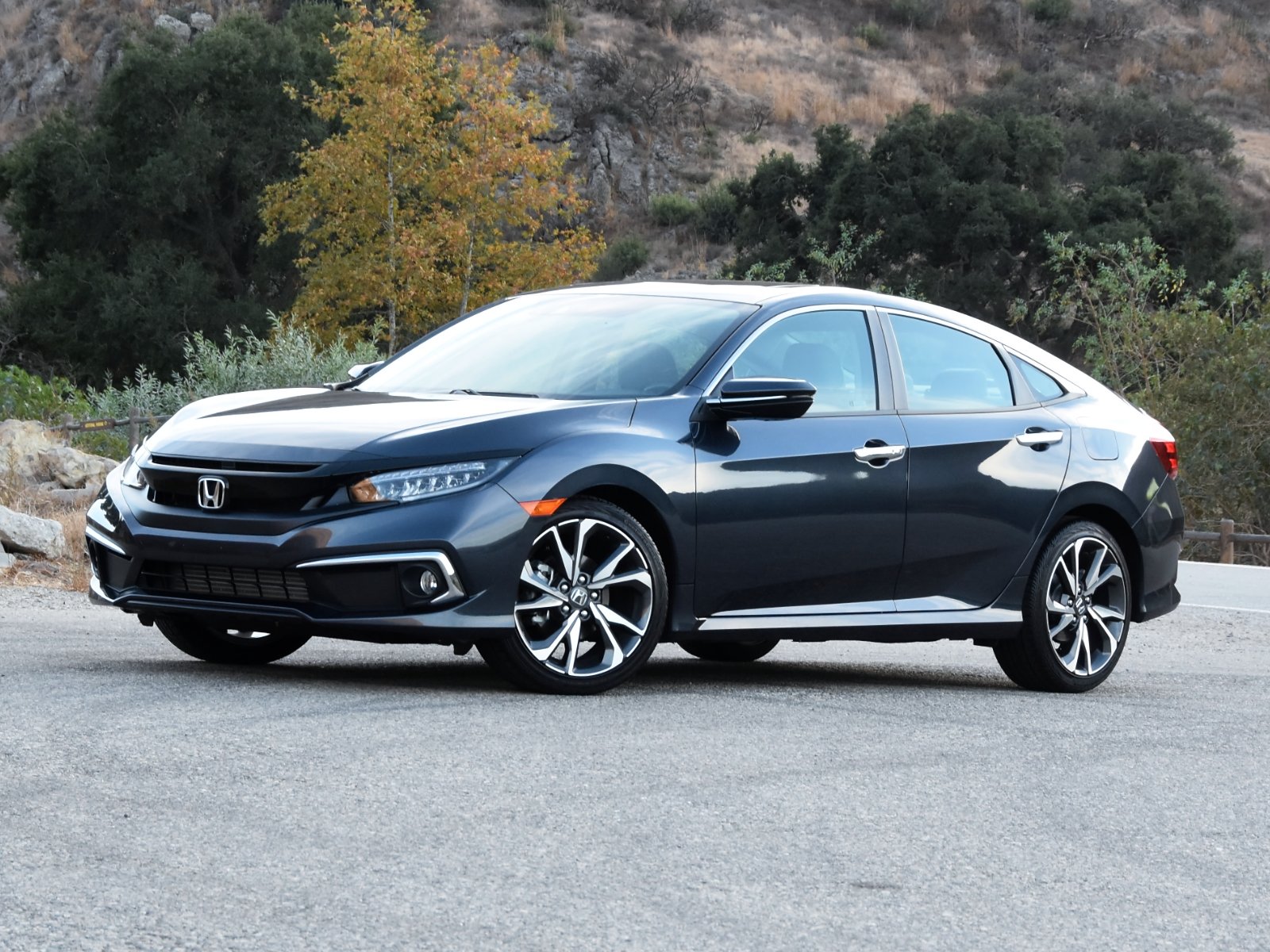
Choosing the right model year can mean the difference between a decade of trouble-free ownership and an unexpected repair bill. CarGurus data reveals clear patterns about which Civic model years offer the best value and reliability in the Atlanta market. For more information on the Civic by generation and model year, check out our Honda Civic Buying Guide.
Best Honda Civic Years for Atlanta
| Category |
Best Years |
Atlanta Avg. Price |
Why They’re Best |
| Best Overall |
2020–2021 |
$18,190–$18,629 |
Refined tenth-gen, Honda Sensing standard, strong Atlanta discounts |
| Best Value |
2017 |
$14,573 |
4.3% Atlanta discount, hatchback option added, proven tenth-gen reliability |
| Best for Modern Features |
2022–2023 |
$21,803–$24,221 |
Latest eleventh-gen design, upscale interior, updated tech |
| Best Local Discount |
2014 |
$10,181 |
11.2% below national average, stellar ninth-gen reliability, sub-$11k entry |
Best Overall: 2020–2021
These late tenth-generation models hit the sweet spot of modern features, proven reliability, and meaningful depreciation. Honda Sensing safety tech became standard on more trims, and these years benefit from four to five years of tenth-generation refinement. The 2021 shows a 4.7% Atlanta discount ($18,629 vs. $19,556 nationally) with average mileage of 82,048 miles — well within the Civic’s comfort zone. The 2020 at $18,190 offers a similar package with slightly lower mileage at 73,975 miles.
Best Value: 2017
The year Honda added the five-door hatchback to the tenth-generation lineup and introduced the first US-market Type R. At $14,573 in Atlanta — 4.3% below the national average of $15,221 — the 2017 delivers the tenth-gen’s major improvements in size, driving dynamics, and safety features at a sub-$15,000 price point. Average mileage of 99,817 miles is notable, but these are built to handle it.
Best for Modern Features: 2022–2023
The eleventh-generation redesign brought a genuinely upscale interior, refined styling, and updated technology that makes these Civics feel a class above. The 2022 at $21,803 shows a 3.5% Atlanta discount and represents the best entry point into the newest generation. The 2023 at $24,221 is essentially at national parity, making the 2022 the better Atlanta value.
Best Local Discount: 2014
At $10,181 — a full 11.2% below the national average of $11,471 — the 2014 Civic offers the deepest Atlanta discount of any model year. The ninth generation’s stellar reliability record means these are dependable daily drivers despite higher mileage at 132,903 miles. For buyers on a tight budget who need reliable transportation, this is the strongest data-backed choice in Atlanta.
Worst Honda Civic Years for Atlanta
| Years |
Concerns |
| 2001–2005 |
Worst reliability record of any Civic generation; transmission failures common; early 2001–2002 models most problematic |
| 2006–2011 |
Documented transmission, paint, and HVAC issues; AC system particularly problematic; hybrid models costly to repair |
Avoid: 2001–2005 (Seventh Generation)
The seventh-generation Civic has the worst reliability record of any Civic generation. Transmission issues are the most common and most expensive complaint, with early 2001 and 2002 models worst of all. The Civic Hybrid introduced in 2003 brought additional first-generation hybrid bugs. These models have largely aged out of the Atlanta market, and the few remaining examples aren’t worth the risk when ninth-generation models at $10,181–$11,178 offer vastly better reliability.
Approach Carefully: 2006–2011 (Eighth Generation)
While the eighth-gen Civic was fun to drive and well-liked by enthusiasts, it carries documented reliability concerns — particularly with transmissions, HVAC systems, and paint quality. The air conditioning issues are especially relevant in Atlanta, where a failed AC compressor can make a car unusable for half the year. Civic Hybrids from this era are also more expensive to repair than gas models. If you’re drawn to this generation, budget for a thorough pre-purchase inspection and factor in potential AC repair costs.
Honda Civic Pros and Cons
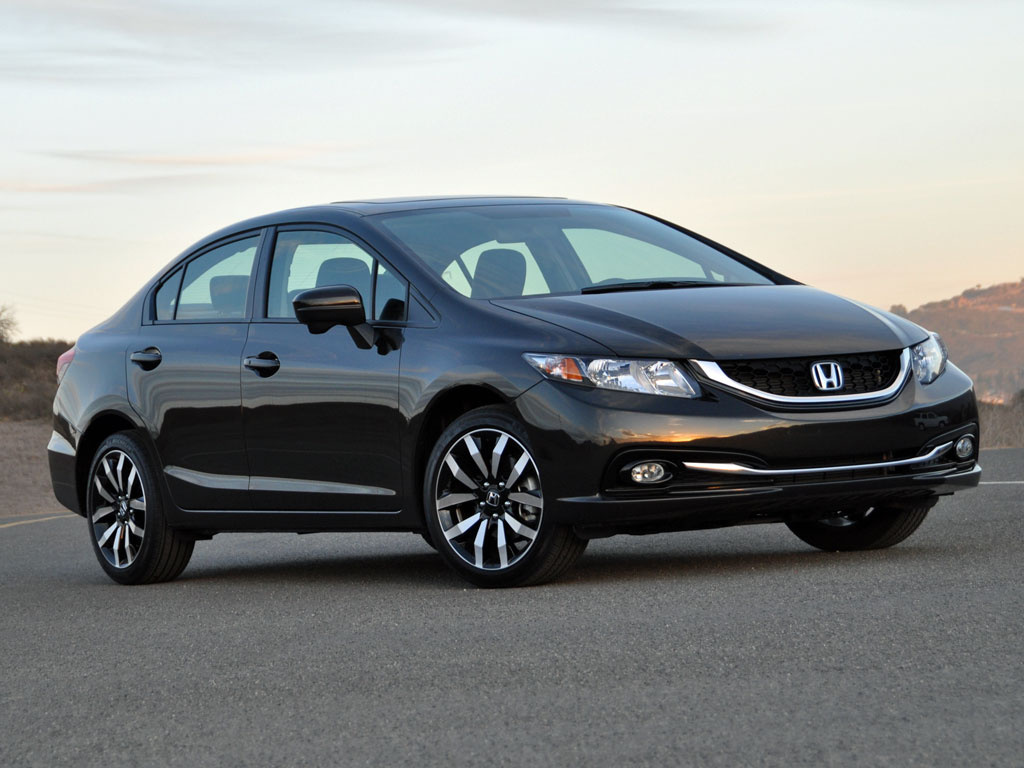
Atlanta rewards the Civic’s core strengths. Long commutes on I-285 and I-85 benefit from fuel efficiency and comfortable seating; stop-and-go traffic demands reliability; and the Civic’s value proposition makes sense for budget-conscious buyers in a metro area with rising costs of living.
Pros
Exceptional Reliability (Most Generations)
The Civic’s dependability is legendary, and most generations back it up. The ninth generation (2012–2015) has a particularly stellar record with no documented pain points, and the tenth generation (2016–2021) earned praise for mechanical durability despite minor HVAC and paint complaints. For Atlanta commuters covering 15,000+ miles annually, this translates to lower repair bills and fewer unexpected shop visits.
Strong Atlanta Market Conditions
The data makes a compelling case: 9% lower average prices than national, a 57% Good and Great Deal rate versus 31% nationally, and 467 listings providing strong selection. Atlanta is genuinely one of the better markets in the country for Civic buyers.
Fun to Drive
Unlike many competitors in the compact segment, the Civic is genuinely engaging behind the wheel. The tenth generation earned widespread critical praise for its handling and driving dynamics, and even base models feel lively and responsive. For drivers who want more than just transportation, the Civic delivers — the Si and Type R variants take it further still.
Excellent Fuel Economy
For Atlanta commuters, fuel costs add up fast. Most Civic models achieve at least 30 mpg combined, with efficiency models pushing even higher. The 2025 Civic Hybrid returns the electrified option to the lineup, promising even better numbers. In a city where many commutes exceed 30 miles each way, this efficiency advantage compounds over years of ownership.
Budget-Friendly Ownership
Beyond fuel economy, Civics are inexpensive to maintain. Parts are widely available and competitively priced, any independent shop in metro Atlanta can service them, and they don’t require premium fuel. The ninth-generation models start at $10,181 in Atlanta — genuine economy car pricing for proven reliability.
Practical Size and Space
The tenth- and eleventh-generation Civics offer interior space that rivals midsize sedans from just a few years ago. The hatchback variant (available from 2017 onward) adds genuine cargo versatility. For Atlanta residents juggling commuting, errands, and weekend road trips, the Civic handles it all without the fuel penalty of a larger vehicle.
Cons
HVAC Reliability Concerns
Both the eighth and tenth generations have documented air conditioning issues, and in Atlanta’s hot, humid climate, this is not a minor inconvenience — it’s a usability problem. AC compressor replacement can cost $800–$1,500, and a Civic without working AC in a Georgia summer is effectively unusable. Budget for inspection and potential repair when buying these generations.
Seventh Generation Is a Liability
The 2001–2005 Civic has the worst reliability record of any generation, with transmission failures the most expensive and common complaint. The affordable pricing on surviving examples is tempting but misleading — more reliable ninth-generation models are available at comparable prices in Atlanta.
Best Features Locked to Higher Trims
Honda consistently reserves the most desirable features for upper trim levels. Adaptive cruise control, heated seats, and premium audio often require EX or Touring trims, pushing prices closer to midsize sedan territory. Base and Sport trims are well-equipped for the price, but if you want the full feature set, prepare to pay for it.
Higher Mileage on Best-Value Years
The strongest Atlanta discounts come with significant odometer readings. The 2014 model year’s 11.2% local discount comes at an average of 132,903 miles, and the 2017’s 4.3% discount averages 99,817 miles. These are well within the Civic’s mechanical capabilities, but buyers should factor mileage into their long-term ownership calculations.
No Manual Transmission on 11th-Gen Sedan
Honda dropped the manual option for the eleventh-generation Civic sedan. If you want a stick shift in the newest generation, you’ll need the hatchback, Si, or Type R. For Atlanta’s heavy traffic this may not matter to most buyers, but enthusiasts will miss the option.
Who Should Buy a Honda Civic in Atlanta?
Ideal buyers based on data patterns:
- Daily commuters covering significant miles on Atlanta’s highways who need fuel efficiency and reliability above all
- Budget-conscious buyers looking for sub-$15,000 reliable transportation — the ninth and early tenth generations deliver
- First-time car buyers who want something fun, practical, and affordable to insure and maintain
- Drivers who value engagement behind the wheel and want a compact car that doesn’t feel like an appliance
Consider alternatives if:
- You need AWD for occasional mountain trips or poor weather — the Civic is FWD only (consider a Subaru Impreza or Mazda3 AWD)
- Maximum rear-seat space is a priority — the Civic is adequate but not class-leading for passenger room
- You want the absolute lowest price in the compact segment — the Hyundai Elantra and Kia Forte often undercut the Civic
- You prefer a traditional automatic transmission — some Civic trims use a CVT that may not suit all drivers
Final Verdict for Atlanta Buyers
The 2020–2021 model years represent the clearest recommendation for most Atlanta buyers — refined tenth-generation driving experience, Honda Sensing safety tech, and 3.7%–4.7% local discounts that put these models under $19,000. For buyers on a tighter budget, the 2017 offers the same fundamental tenth-generation package at $14,573, and the ninth-generation 2014 delivers proven reliability under $10,200 with the deepest Atlanta discount of any model year. Just steer clear of the seventh generation (2001–2005), where the Civic’s reliability reputation doesn’t hold. Atlanta’s 9% overall price advantage and exceptional 57% deal rate make this one of the strongest local markets in the country for Civic buyers.