What is a Good Price for a Used Accord in Atlanta?
Used Accords in Atlanta average $17,807 — a 5.6% discount versus the national average of $18,867. Combined with a 50% Good or Great Deal rate, Atlanta is one of the stronger markets for Accord buyers.
Price by Model Year in Atlanta
The Accord spans eleven generations, but the used market concentrates on the eleventh-generation (2023–present), tenth-generation (2018–2022), and ninth-generation (2013–2017). Each generation brought meaningful improvements — the tenth-gen's complete redesign in 2018 ditched the V6 and coupe in favor of turbocharged four-cylinders and a sedan-only lineup, while the eleventh gen made the hybrid powertrain standard on most trims.
| Model Year |
Atlanta Avg. Price |
National Avg. Price |
Atlanta Avg. Mileage |
Inventory Share |
| 2025 |
$27,397 |
$27,704 |
13,248 miles |
32% |
| 2024 |
$25,157 |
$25,490 |
35,218 miles |
47% |
| 2023 |
$24,567 |
$24,592 |
43,082 miles |
52% |
| 2022 |
$23,732 |
$24,780 |
72,409 miles |
56% |
| 2021 |
$21,616 |
$22,432 |
81,980 miles |
56% |
| 2020 |
$19,472 |
$20,733 |
87,713 miles |
56% |
| 2019 |
$18,947 |
$19,253 |
97,730 miles |
62% |
| 2018 |
$17,663 |
$18,264 |
108,915 miles |
61% |
| 2017 |
$15,510 |
$15,356 |
120,927 miles |
54% |
| 2016 |
$13,639 |
$14,862 |
135,425 miles |
35% |
| 2015 |
$12,930 |
$13,172 |
116,932 miles |
28% |
| 2014 |
$12,410 |
$11,818 |
110,163 miles |
29% |
Eleventh Generation (2023–2025): $24,567–$27,397
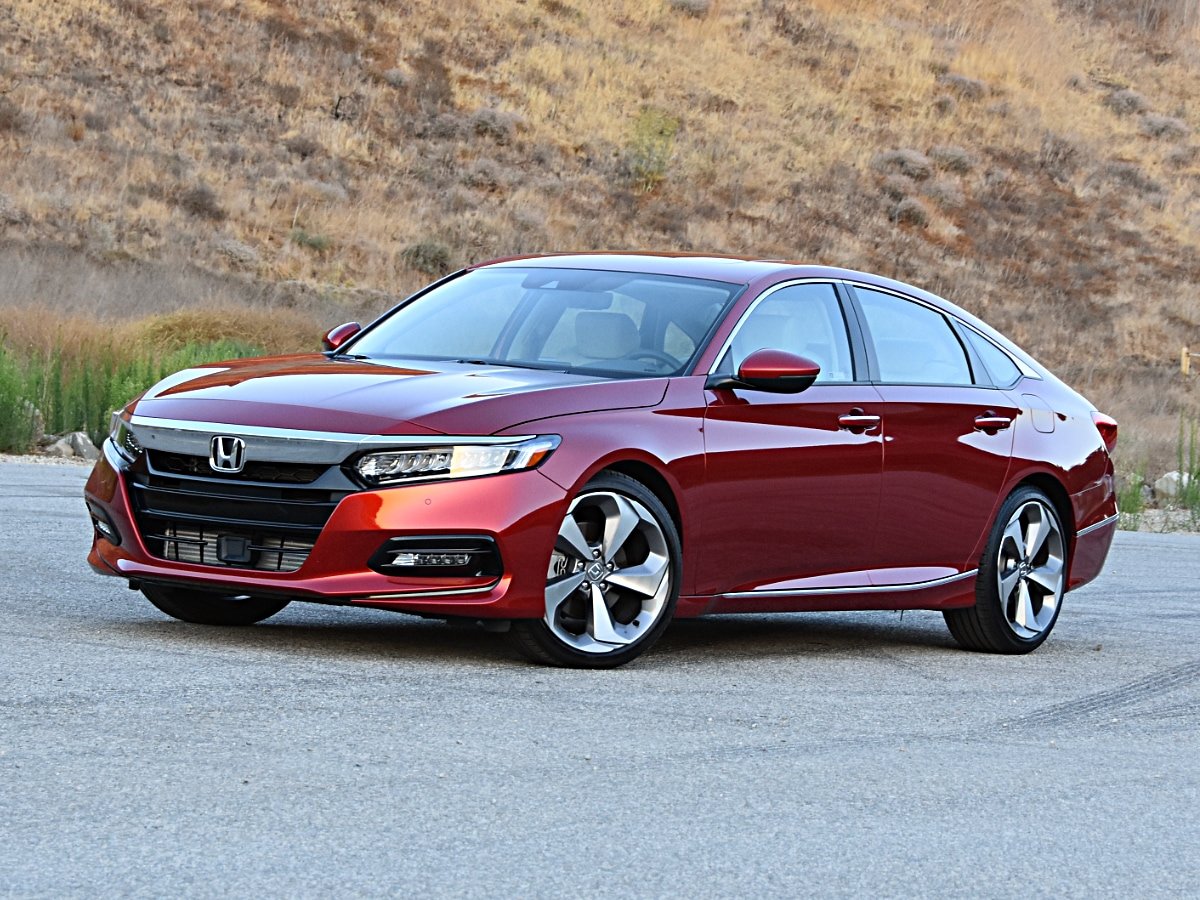
The newest Accord makes the hybrid powertrain standard on most trims, pairing two electric motors with a 2.0-liter Atkinson-cycle four-cylinder. The gas-only 1.5-liter turbo remains available on LX and EX trims. Atlanta pricing tracks close to national averages for these newer models — the 2025 shows a modest 1.1% local discount ($27,397 vs. $27,704), while the 2024 sits 1.3% below national ($25,157 vs. $25,490). With Honda Sensing standard and wireless Apple CarPlay/Android Auto, these are the most feature-rich Accords available.
Tenth Generation (2018–2022): $17,663–$23,732
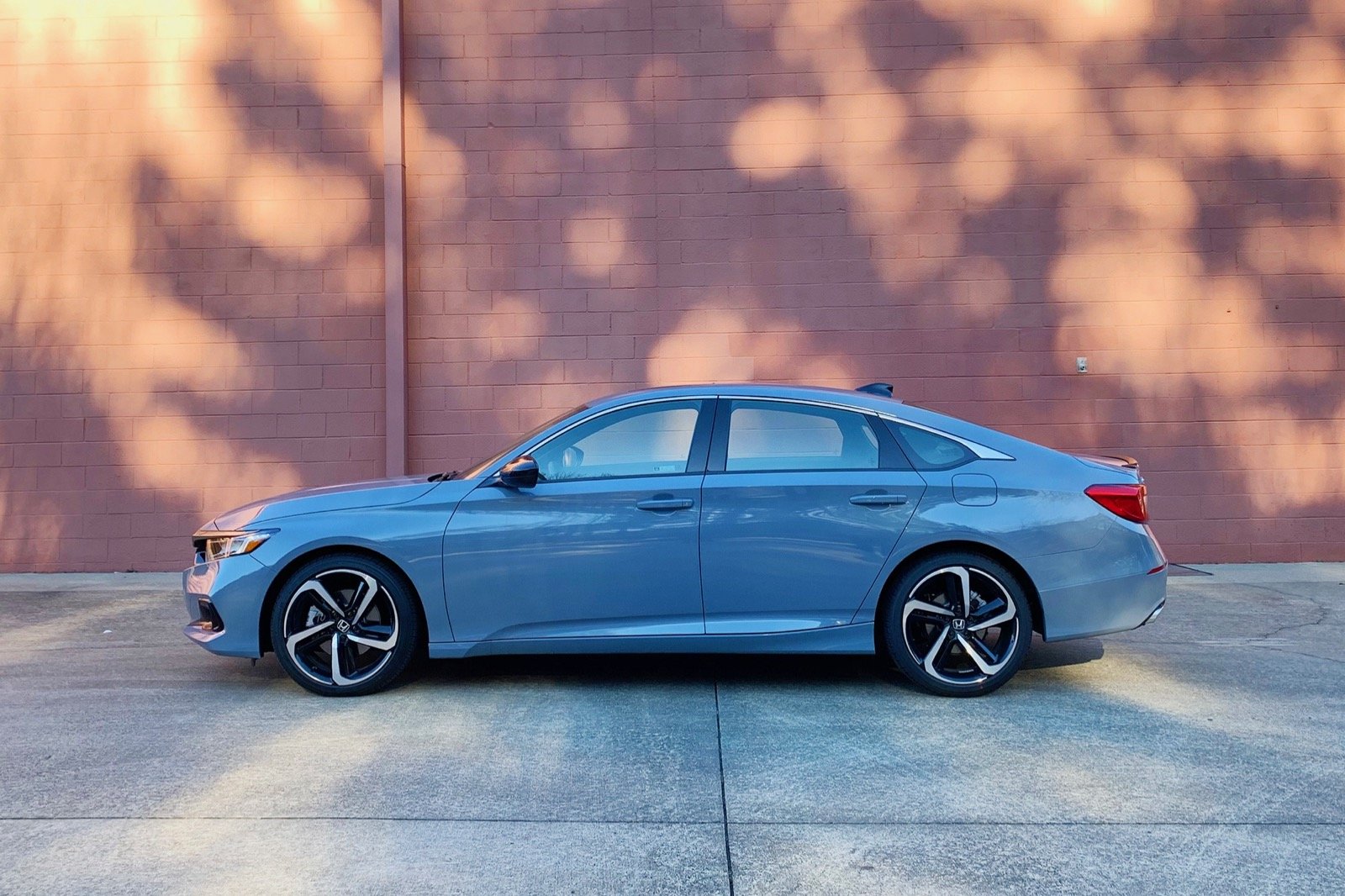
The sweet spot for most Atlanta buyers. The 2018 redesign brought a new turbocharged engine lineup, sedan-only format, and Honda Sensing standard on every trim. The 2022 model year delivers the strongest local discount at 4.2% below national pricing ($23,732 vs. $24,780), while the 2020 offers the deepest savings at 6.1% below national ($19,472 vs. $20,733). The 2021 mid-cycle refresh added new bumpers, brighter LED headlights, and resolved early-model HVAC and Bluetooth concerns.
Ninth Generation (2013–2017): $12,410–$15,510
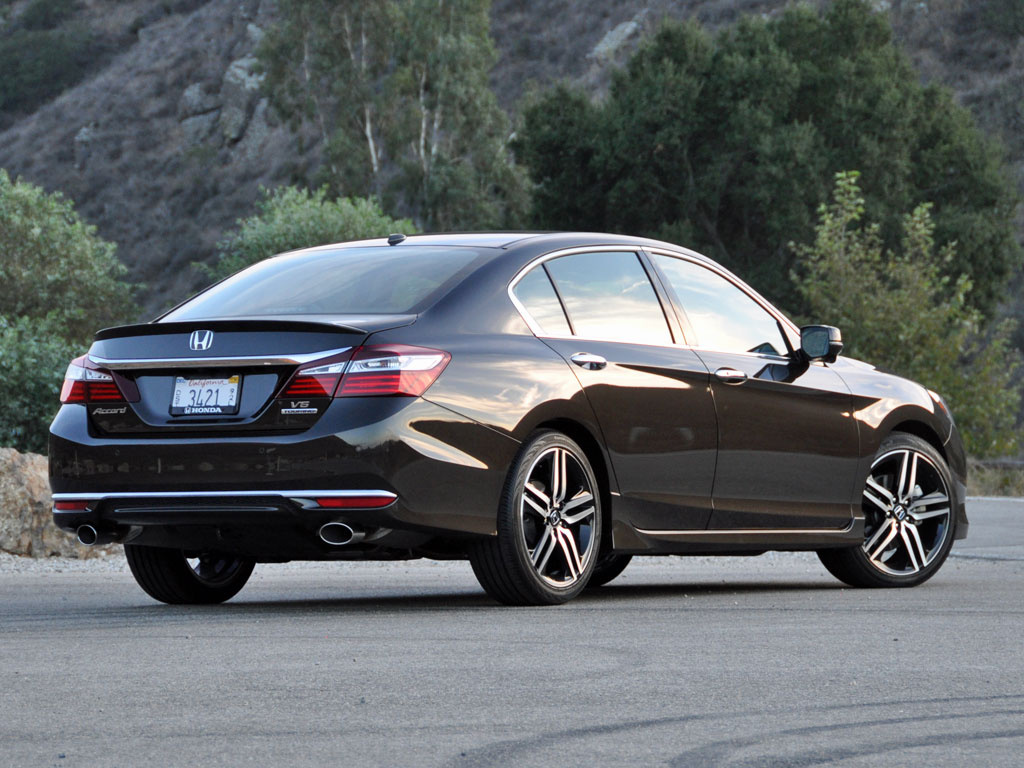
Budget-friendly entry into reliable Accord ownership. The 2016 mid-cycle refresh brought Apple CarPlay, Android Auto, and updated styling — making the 2016 at $13,639 an especially strong value at 8.2% below national pricing. The V6 and six-speed manual coupe are highlight options for enthusiasts, though the sedan with the 2.4-liter four-cylinder and CVT is the volume pick.
Eighth Generation (2008–2012): Limited local inventory
No local pricing data is available for Atlanta, indicating limited inventory for these older models. The eighth gen offered improved space and the first EPA "large car" classification for the Accord. Reliability was solid aside from brake wear issues on 2008–2010 models and Takata airbag recalls on some 2008–2009 examples. If you find one locally, a pre-purchase inspection is essential.
Understanding the Atlanta Price Advantage
The 5.6% discount over national pricing reflects several Atlanta-specific dynamics.
High dealer competition: Metro Atlanta's sprawling geography supports a large number of dealerships competing for buyers. That volume translates to competitive pricing on popular models like the Accord, with 537 local listings creating genuine leverage for shoppers.
Southeast climate benefits: Georgia's mild winters mean no road salt and minimal freeze-thaw cycles. Honda's already-robust engineering ages particularly well here, and buyers don't pay the corrosion premium that affects inventory in the Northeast and Midwest.
Slightly higher local mileage: Atlanta Accords average 97,599 miles versus the national average of 91,547 — a 6.6% difference that reflects the metro's long commuting distances. For Honda's proven four-cylinder engines, this mileage difference is well within the vehicle's expected lifespan and partly explains the pricing discount.
Good and Great Deals in Atlanta
50% of Atlanta Accord listings qualify as Good or Great Deals — dramatically better than the national average of 31%. That 19-percentage-point advantage makes Atlanta one of the most favorable Accord markets in the country.
| Deal Rating |
Atlanta Percentage |
National Percentage |
| Great Deals |
9% |
8% |
| Good Deals |
41% |
24% |
Atlanta's standout metric is its Good Deal rate: 41% locally versus just 24% nationally. The 2020 and 2016 model years show particularly strong Atlanta discounts at 6.1% and 8.2% below national pricing, respectively.
What is the Most Reliable Used Accord in Atlanta?
The Honda Accord's reliability reputation is well-earned across most generations — but not all eras are equal. The ninth and tenth generations stand out as the most dependable modern Accords, while the seventh generation (2003–2007) represents a notable exception with widespread V6 transmission failures.
Most Reliable by Era
Eleventh Generation (2023–Present)
Too new for long-term reliability data, but the evolution-not-revolution approach means engines and hybrid powertrains are familiar and proven. The hybrid system, now standard on most trims, draws heavily from the tenth-generation's track record. Early indicators are positive. In Atlanta, 2023 models average 43,082 miles and 2024 models average 35,218 miles — low enough that major mechanical concerns are unlikely regardless of powertrain.
Tenth Generation (2018–2022)
The most feature-rich reliable Accord generation. Honda Sensing active safety comes standard, the interior is spacious and well-built, and both turbocharged engines have proven durable. Early 2018 and 2019 models did suffer from HVAC and AC compressor issues, and some Bluetooth connectivity glitches were reported — both remedied in later model years. A fuel pump recall affects 2018–2020 models; verify recall completion before purchase. The 2021 mid-cycle refresh resolved most early complaints, and 2021–2022 models have very few reported issues. Atlanta's 2020 models average 87,713 miles — well within the expected service life of Honda's 1.5-liter turbo.
Ninth Generation (2013–2017)
The second-most reliable modern Accord generation. The direct-injected 2.4-liter four-cylinder and updated V6 are both dependable long-term engines. The most commonly reported issue is starter failure on 2013–2015 four-cylinder models — Honda issued a Technical Service Bulletin. The 2016 mid-cycle refresh brought Apple CarPlay/Android Auto and fewer reported problems. The 2016 and 2017 model years have particularly clean reliability records. In Atlanta, 2016 models average 135,425 miles, demonstrating how well these engines hold up over time.
Eighth Generation (2008–2012)
Reliability improved for this generation, with fewer widespread problems than the seventh gen. The main concerns are excessive brake wear on 2008–2010 models (remedied by redesigned brake pads) and Takata airbag recalls on some 2008–2009 examples. The V6 and four-cylinder engines are both solid. Atlanta's humid summers can accelerate rubber component degradation — check belts, hoses, and weatherstripping on these older models.
Seventh Generation (2003–2007): The Exception
This is the Accord generation to avoid. Widespread transmission problems plagued V6 models, and these nearly 20-year-old cars now face age-related maintenance needs. The Takata airbag recall also affects these years. At this age, deferred maintenance becomes a serious concern. We recommend stepping up to a ninth-generation model for meaningfully better reliability at comparable price points.
Key Improvements by Model Year — Tenth Generation (2018–2022)
| Model Year |
Key Improvements |
| 2018 |
Complete redesign: new turbocharged engines (1.5T/2.0T), Honda Sensing standard, sedan-only lineup, best-in-class cargo hold |
| 2019 |
Minor refinements, continued availability of six-speed manual in Sport trim |
| 2020 |
Bluetooth connectivity improvements over earlier models |
| 2021 |
Mid-cycle refresh: new bumpers, brighter LED headlights, manual transmission discontinued; HVAC issues resolved |
| 2022 |
Final year of tenth generation; refined and issue-free, fewest reported complaints |
Accord-Specific Reliability Considerations
Turbocharged Engine Longevity: The tenth-generation Accord replaced the traditional naturally aspirated four-cylinder and V6 with a pair of turbocharged engines. Both the 1.5-liter (192 hp) and 2.0-liter (252 hp) turbo units have proven reliable, but turbo engines require consistent oil change intervals. Atlanta's summer heat adds thermal stress — stick to the maintenance schedule and use the recommended oil grade.
CVT Transmission (Ninth and Eleventh Generations): Honda's CVT, paired with the four-cylinder in ninth-gen models and the 1.5-liter turbo in eleventh-gen models, is generally reliable but can feel different from a traditional automatic. Test-drive to confirm smooth, consistent operation. Unusual whining or hesitation warrants further inspection.
Hybrid Battery Durability: The Accord Hybrid (available since the ninth generation, standard on most eleventh-gen trims) uses a battery pack that Honda has engineered for long service life. Check for warning lights or noticeably reduced fuel economy. Honda's hybrid system has proven durable in practice.
Takata Airbag Recall (Seventh and Eighth Generations): Older Accords, particularly 2003–2009 models, may be affected by the Takata airbag recall. Verify recall completion through Honda's recall lookup tool before purchase — this is a safety-critical item, not optional maintenance.
What to Check When Buying
Recall status: Verify all open recalls are completed, particularly the Takata airbag recall on 2003–2012 models and the fuel pump recall on 2018–2020 models.
HVAC operation (2018–2019): Run the AC through a full cycle and check for unusual noises or weak cooling, as early tenth-gen models had AC compressor issues.
Transmission behavior: On seventh-gen V6 models, check for rough shifts, slipping, or delayed engagement — these are early signs of the generation's known transmission failures. On CVT-equipped models, listen for whining at highway speeds.
Service records: Honda's engines are durable but need regular oil changes, especially the turbocharged tenth-gen units. Documented service history is a strong positive signal.
Brake inspection (2008–2010): Eighth-gen models had excessive brake wear issues. Check pad thickness and rotor condition — replacement parts are affordable but worth factoring into your offer.
Best and Worst Accord Years in Atlanta
Choosing the right model year matters with the Accord — the gap between the best and worst generations is significant. CarGurus data reveals clear patterns about which years deliver the best combination of value and reliability in the Atlanta market. For more information on the Accord by generation and model year, check out our Honda Accord Buying Guide.
Best Accord Years for Atlanta
| Category |
Best Years |
Atlanta Avg. Price |
Why They're Best |
| Best Overall |
2021–2022 |
$21,616–$23,732 |
Post-refresh tenth-gen, fewest reported issues, Honda Sensing standard, meaningful Atlanta discount |
| Best Value |
2020 |
$19,472 |
6.1% Atlanta discount, proven tenth-gen reliability, sub-$20k pricing |
| Best for Modern Features |
2023–2025 |
$24,567–$27,397 |
Eleventh-gen, hybrid standard on most trims, latest Honda Sensing, wireless Apple CarPlay |
| Best Local Discount |
2016 |
$13,639 |
8.2% below national, post-refresh ninth-gen with Apple CarPlay, excellent reliability |
Best Overall: 2021–2022
These post-refresh tenth-generation models hit the sweet spot of proven reliability, modern technology, and meaningful depreciation. The 2021 mid-cycle refresh resolved the HVAC and Bluetooth issues that affected earlier tenth-gen models, and both years have minimal reported complaints. Atlanta pricing sits 3.6% below national for the 2021 ($21,616 vs. $22,432) and 4.2% below for the 2022 ($23,732 vs. $24,780). With Honda Sensing standard and a spacious interior, these are the most confident recommendations.
Best Value: 2020
The 2020 Accord offers the deepest Atlanta discount among tenth-generation models at 6.1% below national pricing ($19,472 vs. $20,733). It's a pre-refresh model but still benefits from the complete 2018 redesign — turbocharged engines, Honda Sensing, and a best-in-class cargo hold. Average mileage of 87,713 miles is manageable for Honda's proven 1.5-liter turbo, making this the strongest entry point for buyers wanting tenth-gen features under $20,000.
Best for Modern Features: 2023–2025
The eleventh-generation Accord brings the hybrid powertrain to most trims as standard equipment, with wireless Apple CarPlay and Android Auto across the lineup. The 2023 model at $24,567 offers the most accessible entry into this generation, priced nearly at the national average. These are the newest used Accords available and carry the most comprehensive suite of driver-assistance technology.
Best Local Discount: 2016
The 2016 Accord delivers the strongest Atlanta price advantage of any model year in our data — 8.2% below national at $13,639 versus $14,862. This is the first year of the ninth-generation mid-cycle refresh, which added Apple CarPlay and Android Auto along with updated exterior styling. Reliability for 2016 models is excellent, with fewer reported issues than the pre-refresh years. Average mileage of 135,425 miles is high but well within the Accord's capabilities.
Worst Accord Years for Atlanta
| Years |
Atlanta Avg. Price |
Avg. Mileage |
Concerns |
| 2003–2007 |
Limited local data |
N/A |
Widespread V6 transmission failures, Takata airbag recall, deferred maintenance at this age |
| 2008–2010 |
Limited local data |
N/A |
Excessive brake wear, Takata airbag recall on 2008–2009, aging components |
Avoid: 2003–2007 (Seventh Generation)
The seventh-generation Accord is widely considered the worst modern Accord generation, primarily due to widespread transmission problems on V6 models. These nearly 20-year-old cars also face Takata airbag recalls and general age-related maintenance needs. While prices may appear attractive, the risk of expensive transmission repair makes these poor values. More reliable 2013–2015 ninth-generation models are available at comparable or slightly higher price points — the reliability improvement is worth the premium.
Approach Carefully: 2008–2010 (Eighth Generation)
The eighth generation improved significantly over the seventh, but 2008–2010 models still carry specific concerns: excessive brake wear requiring replacement and Takata airbag recalls on 2008–2009 examples. These cars are now 16–18 years old, and Atlanta's summer humidity can accelerate rubber and seal degradation. If considering this era, get a thorough pre-purchase inspection and verify all recall work is complete.
Accord Pros and Cons
Atlanta rewards the Accord's core strengths. The metro's long commutes on I-285 and I-75 demand fuel efficiency and comfort; Georgia's summers test HVAC systems and interiors; and the region's competitive dealer landscape gives buyers leverage on pricing that simply doesn't exist in smaller markets.
Pros
Excellent Reliability Across Most Generations
The ninth and tenth-generation Accords have outstanding reliability records, and Honda's tradition of relentless refinement means even high-mileage examples hold up well. Atlanta's 2016 models average 135,425 miles — testament to how well these engines endure. Tenth-gen models from 2021 onward have minimal reported complaints, making the Accord one of the safest used car bets available.
Strong Atlanta Deal Quality
50% of Atlanta Accord listings qualify as Good or Great Deals, compared to just 31% nationally. That 19-percentage-point advantage is among the most favorable deal-quality gaps for any major sedan in the Southeast. The 2020 model year shows the strongest value proposition at $19,472 — 6.1% below the national average.
Fun to Drive for a Family Sedan
The Accord has always been one of the more engaging sedans in its class. The tenth-generation's 2.0-liter turbo (252 hp) delivers genuinely strong performance, and the optional six-speed manual (available through 2020) makes it a rarity among modern sedans. Even the 1.5-liter turbo provides adequate power with responsive throttle behavior — a step above most competitors.
Spacious Interior and Best-in-Class Cargo
Classified as a "large car" by the EPA since the eighth generation, the Accord offers rear seat room described by reviewers as "luxury-car massive." The tenth-generation cargo hold is best in class among its contemporaries. For Atlanta families juggling commuting and weekend errands, the Accord handles both without compromise.
Comprehensive Standard Safety (2018+)
Every tenth and eleventh-generation Accord comes standard with Honda Sensing: adaptive cruise control, forward collision braking, lane-keeping assist, and road-departure mitigation. These systems have helped the Accord earn consistent IIHS Top Safety Pick awards — meaningful peace of mind for Atlanta's highway-heavy commutes.
Fuel Efficiency Across the Lineup
The ninth-generation Accord Hybrid achieved 47 mpg combined, and the eleventh-gen hybrid system is standard on most trims. Even the non-hybrid 1.5-liter turbo manages competitive efficiency. For Atlanta commuters covering 15,000+ miles annually, fuel savings compound meaningfully over the ownership period.
Cons
No All-Wheel Drive
The Accord has never offered AWD — every generation is front-wheel drive only. While Atlanta rarely sees snow, buyers who want the added confidence of AWD for occasional mountain trips to North Georgia will need to look at competitors like the Subaru Legacy or Toyota Camry (which added AWD for its latest generation).
Higher Local Mileage Than National Average
Atlanta Accord inventory averages 97,599 miles versus the national average of 91,547 — a 6.6% gap. The metro's sprawling layout and long commuting distances are the likely culprit. While Honda's engines handle high mileage well, factor this into your offer and budget for the maintenance that comes with six-figure odometer readings.
Seventh-Generation Transmission Failures
The 2003–2007 Accord's V6 transmission problems are well-documented and can result in expensive repairs. While limited local inventory data suggests these older models are less common in Atlanta, any seventh-gen V6 should be approached with extreme caution or avoided entirely.
Early Tenth-Gen HVAC Issues
The 2018 and 2019 model years had reported AC compressor and HVAC problems. Atlanta's intense summer heat makes a functioning AC system non-negotiable. If considering these model years, test the AC thoroughly during a summer test drive and verify whether any related repairs have been completed.
Conservative Exterior Styling
Honda's evolutionary design approach means the Accord blends in rather than stands out. The eleventh-generation took a more conservative exterior direction compared to the tenth gen's sharper lines. If visual distinctiveness matters, the Accord won't turn heads — it's designed to be pleasant and inoffensive rather than bold.
Who Should Buy an Accord in Atlanta?
Ideal buyers based on data patterns:
- Atlanta commuters covering long highway distances who need reliable, fuel-efficient daily transportation
- Budget-conscious buyers seeking a well-priced sedan — the 50% Good/Great Deal rate and 5.6% local discount create genuine savings
- Families needing a spacious rear seat and large trunk without stepping up to an SUV
- Driving enthusiasts seeking a sedan that's actually engaging — particularly the 2.0-liter turbo or manual-equipped Sport trims
- Buyers prioritizing long-term value — Honda's reliability reputation supports strong resale, offsetting the initial purchase price
Consider alternatives if:
- You need all-wheel drive for confidence in inclement weather or mountain roads
- You prefer an SUV or crossover body style for ground clearance and ride height
- You want a sub-$10,000 sedan with minimal risk — the Accord's reliable generations start around $12,000–$13,000 in Atlanta
- Bold exterior design is a priority — the Accord is handsome but never flashy
Final Verdict for Atlanta Buyers
The 2021–2022 model years represent the clearest recommendation for most Atlanta buyers — post-refresh reliability, Honda Sensing standard, a spacious interior, and a 3.6–4.2% local discount that puts these cars in the low $20,000s. For buyers on a tighter budget, the 2020 at __$19,472__ offers the same fundamental tenth-generation package at the deepest local discount. The ninth-generation 2016 at __$13,639__ delivers the strongest percentage savings in Atlanta at 8.2% below national, with Apple CarPlay and excellent reliability. Avoid the seventh-generation Accord (2003–2007) entirely — the V6 transmission failures make these poor values regardless of price. Atlanta's combination of competitive pricing, strong deal quality, and a climate that preserves rather than punishes makes it a genuinely favorable market for Accord buyers.


