The Audi Q5 is Audi's midsize SUV–a rival for cars such as the BMW X3, the Mercedes-Benz GLC and the Porsche Macan. It was introduced in 2009 as Audi's second SUV model, following the launch of the Q7 in 2006. While every Q5 has decent ground clearance and 'quattro' all-wheel drive (AWD) as standard, the Q5's appeal is centered on its luxurious interior, upmarket image and practicality, rather than its off-road ability.
Initially available only with a 3.2-liter V6 engine, Audi expanded the Q5 range over time to include four-cylinder and diesel engines and a Q5 hybrid model. A high-performance SQ5 variant has also joined the range but, unlike the smaller Q3 SUV and the related Audi A4/A5 models, there's no super-fast RSQ5 version. From the off, the Q5 has been well-appointed; there's never been a budget model for those that don't want all the bells and whistles. That means every Q5 gives you a premium SUV with features, quality and a price to match. You also get Audi's quattro all-wheel drive system which, under normal conditions, sends 60% of power to the rear wheels and 40% to the front.
The third-generation Audi Q5 went on sale in 2025, featuring a turbocharged four-cylinder engine, a redesigned interior, and an updated tech suite. The 2026 model added further digital refinements, including an MMI overhaul and an available dashcam system.
The Audi Q5 has the look and feel of a luxury product, as befits a car with a premium price tag, yet it scores well for functionality, with a spacious interior and a large trunk. It's well-equipped ; even the earliest entry-level Audi Q5 Premium trim level includes standard features such as 18-inch alloy wheels, leather upholstery, three-zone climate control and cruise control. Trim levels include Q5 Premium, Q5 Premium Plus, Q5 Prestige and Q5 S line, as well as the bespoke SQ5.
Here's our guide to the Audi Q5 SUV, covering each generation of the car, which models are available, what to look out for and how much you can expect to pay.
Audi Q5 Buying Guide: Cost, Reliability, and the Best Years to Buy
Frequently Asked Questions
Which Audi Q5 years are the best?
If you're looking for the best reliability from your Audi Q5, the second-generation model (2018 model year onwards) is the one to go for. It's proving generally dependable so far, although Audi's reputation for reliability as a brand is nothing special overall. Second-generation models from 2018 to 2022 currently average between about $16,300 and $26,900 on the used market.
What are the worst Audi Q5 years?
The worst years for the Audi Q5 are between 2012 and 2014. Common problems for cars of this era include excessive oil consumption and timing chain issues, with 2.0T models most affected.
How much does a late-model Audi Q5 cost?
On the used market, a one-year-old 2025 Audi Q5 averages about $48,500, while a three-year-old 2023 model averages around $31,400. A five-year-old 2021 Q5 averages roughly $22,900.
Is a used Audi Q5 a good deal?
The Audi Q5 is a good deal if you're looking for a high-quality SUV that's practical, comfortable and well-equipped and don't mind paying more for it. It's far from cheap but it does feel like a top-grade product, and there are fuel-efficient powertrain options if you want to keep running costs to a reasonable level. Used Q5 prices have risen 10.51% year over year, outpacing the broader used car market's 2.75% increase, which reflects strong demand for this model.
Audi Q5 Pros and Cons
Pros:
- Smooth and comfortable ride, with standard all-wheel drive
- Roomy, high-quality interior
- All versions have lots of standard equipment
Cons:
- Not as much fun to drive as some midsize SUVs
- Some models are rather expensive
- Unadventurous styling
Audi Q5 Generations
Third Generation (2025-present)
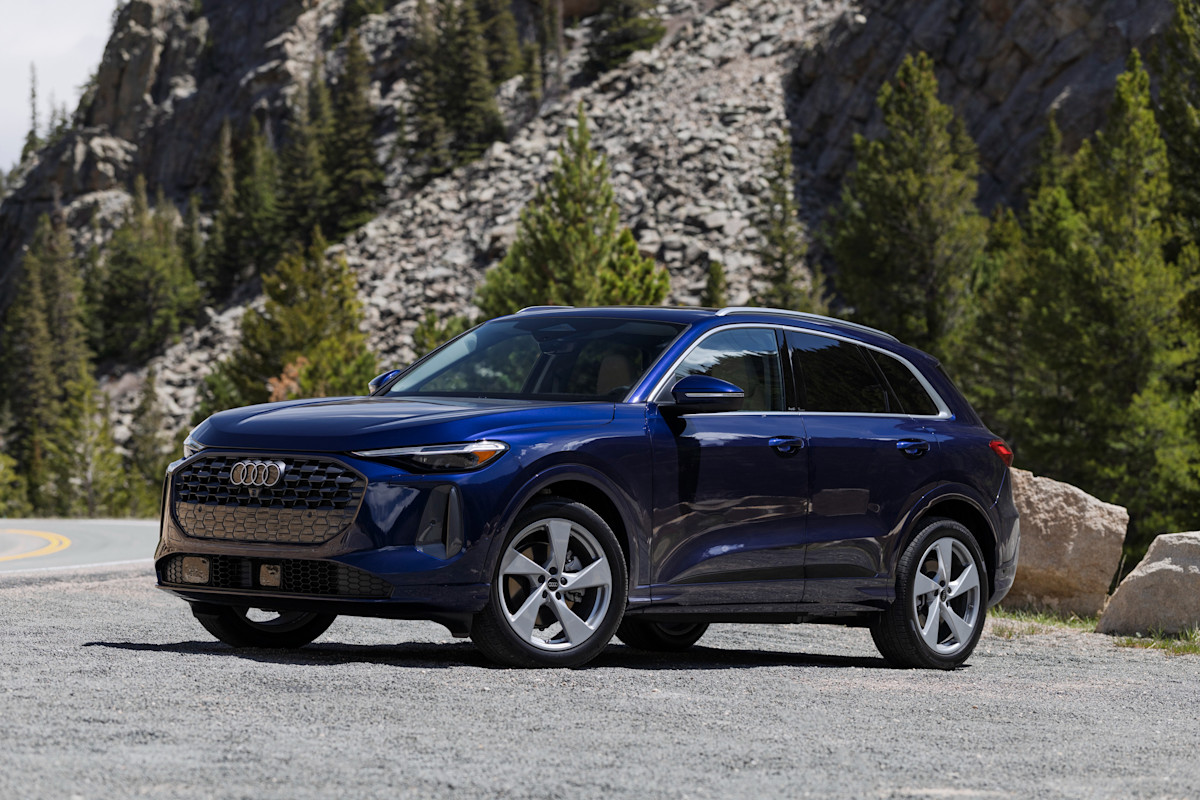
The third-generation Audi Q5 arrived for the 2025 model year as a complete redesign, with new exterior styling, a restyled interior, updated LED lighting signatures, and additional tech. The 2026 model builds on this with a digital refresh that includes a Multi-Media Interface (MMI) upgrade, an updated multifunction steering wheel, a new available Audi dashcam system, and standard Audi Signature Care scheduled maintenance. The Q5 competes in the compact luxury SUV class against the BMW X3, Mercedes-Benz GLC, Volvo XC60, Genesis GV70, Acura RDX, and Lexus NX. Three trims are available: Premium, Premium Plus, and Prestige.
The third-generation Q5 has curvier, less austere lines than its predecessor. Matrix-Design LED headlights and OLED taillights offer up to eight digital light signatures. Standard wheels are 18 inches, with 19- and 20-inch options available depending on trim. Both the Premium Plus and Prestige offer an S line black optic package with 20-inch wheels, black exterior accents, black center wheel caps, dark chrome exhaust tips, and S line exterior elements.
Under the hood, the Q5 is equipped with a turbocharged 2.0-liter inline four-cylinder engine producing 268 horsepower and 295 pound-feet of torque. Audi's quattro all-wheel-drive system is standard, paired with a seven-speed S tronic dual-clutch transmission. Fuel economy is rated at 22 mpg in the city and 30 mpg on the highway with premium fuel recommended. The Q5 has a max tow rating of 4,400 pounds—more than most of its competitors—though a trailer hitch must be added for $650.
Inside, the Q5 has a minimalist dashboard dominated by a large screen. Standard features include leather upholstery, aluminum interior accents, heated front seats, and a panoramic moonroof. The Q5 seats five and provides 27.6 cubic feet of cargo space behind the second row, or up to 56.9 cubic feet with the rear seats folded.
The 2026 tech overhaul brings an easier-to-use MMI touch display interface along with expanded voice control and the return of the steering wheel scroll wheel. A standard single screen houses the 11.9-inch virtual cockpit driver display and the 14.5-inch infotainment screen. Other standard features include wireless Apple CarPlay and Android Auto, ambient lighting, an updated Audi digital assistant, and a 10-speaker audio system. Available features include a 10.9-inch passenger display, head-up display, Bang & Olufsen 3D sound system, digital OLED taillights, adaptive air suspension, and "experience worlds" scenarios with lighting, sound, massage, and climate-control settings. Buyers who opt for the passenger screen also get in-car gaming options with Bluetooth controller and headphone support.
Standard safety features include rear parking sensors, lane-departure warning, front and rear cross-traffic alerts, drowsy-driver alert, automatic emergency braking, and blind-spot monitoring. Available features include park assist, adaptive cruise control, and reverse automatic emergency braking. The Insurance Institute for Highway Safety recognized the 2026 Q5 with a 2025 Top Safety Pick+ award, and NHTSA gave the 2025 model an overall safety rating of five out of five stars.
The 2026 Audi Q5 went on sale in the first quarter of 2026. The Premium trim starts at $54,690, Premium Plus at $57,590, and Prestige at $62,700—all including a $1,295 destination charge. Adaptive cruise control on the base Premium requires the $1,000 Convenience Package, which also adds a heated steering wheel and the top-view camera system. All non-white exterior paint colors add $595. On the used market, 2025 Q5 models currently average about $48,500.
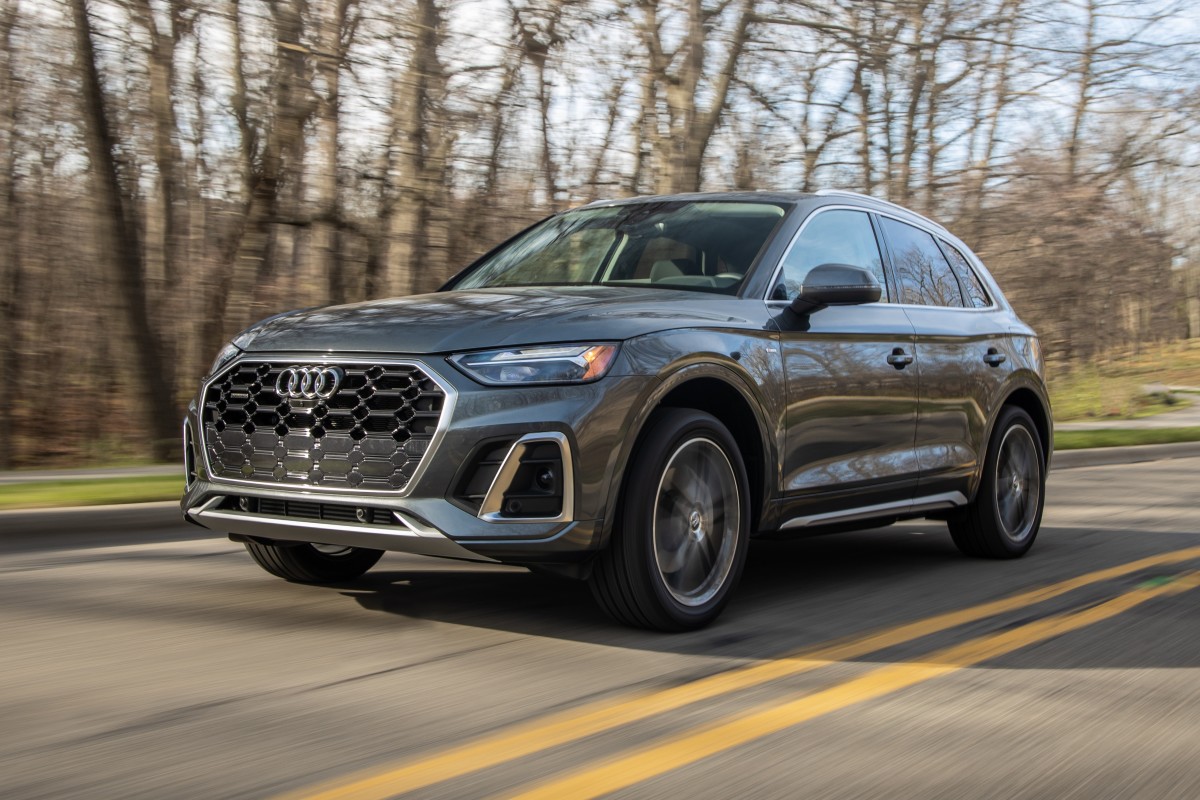
Second Generation (2018-2024)
The second-generation Audi Q5 arrived in 2017 for the 2018 model year. It picks up where the first one left off, with similar looks and a familiar blend of quality and comfort, but with even more high-tech kit. It's a very refined package with few major weak spots.
Initially, the second-generation Q5 was available only with an updated version of the four-cylinder 2.0T engine from its predecessor. It's slightly more powerful, with 252-horsepower, and comes with a seven-speed 'S tronic' automatic transmission–a dual-clutch system–in place of the older car's eight-speed conventional 'Tiptronic' auto. Combined with a new quattro all-wheel-drive system, it gives improved fuel economy, with an EPA combined figure of 25 mpg. The high-performance SQ5 model was available from the get-go this time, and it has a turbo 3.0-liter engine with 354 horsepower, with an eight-speed Tiptronic transmission as standard.
A mid-life update for the 2021 model year brought minor cosmetic changes and added two new derivatives – a plug-in hybrid (PHEV) model called Q5 TFSI e and the Q5 Sportback–a five-door 'coupe' version with a sloping roofline. The Q5 TFSI e combines a 2.0-liter engine with an electric motor for a total output of 362 horsepower and an estimated pure electric range of 19 miles. Other than its sleeker rear section, the Q5 Sportback is identical to the Q5 and only slightly less practical, with a trunk capacity of 24.7 cubic feet rather than 25.8 cubic feet. The engine lineup has since been updated and the Q5 adopted Audi's latest naming strategy. As of late 2024 there are two 2.0 TFSI models–the Q5 40 TFSI (201 horsepower) and the Q5 45 TFSI (261 horsepower), while the PHEV model is now called the Q5 55 TFSI e and has a larger battery for a pure-electric range of 23 miles.
Audi Q5 trim levels for this era are Premium, Premium Plus and Prestige. All are extremely well-equipped–from the start, standard features for Audi Q5 Premium models included Apple CarPlay and Android Auto support, Bluetooth, cruise control, three-zone climate control, a rear-view camera, steering wheel-mounted shift paddles, leather upholstery, power front seats and tailgate and sliding 40/20/40-split rear setbacks. Audi Q5 Premium Plus models add features such as heated front seats, a panoramic sunroof and full-LED headlights, while Prestige trim adds a head-up display, a Bang & Olufsen sound system and the 'Audi virtual cockpit'–a digital driver display that offers a wealth of different configurations. It also features a 'top-view camera system' that gives a bird's eye view of the car and its surroundings on the display screen that makes it easier to park in particularly tight spaces. Equipment levels have increased over time; as of October 2024, Audi Q5 Premium trim now includes adaptive cruise control, LED headlights and driver assistance features such as Audi side assist, Audi active lane assist (a lane departure warning system) and Audi pre sense city, which senses a potential collision and can tighten the seat belts and brake the car if necessary.
Despite its premium image, Audi tends to muster only mid-table rankings in most independent reliability surveys. In fact, in the J.D. Power 2024 U.S. Vehicle Dependability Study it finished second from bottom. The general consensus is that the second-generation Audi Q5 is more reliable than the first-generation car. Owners of this Audi Q5 model have cited comparatively few problems on carcomplaints.com, although some have noted issues with the car's 'MMI' infotainment system.
When new, the MSRP for a second-generation Audi Q5 Prestige model topped out at just over $57,000, with premiums for the Q5 Sportback, Q5 Plug-in Hybrid and SQ5. On the used market, early second-generation Q5 models (2018) now average about $16,300, while late-model 2024 examples average around $32,700.
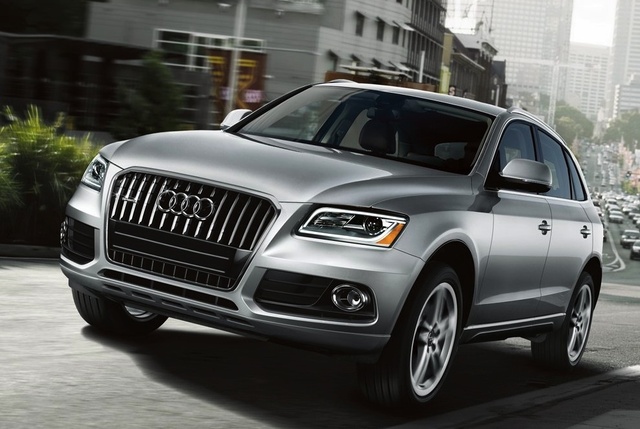
First Generation (2009-2017)
The introduction of the first-generation Audi Q5 in 2009 was a no-brainer, capitalizing on the boom in popularity of luxury SUVs that continues to this day. Based on the same platform and sharing many parts with the concurrent Audi A4 sedan and A5 coupe, the Q5 is a rival for cars such as the Lexus NX, the Mercedes-Benz GLK and the BMW X3. In fact, the exterior dimensions of the first Q5 are almost identical to those of the BMW X3 that went on sale in 2010. It's a car that ticks a lot of boxes in any guise, with a roomy and beautifully built interior and a real feeling of solidity and smoothness.
To begin with, the Q5 came only with a 3.2-liter V6 engine with 270 horsepower and a six-speed Tiptronic automatic transmission as standard. A four-cylinder option was added in 2010; badged 2.0T it's a turbocharged 'TFSI' engine with 211 horsepower and an eight-speed automatic transmission. The 3.2-liter V6 was replaced from 2012 onwards by a new 3.0-liter, supercharged V6. At the same time, the Q5 Hybrid joined the range. The hybrid powertrain combines the 2.0T's engine with a 54-horsepower electric motor for a total output of 245 horsepower.
In 2013, power for the 2.0T increased to 220 horsepower and two new models joined the range. These were the Q5 TDI, which has a 240-horsepower 3.0-liter V6 diesel engine, and the SQ5–a high-performance model with a supercharged 3.0-liter V6 engine with 354 horsepower. Both came with an eight-speed automatic transmission as standard. The Q5 TDI was a victim of the demise of diesel and was dropped in 2016.
Core Audi Q5 trim levels for this era are Premium, Premium Plus and Prestige. You get a lot of features with each one, as even the earliest entry-level Q5 Premium models have interior wood inlays, electrically adjustable front seats, sliding rear seats, power-adjustable door mirrors, leather upholstery, LED taillights and three-zone climate control. Premium Plus trim adds features such as a power tailgate and heated front seats, while Q5 Prestige models have a Bang & Olufsen sound system and satellite navigation. On top of this, a wealth of individual options could be specified from new, along with a bewildering array of option packs. The Luxury package, S line plus package, Black Optic package and Audi exclusive line package are merely the tip of the iceberg. The SQ5 is a standalone trim level that adds sport suspension, quad exhaust outlets and a range of cosmetic upgrades, although it, too, could be combined with a number of additional option packages.
In general, Audi as a brand has an average reliability record and the Q5 doesn't do anything to shift the dial. Although there aren't a huge number of issues raised by first-generation Audi Q5 owners on carcomplaints.com, some of them are fairly major, with excessive oil consumption and failing timing chains the most prominent. These seem to be centered on 2.0T models, with the V6 petrol and diesel models less affected. Other common issues, regardless of engine, include rattling or leaking panoramic sunroofs and noisy suspension, caused by failing control arms–things to look out for on any test drive.
When it was new, the MSRP for the first Q5 started from just over $37,000. You can now pick up early Audi Q5 models for little more than $7,100 for a 2010, while 2016 models average about $11,600. Expect to pay a premium for V6 models and later years, while the jumping-off point for an SQ5 is about $15,000.
Related Topics